





Carved Hardwood Console Table
A carved hardwood console table brings dense grain and deep relief carving into a hallway or reception room.

Carved Hardwood Console Table
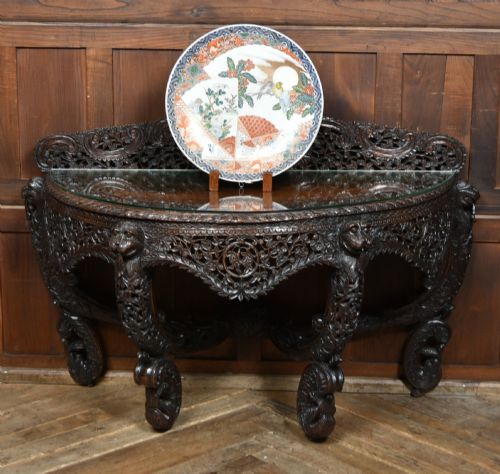
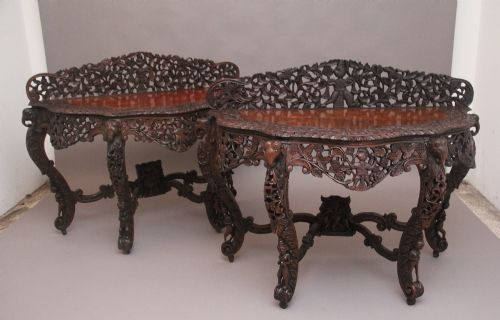
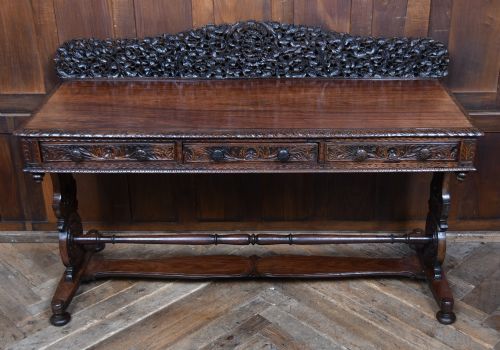
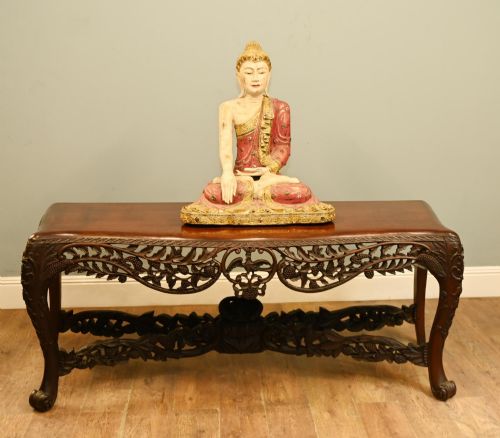
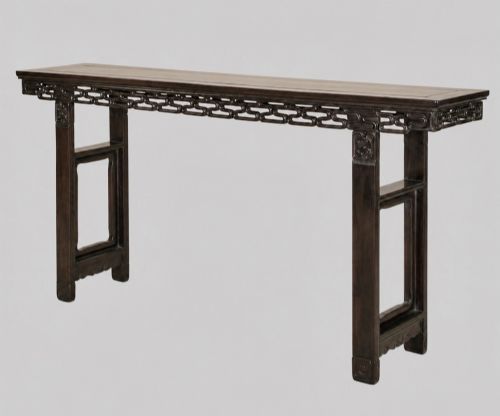
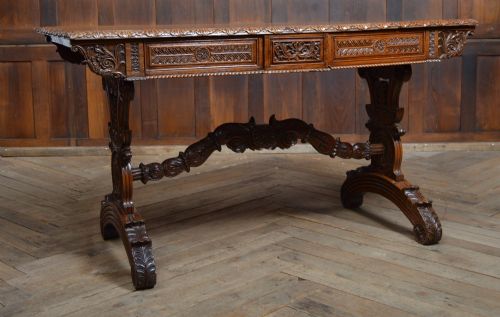
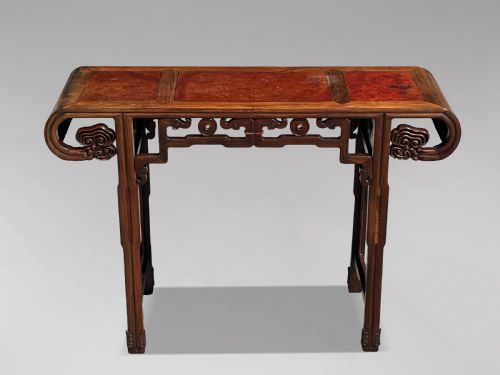
A carved hardwood console table typically originates from nineteenth-century China or British colonial Burma, drawing on Qing Dynasty traditions and Anglo-Burmese design. These items frequently take the form of altar tables, side tables, and demi-lune hall tables designed to sit flat against a wall.
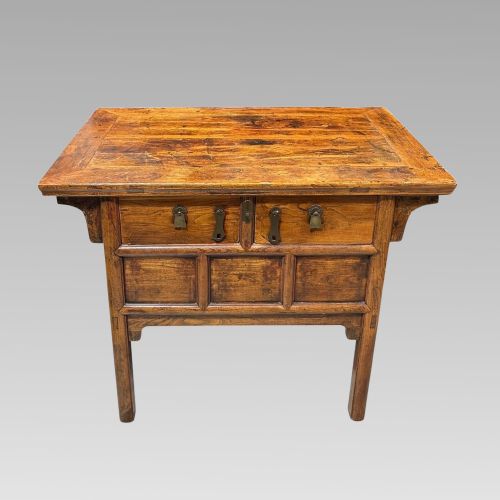
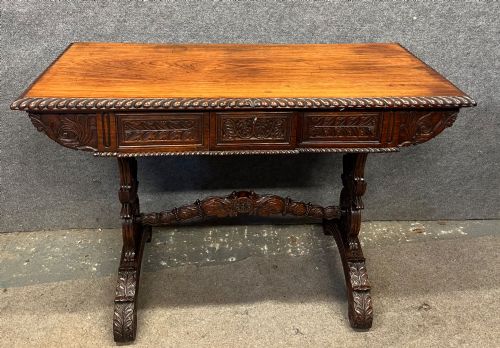
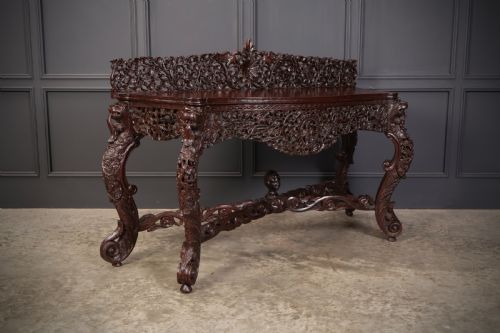
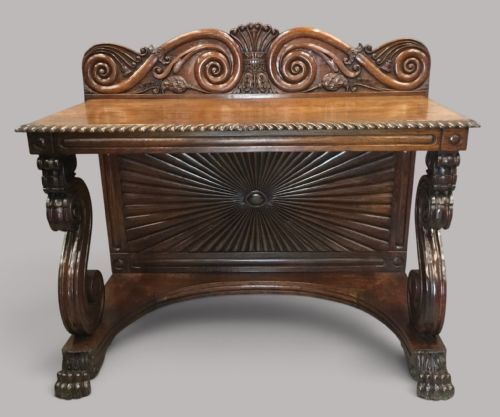
The versions most commonly met on this page span the Victorian era and the late nineteenth century, often featuring dense tropical timbers carved with scrolling foliage, dragons, or traditional motifs. Alongside strict console forms, the selection encompasses related centre tables, library tables, and altar tables.
Makers and workshops across China and Burma produced these pieces for export and domestic use, employing heavy woods that could sustain intricate chisel work. Their varied profiles include rectangular tops, inset marble panels, and scroll-ended surfaces suited to grand interiors.
Materials and construction
Cabinetmakers utilised dense Asian hardwoods such as hongmu, padauk, teak, and elm, which provided the structural stability necessary for deep relief carving. These heavy timbers resist warping while allowing artisans to execute crisp architectural mouldings and figural details.
Surface decoration frequently combined hand-carving directly into the solid wood with occasional contrasting inserts like amboyna wood, lacquer, or rouge marble panels. Joinery relied on traditional mortise and tenon techniques, ensuring rigid frames without the need for modern metal fixings.
Carved Hardwood Console Table Retail Price Guide 2026
Typical asking prices for carved hardwood console table among the pieces listed under this phrase on Sellingantiques today, from the lower quarter to the upper quarter. They describe what is for sale here now, not the wider market.
Materials documented across the inventory include hongmu, padauk, teak, elm, amboyna wood, lacquer, and inset rouge marble.
The spectrum of quality
Quality rests primarily on the depth and crispness of the carving, where master artisans achieved clean undercut details and balanced symmetry rather than shallow, repetitive patterns. The choice of timber also dictates value, with heavy, figured hongmu and dense padauk commanding greater respect than simpler domestic utility woods.
Proportion and structural integrity separate exceptional examples from standard workshop output, particularly in complex forms like demi-lune consoles and scroll-ended altar tables. Original inset marble panels and undisturbed patination further elevate a piece above those that have suffered later alterations or heavy refinishing.
The Carved Hardwood Console Table Glossary
- Hongmu
- A dense, reddish-brown tropical hardwood prized in Chinese furniture making for its weight and fine grain. It accepts intricate hand-carving exceptionally well.
- Altar table
- A traditional Chinese table form featuring upturned ends or flat rectangular surfaces, originally designed for ritual use but widely adapted for domestic reception spaces.
- Padauk
- A heavy, durable timber with vibrant reddish hues, frequently utilised in nineteenth-century Burmese and Indian colonial furniture production.
- Demi-lune
- A half-moon shape used for console and hall tables designed to stand flush against a wall while projecting minimally into a room.
- Chinoiserie
- European artistic interpretation and imitation of Chinese decorative motifs, influencing the ornamentation of various nineteenth-century side and hall tables.
Carved Hardwood Console Table: Frequently Asked Questions
Where should I place a console table?
These tables find a natural home in entrance halls, living rooms, or along long corridors where their narrow profiles save floor space while offering a surface for lamps or decorative objects.
Because many examples feature finished backs or refined detailing all round, they also function effectively as centre tables positioned in the middle of a spacious room.
How do I care for antique hardwood?
Maintain the timber by dusting regularly with a soft, dry cloth and avoiding placement near direct heat sources or strong sunlight, which can dry out the natural oils in dense woods like hongmu and padauk.
Applying microcrystalline wax occasionally helps protect the surface patination without building up heavy residues that obscure fine hand-carving.
What is the difference between an altar table and a console?
Traditional altar tables originate from ritual contexts and frequently incorporate distinctive upturned flange ends along the top surface, whereas standard console tables usually feature flat, rectilinear profiles designed purely for domestic display.
In nineteenth-century export production, the two terms often overlap as workshops adapted sacred architectural forms to satisfy Western interior tastes.
How do I identify a Qing Dynasty piece?
Look for characteristic construction methods, such as traditional joinery without metal nails, combined with iconography like dragons, scrolling foliage, and Auspicious symbols carved deeply into dense Asian hardwoods.
Dates around the late nineteenth century often reflect the transitional periods of the late Qing Dynasty when export manufacturing flourished alongside traditional domestic forms.