

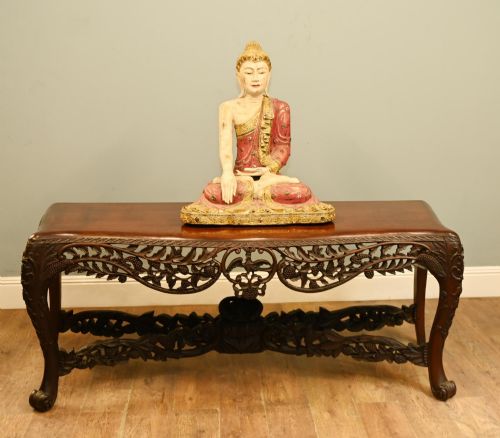
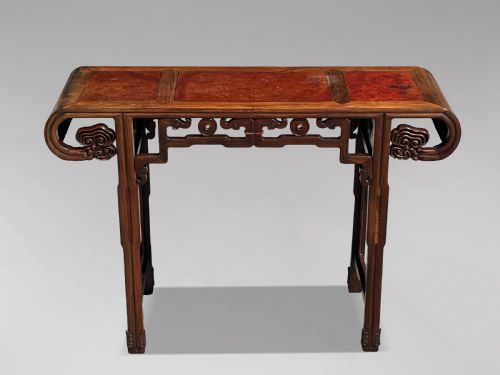


Oriental Hallway Table
An oriental hallway table brings architectural timber and provincial character straight into an entrance, offering a striking focal point for any interior.
Oriental Hallway Table
When you search for an oriental hallway table, you are looking at substantial hardwood furniture designed for narrow spaces, predominantly taking the form of console tables, altar tables, and low benches originating from China.
The pieces you are most likely to meet on this page date from the nineteenth century, including examples from the Qing Dynasty and the early twentieth century, spanning styles from traditional provincial work to export pieces.
These items serve practical purposes in modern hallways while retaining distinct historical forms such as upturned ends on altar tables or carved aprons derived from traditional Chinese architecture.
Materials and construction
Construction relies heavily on dense hardwoods like hongmu and elm, joined using traditional woodworking techniques that provide stability without relying entirely on metal fastenings.
Surface finishes include clear polish that reveals the natural grain of the timber alongside red lacquer applications, sometimes paired with contrasting amboyna wood or brass mounts.
Carved details appear directly on structural elements such as aprons and legs, utilising hand-choking methods typical of Chinese cabinet making during the late nineteenth and early twentieth centuries.
Oriental Hallway Table Retail Price Guide 2026
Typical asking prices for oriental hallway table among the pieces listed under this phrase on Sellingantiques today, from the lower quarter to the upper quarter. They describe what is for sale here now, not the wider market.
Styles represented across the inventory include Qing Dynasty, Chinoiserie, and Chinese provincial designs associated with traditional cabinet making.
Judging quality
The distinction between ordinary and superior pieces rests on the choice of timber, where dense hongmu or carefully selected elm commands greater appreciation than generic softwood or mixed timber alternatives.
Execution of carved ornamentation dictates upper-tier status, with crisp, deep relief work showing individual hand skill rather than shallow, mechanical shaping across the aprons and frame.
Original surface treatments, particularly intact red lacquer or undisturbed patination on hardwood, preserve the historical integrity of a piece far better than modern refinishing.
The Oriental Hallway Table Glossary
- Altar table
- A narrow rectangular table traditionally used for ceremonial purposes, characterised by high placement of the surface and often featuring flanged ends that turn upwards.
- Hongmu
- A translation meaning red wood, used by makers to describe various dense tropical hardwoods native to Asia that take a fine dark polish.
- Lacquer
- A durable natural resin finish applied in multiple layers to wood surfaces, frequently pigmented in vibrant red or black hues on export and domestic furniture.
- Qing Dynasty
- The final imperial dynasty of China, spanning from the seventeenth to the early twentieth century, whose later period defines the majority of nineteenth-century export furniture.
- Console table
- A table designed to stand against a wall, frequently utilised in hallways and living spaces where floor depth is restricted.
Oriental Hallway Table: Frequently Asked Questions
What is an oriental hallway table used for?
These tables provide a narrow surface in entrance halls for holding everyday items like keys, post, and decorative lamps without obstructing movement through the space.
Their elongated proportions also make them suitable for displaying vases or ceramics against a hallway wall.
How do I identify a nineteenth-century piece?
Nineteenth-century construction is identifiable through traditional joinery methods, hand-carved hardwood details, and natural wear patterns accumulated over generations.
Examination of the timber underside and interior drawer construction often reveals the hand tools used by period craftsmen.
Where should I place an altar table?
Altar tables suit narrow entranceways, living room perimeters, or behind sofas where their shallow depth allows them to sit flush against vertical surfaces.
Placing them away from direct heat sources helps protect the antique wood and traditional lacquer finishes from drying out.
What is Chinese provincial furniture?
Provincial pieces originate from regional workshops outside the main imperial courts, focusing on practical forms built for local domestic use rather than strict court standards.
These items often feature simpler lines and sturdy elm construction suited to everyday household tasks.