

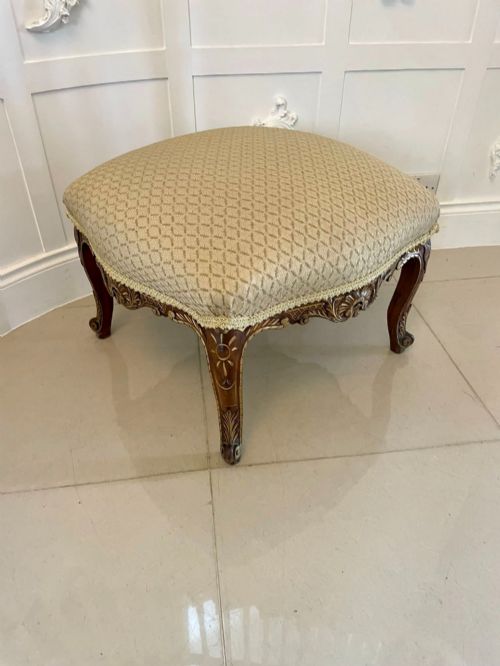
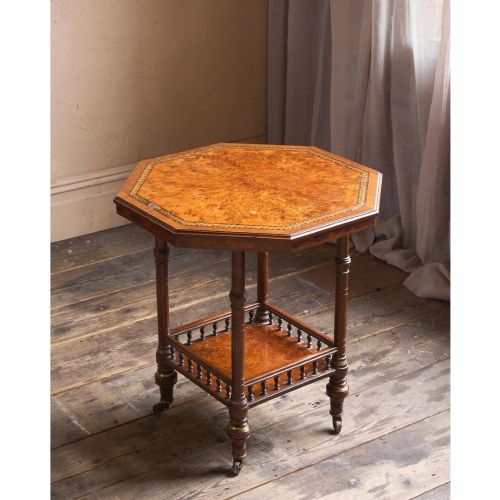
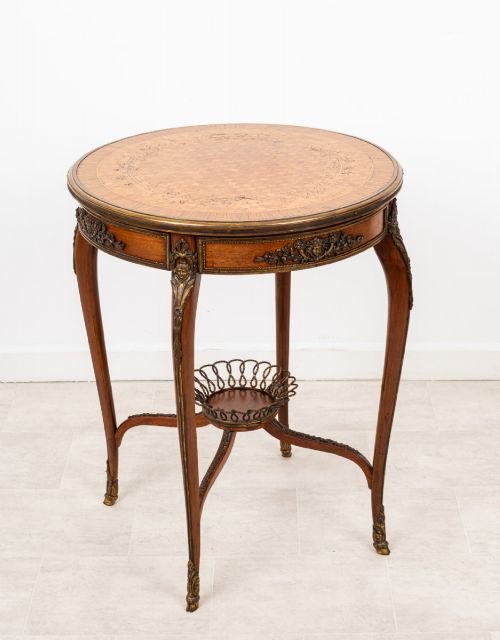
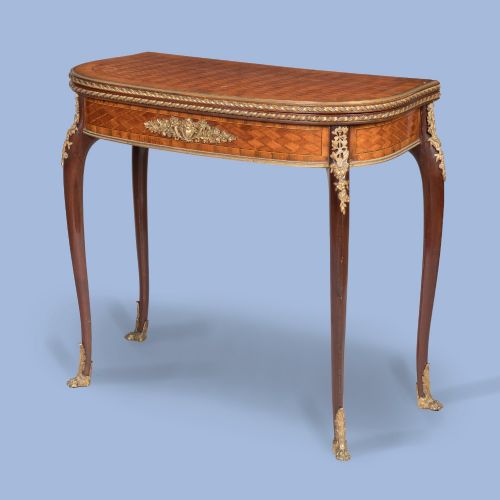
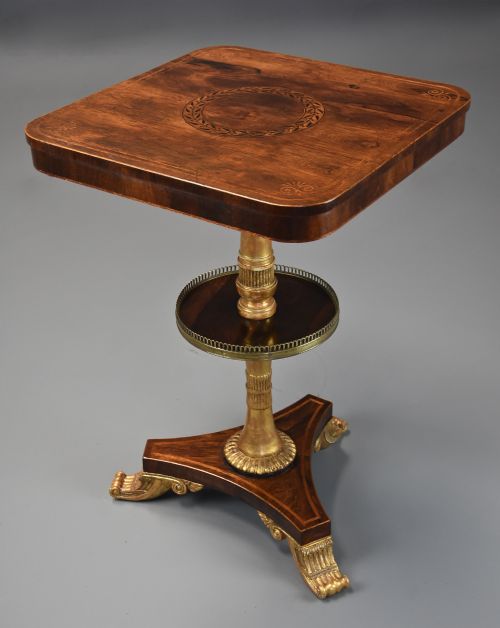


Gilt Wood Accent Table
A gilt wood accent table brings warmth and reflective light to a room through carved surfaces and metallic finishes.
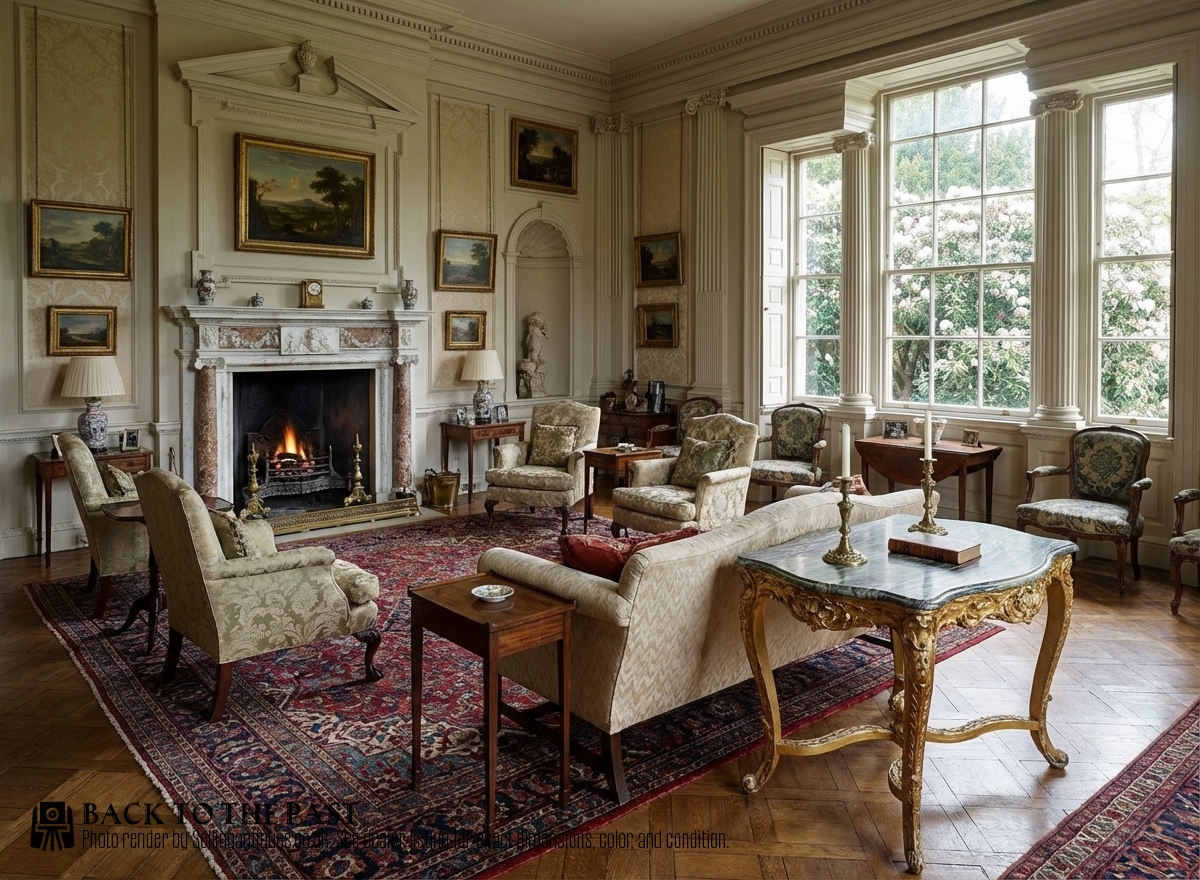
Gilt Wood Accent Table
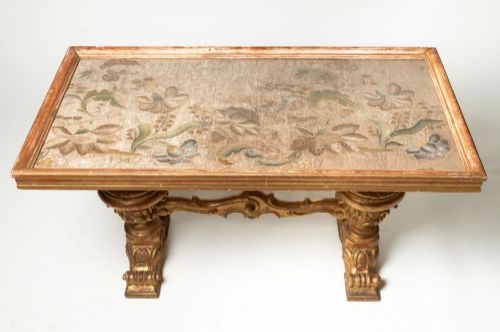
A gilt wood accent table encompasses side tables, occasional tables, coffee tables, and centre tables originating from the eighteenth, nineteenth, and early twentieth centuries. These pieces reflect historical design movements including Regency, Victorian, and various French and Italian revival styles.
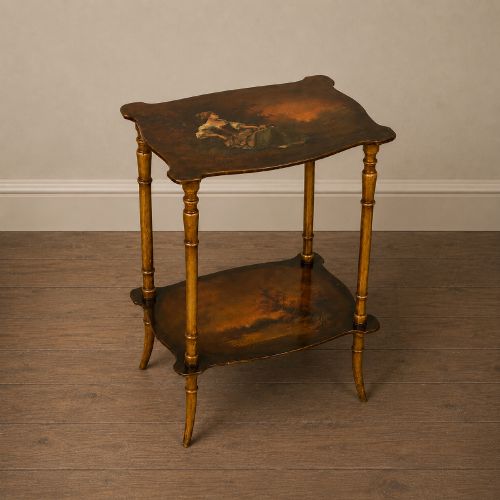
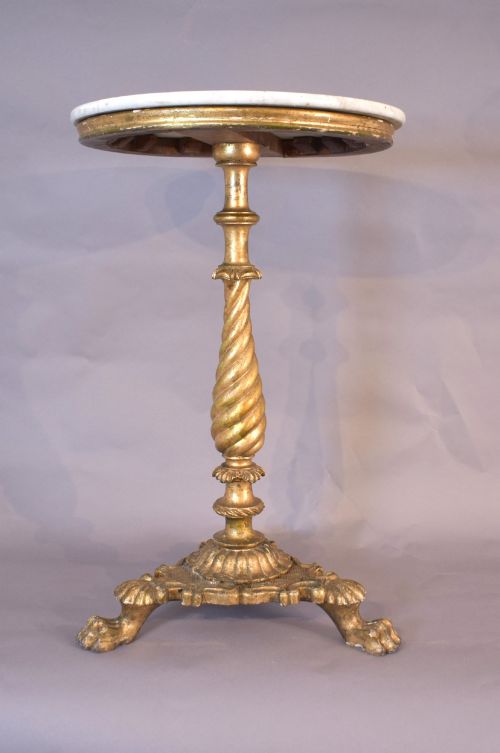
The version most frequently encountered on this page is the nineteenth-century occasional or side table, often featuring carved giltwood, painted surfaces, or parcel-gilt details. Many examples incorporate contrasting materials such as marble tops or ormolu mounts to enhance their decorative impact.
Buyers also encounter specialised forms such as two-tier étagères, card tables, and guéridons alongside standard lamp tables. These objects served functional roles in period interiors while displaying ornate craftsmanship suited to prominent display.
Materials and technique
The construction relies on timber frames shaped from woods such as mahogany, rosewood, amboyna, and walnut. Carvers then applied gesso as a preparatory layer to receive gold leaf or paint finishes.
Gilding techniques involved applying thin sheets of gold leaf to prepared wooden surfaces, sometimes combined with parcel-gilt highlights on carved details. Ormolu mounts and cast brass elements were frequently added to enrich the structural composition.
Marble tops, often inset into recessed wooden frames, provided durable and decorative surfaces for tables designed to hold lamps or display objects.
Listings feature nineteenth-century and early twentieth-century pieces utilising giltwood, amboyna, rosewood, and marble.
Craftsmanship and distinction
Quality reveals itself in the depth and crispness of the wood carving beneath the gilding, where hand-tooled details demonstrate superior execution compared to cast or pressed ornamentation. The application of gold leaf shows skill through smooth burnishing and consistent coverage across complex contours.
Selection of secondary woods and the precision of joinery in table frames and under tiers separate standard production pieces from fine cabinetwork. Attribution to known makers or documented workshops adds further distinction to individual pieces.
Gillows·François Linke·George Bullock
The Gilt Wood Accent Table Glossary
- Giltwood
- Wood that has been coated with gold leaf or gold powder over a prepared gesso ground. This finish provides a reflective and decorative surface characteristic of period furniture.
- Gesso
- A plaster mixture applied to wood surfaces as a smooth base for gilding or painting. It allows carvers to achieve sharp definition before applying gold leaf.
- Ormolu
- Gilded bronze used for decorative mounts and furniture embellishments. The technique involves applying a mercury and gold amalgam to bronze before heating.
- Parcel-gilt
- A method where only specific portions of an object are gilded, leaving other areas such as natural wood grain or paint exposed.
- Étagère
- A set of open shelves or a multi-tiered small table used for displaying ornaments. These pieces became particularly popular during the nineteenth and early twentieth centuries.
Gilt Wood Accent Table: Frequently Asked Questions
What is a gilt wood accent table used for?
These tables functioned historically as decorative surfaces for holding lamps, serving tea, or displaying small ornaments in drawing rooms and parlours. Today they serve similar purposes in contemporary interiors while adding period character.
Their compact scale allows them to fit easily beside seating arrangements or in hallways as distinctive focal points.
How do I identify a nineteenth-century piece?
Nineteenth-century pieces often display characteristic revival styles such as Louis XV or Regency, alongside traditional joinery methods appropriate to the era. Examining the underside and secondary timbers helps confirm the period of construction.
Signatures or attribution marks, when present, provide further evidence of workshop origin.
Are marble tops original to these tables?
Many occasional and centre tables from the nineteenth century were manufactured specifically with inset marble slabs to provide a durable and luxurious surface. The fit of the stone within the wooden frame indicates whether it belongs to the original construction.
Different types of marble, from white Carrara to coloured varieties, appear across French and Italian examples.
How should I care for gilded furniture?
Gilded surfaces require gentle dusting with a soft, dry cloth to prevent abrasion of the delicate gold leaf layer. Moisture and harsh cleaning agents must be avoided entirely.
Placing tables away from direct sunlight and heat sources protects both the wood substrate and the historical finish.