


19th Century Wall Table
A 19th century wall table brings architectural presence and a dedicated display surface to a hallway or reception room.
19th Century Wall Table
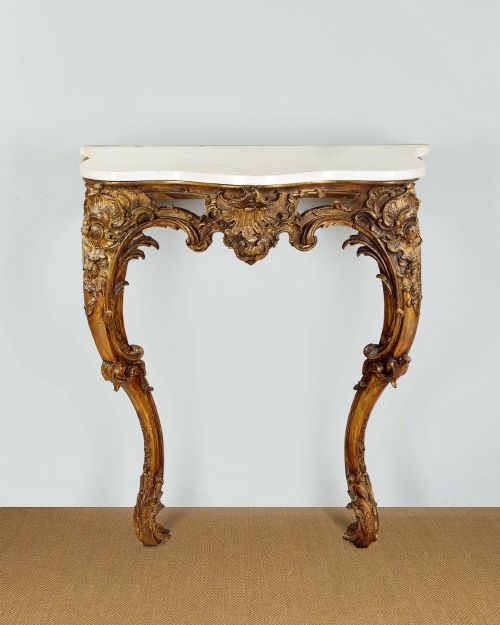
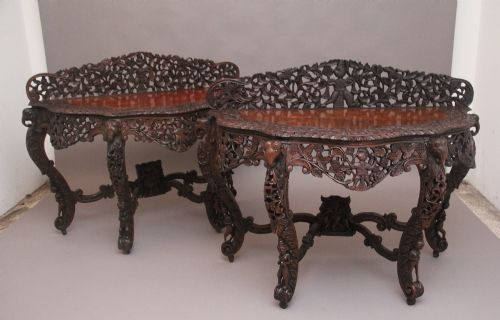
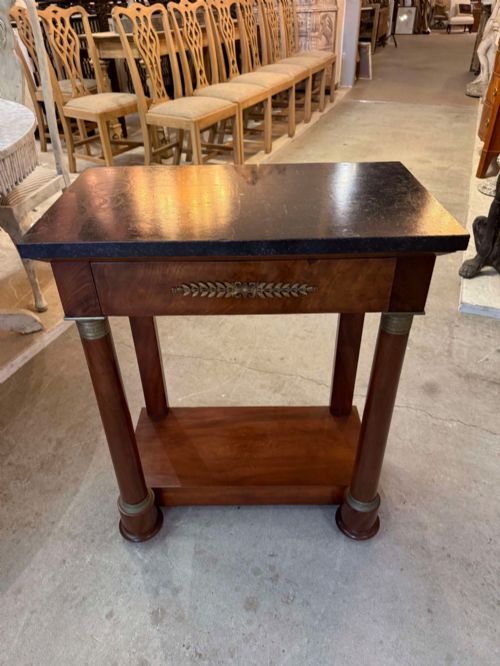
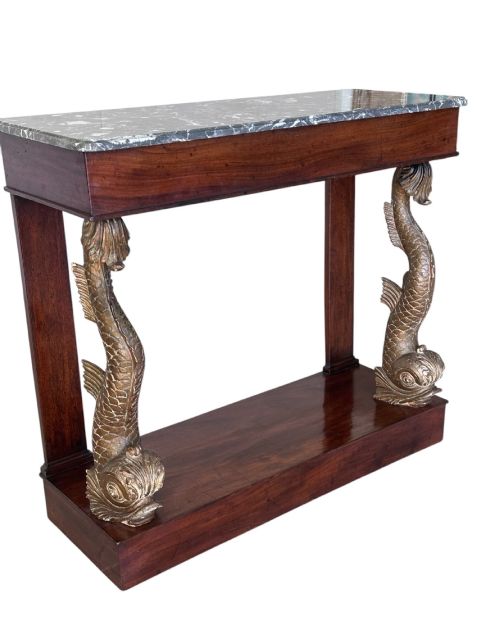
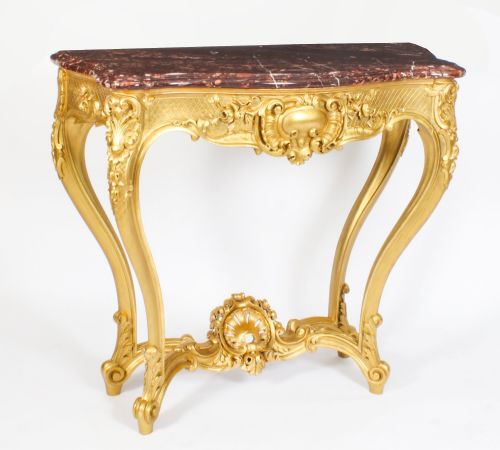
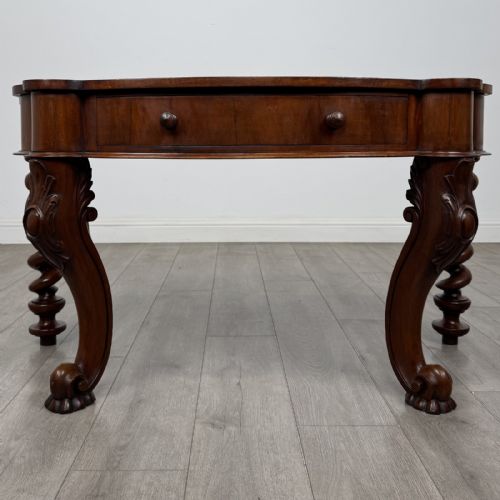
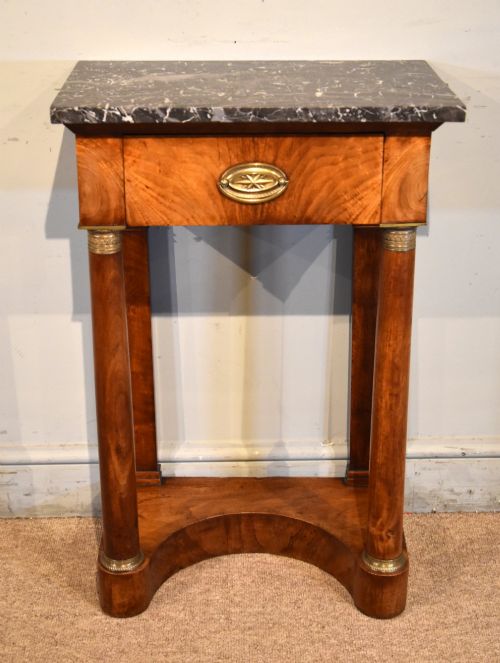
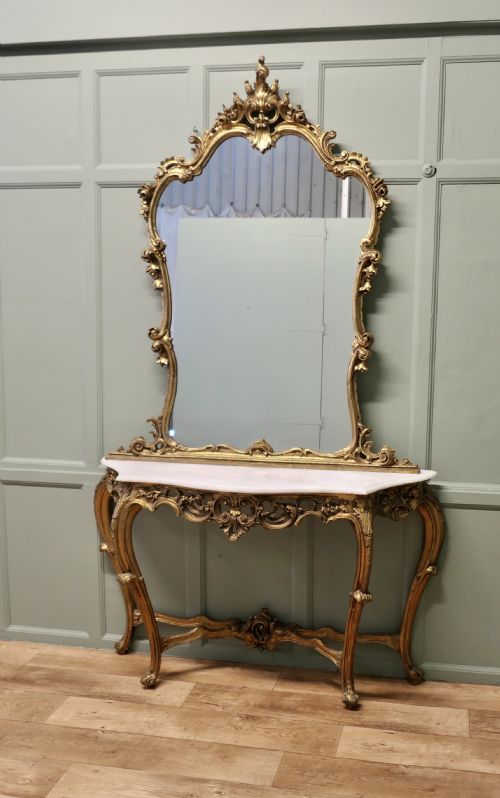
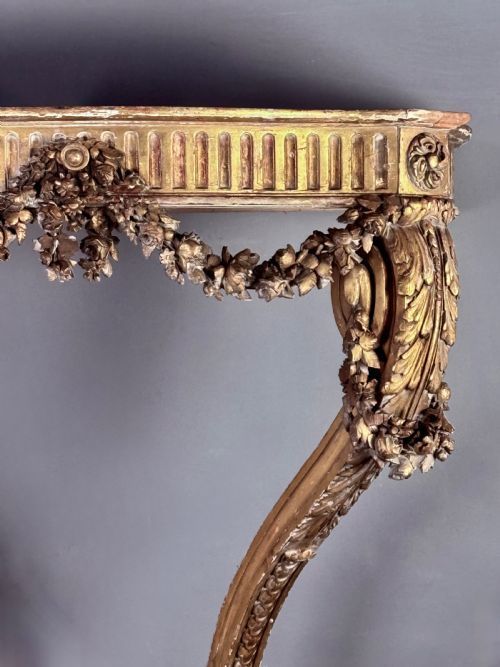
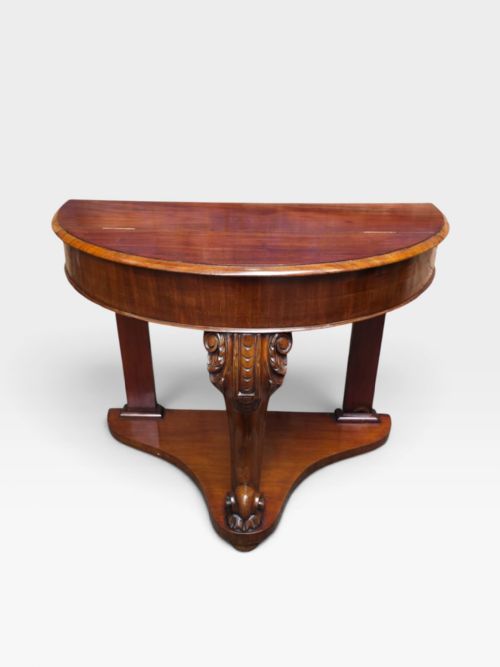
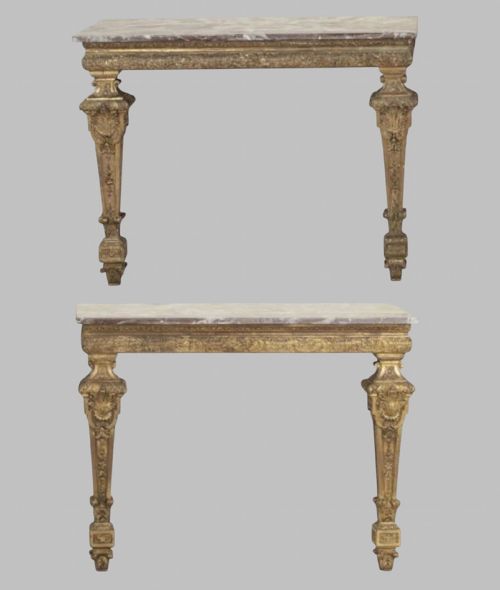
A 19th century wall table typically takes the form of a console or pier table designed to stand against a wall, frequently paired with a matching mirror. The selection spans compact demi-lune shapes in mahogany and walnut to grander gilded French and Italian console bases fitted with marble tops.
Examples on this page draw from Victorian, Regency, William IV, and Italian Neoclassical idioms. While many function primarily as console tables, related serving tables and wall-mounted variants also appear within the inventory.
Origin and regional cabinet-making traditions shape each piece, from English mahogany designs to continental painted and silver-gilt pieces from France and Italy.
Materials and construction
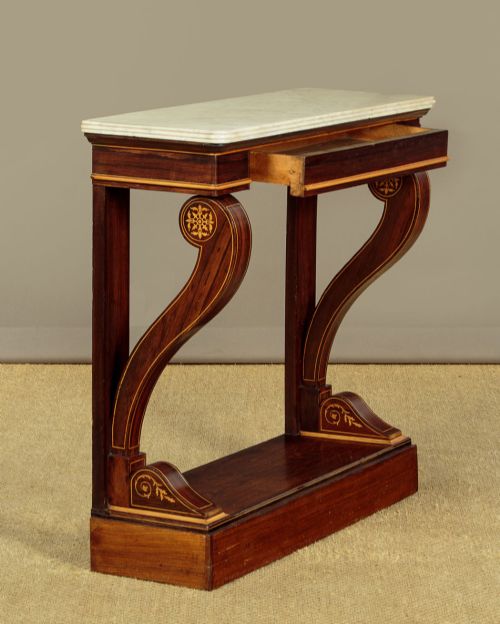
Makers relied heavily on dense timbers such as mahogany, walnut, and rosewood for structural frames, often applying rich veneers or polishing the natural grain. Giltwood, gesso, and painted finishes dominate the decorative continental pieces.
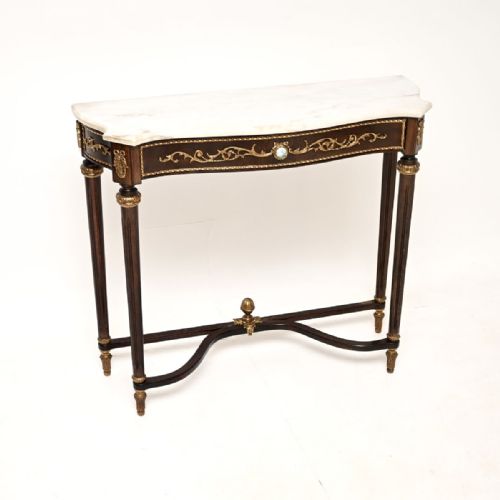
Slabs of white or coloured marble provide heavy, cool-to-the-touch surfaces for the tops of many console tables, while brass accents and carved details add focal points to the frieze and legs.
19th Century Wall Table Retail Price Guide 2026
Typical asking prices for 19th century wall table among the pieces listed under this phrase on Sellingantiques today, from the lower quarter to the upper quarter. They describe what is for sale here now, not the wider market.
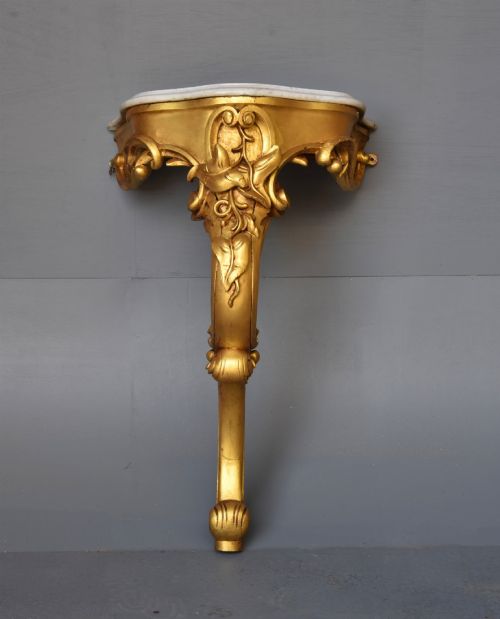
One wall-mounted console table even includes a concealed drawer for hiding away stray letters.
Judging quality and craftsmanship
Quality rests in the crispness of the wood carving or gesso moulding, and the weight and selection of the fitted marble top. Finer pieces demonstrate precise joinery on demi-lune frames and well-balanced proportions between the base and the surface.
The sophistication of the surface finish - whether original hand-applied gilding, paint, or polished wood grain - distinguishes standard regional cabinet work from high-status metropolitan commissions.
Felix Alfred Ternisien
The 19th Century Wall Table Glossary
- Demi-lune
- Half-moon shape. This term describes tables with a semicircular flat top and a straight back edge designed to sit flush against a wall.
- Giltwood
- Timber coated with gold leaf or a gold-coloured metallic finish. It reflects candlelight and adds opulence to formal 19th-century interiors.
- Pier mirror
- A tall mirror designed to hang on the pier, the section of wall between two windows. It frequently matches a console table placed directly beneath it.
- Serpentine
- Having a gently undulating edge with alternating convex and concave curves. This profile is often carved into marble tops and wooden table aprons.
19th Century Wall Table: Frequently Asked Questions
Where should I place a wall table?
These pieces suit narrow hallways, entrance lobbies, or living rooms where floor space is limited. Their shallow depth allows them to sit neatly against a flat wall without obstructing foot traffic.
Positioning one beneath a mirror or painting creates a balanced focal point that anchors the room's decorative scheme.
Are marble tops original to the tables?
Many 19th-century console tables were manufactured specifically to carry heavy marble slabs, which provided a durable and waterproof surface for serving or display. The marble is usually loose-fitting and rests within the wooden frame.
Inspect the underside of the top and the rebate of the frame to ensure the stone sits naturally within the historic structure.
How do I care for a giltwood base?
Giltwood surfaces require gentle dusting with a soft, dry ostrich feather brush to prevent the delicate gold leaf from flaking. Avoid using liquid polishes, water, or abrasive cloths on the metallic finish.
Keep these tables away from direct sunlight and strong heat sources to protect both the wooden substrate and the gesso preparation beneath the gold leaf.
How can I tell a Regency table from a Victorian one?
Regency pieces, dating from the early decades of the century, often incorporate classical motifs such as parcel gilding, black paint, and bold architectural lines. Victorian examples, emerging later, tend to feature heavier proportions and richer walnut or mahogany veneers.
Looking at the construction methods, secondary woods, and hardware helps pinpoint whether a piece belongs to the earlier neoclassical style or the later Victorian era.