




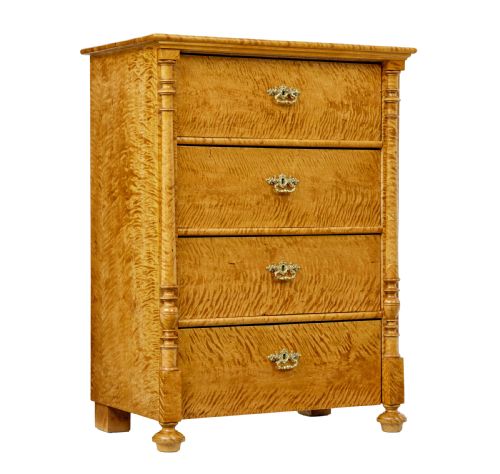


Golden Birch Commode
These golden birch commode examples bring warm Scandinavian Biedermeier grain and nineteenth-century craftsmanship into a room.
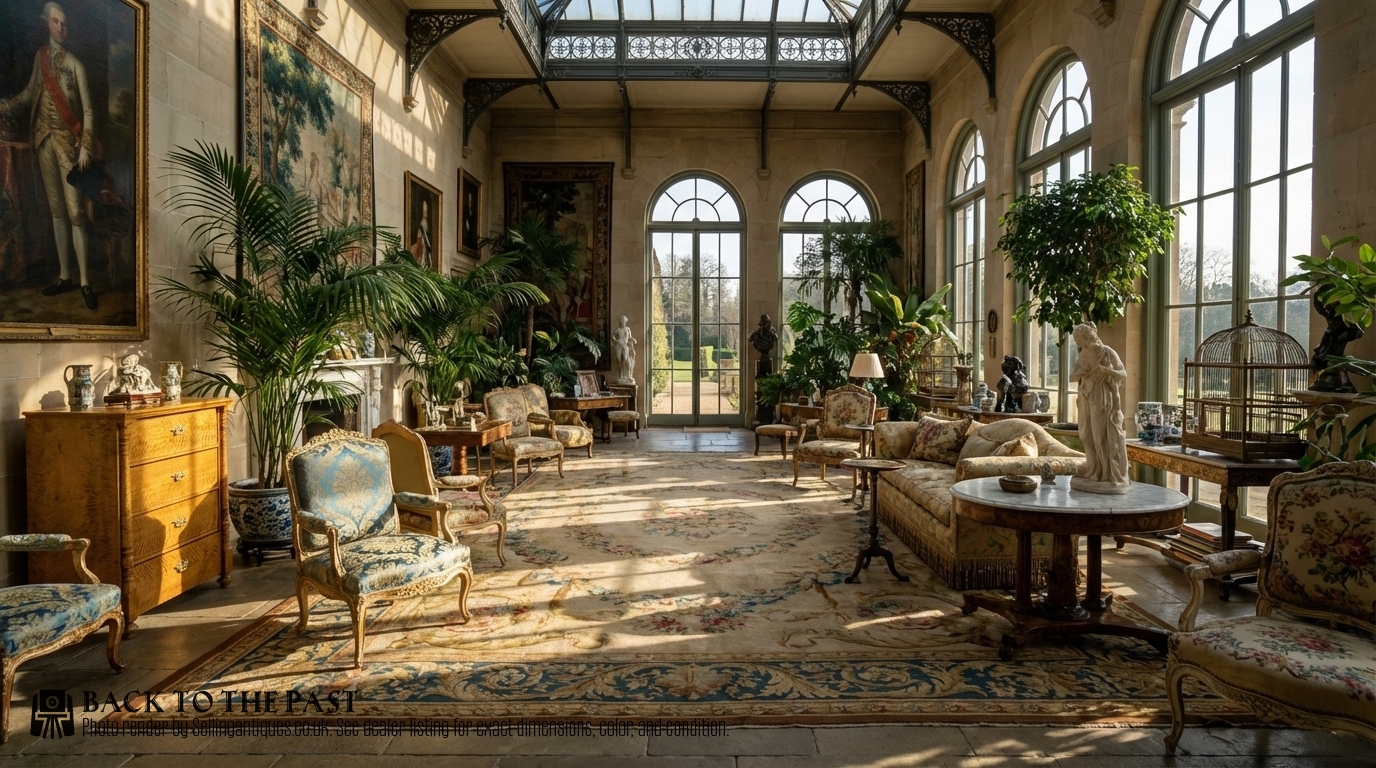
What these golden birch commodes are
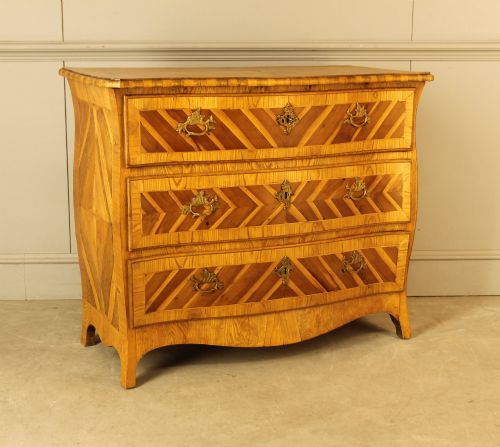
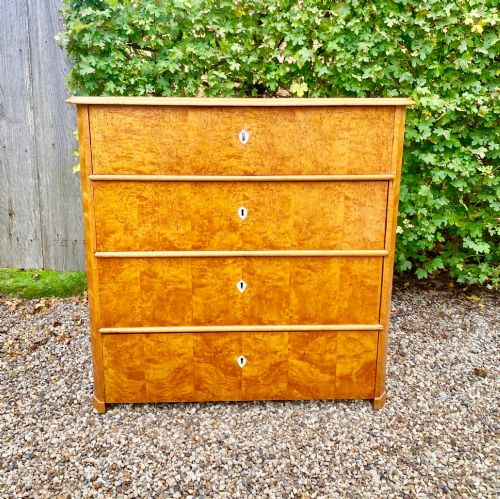
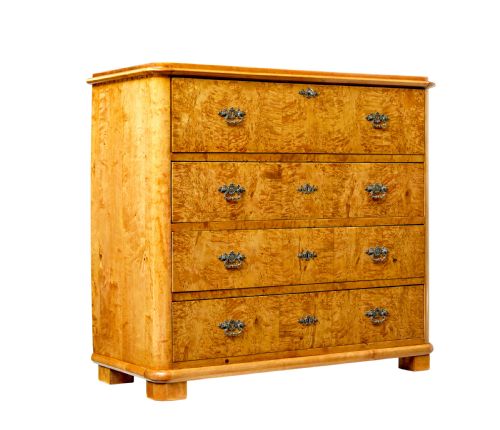
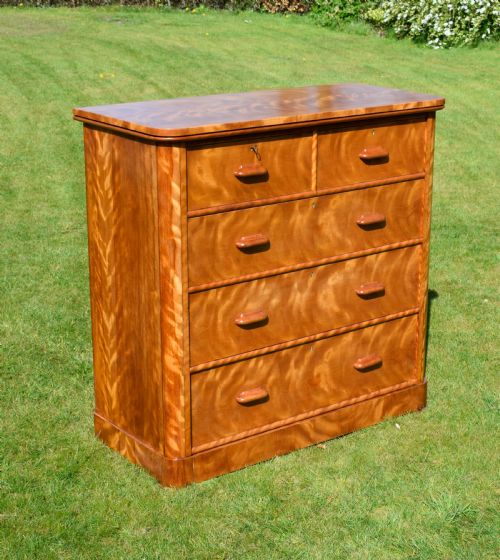
A golden birch commode typically takes the form of a nineteenth-century chest of drawers originating from Sweden and wider Scandinavia. These pieces showcase striking timber figures including tiger birch and flame birch veneer.
Buyers encounter classic Biedermeier chests alongside Victorian washstands and caddy top forms. The overall aesthetic relies on clean architectural lines that let the natural honey-toned wood grain dominate.
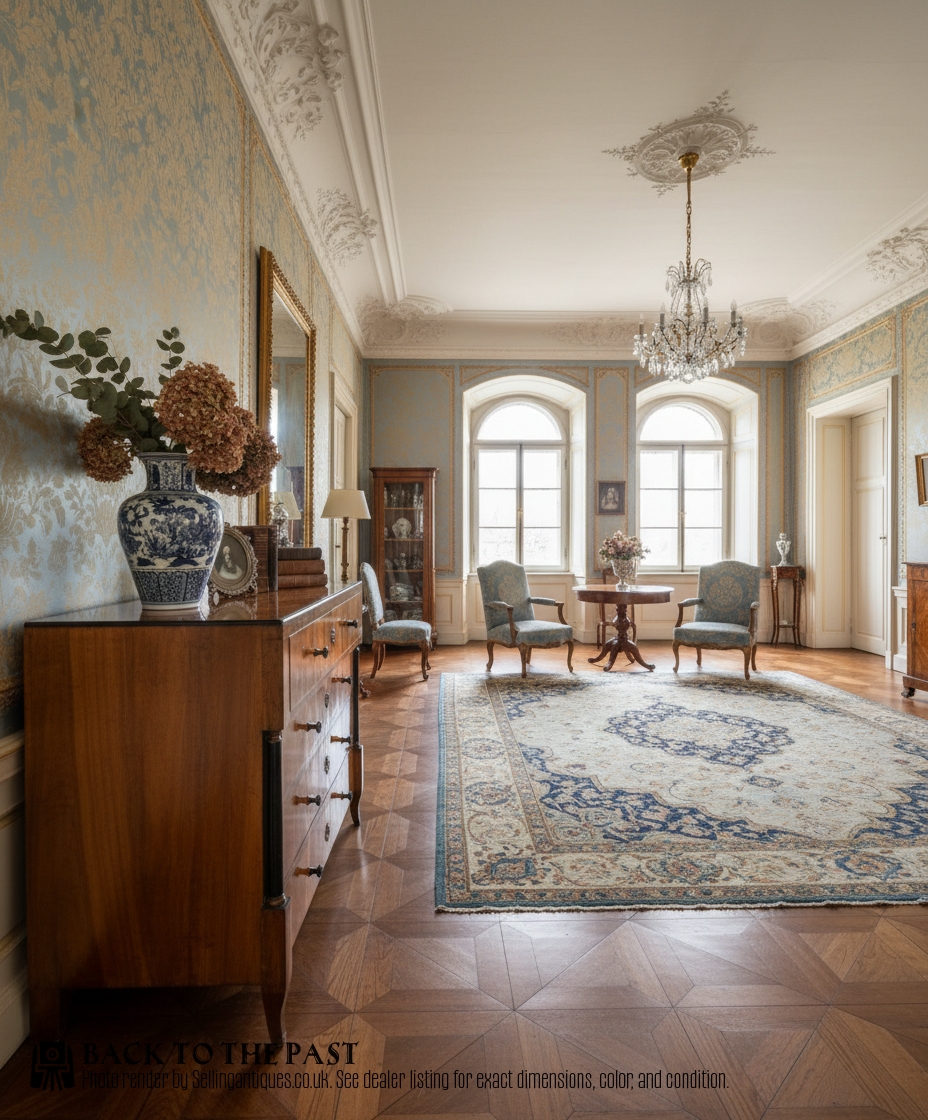
How they were made
Cabinet makers utilised solid birch and pine as structural timbers, applying carefully selected flame birch veneer and tiger birch across the primary facades. Ebonised wood and bone details frequently provide sharp visual contrast against the pale golden ground.
Brass hardware secures the drawers, while specialised joinery ensures the delicate wood veneers remain stable over generations. Workshops combined robust carcass construction with meticulous surface polishing to highlight the unique figuring of the timber.
Retail Price Guide 2026
Typical UK retail prices for golden birch commode, calculated from the Sellingantiques database of over a million retail prices indexed since 2003. This retail price guide relies exclusively on Sellingantiques data; no external sources or auction records are used, so the figures do not describe the wider market.
What varies in quality
Quality rests upon the selection and bookmatching of the birch veneer across the drawer fronts. Superior examples display dramatic, symmetrical tiger or flame patterns that wrap harmoniously around the corners of the commode.
The crispness of ebonised details and the integration of secondary woods like pine dictate the refinement of the piece. Master craftsmen achieved depth through patient polishing, whereas lesser items rely on simpler, flatter timber surfaces.
The Golden Birch Commode Glossary
- Biedermeier
- A Central and Northern European style spanning the nineteenth century characterised by utilitarian comfort and restrained neoclassical lines. It prioritises honest wood figures over heavy ornamentation.
- Flame Birch Veneer
- A thin slice of birch wood showing a flamed, wave-like grain pattern applied over a stable secondary timber. This technique creates dramatic movement across large drawer surfaces.
- Tiger Birch
- A naturally occurring figure in birch wood featuring dark horizontal stripes resembling tiger markings. Cabinet makers prized this variation for high-status furniture fronts.
- Caddy Top
- A raised, moulded tabletop profile resembling the lid of a tea caddy. This traditional edge treatment adds subtle depth to nineteenth-century chests of drawers.
- Ebonised Wood
- Timber treated with chemical stains or black paint to imitate ebony. It provides dark structural contrast against pale golden birch veneers.
Frequently Asked Questions
What is a golden birch commode?
A golden birch commode is a nineteenth-century storage chest, often from Sweden, featuring pale Scandinavian birch timber.
These pieces typically take the form of chests of drawers or washstands showcasing dramatic tiger and flame veneer patterns.
How do I care for birch furniture?
Keep nineteenth-century birch furniture away from direct sunlight and sudden temperature changes to protect the delicate wood veneer.
Regular dusting with a dry cloth maintains the polished surface without stripping the natural golden tones.
Where were these commodes made?
Most pieces originate from Sweden and broader Scandinavian workshops during the nineteenth century under Biedermeier influence.
Cabinet makers in this region favoured local birch for its bright grain and excellent response to polishing.
How do I identify Biedermeier style?
Biedermeier furniture relies on clean architectural forms, minimal carving, and a strong emphasis on figured wood veneers.
These designs emerged in the nineteenth century to balance domestic comfort with classical elegance.