


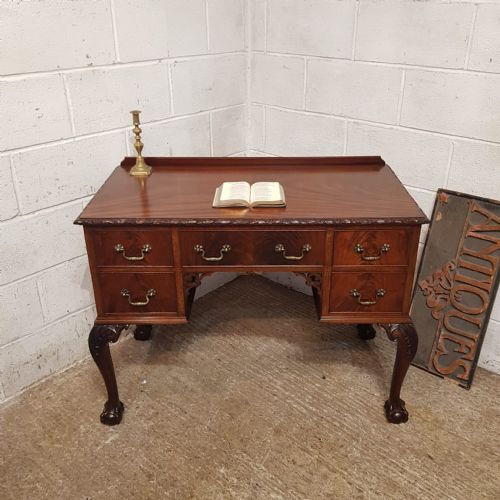
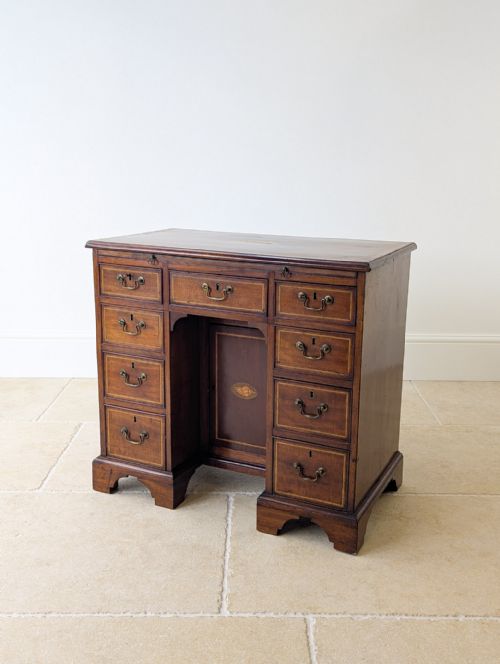
Brass Handle Kneehole Desk
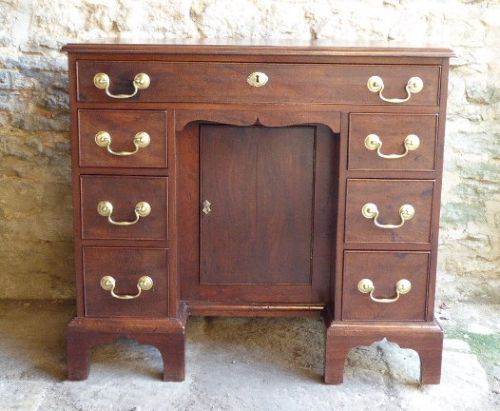
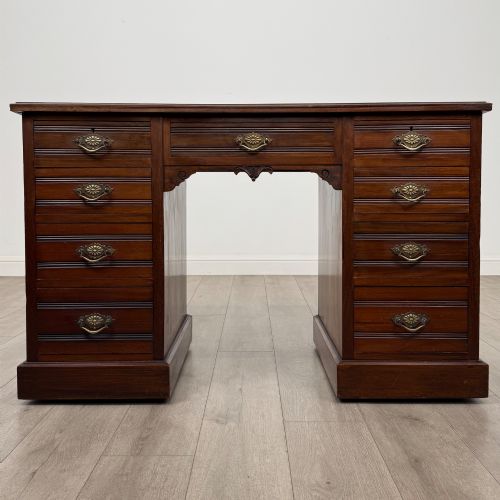
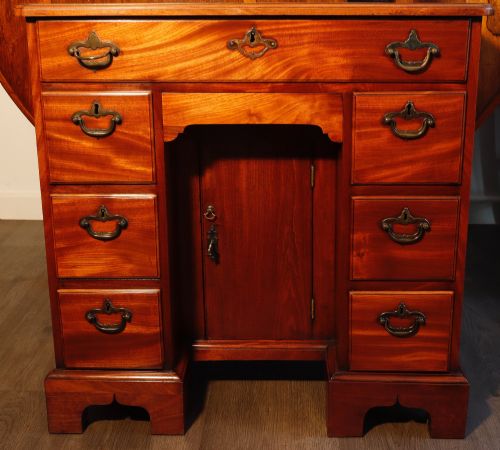
A brass handle kneehole desk brings traditional form and timber warmth to a study, offering tidy drawers around a central recessed space.
Brass Handle Kneehole Desk
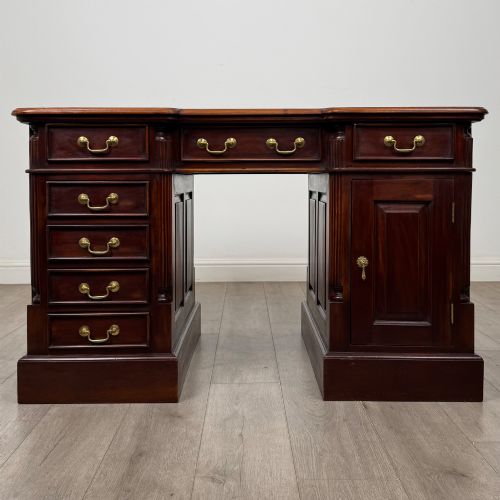
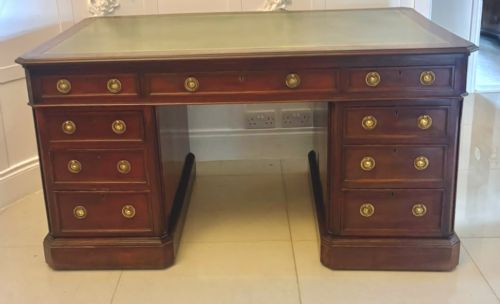
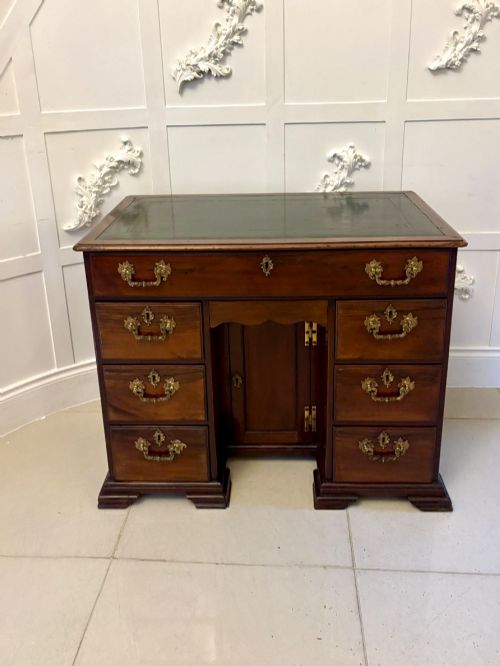
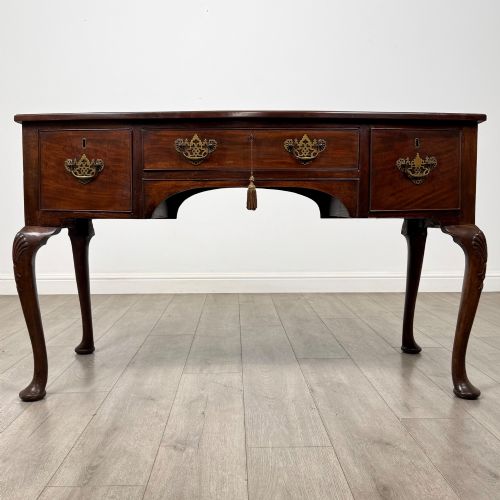
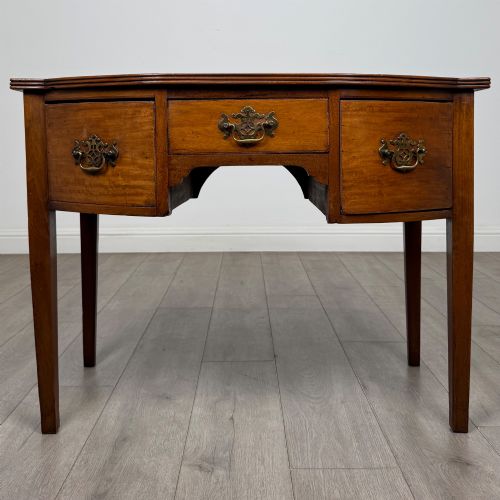
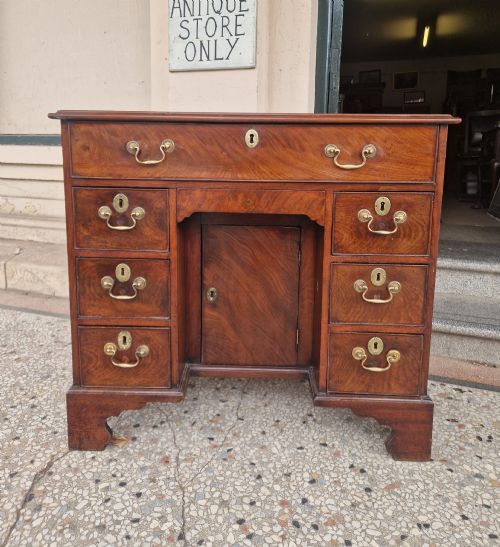
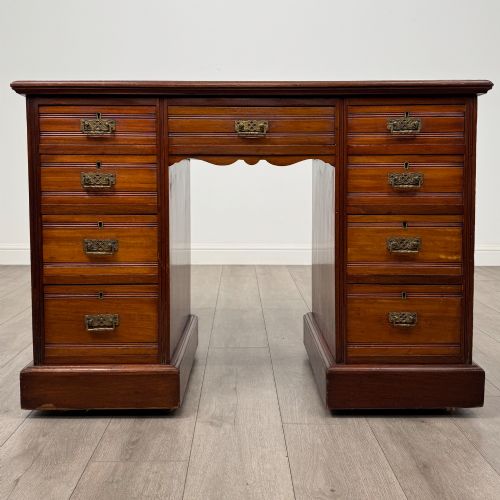
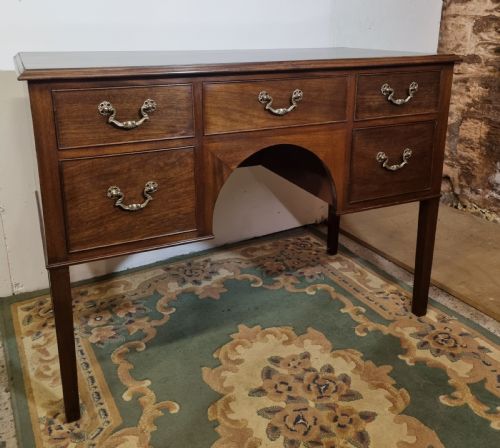
When you examine a brass handle kneehole desk, you encounter compact writing furniture designed with a central recess flanked by pedestals of smaller drawers. The examples found here span the Georgian and Victorian eras through to Edwardian and early twentieth century revivals, drawing on foundational eighteenth century proportions.
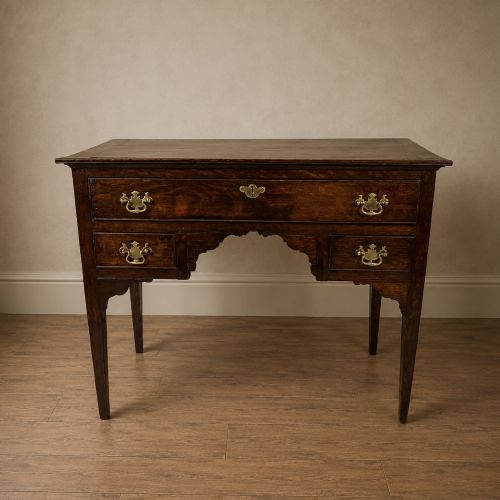
Mahogany predominates among the surviving pieces, accompanied by walnut, burr walnut, and oak, often paired with inset leather writing surfaces and fitted stationery compartments. Alongside dedicated pedestal desks, the selection includes writing tables, lowboys, and dressing tables sharing the characteristic kneehole arrangement.
Most pieces date from the George III period up to Edwardian revivals, showing how cabinet makers adapted classical architectural layouts for domestic writing and dressing duties. The presence of brass handles provides both functional grip and a consistent metallic accent against dark hardwoods.
How they were made
Cabinet makers constructed these desks primarily from solid mahogany, walnut, and oak timbers, frequently applying veneers of burr walnut or satinwood across drawer fronts and writing surfaces. Marquetry inlay appears on select revival pieces, adding decorative borders and geometric motifs to the primary wood grain.
Drawer construction relies on traditional joinery, housing fitted stationery compartments and writing slides designed for daily correspondence. Brass handles and pulls are secured to the drawer faces, complementing the structural hardware and inset leather writing panels.
Many a secret drawer hides behind the stationary fittings, waiting for a modern owner to discover forgotten paper clips.
What varies in quality
The distinction between standard utility furniture and superior cabinet work rests in timber selection and the precision of the drawer construction. Grain matching across drawer fronts and the fineness of inlay work separate workshop output intended for wealthy patrons from standard domestic pieces.
Proportion and scale dictate the appeal of these desks, with narrower or smaller antique examples demonstrating greater carpentry skill in miniaturising the pedestal layout. Original brass hardware and undisturbed patination on the timber surfaces further distinguish the finest survivals from later alterations.
Trollope and sons·Maples of London·Shapland and Petter of Barnstaple
The Brass Handle Kneehole Desk Glossary
- Kneehole
- A recessed space beneath the central part of a desk or dressing table, designed to accommodate the user's legs while seated. This layout allows for banks of drawers on either side.
- Lowboy
- A small table with one or more rows of drawers, commonly used as a dressing table or side table in eighteenth century interiors. It shares similar proportions to the lower section of a kneehole desk.
- Pedestal
- A structural column or cupboard base supporting one side of a desk top, typically fitted with vertical tiers of drawers. Pedestal desks offer substantial storage capacity within a compact footprint.
- Writing slide
- A pull-out shelf housed immediately beneath the desk top, used to extend the writing surface temporarily. Slides tuck away flush when not in use.
Brass Handle Kneehole Desk: Frequently Asked Questions
What is a kneehole desk?
A kneehole desk is a compact form of writing furniture featuring a central recess for the sitter's legs, flanked by vertical banks of drawers. This layout provides generous storage while maintaining a manageable footprint for smaller studies.
First popularised during the eighteenth century, the design persists through various revival periods, frequently fitted with brass handles and leather writing surfaces.
How do I date an antique desk?
Dating relies on examining timber choices, construction methods, and stylistic cues such as bracket feet, cockbeading, and handle design. Georgian pieces often feature solid mahogany with hand-cut dovetails, while Edwardian revivals incorporate machine-sawn elements and distinct veneer patterns.
Makers' marks or stamps, where present, help pinpoint specific cabinet makers and workshops active during the nineteenth and early twentieth centuries.
Where were these desks used?
These desks served primarily in private libraries, bedrooms, and drawing rooms as spaces for correspondence, household accounts, and reading. Their finished backs sometimes allowed them to stand freestanding within a room rather than against a wall.
Dressing tables shared similar kneehole proportions, serving domestic grooming functions with the addition of mirrors and cosmetic compartments.
How do I care for antique wood?
Antique mahogany and walnut surfaces benefit from regular dusting with a soft, dry cloth and occasional application of traditional beeswax to nourish the timber. Keeping desks away from direct sunlight and heat sources prevents the wood from drying out or warping.
Leather writing panels require gentle cleaning with specialised conditioners to maintain suppleness and prevent cracking over time.