
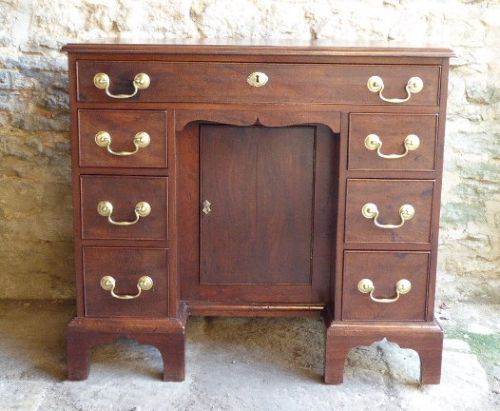
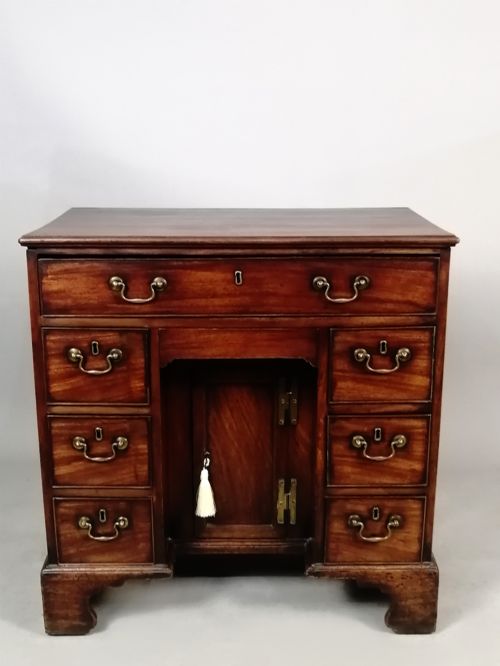
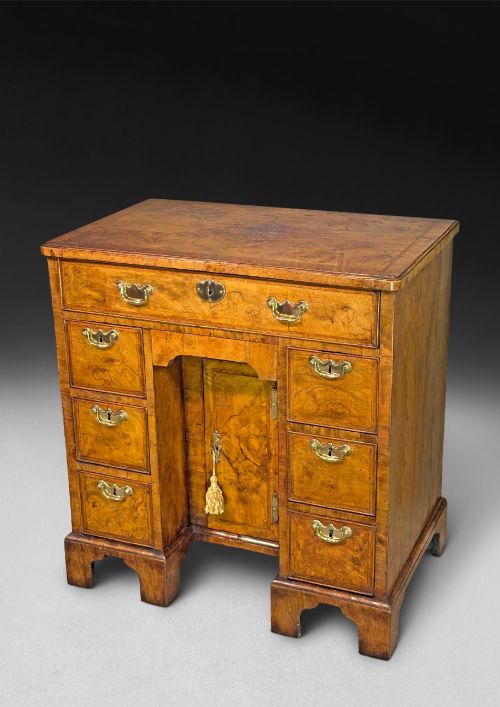
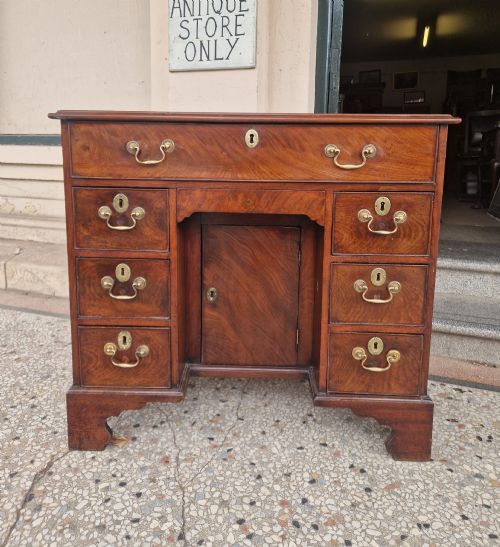
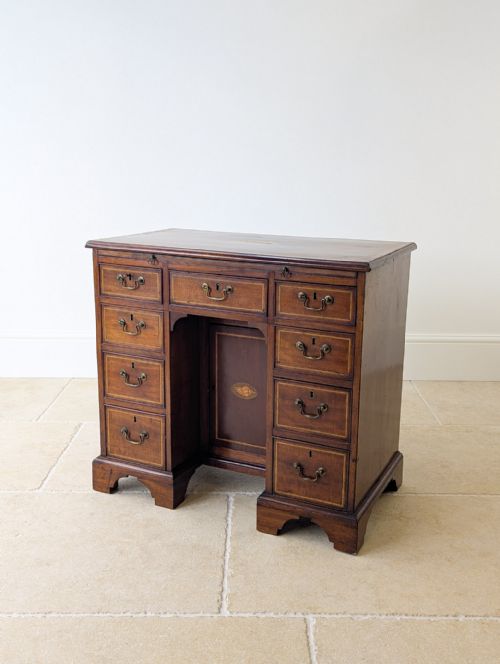
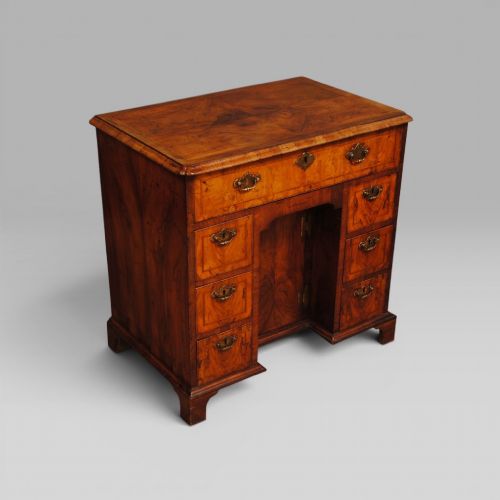
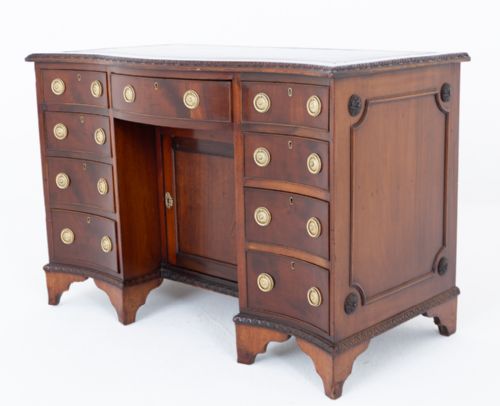

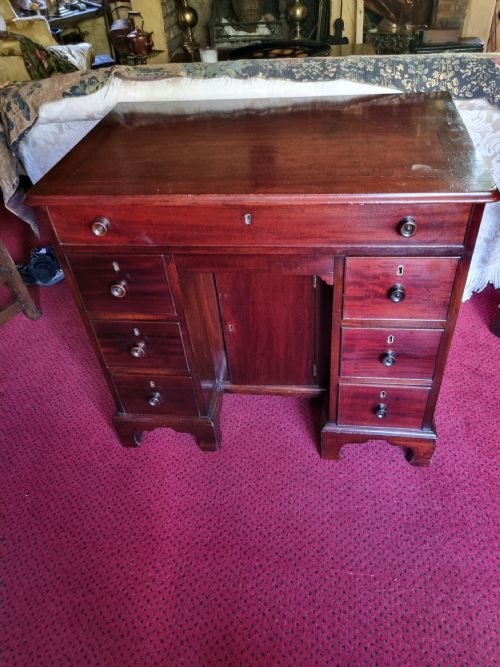


18th Century Kneehole Cupboard
An 18th century kneehole cupboard is a compact writing or dressing table that offers concealed storage beneath a central recess.

18th Century Kneehole Cupboard
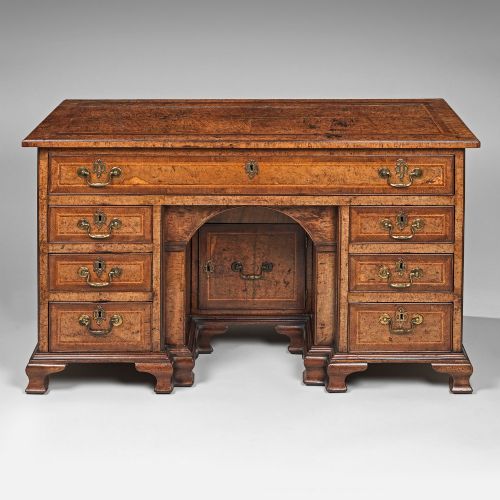
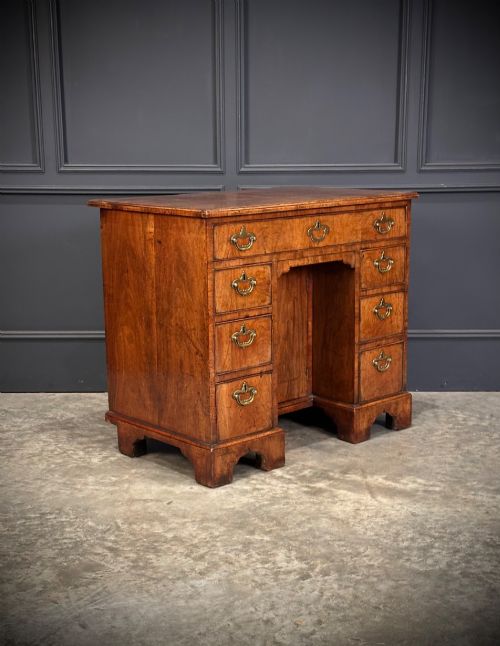
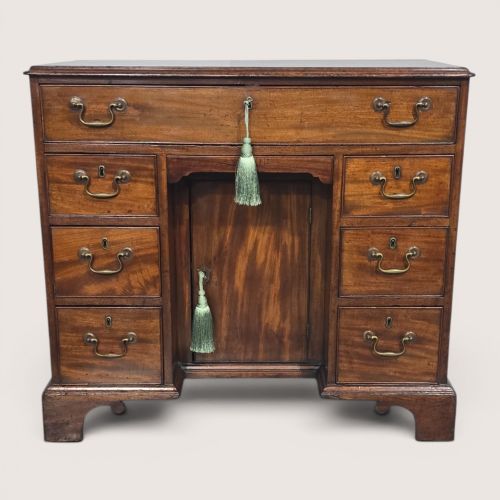
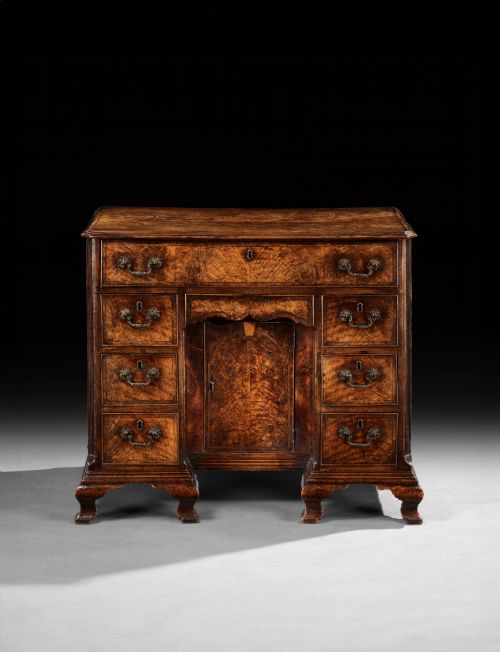
When you search for an 18th century kneehole cupboard, you are looking at domestic timber furniture designed for writing, dressing or personal administration. These pieces typically feature a central recessed cupboard flanked by small drawers, sitting upon short bracket feet or plinths.
The version you are most likely to meet on this page is the Georgian mahogany or walnut kneehole desk from the middle decades of the eighteenth century. Makers constructed these items to occupy modest spaces in parlours and bedchambers, serving as writing desks or dressing tables with fitted interiors.
The evidence shows forms ranging from small desks and bureaux to dressing tables, spanning periods from Queen Anne through to George III. Walnut, mahogany, oak and elm appear frequently, often enhanced by burr veneers, featherbanding and brass drop handles.
How they were made
Cabinet-makers constructed carcass frames from solid oak or pine, applying expensive figured veneers such as walnut, burr elm and Cuban mahogany to the drawer fronts and primary surfaces. They secured these timbers using traditional dovetail joints on the drawer constructions and pegged mortise and tenon joints for the main frames.
Surface decoration relied upon decorative techniques like featherbanding, crossbanding and polishing with shellac to highlight the natural grain of the timber. Brass hardware, including escutcheons and drop handles, was cast and hand-chased before being pinned to the drawer faces.
The documented forms span the reigns from Queen Anne through to George III, alongside occasional nineteenth-century revival interpretations.
What varies in quality
The selection of timber dictates the visual impact of each piece, distinguishing finely figured burr walnut, fiddleback walnut and curl mahogany from plain or utilitarian stock. Cabinet-makers who matched veneer patterns symmetrically across drawer fronts achieved a superior decorative balance.
The finesse of the internal construction, such as secondary drawer linings in oak and the retention of original brass handles or keys, separates standard regional work from exceptional London workshop production.
The 18th Century Kneehole Cupboard Glossary
- Kneehole
- A recessed space beneath the central part of a desk or dressing table designed to accommodate the legs of a seated person. This central void is typically enclosed by a small cupboard door.
- Featherbanding
- A decorative inlay technique using two strips of veneer laid diagonally to form a herringbone pattern around the perimeter of a drawer front. It was popular on walnut and mahogany pieces during the Georgian period.
- Burr walnut
- Timber taken from a growth on a walnut tree where the grain has swirled into intricate knots and eyes. Cabinet-makers sliced this wood into thin veneers for high-status furniture.
- Dovetail
- A joint formed by interlocking wedge-shaped fingers, used extensively to join drawer sides to drawer fronts and backs. Hand-cut dovetails on these pieces are typically narrow and closely spaced.
- Escutcheon
- A protective plate surrounding the keyhole of a drawer or cupboard door, usually cast in brass. It prevents the timber keyhole from becoming worn through repeated use.
18th Century Kneehole Cupboard: Frequently Asked Questions
What is a kneehole cupboard used for?
These pieces served multiple domestic functions in the eighteenth century, operating primarily as personal writing desks or dressing tables. The small central cupboard provided secure storage for ledgers, letters or personal valuables.
The flanking banks of small drawers allowed owners to organise papers and toilette accessories efficiently. Their compact footprint made them suitable for private bedchambers rather than large public reception rooms.
How do I date an 18th century kneehole desk?
Dating relies on observing changes in timber choice, hardware styles and structural construction methods across different reigns. Early examples from the Queen Anne and George I periods frequently utilise figured walnut with featherbanded borders.
Pieces from the mid-eighteenth century under George II and George III increasingly employ mahogany, sometimes featuring serpentine fronts or satinwood crossbanding. Hand-cut dovetails and original brass drop handles further help to narrow the decade of manufacture.
Are walnut and mahogany pieces from different eras?
Walnut dominated British cabinet-making from the late seventeenth century through the reign of George I, prized for its rich grain and figuration. Mahogany superseded walnut in popularity from the seventeen-thirties onwards as trade routes opened with the West Indies.
While walnut remained available in limited quantities later, an overwhelming majority of mahogany pieces date from the mid-to-late eighteenth century. Oak was used continuously throughout the period, often as a secondary wood for drawer linings.
Where should I place a kneehole desk at home?
Their compact dimensions and finished backs allow these items to sit comfortably in studies, living rooms or hallways as occasional writing surfaces. Because they occupy minimal floor space, they fit well against narrow wall spaces where standard desks would prove too deep.
Keep them away from direct sunlight and heat sources to prevent the burr veneers from drying out or splitting. Maintaining a stable room humidity preserves the polish and structural integrity of the timber.