

Antique Pedestal Vanity Desk
An antique pedestal vanity desk brings together deep timber drawers and dedicated mirror glass to anchor a bedroom or study with proper architectural presence.
Antique Pedestal Vanity Desk
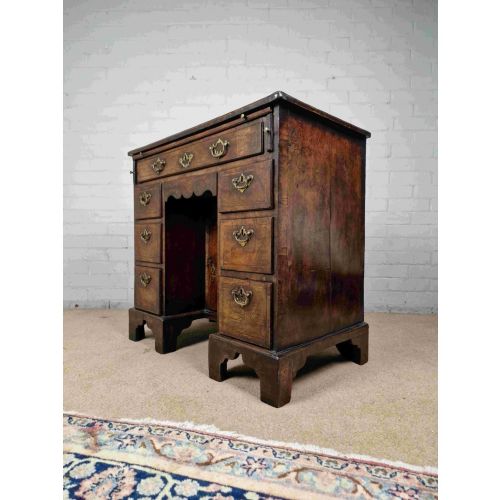
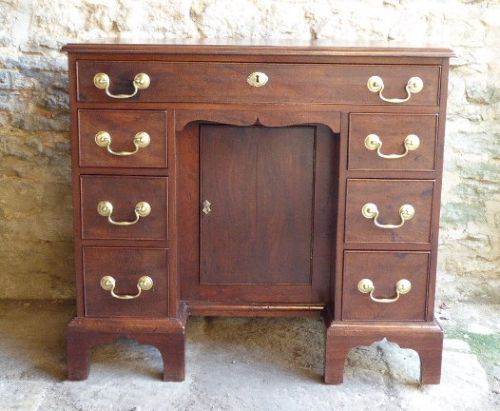
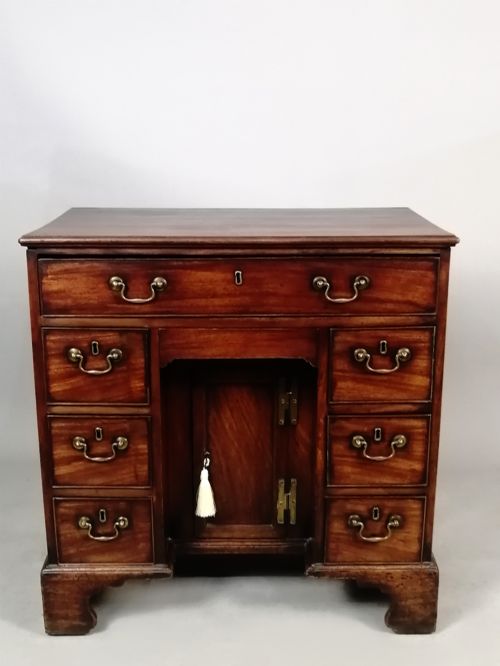
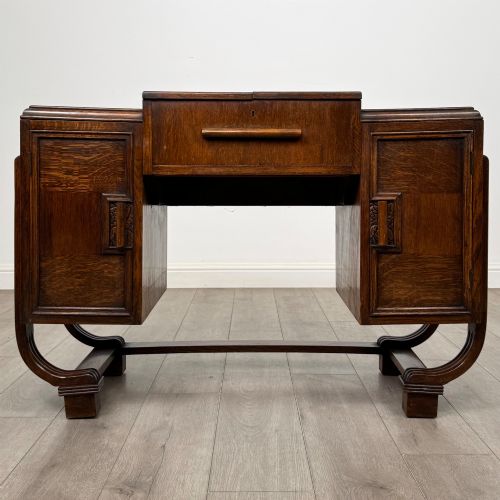
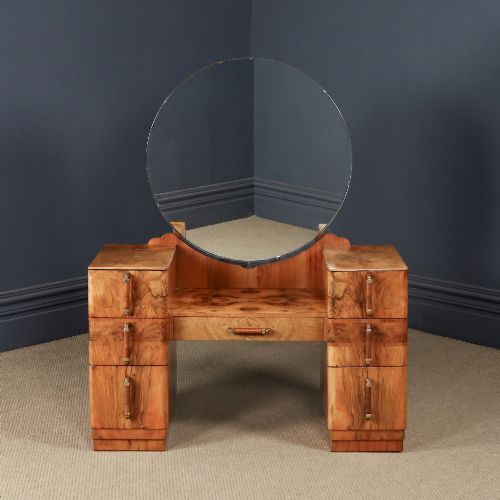
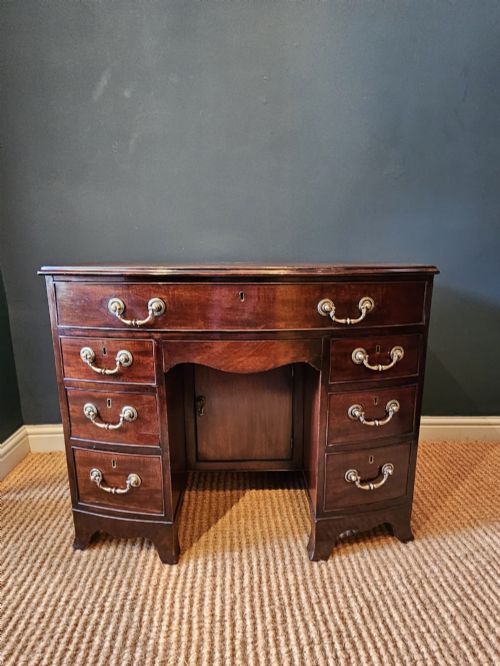
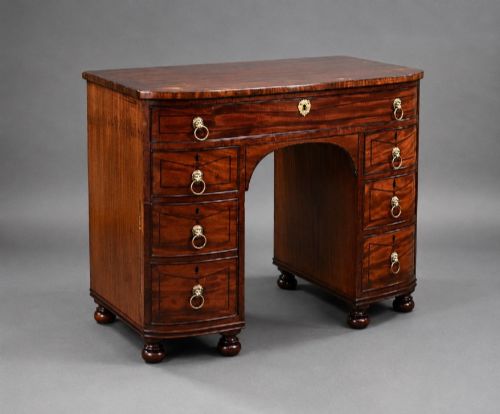
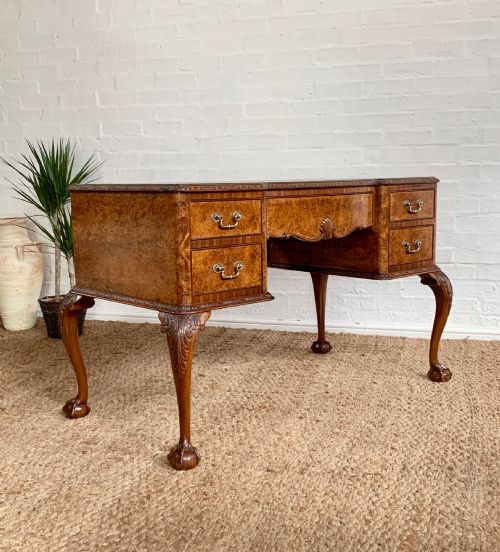
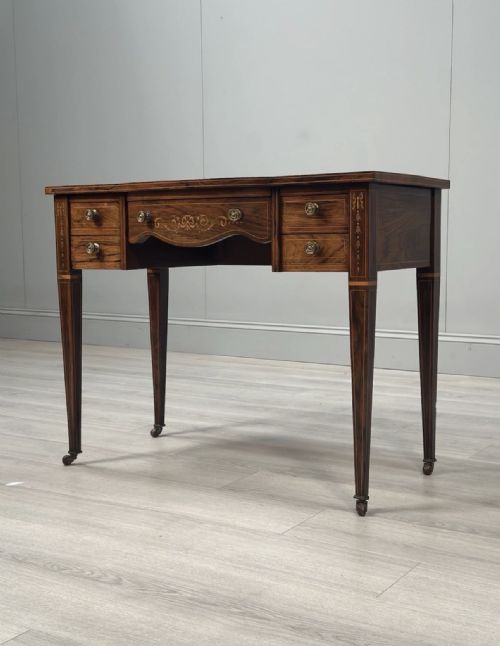
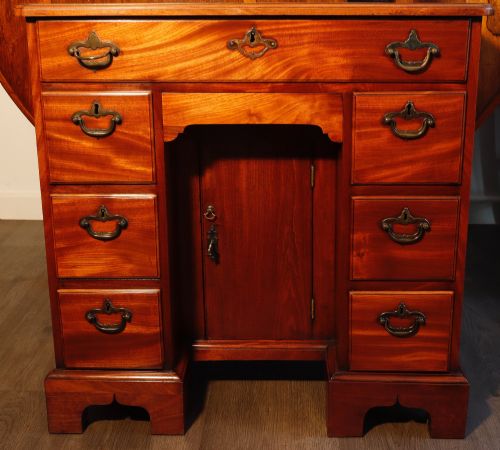
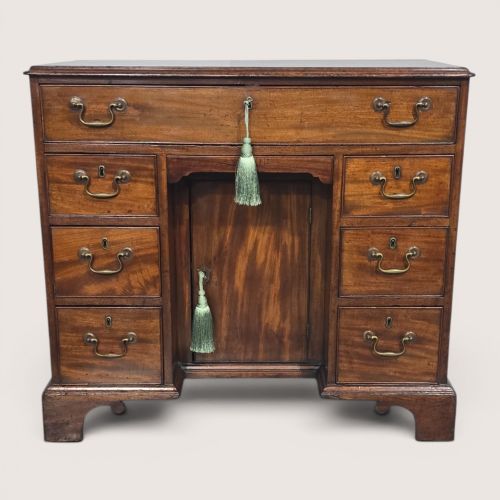
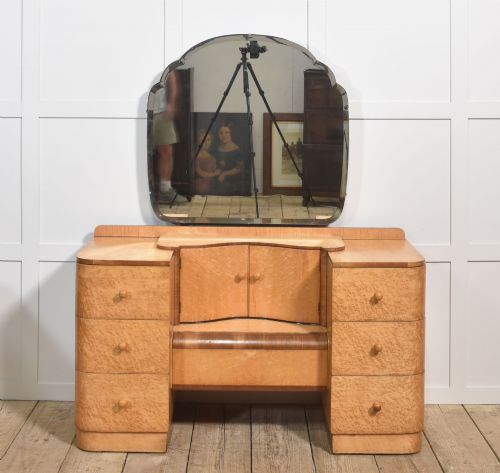
An antique pedestal vanity desk encompasses a variety of fitted writing and dressing furniture, drawing on forms from the 18th Century through to the 1930s. The selection on this page leans heavily toward George III and Georgian mahogany kneehole desks, alongside Edwardian satinwood and mahogany dressing tables and later Art Deco burr walnut designs.
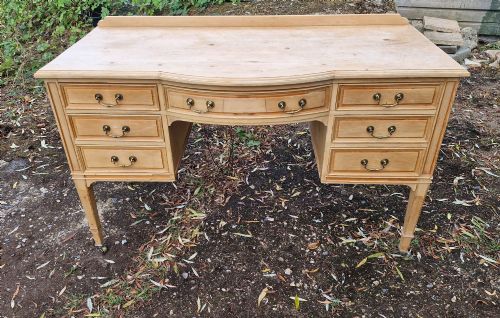
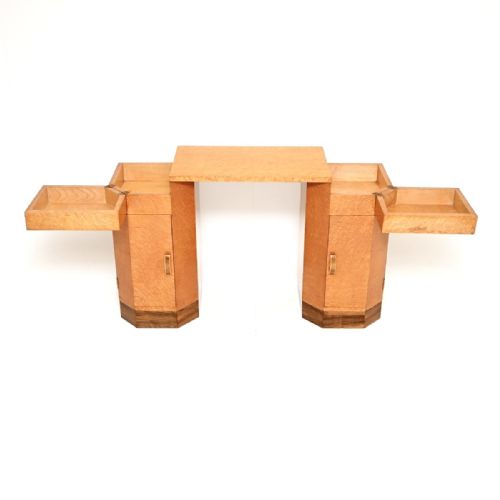
Makers and workshops adapted the twin pedestal layout for both private writing rooms and boudoirs, equipping pieces with central kneeholes, fitted drawers, and occasionally swivelling mirrors or tooled leather writing surfaces. Examples range from modest pine and oak specimens to elaborate satin birch, birdseye maple, and rosewood realisations.
Period revivals appear frequently alongside genuine Georgian and Victorian pieces, demonstrating how cabinet makers of the Edwardian era and the 1920s reinterpreted Queen Anne, Sheraton, and George II styles for contemporary homes.
Materials and construction
Cabinet makers relied predominantly on solid timbers and rich veneers, favouring mahogany, walnut, and burr walnut for their decorative grain patterns, complemented by secondary woods such as oak and pine in drawer linings and carcases.
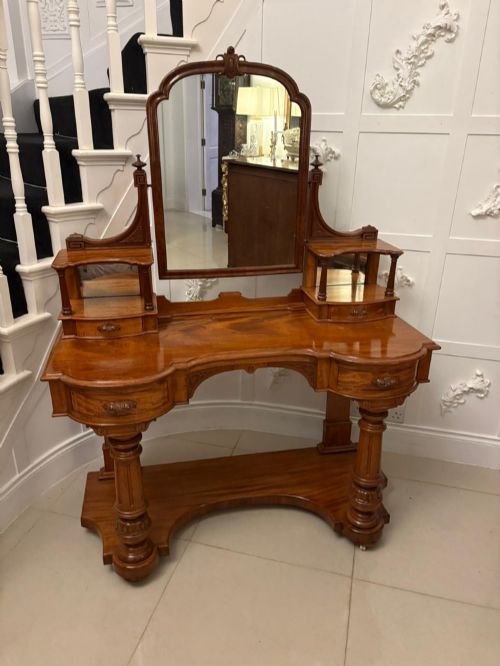
Surface ornamentation involved intricate crossbanding, marquetry inlay, and satinwood stringing, while interior fittings frequently incorporated brass handles, tooled leather writing surfaces, and integrated mirror plates supported by scrolling wooden arms.
Listings span from the 18th Century through to the 1930s, featuring woods such as mahogany, walnut, burr walnut, oak, pine, and satinwood.
Judging quality
Quality rests upon the selection of timber figures - such as burr walnut and figured mahogany - and the precision of the cabinet work, including dovetailed drawer construction and flush-fitting panels. Later revivals and Art Deco pieces rely heavily on the clarity of the maple or glass elements and the integrity of the original veneer.
The sophistication of internal compartments, the retention of original brass hardware, and the harmony of proportions between the pedestals and the central kneehole distinguish standard utility pieces from finer salon and chamber furniture.
Heal and Sons·Harry and Lou Epstein·Edwards and Roberts
The Antique Pedestal Vanity Desk Glossary
- Kneehole desk
- A compact desk or dressing table featuring two banks of drawers flanking a central recess for the legs. This form became popular during the Georgian period.
- Burr walnut
- A prized timber veneer taken from the wart-like growths on walnut trees. It yields complex, swirling grain patterns highly favoured in Art Deco and Georgian-style furniture.
- Secretaire
- A cabinet or desk incorporating a pull-down writing flap that conceals small drawers and pigeonholes. It combines storage with a dedicated writing surface.
- Crossbanding
- A decorative technique where narrow strips of veneer are laid around the border of a panel so the grain runs at right angles to the central wood. It frames the primary timber surface.
- Marquetry
- The art of applying pieces of veneer to a structure to form decorative patterns and pictures. Craftsmen used various tinted woods to create floral or geometric designs.
Antique Pedestal Vanity Desk: Frequently Asked Questions
How do I date an antique pedestal vanity desk?
Dating relies on identifying the primary wood, construction methods, and stylistic cues such as bracket feet, Chippendale carving, or streamlined Art Deco veneers. Georgian pieces typically show hand-cut dovetails and solid mahogany carcases.
Later Edwardian and 1930s examples often employ machine assistance, contrasting timbers like birdseye maple, and distinct period revival motifs that reflect the tastes of their era.
Are these desks suitable for daily use?
Most antique pedestal desks and vanity tables adapt well to contemporary use as writing desks or bedroom dressing furniture. Their sturdy timber construction and numerous drawers offer practical storage.
Care should be taken with leather writing surfaces and polished veneer tops, which benefit from protective pads and coasters to prevent moisture and heat marking.
What woods were most commonly used?
Mahogany remains the dominant timber across 18th Century and Georgian pieces, prized for its strength and rich reddish-brown colour. Walnut and burr walnut gained immense popularity during the Victorian era and the 1930s Art Deco period.
Secondary woods like oak and pine appear inside drawer boxes and carcase backs, while exotic timbers such as satinwood and rosewood were reserved for decorative stringing and high-status revival pieces.