





Antique Fitted Dressing Desk
An antique fitted dressing desk combines writing and grooming compartments into a single piece, offering concealed drawers and fine timbers for daily utility.
Antique Fitted Dressing Desk
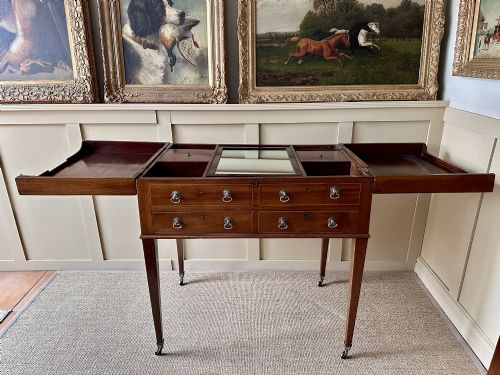
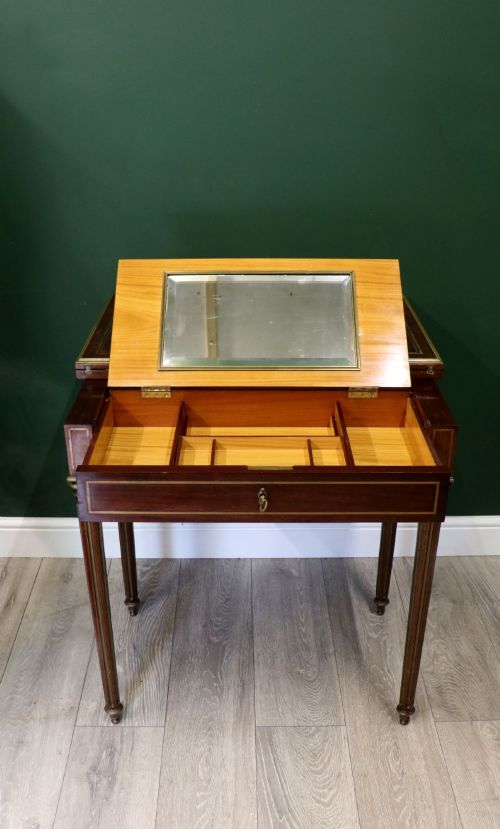
An antique fitted dressing desk serves as a dual-purpose table for personal grooming and writing, housing internal compartments and drawers for small accessories. These pieces span the eighteenth and nineteenth centuries, encompassing Georgian, Victorian, and Edwardian periods.
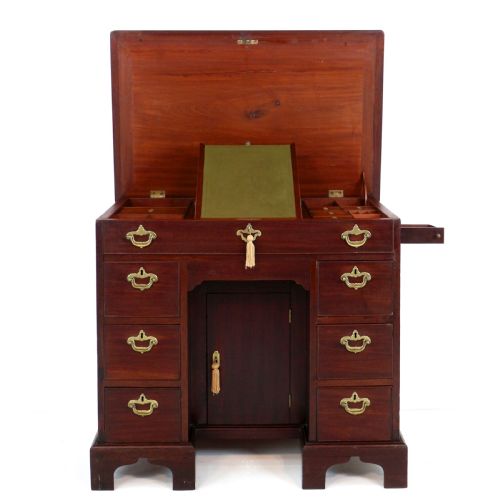
The versions most commonly met here include mahogany side tables with fitted drawers, kneehole dressing tables, and campaign chests. Makers also produced inlaid gentleman's vanity tables and specialised washstand combinations during the later periods.
Origins stretch from English country workshops to French empire revival studios and Viennese makers. Each piece adapts the core desk or table form to include specialised internal arrangements for daily toilette or correspondence.
How they were made
Metalwork played a structural and decorative role, incorporating cast brass handles, hinges, and occasional ormolu mounts. Glass and mirror glass were integrated into lifting lids or pivoting frames for grooming purposes, while velvet lined certain internal compartments.
Antique Fitted Dressing Desk Retail Price Guide 2026
Typical asking prices for fitted dressing desk among the pieces listed under this phrase on Sellingantiques today, from the lower quarter to the upper quarter. They describe what is for sale here now, not the wider market.
Several listings include clever ships' washstands and campaign chests designed to survive turbulent ocean voyages without spilling a drop.
What varies in quality
The distinction between standard and superior pieces rests upon the choice of timber and the precision of the internal divisions. Dense grain matching in mahogany and sophisticated internal compartment layouts separate utilitarian workshop output from master cabinet work.
Complexity of form also dictates distinction, moving from plain side tables with a single fitted drawer to elaborate kneehole desks with multiple secret compartments and inlaid satinwood details.
The Antique Fitted Dressing Desk Glossary
- Campaign chest
- A portable form of furniture made in sections with brass corners and recessed handles for transport. These pieces were built for officers on the move during the eighteenth and nineteenth centuries.
- Satinwood
- A durable, light yellow timber native to Ceylon and India used extensively for decorative veneers and stringing lines. Cabinet makers prized it for its lustrous, reflective grain.
- Ormolu
- Gilt bronze applied to furniture as decorative mounts and accents during the eighteenth and nineteenth centuries. The technique involves applying a mercury and gold amalgam to shaped bronze.
Antique Fitted Dressing Desk: Frequently Asked Questions
What is an antique fitted dressing desk?
An antique fitted dressing desk is a multi-functional table or chest designed for grooming and writing, featuring internal compartments, mirrors, and fitted drawers.
These pieces bridge the gap between personal care and correspondence, offering concealed storage for small valuables and toilette items within a decorative wooden frame.
How were these desks used historically?
Owners used them in bedrooms and dressing rooms for morning grooming, applying cosmetics, and writing letters or keeping journals.
The internal fitted compartments kept powders, brushes, and writing implements organised and out of sight when the top was closed or the drawers were shut.
What woods were commonly used?
Makers relied heavily on mahogany as the primary timber, supplemented by oak for secondary framing and interior drawer linings.
Satinwood, teak, and red walnut also appear across specific regional styles and periods, ranging from eighteenth-century English workshops to nineteenth-century continental hubs.
How do I tell different periods apart?
Georgian and George II pieces display simpler, robust mahogany framing and traditional cabinet proportions, whereas late nineteenth-century examples often incorporate French empire revival influences or satinwood inlay.
Early twentieth-century pieces, such as Viennese gentleman's vanity tables, introduce distinct modernist touches while retaining the traditional fitted interior concept.