
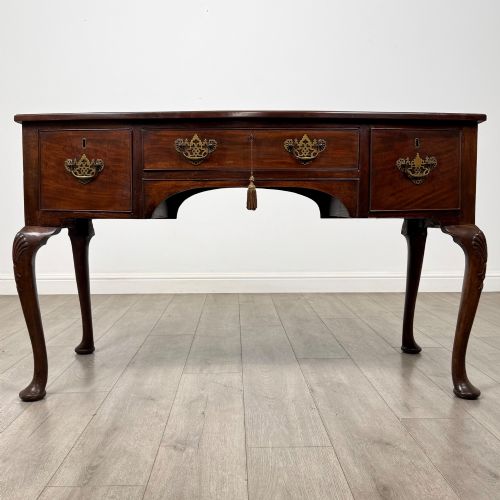
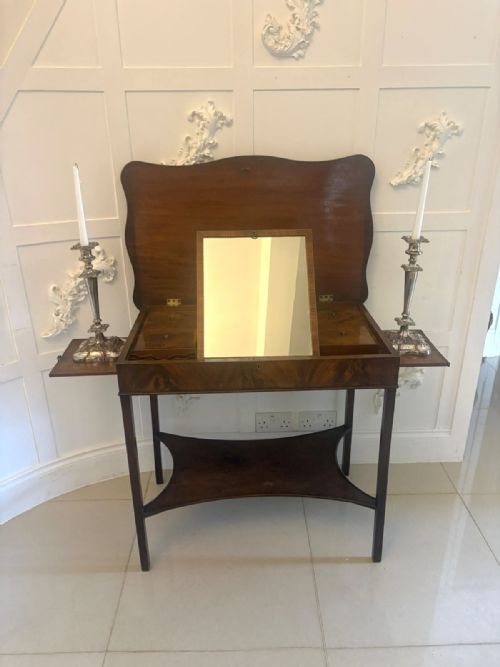
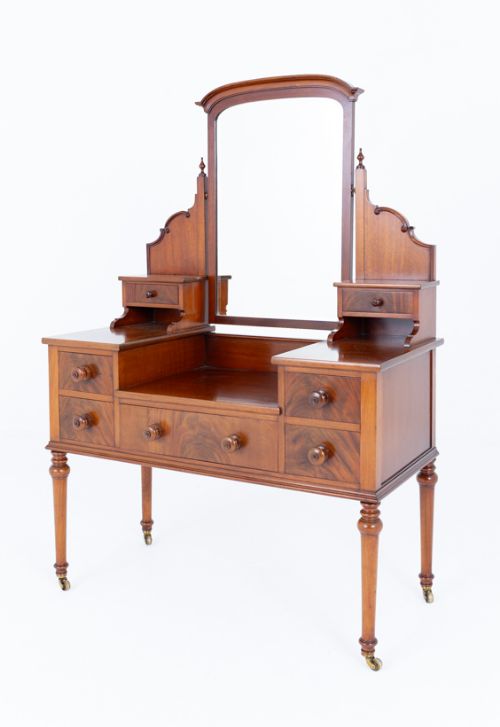
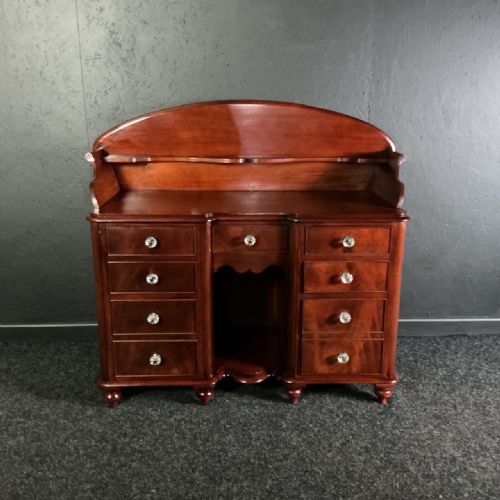


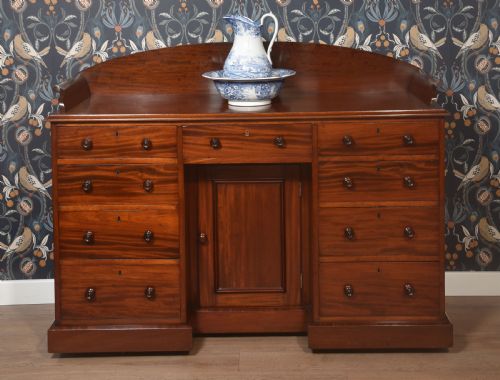


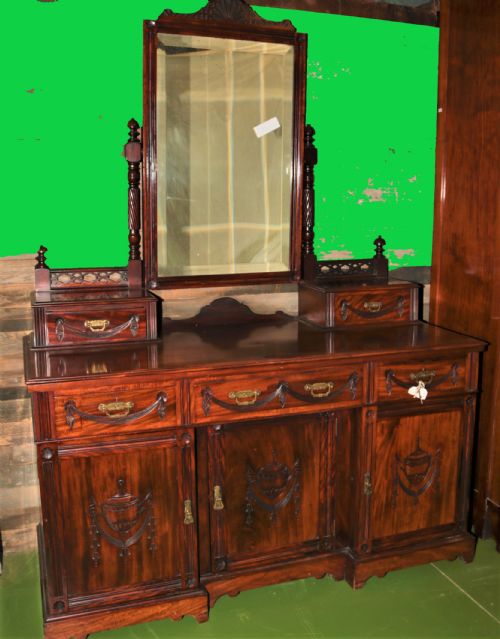

Dark Mahogany Vanity Unit
These dark mahogany vanity unit pieces offer rich timber surfaces and classic proportions for the traditional bedroom.
Dark Mahogany Vanity Unit
A dark mahogany vanity unit encompasses period dressing tables, washstands, and dressing chests designed for personal grooming and ablutions. These pieces date from the Georgian, Victorian, and Edwardian eras, spanning the eighteenth and nineteenth centuries into the twentieth.
The most common forms on this page are Victorian and Edwardian dressing tables alongside mahogany washstands. Many incorporate mirrors, drawers, or marble tops intended for daily domestic use.
Materials and construction methods
Makers utilised solid and veneered mahogany timber, often pairing the dark wood with brass hardware, ceramic inserts, and mirror glass. Ormolu mounts appear on French-influenced examples to provide metallic contrast.
Marble top washstands introduced durable stone surfaces to resist water during washing, while campaign washstands utilised folding timber frames and brass fittings for travel.
Listings feature mahogany furniture spanning the Georgian, Victorian, and Edwardian periods, alongside materials such as marble, brass, and ormolu.
Assessing quality and craftsmanship
Superior examples display finely figured mahogany grain, precise dovetail joinery in the drawer construction, and original brass or ormolu mounts. Lower grades rely on plain timber and simpler secondary woods without decorative detailing.
The integration of functional elements, such as smoothly operating drawers and well-fitted marble or glass components, distinguishes standard utilitarian pieces from finer cabinet work.
The Dark Mahogany Vanity Unit Glossary
- Mahogany
- A durable tropical hardwood prized for its deep reddish-brown colour and stability in furniture construction. It takes a high polish and resists warping.
- Washstand
- A utilitarian piece of furniture designed to hold a basin and pitcher for washing. These often feature marble tops to protect the wood from water splashes.
- Ormolu
- Gilded bronze mounts applied to furniture for decorative effect. This technique was popular on French Empire influenced pieces.
- Campaign washstand
- A portable washstand designed for military use or travel, featuring folding elements and brass bracing. They prioritize practicality and robust joints.
- Dressing chest
- A combination of a chest of drawers and a dressing table, usually fitted with a mirror. It provides storage space alongside a surface for grooming.
Dark Mahogany Vanity Unit: Frequently Asked Questions
What is a dark mahogany vanity unit?
These items comprise historical dressing tables, washstands, and dressing chests constructed from mahogany timber. They served practical domestic functions for washing and grooming in past centuries.
Today, buyers use them as functional bedroom furniture or decorative focal points. Their rich wood tones complement both traditional and contemporary interiors.
How do I date a mahogany washstand?
Dating relies on construction techniques, hardware styles, and general design characteristics. Georgian pieces often display restrained lines, whereas Victorian examples tend to be heavier and more ornate.
Examining drawer joints and timber thickness helps establish the manufacturing period. Earlier pieces show hand-cut dovetails and solid secondary woods.
Are marble top washstands original?
Many washstands from the Victorian era were manufactured with marble tops to provide a waterproof surface for basins. These stone slabs are typically fitted directly into the timber frame.
Replacement marble is occasionally found on pieces where the original stone cracked. Checking the fit against the wood frame indicates originality.
How should I care for dark mahogany?
Mahogany benefits from occasional dusting with a soft cloth and treatment with appropriate furniture wax to nourish the timber. Avoid placing pieces near direct heat sources or strong sunlight.
Protecting marble tops from acidic liquids prevents staining on stone surfaces. Gentle maintenance preserves the depth of the wood finish.