

Wooden Vanity Dressing Table
These wooden vanity dressing table pieces offer practical surface space and traditional bedroom elegance, drawing on centuries of craftsmanship.
Wooden Vanity Dressing Table
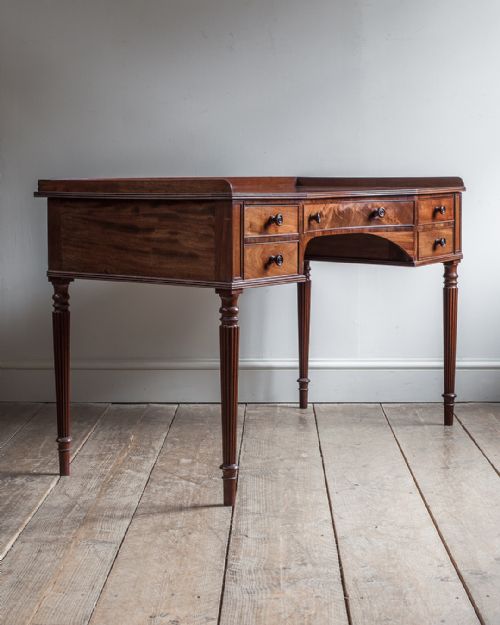
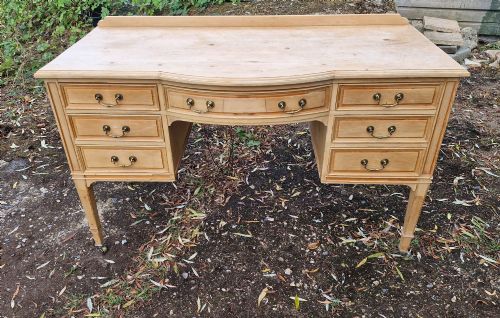
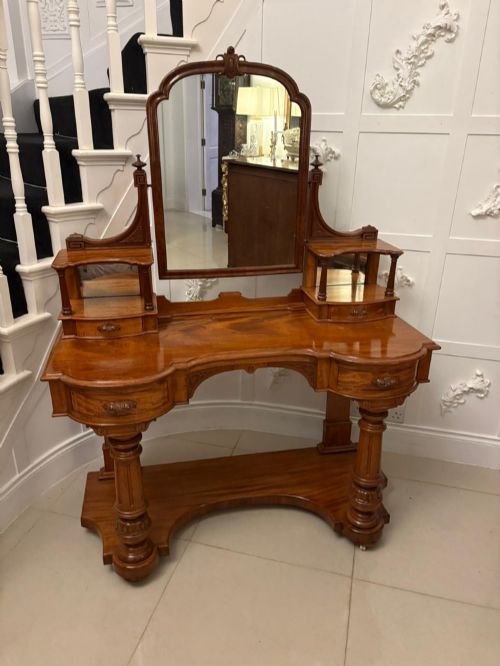
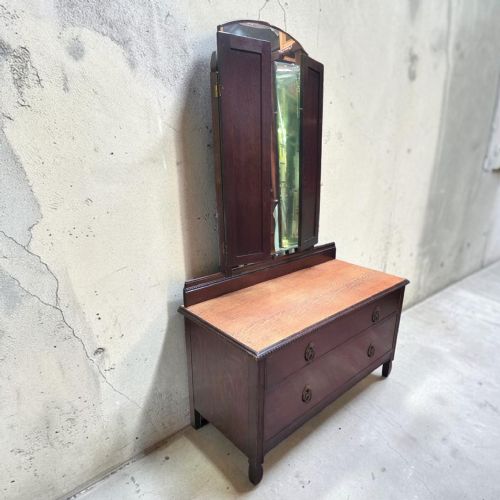
A wooden vanity dressing table encompasses a variety of antique forms, from freestanding mahogany tables to compact dressing chests and adjustable toilet mirrors designed for personal grooming. Buyers exploring this category frequently encounter pieces dating from the Georgian, Victorian, and Edwardian periods, alongside later 1930s Art Deco examples.
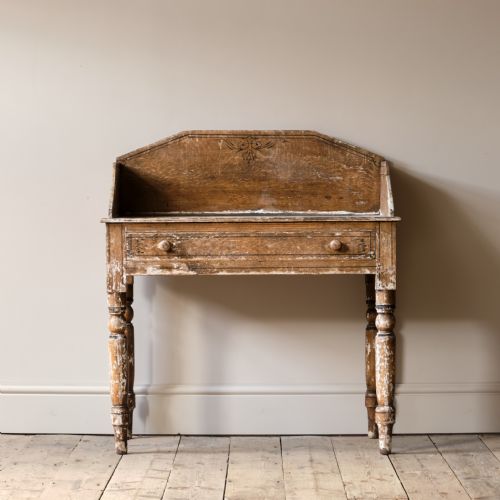
Originating across different eras, the items reflect shifting domestic habits and interior tastes, utilising standard bedroom furnishings of the 18th, 19th, and early 20th centuries. The physical forms vary from simple pine washstands to elaborate walnut and rosewood designs.
Materials and Construction
Cabinet makers relied heavily on hardwoods such as mahogany, walnut, and oak to construct the primary frames, drawers, and surfaces of these tables and mirrors. Secondary timbers like pine appear in structural components, while specialised surfaces incorporate rosewood, laburnum, burr walnut, and birds eye maple veneers.
Metal fittings such as brass hinges, handles, and swing mirror brackets provide functional articulation, alongside glass mirror plates and occasional marble tops on washstands. Joinery techniques connect these elements, supporting adjustable mechanisms on cheval and toilet mirrors.
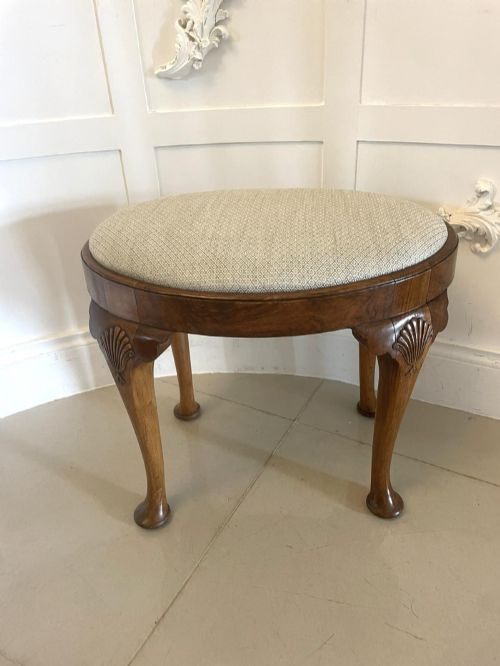
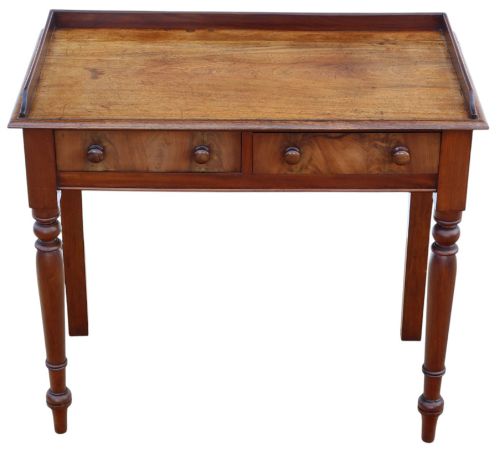
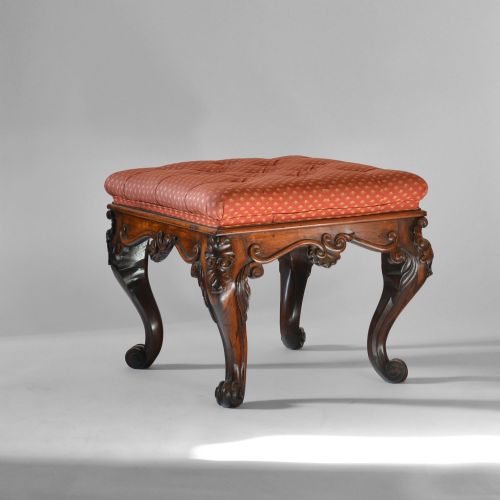
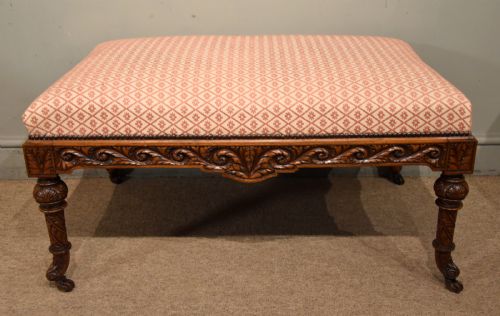
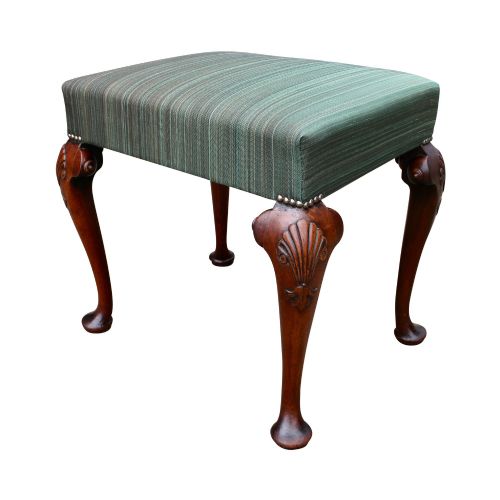
The furniture forms include writing desks, washstands, stools, and several styles of adjustable mirrors.
Distinctions in Standard
Excellence in these pieces rests upon the quality of the timber selection and the precision of the cabinet work. Finer examples display carefully chosen wood grains, such as figured mahogany or burr walnut, matched across drawer fronts and surfaces.
Construction details distinguish workshop standards, visible in the snugness of drawer joints, the stability of mirror supports, and the crispness of carved wooden or giltwood detailing. The integrity of original glass plates and brass hardware also separates standard utility pieces from finer commissions.
Heal And Sons·P And MA Nicholson
The Wooden Vanity Dressing Table Glossary
- Toilet mirror
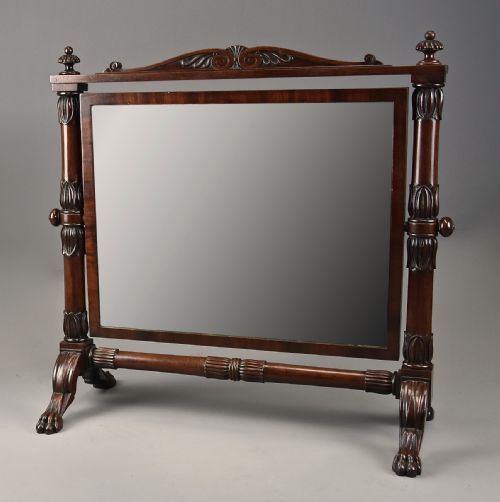
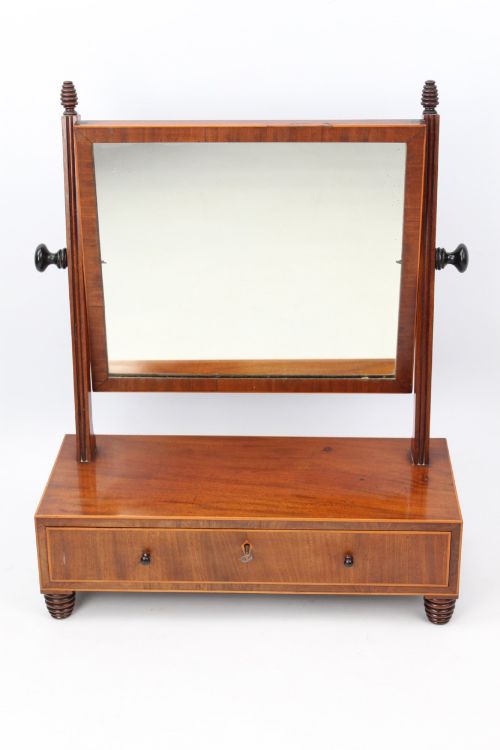
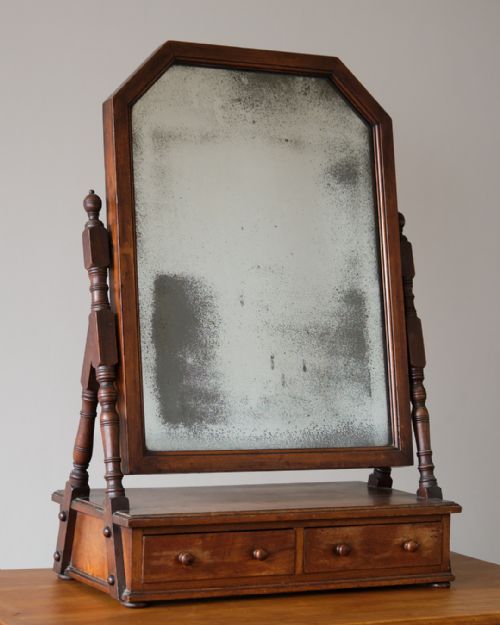
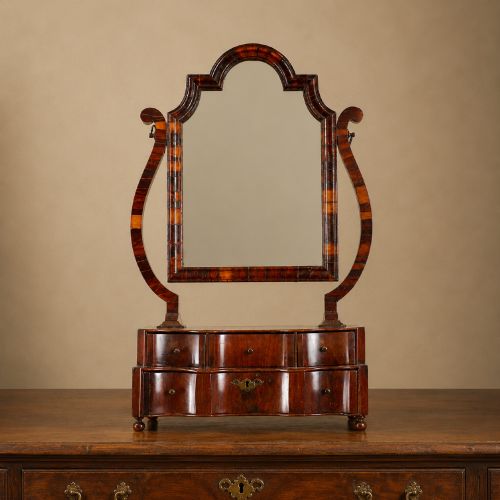
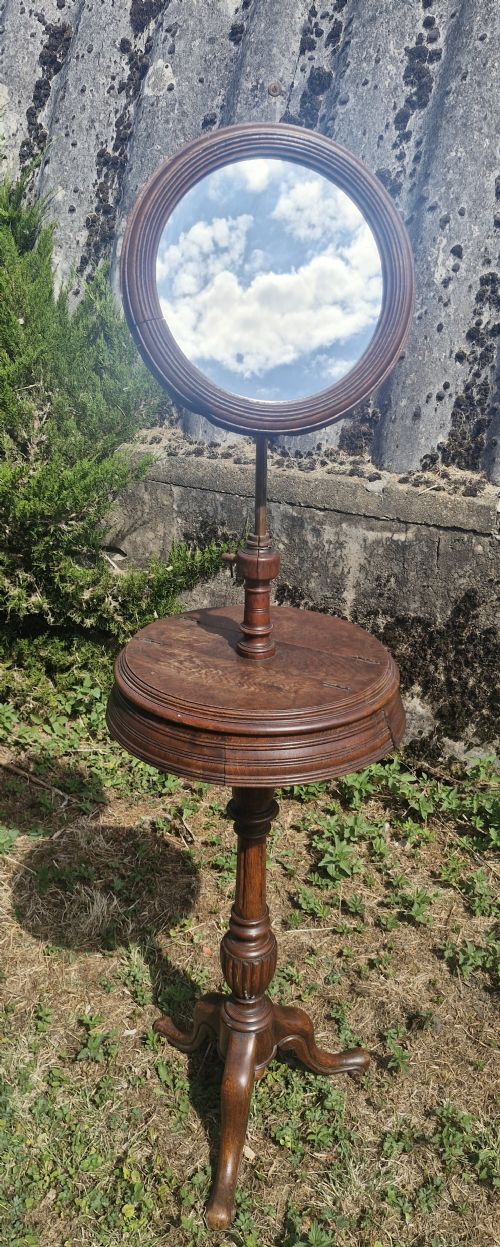
- A small mirror designed to sit on top of a dressing table or chest of drawers. These units usually feature a pivoting glass plate set within a supportive wooden frame.
- Cheval mirror
- A full-length dressing mirror mounted on a freestanding frame with vertical pillars. The glass swings freely between pivots, allowing the user to view their entire reflection.
- Kneehole
- A recessed central space beneath a desk or dressing table designed to accommodate the user's knees while seated. It is typically flanked by banks of small drawers.
- Washstand
- A wooden piece of furniture designed to hold a basin and ewer for washing. Many include marble tops and splashbacks to protect surrounding walls from water.
- Serpentine front
- A furniture front characterised by a curving contour that bulges outward in the centre and curves inward at the sides. This shape requires skilled woodworking to execute cleanly.
Wooden Vanity Dressing Table: Frequently Asked Questions
What is a toilet mirror?
A toilet mirror is a small, portable looking glass mounted on a wooden frame, designed to stand on top of a dressing table or chest of drawers. These mirrors often feature small integrated drawers in the base for storing small personal items.
Historically, they provided a dedicated reflection space before fitted bedroom furniture became common in British homes.
How do I date a dressing table?
Dating relies on observing the prevailing wood choices, hardware styles, and construction methods characteristic of different eras. Georgian and Regency pieces often feature clean mahogany lines, while Victorian and Edwardian examples frequently incorporate heavier carvings or lighter pine structures.
Makers' labels, where present, offer definitive production dates and workshop origins.
What woods were used?
Cabinet makers utilised a range of domestic and exotic timbers depending on the period and style of the piece. Mahogany, oak, and walnut are the most common primary woods, supplemented by decorative veneers like rosewood, laburnum, and birds eye maple.
Pine frequently appears as a secondary wood in drawer linings and internal framing.
Are washstands and dressing tables the same?
Washstands and dressing tables served distinctly different functions in period bedrooms. A washstand was built to hold a water basin and pitcher, often featuring a marble top to resist moisture, whereas a dressing table provided a surface for grooming and cosmetics.
Both forms belong to the broader category of bedroom furniture found across the 18th and 19th centuries.