



Bracket Feet Writing Desk
A bracket feet writing desk brings timeless architectural form and practical workspace into the home, rooted in centuries of cabinet-making tradition.

Bracket Feet Writing Desk
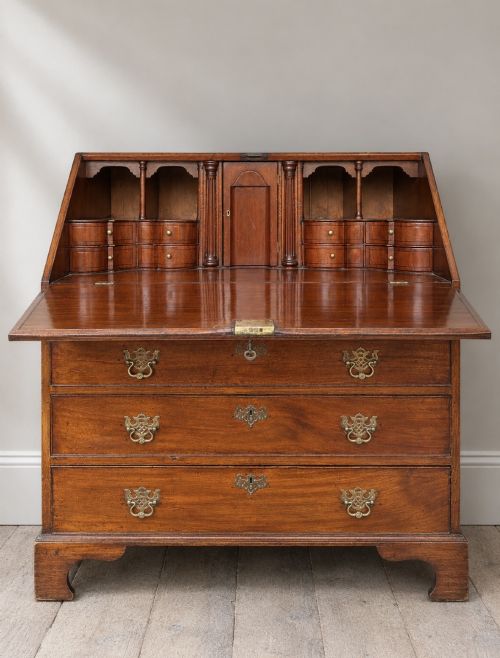
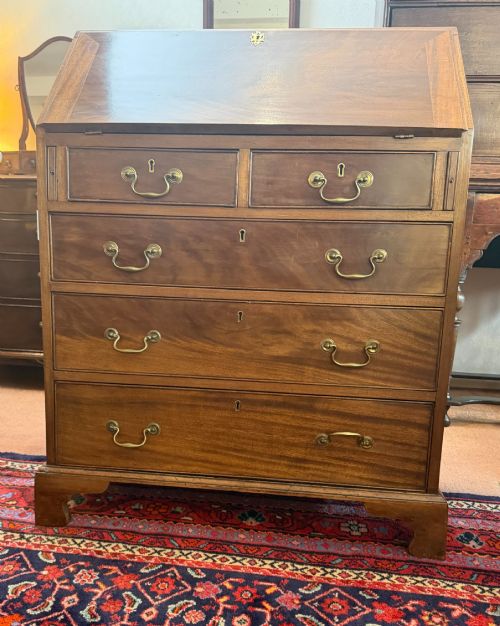
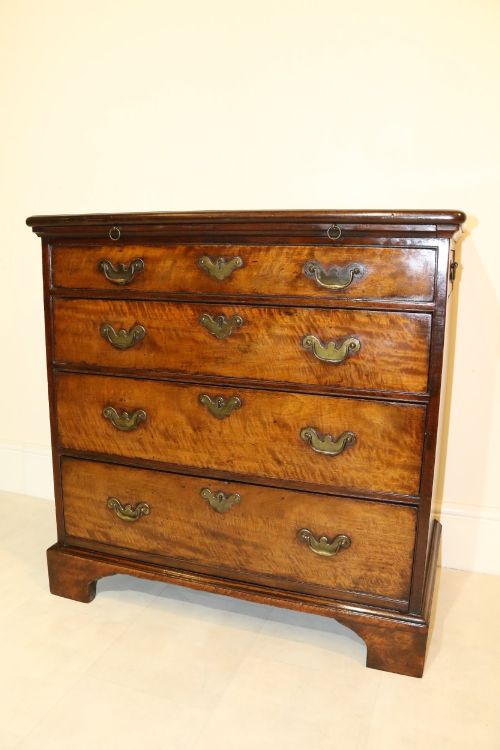
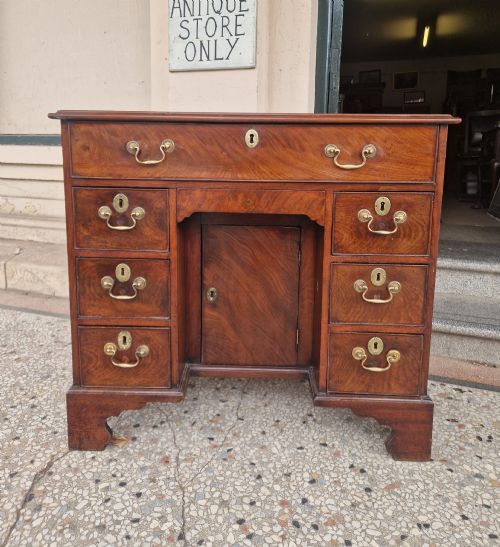
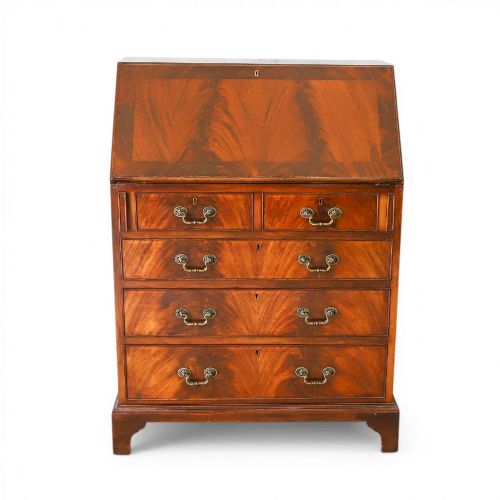
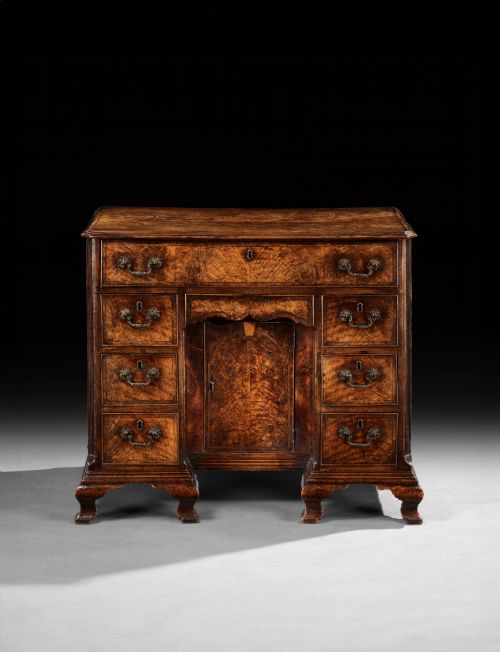
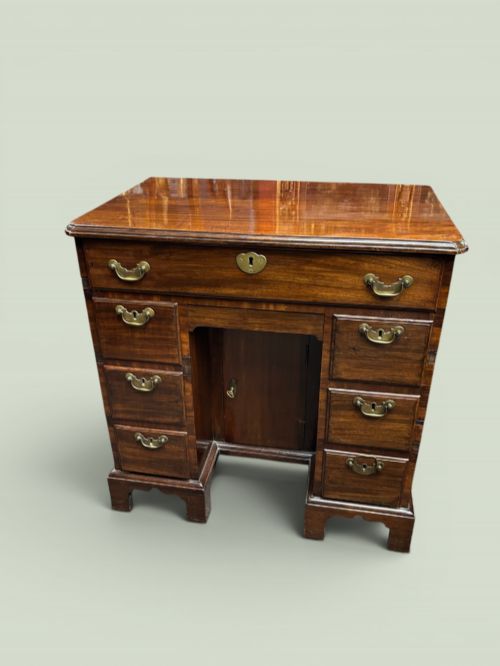
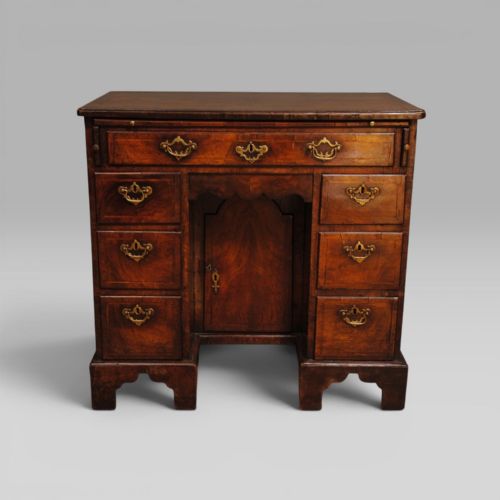
When you search for a bracket feet writing desk, you encounter pieces designed for correspondence and storage, predominantly taking the form of kneehole desks and bureaux dating from the eighteenth century onwards. The selection on this page centres on mahogany and walnut examples, ranging from compact proportions to grander Georgian formats.
The prevailing types span simple writing chests with slides, kneehole desks with central recesses, and fall-front bureaux containing fitted interiors. Pieces appear from periods including the Georgian era, the Victorian epoch, and later twentieth-century revivals.
Makers utilised timber varieties such as oak, elm, and burr walnut alongside the primary mahogany stock, incorporating period brass hardware. These forms serve modern studies and living spaces with the same utility intended by their original makers.
Distinctions in craftsmanship and finish
Quality reveals itself in the selection of figured timbers, such as burr walnut and flame mahogany, and the crispness of the bracket feet profile. Finer pieces demonstrate meticulous attention to interior pigeonholes, secret drawers, and fitted compartments.
The integration of original brass hardware and the subtlety of decorative banding, such as featherbanding, separate standard production from superior examples. Proportions also dictate standing, with diminutive and small-scale desks commanding particular appreciation for their cabinet-maker's skill.
The Bracket Feet Writing Desk Glossary
- Bracket feet
- A simple, architectural foot shape resembling a bracket, mitred at the corner and supporting case furniture like desks and chests. This form provides a stable and understated base for eighteenth-century pieces.
- Bureau
- A sloping front desk enclosing a fitted interior of pigeonholes and small drawers. This form allows the writing surface to close securely when not in use.
- Kneehole desk
- A desk featuring a central recessed cupboard or space for the legs, flanked by pedestals of small drawers. This compact design became popular during the Georgian period.
- Featherbanding
- A decorative inlay technique using narrow strips of veneer arranged in a herringbone pattern around drawer edges. Craftsmen utilised this method to frame and enhance polished walnut surfaces.
- Secretaire
- A desk or cabinet containing a pull-down writing drawer that conceals smaller compartments. This specialised form combines chest storage with a functional writing surface.
Bracket Feet Writing Desk: Frequently Asked Questions
What is a bracket feet writing desk?
A bracket feet writing desk is a piece of antique case furniture, typically a bureau or kneehole desk, elevated on bracket feet and designed for writing and storage.
These desks originate primarily from the eighteenth and nineteenth centuries, utilising woods like mahogany and walnut.
How do I identify a Georgian desk?
Georgian desks are identified by their characteristic proportions, bracket feet, and the use of solid mahogany or walnut timbers. They often feature hand-cut dovetail joints and period brass hardware.
Earlier examples from this era frequently incorporate featherbanding and fitted interior compartments for correspondence.
Where should I place a kneehole desk?
A kneehole desk fits well in a study, library, or living room where its compact footprint and finished back or sides can be appreciated. Their flat tops and modest depths allow them to sit comfortably against walls or within smaller rooms.
Ensure the room maintains stable humidity to protect the antique wood and any leather writing surfaces.