



Warm Brown Mahogany Desk
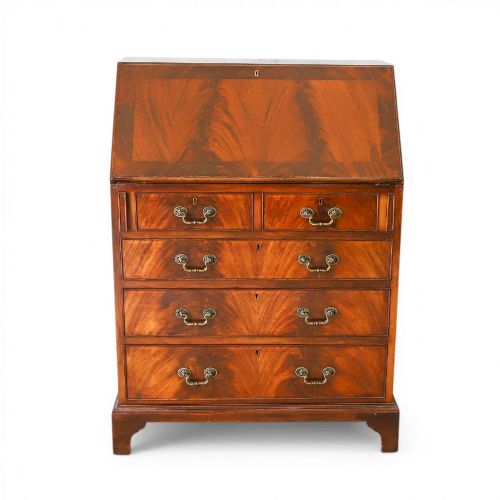
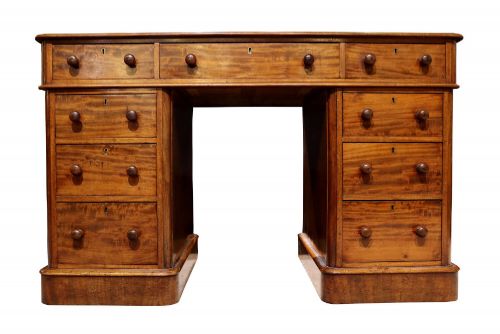
A warm brown mahogany desk brings rich grain and practical writing space to a room, spanning periods from the Georgian era to the Edwardian years.
Warm Brown Mahogany Desk
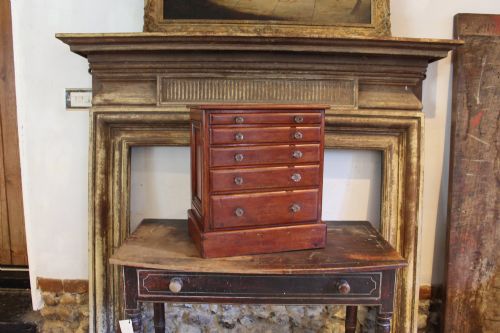
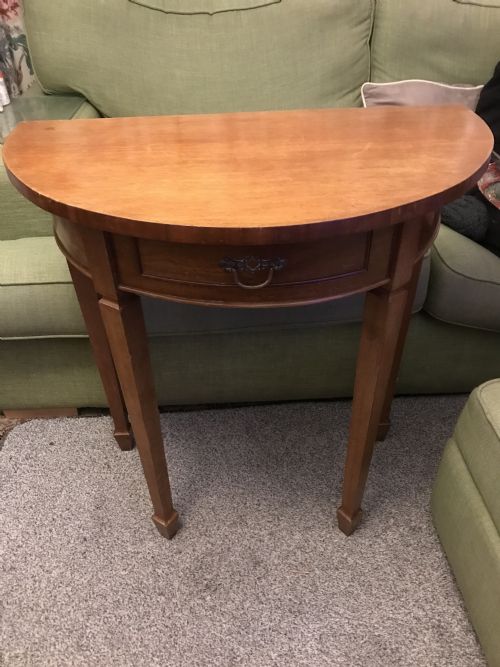
A warm brown mahogany desk encompasses various practical writing forms, ranging from compact writing tables and bureaus to larger pedestal desks and secretaire bookcases. When searching for a warm brown mahogany desk, buyers encounter pieces originating from Georgian, Victorian, and Edwardian periods.
The selection includes specific regional and stylistic variants such as George III pieces, early Victorian writing tables, and Edwardian satinwood-inlaid writing bureaus. These items demonstrate the enduring utility of mahogany furniture across multiple centuries of design.
Materials and construction methods
Construction relies heavily on solid mahogany and mahogany veneers, often enhanced by secondary timbers such as oak, boxwood, and satinwood for contrasting stringing or crossbanding. Many examples incorporate fitted leather writing surfaces and turned brass handles or castors.
Cabinetmakers utilised traditional joinery techniques, pairing flame-figured mahogany grains with decorative inlay and crossbanded borders. The incorporation of brass hardware and internal pigeonholes reflects the functional requirements of nineteenth and early twentieth-century writing furniture.
Charles Dickens apparently managed to write entire novels without a modern ergonomic chair, making do with sturdy nineteenth-century mahogany seating.
Evaluating craftsmanship and condition
Quality separates through the depth of the timber's grain, the precision of the crossbanding, and the integrity of the original brass fittings and leather inserts. Superior examples display carefully selected flame mahogany veneers and balanced proportions.
Finer pieces maintain crispness in their inlaid details, such as boxwood stringing and satinwood banding, alongside smooth operation in drawers and secretaire fitted compartments. The warmth of the colour and the preservation of the original polish distinguish better-kept pieces.
Maple and Co·Thomas Rubergall·Shoolbred·William Trotter·Gillows of Lancaster
The Warm Brown Mahogany Desk Glossary
- Crossbanding
- A border of veneer laid with the grain running perpendicular to the main surface. This technique frames the top of a desk or table to create a decorative visual contrast.
- Secretaire
- A desk or chest featuring a fitted drop-front drawer that conceals writing compartments and small drawers. It combines the storage of a case piece with the workspace of a writing table.
- Baton
- A strip of wood used in cabinetry construction. It provides structural reinforcement to internal framing and supports secondary timbers.
- Stringing
- Thin inlay lines of a contrasting timber, such as boxwood, set into the mahogany surface. It defines the edges of drawers and panels with delicate precision.
Warm Brown Mahogany Desk: Frequently Asked Questions
How do I identify a Georgian desk?
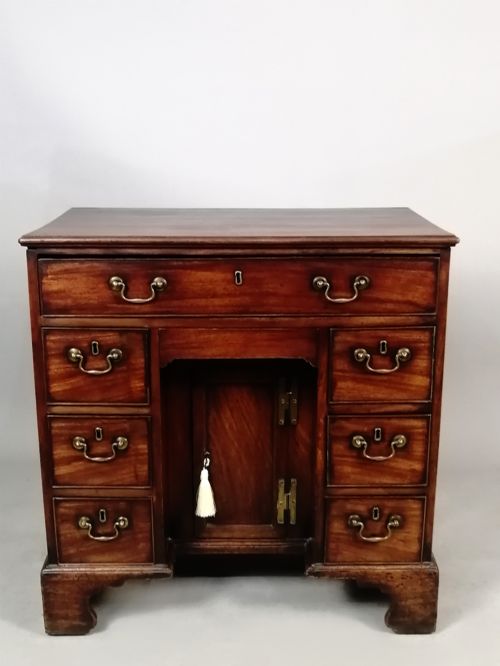
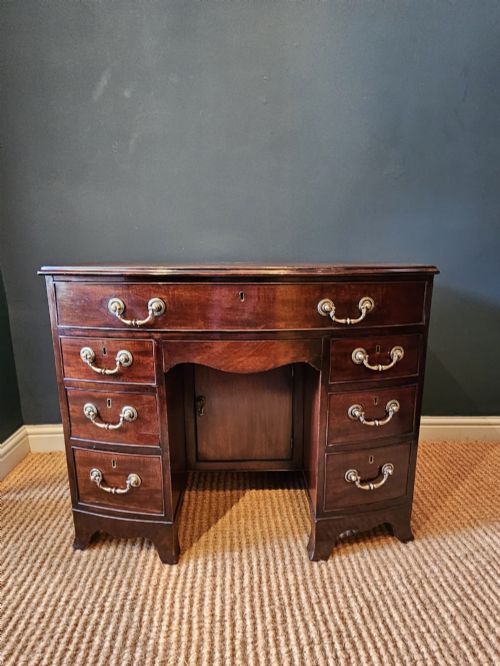
Georgian desks typically exhibit restrained classical proportions, solid mahogany construction, and hand-cut dovetail joints on the interior drawers. They often feature brass swan-neck handles and bracket feet.
Later Victorian and Edwardian interpretations introduce lighter satinwood inlays, cylinder rolls, or cylinder mechanisms while maintaining the traditional mahogany carcase.
How should I care for a mahogany writing surface?
Maintain the wood by dusting with a soft, dry cloth and occasionally applying a traditional beeswax polish to nourish the grain. Avoid placing the desk in direct sunlight or near heat sources to prevent the mahogany and any leather inserts from drying out.
Protect leather surfaces from spills by using appropriate desk blotters or writing pads during daily use.
What distinguishes Edwardian mahogany desks?
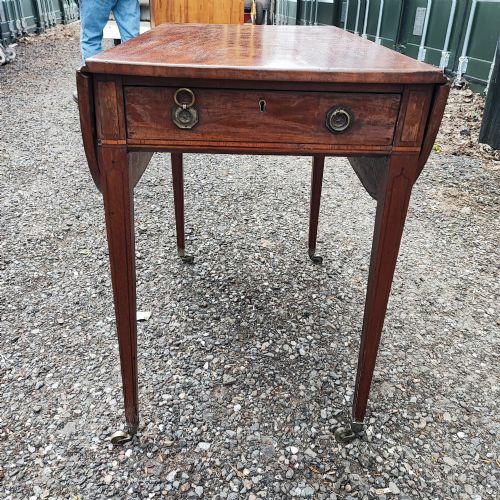
Edwardian desks often display lighter scantlings, delicate tapered legs, and decorative satinwood inlay or crossbanding. They reflect a shift towards lighter, more versatile furniture suitable for smaller domestic spaces.
Unlike heavier Victorian pedestal forms, Edwardian writing tables frequently prioritise refined elegance and accessible proportions.