


Empire Style Table
When you search for an empire style table, you discover formal pieces defined by classical proportions, heavy timber frames, and gilt bronze mounts.
Empire Style Table
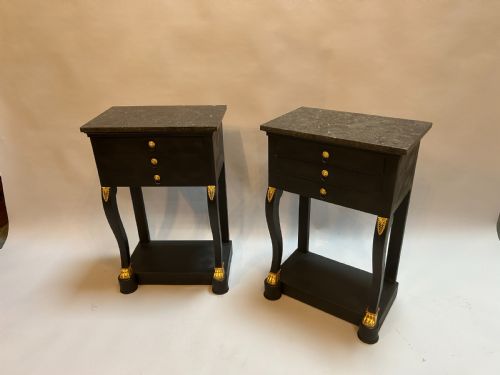
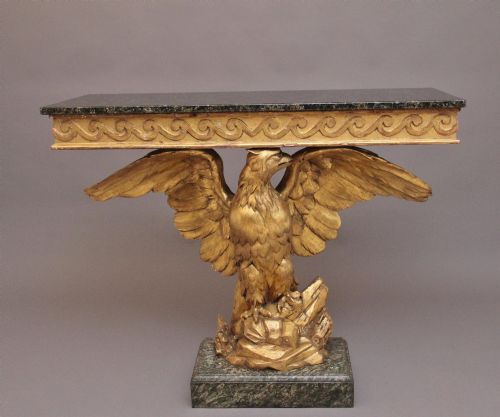
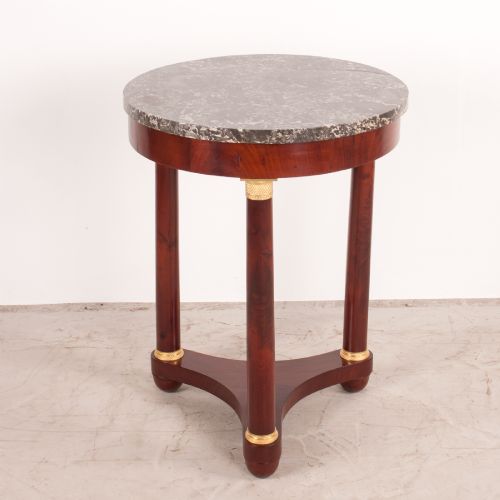
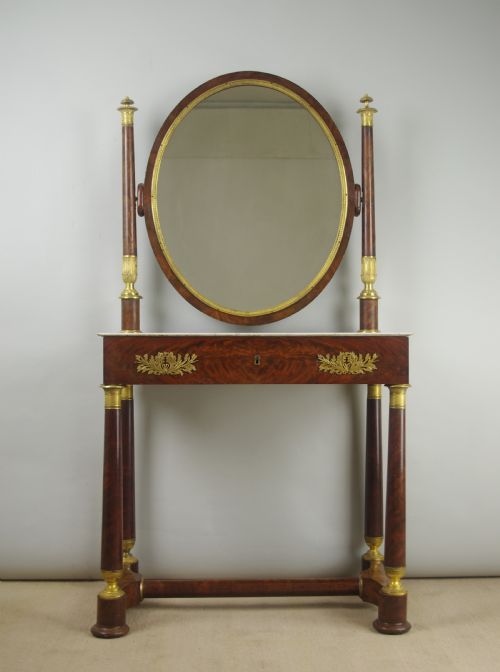
An empire style table draws on classical motifs inspired by ancient Rome and Greece, translated through nineteenth-century cabinetmaking. These pieces frequently appear as console tables, centre tables, and side tables designed with architectural symmetry and structural presence.
The version most commonly met on this page is the French mahogany console or gueridon, often finished with a contrasting inset marble top. Walnut, kingwood, and burr root maple also appear among the records, alongside side tables and dressing tables from the nineteenth century and later revival periods.
Makers often integrated columns, pilasters, and cast metal feet into the wooden frames of these tables. Such ornamentation aligns the furniture with the broader visual vocabulary of neoclassical and regency design seen across the period.
Materials and Construction Methods
Cabinetmakers built the structural carcases of these tables primarily in dense hardwoods such as mahogany and walnut, frequently applying veneers to broad surfaces. Timber selection focused on grain pattern and colour uniformity, providing a dark, polished ground for metal decoration.
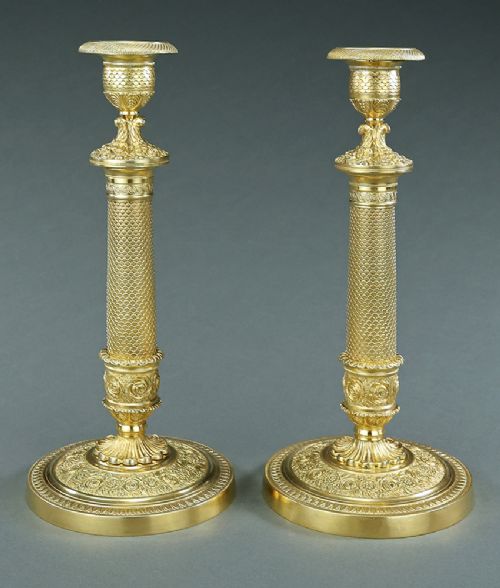
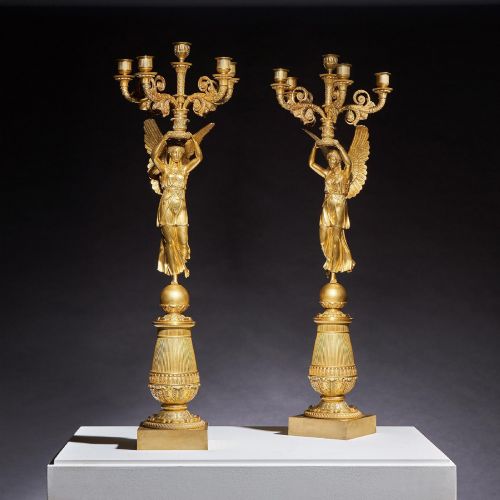
Cast brass and ormolu mounts provide the characteristic metallic highlights on these pieces, secured directly to the wooden frames. Marble tops, set onto console and occasional tables, required precise stonemasonry to fit flush within wooden mouldings.
Several tables sneakily hide their writing supplies inside secret drawers tucked beneath heavy marble tops.
Distinctions in Quality and Craft
The standard of an empire style table is often visible in the crispness of its cast bronze or ormolu mounts. Finer examples display sharp chasing and deep relief work on figural and geometric ornaments, whereas simpler pieces rely on unchased cast brass.
Joinery and timber choice further divide the range, from robust solid mahogany and figured veneers to lighter secondary woods with painted or gilded finishes. Maker stamps from established workshops indicate documented provenance and higher levels of execution in the underlying carpentry.
Japy Freres·Pierre Philippe Thomire·Krieger Paris·JACOB
The Empire Style Table Glossary
- Ormolu
- A gilded bronze ornament applied to furniture and decorative objects. This technique involves fusing powdered gold to a bronze base using mercury.
- Gueridon
- A small circular table supported by a single central pillar or three legs. These tables served various occasional functions in nineteenth-century interiors.
- Console Table
- A table designed to stand against a wall, frequently secured with brackets. They often feature marble tops and elaborate front legs.
- Bureau Plat
- A large rectangular writing desk fitted with drawers beneath the top. These desks typically feature leather writing surfaces and metal mounts.
Empire Style Table: Frequently Asked Questions
What is an empire style table?
An empire style table is a formal piece of furniture characterised by neoclassical symmetry, dark timber frames, and cast metal ornamentation. These tables draw inspiration from ancient Roman and Greek designs.
They typically take the form of console tables, centre tables, or gueridons featuring marble tops and architectural supports.
How do I style a console table?
Console tables function well placed flat against a wall in hallways, living rooms, or dining spaces. Their narrow depth allows them to occupy circulation areas without blocking movement.
Pairing a console table with a matching mirror or placing lamps and centrepieces on the marble surface helps balance its formal proportions within a room.
How do I distinguish periods?
Distinguishing between original nineteenth-century pieces and later twentieth-century revivals involves examining timber ageing, joinery methods, and the quality of metal casting. Original pieces exhibit period-specific construction and hand-finished bronze mounts.
Revival pieces often utilise machine-finished components while replicating the earlier neoclassical forms popular during the nineteenth century.
What woods were used?
Cabinetmakers primarily utilised mahogany, walnut, and kingwood for the structural frames and surface veneers of these tables. Dense hardwoods provided a stable base for heavy marble tops and metal mounts.
Exotic timbers and figured grain patterns were selected to create visual contrast against the gilt bronze and ormolu ornamentation.