

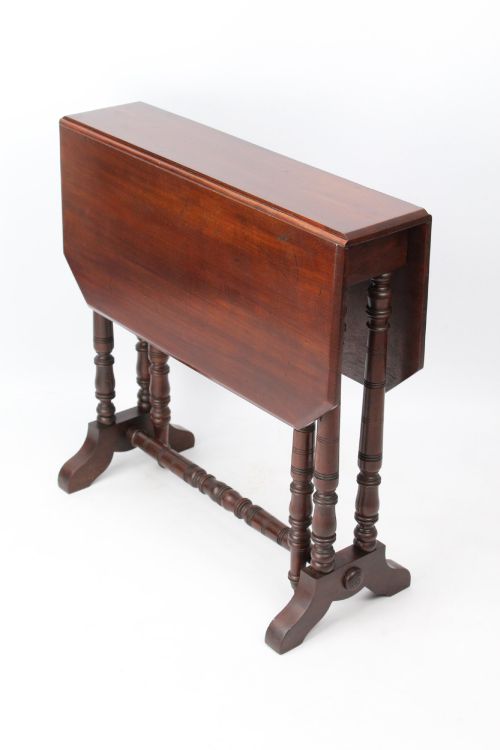


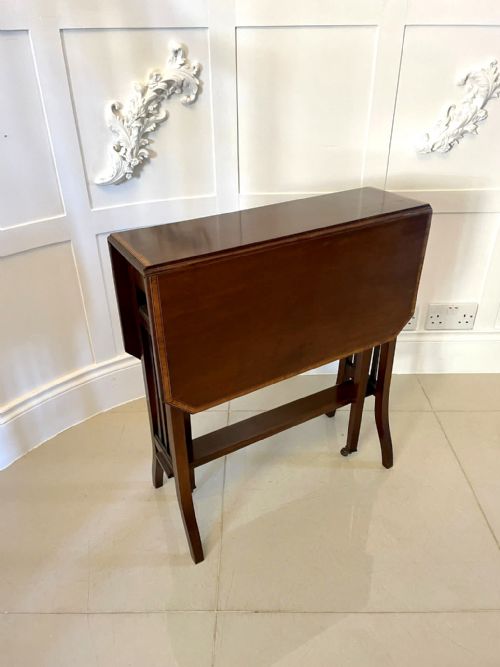


Narrow Drop Leaf Table
These narrow drop leaf table pieces offer compact surfaces that expand when needed, making them practical for everyday living.
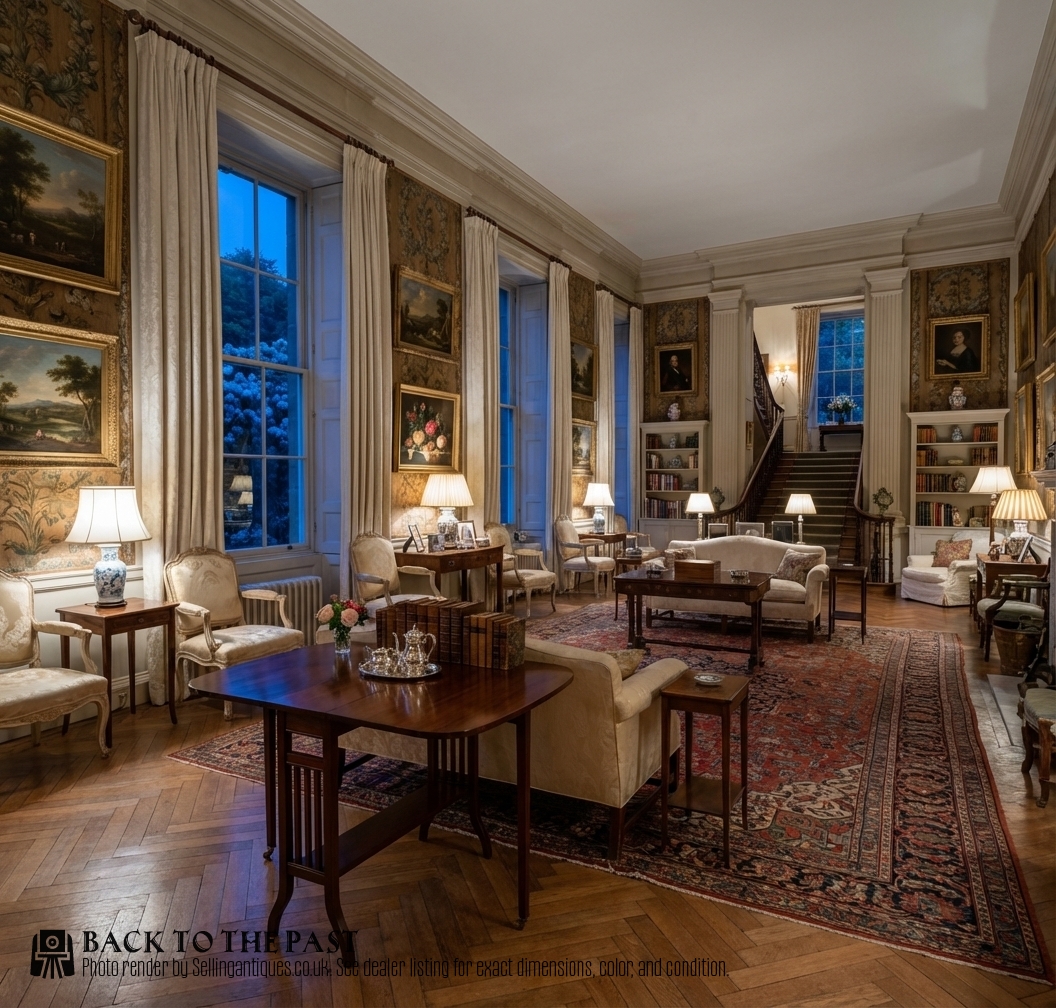
Narrow Drop Leaf Table
When you search for a narrow drop leaf table, you encounter practical folding furniture designed to save space in compact rooms. These pieces include occasional tables, side tables, and dining tables.
The selections on this page span the 19th century, Victorian, and Edwardian periods. Mahogany forms the primary material, alongside oak, pine, and satinwood inlay.
You frequently meet Sutherland tables and Pembroke tables among these listings. They function as occasional, lamp, wine, coffee, or sofa tables.

How they were made
Cabinet makers constructed these tables primarily using mahogany, oak, and pine. Artisans applied satinwood inlay and crossbanding to enhance the timber surfaces.
Brass fittings and spider-legs appear in the construction, supporting the folding leaves and slender frames. Joinery methods varied from kitchen dining builds to delicate occasional table designs.
Narrow Drop Leaf Table Retail Price Guide 2026
Typical asking prices for narrow drop leaf table among the pieces listed under this phrase on Sellingantiques today, from the lower quarter to the upper quarter. They describe what is for sale here now, not the wider market.
Listings combine mahogany, oak, pine, and satinwood across Victorian and Edwardian periods.
What varies in quality
Quality rests in the choice of timber and the precision of the inlay work. Finer examples feature detailed satinwood crossbanding and canted corners rather than plain surfaces.
The ingenuity of the folding mechanism and the stability of the slender leg structures define the higher tier of these tables. Original condition and warm timber tones elevate certain pieces above standard utilitarian examples.
The Narrow Drop Leaf Table Glossary
- Sutherland table
- A narrow drop leaf table where the leaves drop almost vertically and the gatelegs swing out to support them. This design allows the table to fold into an extremely slim profile.
- Pembroke table
- A form of table with hinged flaps on either side, often featuring a drawer. The spider-leg variant uses very slender turned supports.
- Crossbanding
- A strip of veneer applied to the border of a table top running perpendicular to the grain of the main surface. It provides a decorative framing effect.
- Canted corners
- Bevelled corners that replace sharp right angles on a tabletop. This detail softens the silhouette of the piece.
- Satinwood
- A durable, lustrous yellowish timber native to India and Ceylon, frequently used for contrasting inlay and stringing on mahogany furniture.
Narrow Drop Leaf Table: Frequently Asked Questions
What is a narrow drop leaf table?
A narrow drop leaf table is a space-saving furniture piece with hinged flaps that fold down to reduce its footprint. These tables expand easily when extra surface area is required.
They appear frequently as Sutherland or Pembroke forms from the Victorian and Edwardian eras, constructed in mahogany or oak.
How do Sutherland tables work?
Sutherland tables feature exceptionally narrow central fixed tops and wide leaves supported by swinging gatelegs. When lowered, the leaves hang almost flat against the sides.
This clever mechanism allows the table to be tucked away against a wall when not in use.
Where were narrow drop leaf tables used?
These tables served various rooms in period homes, functioning as occasional, lamp, wine, or sofa tables. Their compact nature suited parlours and sitting rooms with limited space.
Larger oak versions also functioned as kitchen dining tables or narrowboat furnishings.
How do I date a mahogany drop leaf table?
Dating relies on observing construction techniques, timber choice, and decorative styles like satinwood inlay or Art Nouveau motifs. Edwardian and Victorian pieces often display lighter frames and specific leg turnings.
Archive examples also extend back to Georgian periods with sturdy oak construction.