
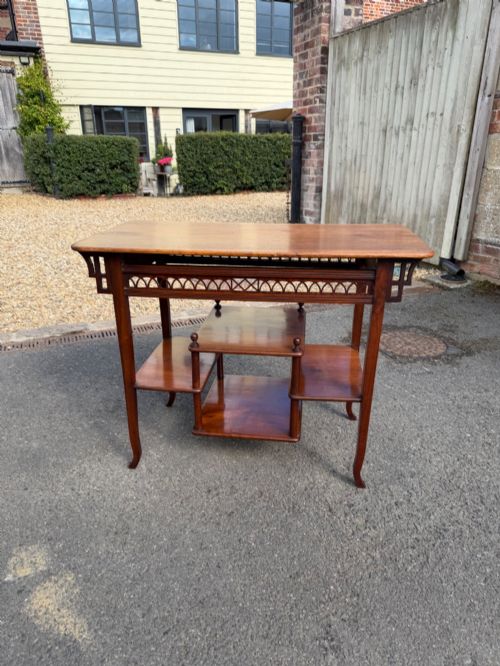
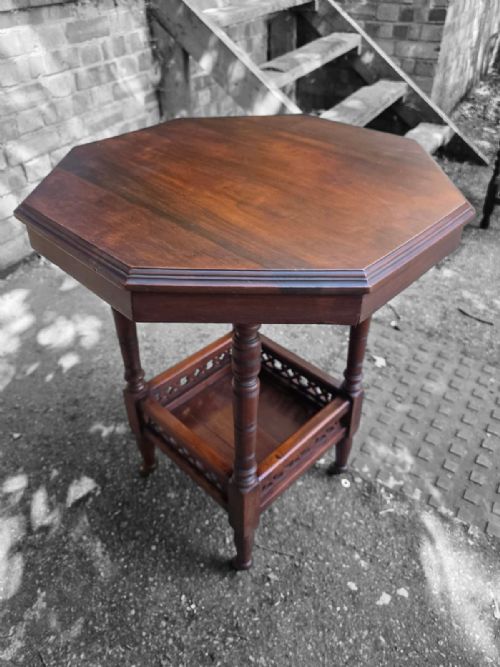
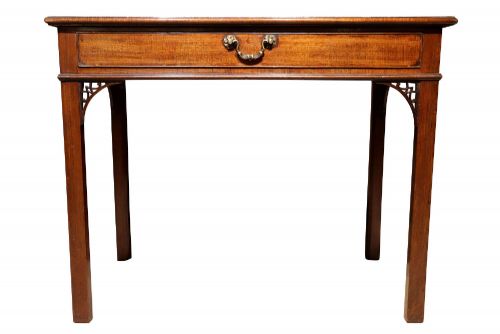
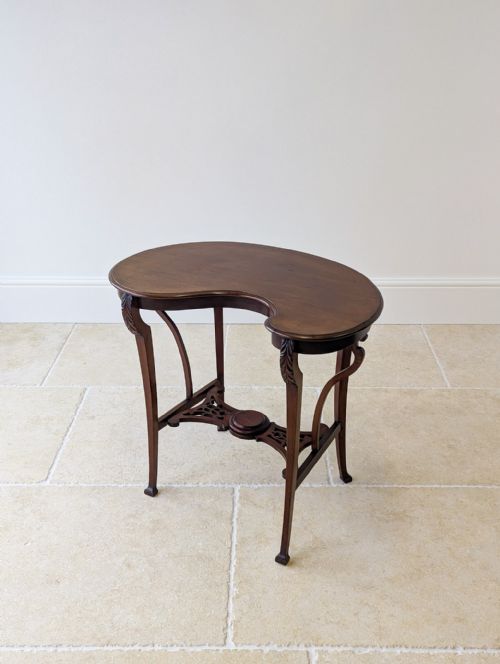


Fretwork Hall Table
These fretwork hall table pieces bring intricate carved detail and classic proportions to an entranceway, offering both surface space and distinct period character.
Fretwork Hall Table
A fretwork hall table typically presents as a side table, console, or lowboy featuring pierced or carved ornamentation derived from Georgian Chippendale designs or oriental traditions. These pieces occupy narrow spaces in hallways and reception rooms, providing a flat surface alongside decorative presence.
The selections available range from 18th-century Georgian originals and lowboys in oak or walnut to 19th-century revival pieces, Victorian interpretations in mahogany, and imported Chinese altar tables. Edwardian and late Victorian variations frequently employ lighter mahogany frames with pierced brackets or applied fretwork.
Buyers frequently encounter side tables and console tables bearing Gothic pierced brackets or Chinese Chippendale mannerisms, alongside Anglo-Indian rosewood and Burmese carved examples. The form serves primarily as a decorative accent that simultaneously offers functional surface utility in a narrow room.
Materials and construction methods
Cabinetmakers constructed these tables primarily using dense hardwoods such as mahogany, oak, walnut, and rosewood, occasionally incorporating elm or exotic timber variants like Hongmu. These timbers provided the structural stability required to support intricate hand-carved fretwork and pierced brackets without warping.
Joinery techniques relied upon traditional mortise and tenon frames, while ornamental details required meticulous hand-piercing and low-relief carving. Brass hardware occasionally appears on writing or drawer variants, complementing the dark grain of the primary wood.
Listings feature woods including mahogany, oak, walnut, rosewood, elm, and Hongmu across periods from the 18th century through the Edwardian era.
Factors determining quality
Quality in a fretwork hall table rests primarily on the crispness and depth of the carved or pierced ornament. Pieces executed with sharp, well-defined fretwork and tight joinery sit distinctly apart from softer, more mechanically produced Victorian revival items.
The choice of timber and the figuring of the grain dictate the visual weight of the piece. Dense, well-selected mahogany or figured walnut with an original patinated surface elevates the standing of an individual table above simpler hardwood constructions.
Butler
The Fretwork Hall Table Glossary
- Fretwork
- Ornamental design created by piercing or cutting patterns through a thin flat piece of wood. This technique defines the visual style of Chinese Chippendale and related revival tables.
- Lowboy
- A small side table or dressing table featuring one or more rows of drawers beneath the top. Eighteenth-century examples in oak or walnut often serve as compact hall or serving tables.
- Console table
- A table designed to be fixed against a wall, frequently supported by brackets or console legs. These pieces suit narrow hallways where floor space is at a premium.
- Altar table
- A traditional Chinese form featuring an elongated rectangular top, often with upturned ends, and pierced friezes. These tables bring architectural presence to western hallway settings.
- Pierced bracket
- A structural corner support cut through with decorative openings to relieve heaviness. They appear commonly beneath the top rail of Chippendale and Gothic revival tables.
Fretwork Hall Table: Frequently Asked Questions
Where should I place a fretwork hall table?
These narrow tables suit entrance halls, narrow corridors, and transitional spaces where floor area is restricted. Their decorative pierced friezes create visual interest against a plain wall.
Position one beneath a mirror or painting to establish a focal point as you enter the room, ensuring the surface remains clear enough for daily items.
How do I distinguish Georgian from revival pieces?
Eighteenth-century examples display timber patination, hand-cut joinery marks, and structural wear consistent with extended age. Revival pieces from the Victorian and Edwardian eras often utilise machine-sawn elements and possess a different surface texture.
Examining the underside and drawer linings usually reveals the tool marks and construction methods specific to each period.
What is a Chinese Chippendale console?
This style combines 18th-century English proportions with Chinese decorative motifs, including geometric fretwork, clustered column legs, and pierced brackets. Thomas Chippendale popularised these designs in pattern books.
Tables described in this manner reflect the European fascination with oriental aesthetics during the Georgian period and its later Victorian revivals.
How do I care for antique hardwood tables?
Maintain the timber by keeping the surface away from direct heat sources and sudden humidity shifts. Apply a suitable wax polish periodically to nourish the grain without building up a sticky residue.
Dust regularly with a soft cloth to protect the intricate corners of the carved fretwork from accumulating dirt.