




Chippendale Centre Table
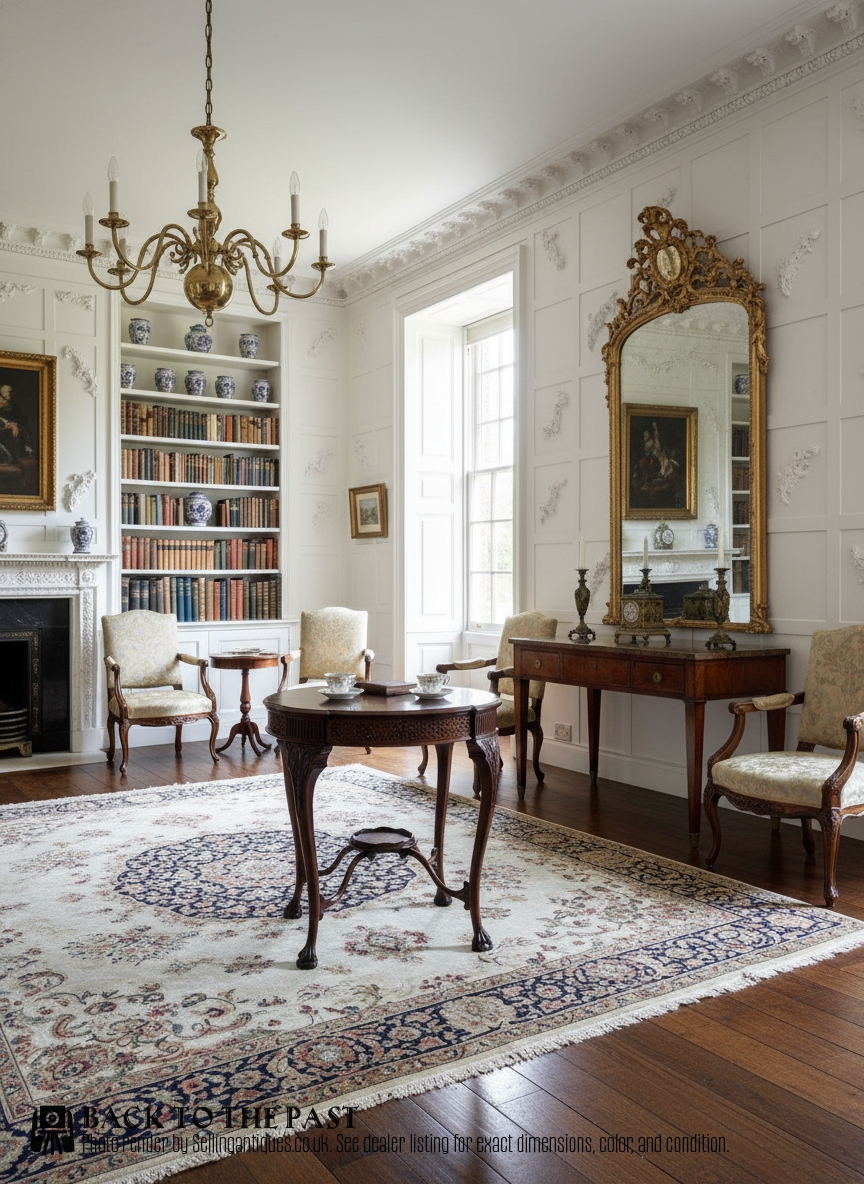
A chippendale centre table is a freestanding mahogany piece designed to anchor a room, bringing classical proportions and intricate carving into an interior.
Chippendale Centre Table
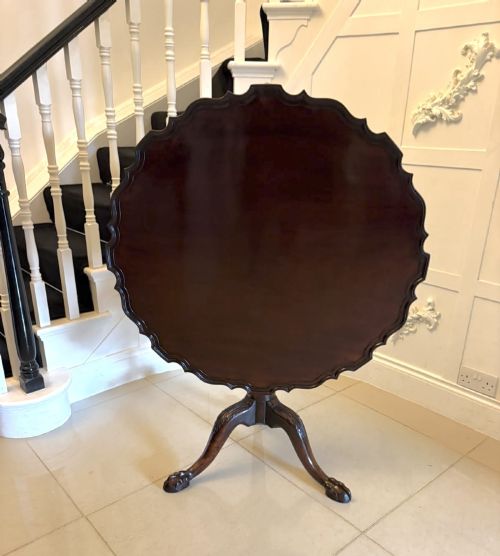
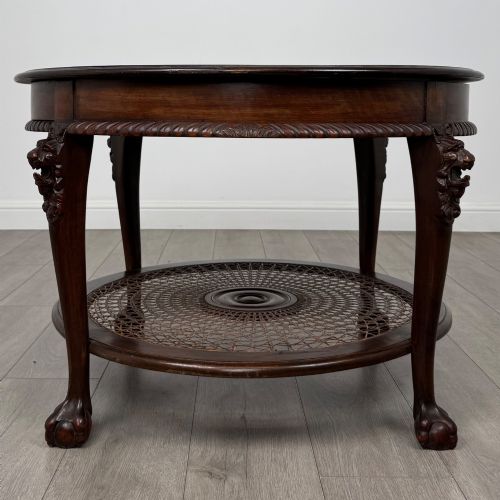
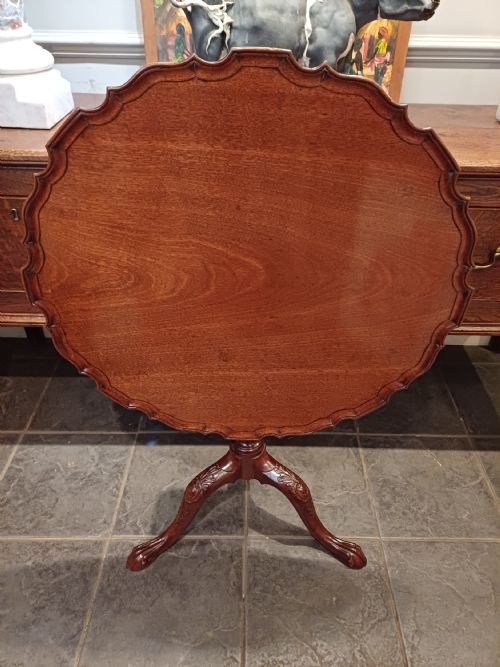
A chippendale centre table stands independently in a room, offering finished details on all sides rather than resting against a wall. The pieces appearing in this selection draw primarily from the eighteenth century, the George III period, and later revivals from the nineteenth and early twentieth centuries. Forms range from tilt-top tripod designs and rectangular writing tables to drum tables and occasional pieces.
Materials and Construction
Makers relied heavily on solid mahogany and flame mahogany veneers, selecting timber prized for durability and deep grain patterns. Structural integrity often depended on traditional joinery techniques, supplemented in specific examples by tilt-top mechanisms, birdcage supports, or brass fittings.
Carving represents a defining element of the construction, executed by hand directly into the dense wood of the friebes, legs, and edges. Secondary materials such as leather inserts, wool tapestry fabric, and marble tops appear across the selection, integrated into the wooden frames to provide functional surfaces.
Mahogany serves as the predominant material across these listings, appearing alongside walnut, marble, leather, and brass accents.
Evaluating Craftsmanship and Age
Quality in a chippendale centre table rests upon the crispness and depth of the carved ornamentation, distinguishing master craftsmanship from simpler production. Tables featuring well-defined piecrust edges, intricate pierced or carved brackets, and balanced proportions command greater attention.
The integrity of the timber and the subtlety of the finish also determine distinction, with mellow patination and minimal alterations indicating superior preservation. Pieces maintaining original structural components without extensive reconfigurements represent the upper tier of available examples.
The Chippendale Centre Table Glossary
- Piecrust edge
- A raised, carved ornamental border shaped in curves and lobes resembling pastry crust, typically found on round tilt-top tables. This decorative moulding required skilled hand-carving from a solid timber blank.
- Tilt-top mechanism
- A hinge arrangement allowing the tabletop to pivot into a vertical position when not in use. This clever design saved floor space in period drawing rooms.
- Birdcage
- A wooden framework beneath a tabletop that enables both rotation and tilting actions. It sits atop the central pillar of tripod tables.
- Drum table
- A circular library or writing table featuring a deep frieze fitted with alternating drawers and faux-drawer fronts. These pieces usually rest on a central pedestal with branching legs.
- Frieze
- The horizontal band situated directly beneath the tabletop, often decorated with carving, mouldings, or fitted drawers.
Chippendale Centre Table: Frequently Asked Questions
What is a centre table used for?
A centre table was historically placed in the middle of a room rather than against a wall, serving as a surface for display, writing, or serving tea. Because they are finished on all sides, they act as visual focal points within an interior space.
Today, buyers utilise these versatile pieces as coffee tables, occasional surfaces, or standalone decorative accents in larger living areas and hallways.
How do I tell an 18th-century table from a revival?
Distinguishing period pieces from later revivals involves examining the construction methods, tool marks, and the natural ageing of the timber. Eighteenth-century examples often exhibit hand-cut joinery and a deep, mellow patination developed over centuries of use.
Revival pieces, frequently produced during the Victorian and Edwardian eras, utilise machine assistance alongside traditional hand-finishing, showing different wear patterns and construction characteristics.
What makes a table tilt-top?
Tilt-top tables incorporate a hinged block and catch mechanism beneath the surface that allows the top to pivot flat or vertical. This construction enabled the table to be stored compactly against a wall when not in active use.
When lowered, the mechanism locks securely into place atop the central pillar to provide a stable, usable surface.
Are these tables suitable for everyday use?
These tables are constructed from solid hardwoods like mahogany, making them robust enough for daily domestic environments with appropriate care. Using coasters and placing them away from direct heat sources helps preserve the polished wood surfaces.
Their sturdy frames and practical forms ensure they function just as effectively in modern homes as they did in Georgian drawing rooms.