
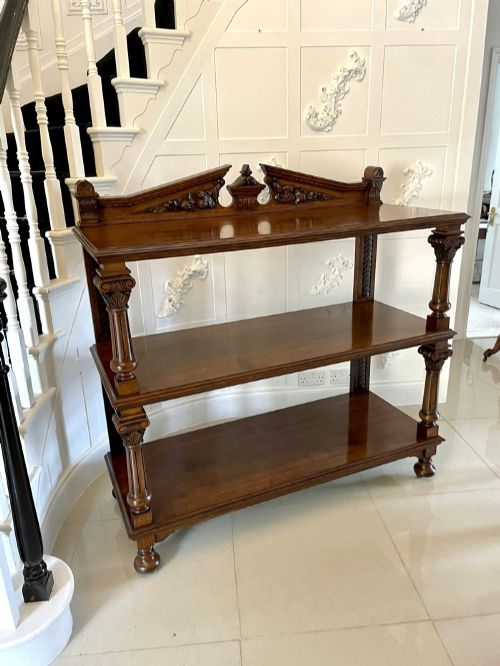
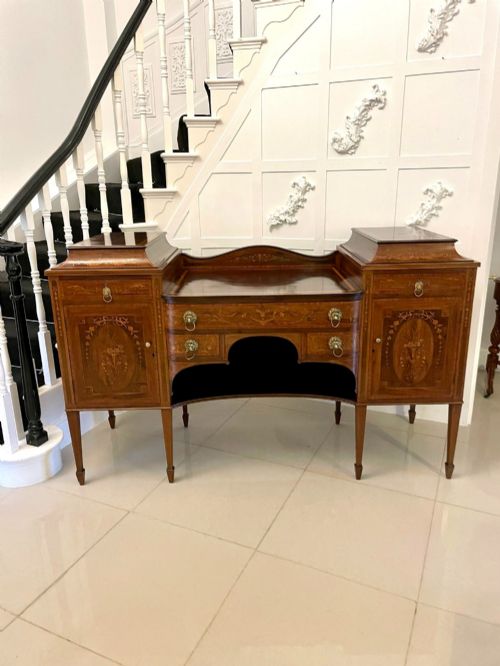
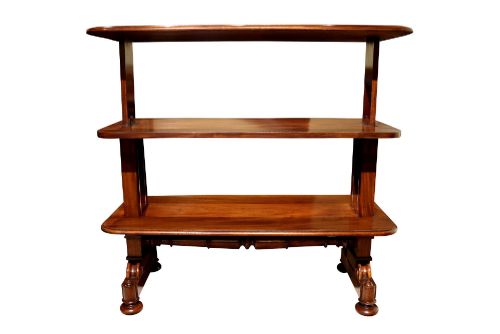
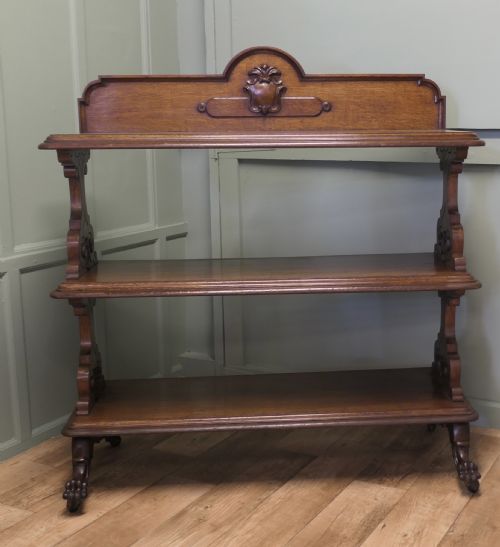


Edwardian Dining Room Furniture
Edwardian dining room furniture brings together substantial mahogany tables, carved oak sideboards and matched chair sets designed to anchor formal domestic interiors.
Edwardian Dining Room Furniture
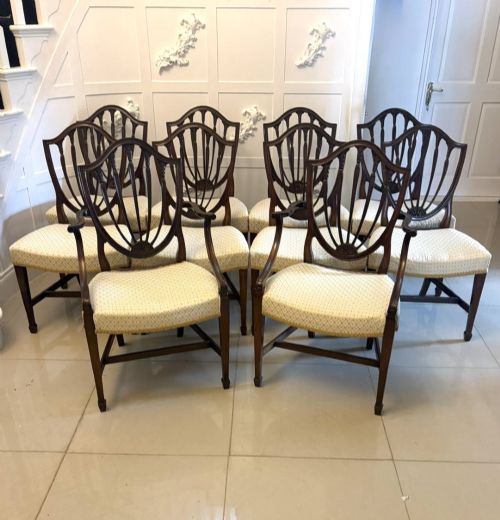
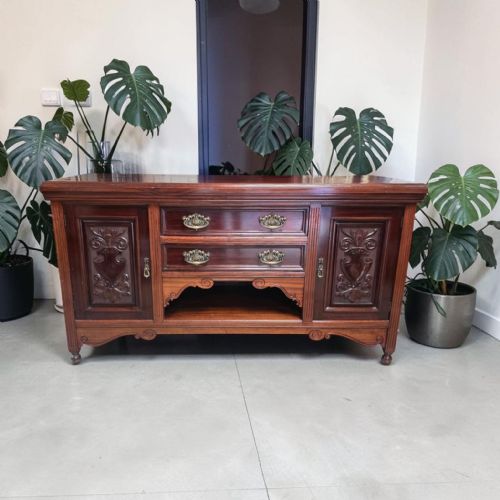
When you search for edwardian dining room furniture, you encounter pieces that served the elaborate hospitality of large households at the turn of the twentieth century. Sideboards, buffets, servers, extending dining tables and sets of dining chairs form the core of this grouping.
The objects frequently draw on earlier design idioms, including Sheraton Revival, Georgian and Regency styles, alongside Arts and Crafts and Art Nouveau interpretations. Walnut, oak and mahogany dominate the forms, often incorporating mirror backs, display cabinets and extensive seating sets.
While specific items span from late Victorian production through to the nineteen-thirties, the Edwardian period itself defines the heavy presence of inlaid mahogany and carved oak across dining tables and storage pieces.
Materials and construction methods
Makers constructed these dining pieces using solid timbers such as mahogany, oak, walnut and beech, frequently applying veneers of flame mahogany, satinwood and pollard oak to prominent surfaces. Boxwood and marquetry inlay provide linear contrast and floral detail.
Listings feature oak, mahogany, walnut, satinwood and pollard oak across periods spanning the Victorian era, the Edwardian years and the nineteen-twenties.
Distinctions in construction and design
The standard of execution separates workshop production from standard commercial output, seen in the crispness of carved oak foliage, the precision of boxwood inlay and the selection of figured mahogany veneers. Pieces bearing the stamps or paper labels of known firms display superior internal framing and timber selection.
Completeness alters the character of a dining suite, particularly where large sets of dining chairs or matching side tables accompany an extending table. The harmony of revival styles, from Sheraton to Queen Anne, depends on the fidelity of the proportions and the weight of the timber.
Hewetsons London·Maple and Co·M D Miller and Sons·Whytock and Reid·Edwards and Roberts·Goodall of Manchester·Howard and Sons
The Edwardian Dining Room Furniture Glossary
- Sideboard
- A large dining room storage piece fitted with cupboards and drawers for serving food and storing tableware. Many Edwardian examples feature raised mirror backs and display shelving.
- Dumbwaiter
- A tiered serving stand with rotating or fixed shelves used to hold dishes and glasses beside the dining table. They appear in carved oak and mahogany formats.
- Marquetry
- Decorative woodwork where pieces of contrasting veneer are fitted into a ground to form geometric or floral patterns. This technique appears frequently on Edwardian and Sheraton Revival sideboards.
- Shield Back
- A chair back design shaped in the contour of a shield, commonly found on revival dining chairs. This form was popularised in the eighteenth century and revived in later periods.
- Extending Table
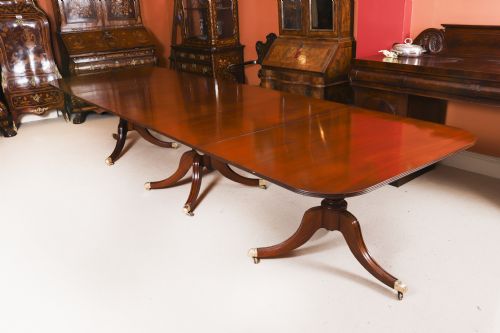
- A dining table equipped with a mechanism and removable leaves to expand its length for large gatherings. Pillar and pedestal supports are typical of these formats.
Edwardian Dining Room Furniture: Frequently Asked Questions
How do I identify Edwardian dining furniture?
Edwardian dining pieces often combine lighter satinwood and mahogany inlays with substantial proportions inherited from Victorian precedents. Look for revival styles such as Sheraton or Art Nouveau motifs integrated into standard dining forms.
The use of mirror backs on sideboards and the presence of larger matching chair sets help distinguish pieces produced around nineteen hundred from earlier nineteenth-century furniture.
What woods were used for these sets?
Mahogany remains the dominant timber, frequently selected for extending dining tables and inlaid sideboards. Oak is also common, appearing in heavily carved sideboards, dumbwaiters and dining suites.
Secondary woods and accents include walnut, beech for chairs, and decorative veneers such as pollard oak, satinwood and flame mahogany.
How were dumbwaiters used during meals?
Dumbwaiters provided tiered shelving near the dining table to hold extra plates, dishes and bottles without requiring constant servant attendance. The rotating or fixed tiers allowed diners to help themselves.
They functioned as practical side service units, constructed in robust oak or mahogany to match the surrounding dining room furniture.
Can I mix different revival styles together?
Mixing revival styles depends on the prevailing timber and period tone of the room. Sheraton Revival and Georgian revival pieces share lighter proportions that sit comfortably alongside standard Edwardian furniture.
Heavier carved oak pieces from the Arts and Crafts or Gothic revival traditions require careful placement to balance the scale of the dining space.
What is a pedestal dining table?
A pedestal table relies on one or more central columns rather than corner legs to support the top. Triple pillar configurations provide stability for long extending dining tables.
This construction allows greater legroom for diners seated along the sides of large mahogany tables.