
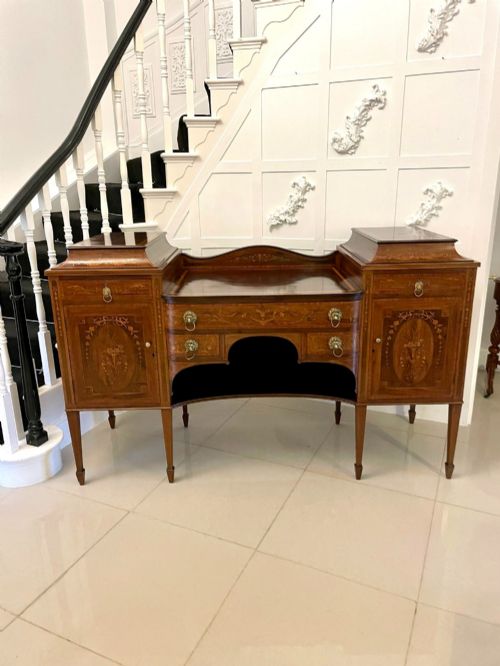
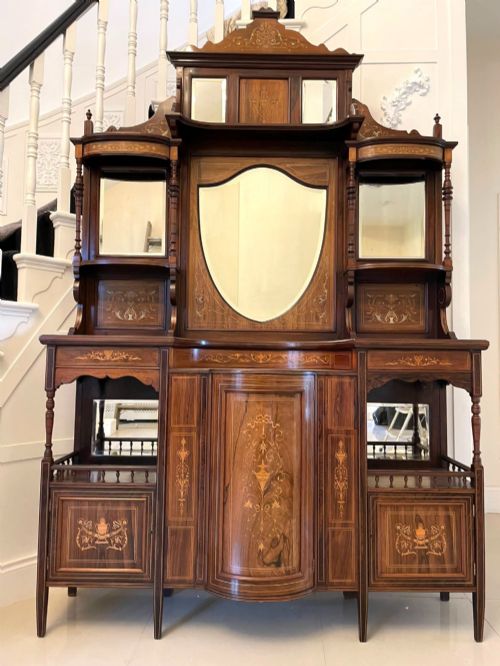
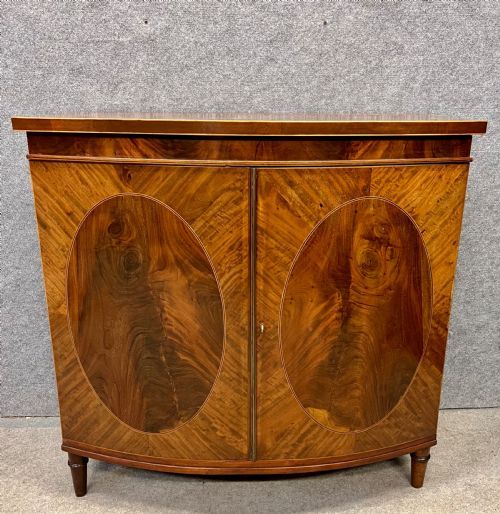
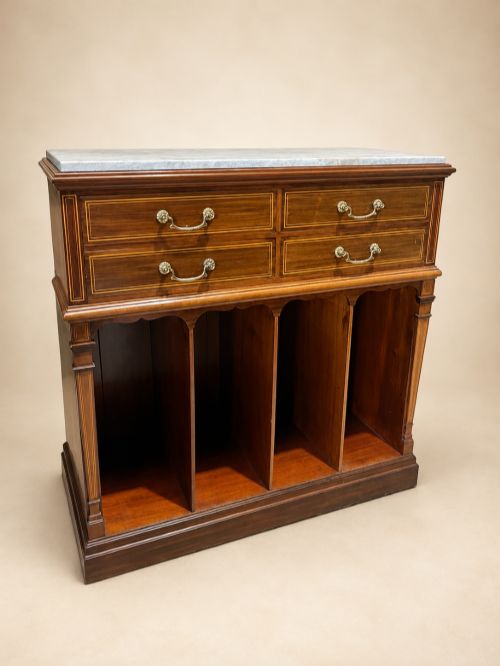




Sheraton Revival Credenza
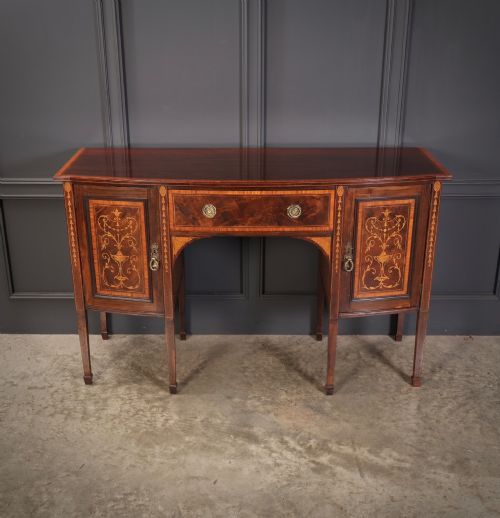
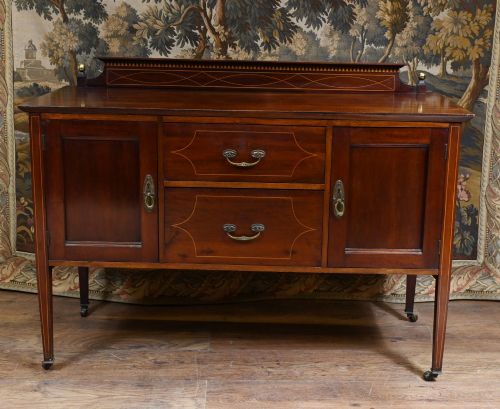
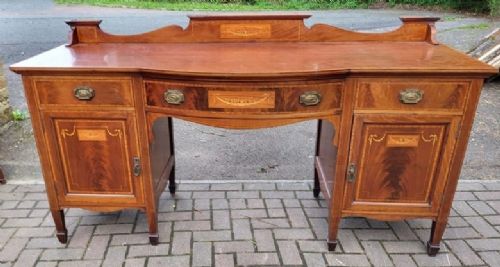
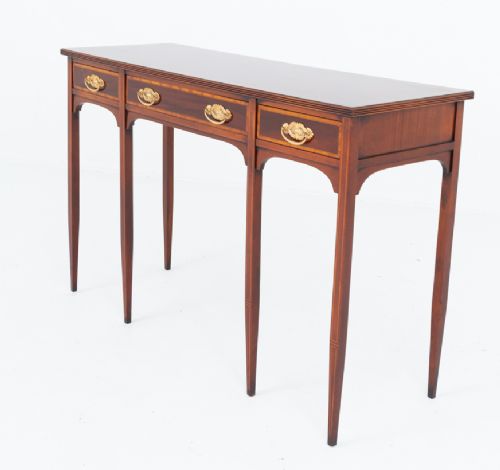
These Sheraton revival credenza examples bring neoclassical elegance and fine inlay to modern interiors, offering both surface display and generous storage.

What They Are
A sheraton revival credenza encompasses refined sideboards, display side cabinets, and sideboards and buffets designed in the late nineteenth and early twentieth centuries. These pieces reflect the enduring influence of eighteenth-century neoclassical furniture, translated through Edwardian and late nineteenth-century cabinet-making.
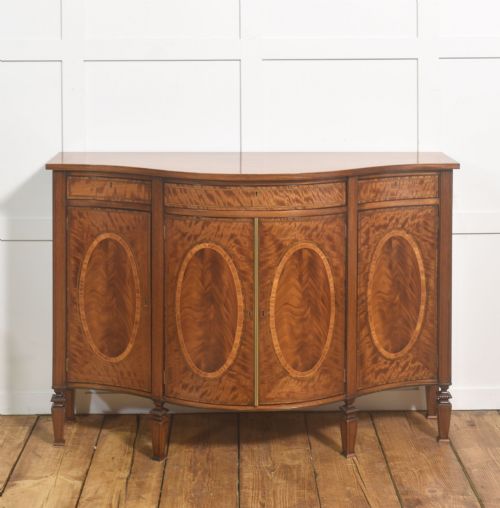
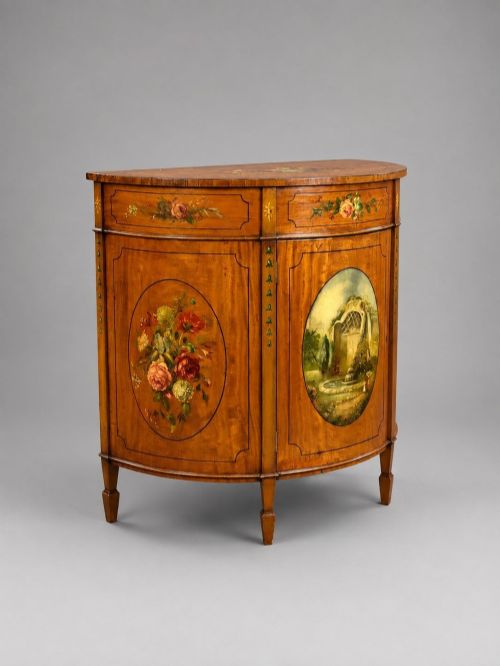
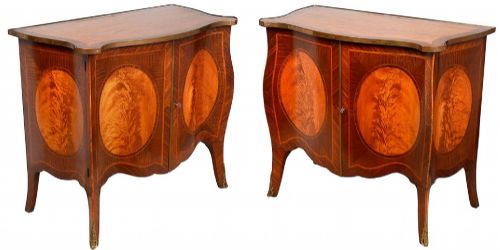
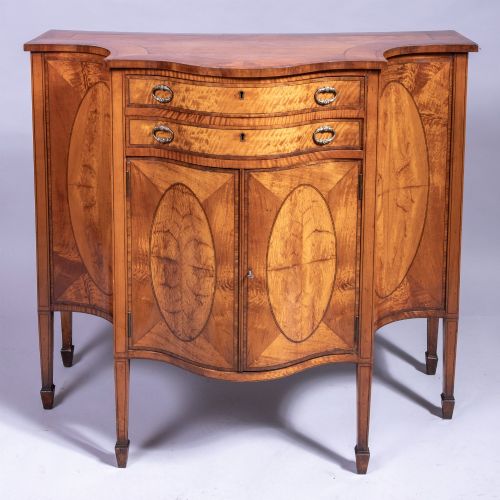
The pieces appearing on this page span the Edwardian period, 1800, 1900, 1890, and the nineteenth century. Buyers encounter serpentine forms, display cabinets, and floral painted surfaces alongside classic sideboard configurations.
Most items documented in the current listings take the form of sideboards and side cabinets rendered in mahogany and satinwood. These variations provide both storage and display functions suited to sophisticated dining and reception rooms.
How They Were Made
Cabinet-makers constructed these pieces primarily using mahogany and satinwood as foundational timbers, complemented by boxwood stringing and brass hardware. Glass panels feature in display variations, permitting the enclosure and viewing of prized objects.
Marquetry inlay and painted ornamentation define the surface decoration, utilising boxwood and contrasting timbers to create delicate neoclassical motifs. Paintwork appears on satinwood surfaces, introducing floral details alongside traditional wood veneers.
Retail Price Guide 2026
Typical UK retail prices for sheraton revival credenza, calculated from the Sellingantiques database of over a million retail prices indexed since 2003. This retail price guide relies exclusively on Sellingantiques data; no external sources or auction records are used, so the figures do not describe the wider market.
The documented forms span sideboards, buffets, display cabinets, and credenzas featuring painted and inlaid surfaces.
What Varies in Quality
The standard of a piece rests upon the precision of its marquetry and the choice of timbers used for veneer and inlay. Finer examples display meticulous boxwood stringing and balanced proportions across serpentine or straight fronts.
Makers such as Edwards and Roberts demonstrate the higher tiers of craftsmanship through superior joinery, integration of glass, and painted satinwood panels. Lesser examples rely on simpler construction while maintaining the broad stylistic vocabulary of the revival.

Edwards and Roberts
The Sheraton Revival Credenza Glossary
- Sheraton Revival
- A late nineteenth and early twentieth-century design movement that reinterprets the neoclassical furniture forms of eighteenth-century designer Thomas Sheraton. This style favours light timbers, symmetric inlay, and classical proportions.
- Credenza
- A sideboard or cabinet used for storing dining accessories and displaying decorative objects. In this context, the term overlaps with sideboards and display side cabinets.
- Marquetry
- The art of applying pieces of veneer to a structure to form decorative patterns and pictorial designs. Cabinet-makers utilise contrasting woods like boxwood and mahogany to achieve this effect.
- Satinwood
- A durable, lustrous timber with a golden sheen, frequently employed in high-grade neoclassical and revival furniture. It provides a bright surface ideal for painted decoration and contrasting stringing.
- Stringing
- Thin inlay lines of contrasting wood, such as boxwood, embedded into the surface of furniture to frame panels and drawers. This technique accentuates the geometric lines of the piece.
Frequently Asked Questions
How do I date a credenza?
Dating relies on examining the materials, construction techniques, and stylistic markers recorded in the evidence. Pieces date primarily from the Edwardian era and the late nineteenth century.
Key indicators include the use of boxwood stringing, brass fittings, and painted satinwood finishes characteristic of the revival period.
Where were these pieces used?
These cabinets served primarily in formal dining rooms and reception spaces to store tableware and display decorative objects. Their combination of cupboards and glass-fronted display areas accommodated both practical needs and aesthetic presentation.
They functioned as central pieces of furniture that displayed the household's taste and refinement.
How do I care for satinwood and mahogany?
Maintenance involves protecting the timber from direct sunlight and sudden temperature changes to preserve the finish and prevent veneer lifting. Regular dusting with a soft, dry cloth maintains the lustre of mahogany and satinwood surfaces.
Harsh chemical cleaners should be avoided in favour of traditional furniture waxes where appropriate.