
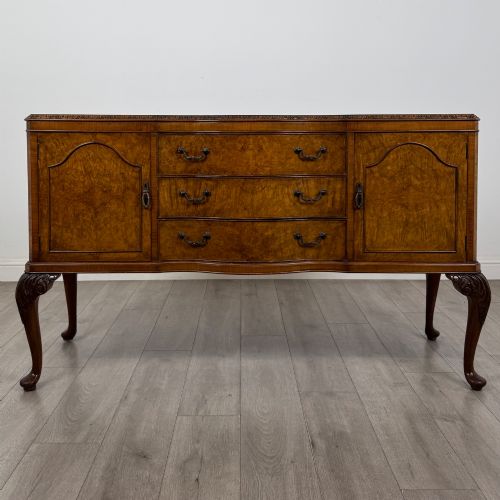
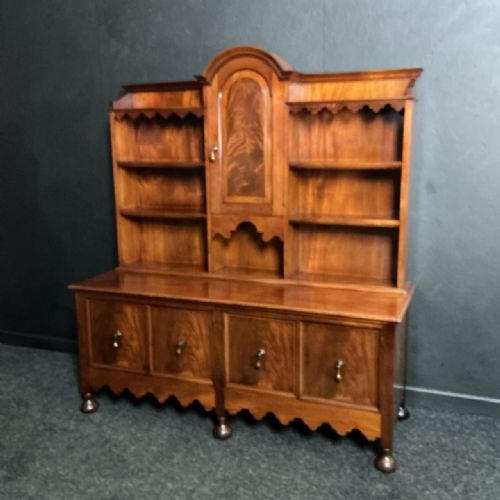
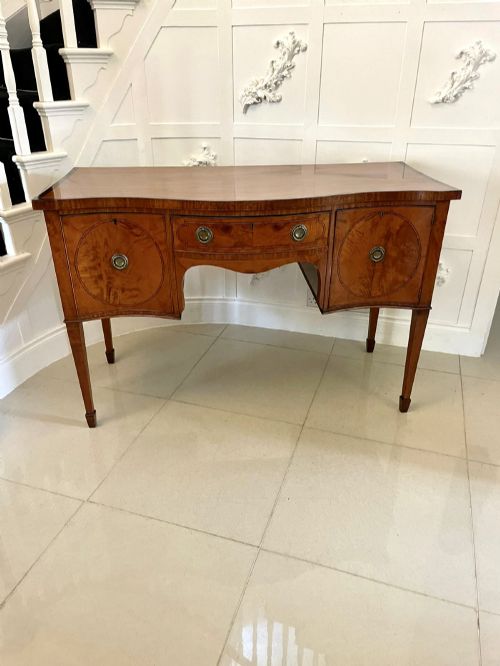
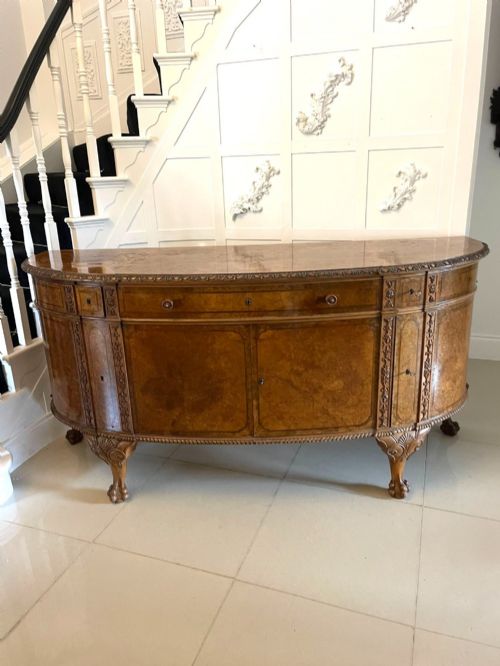
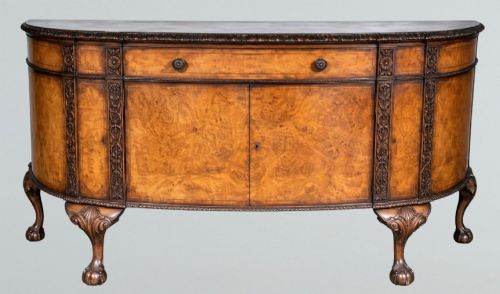
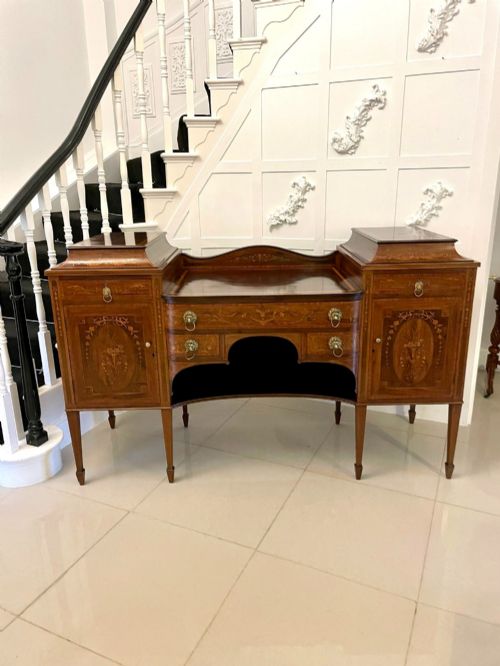
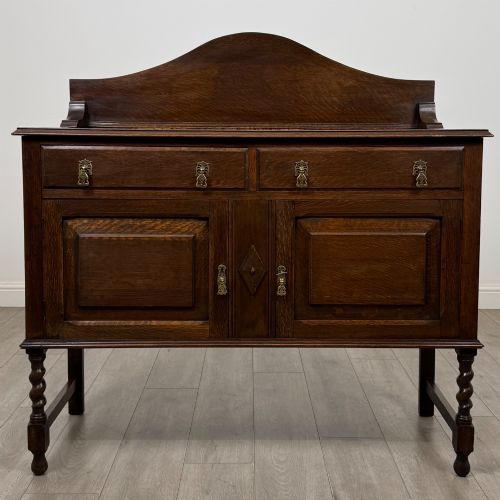
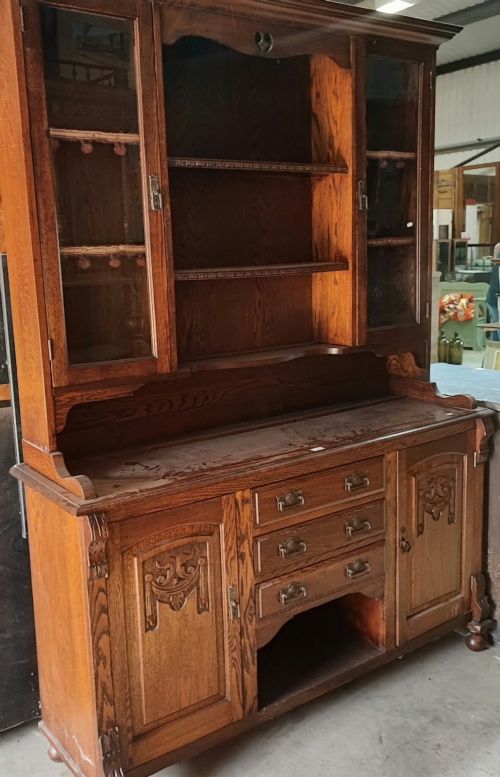
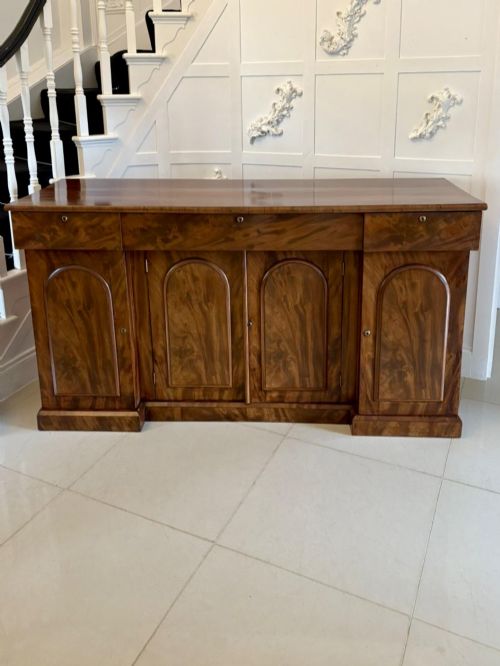
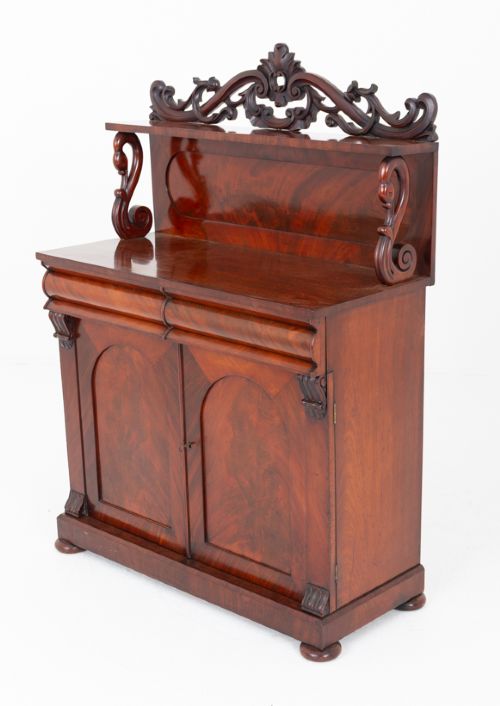
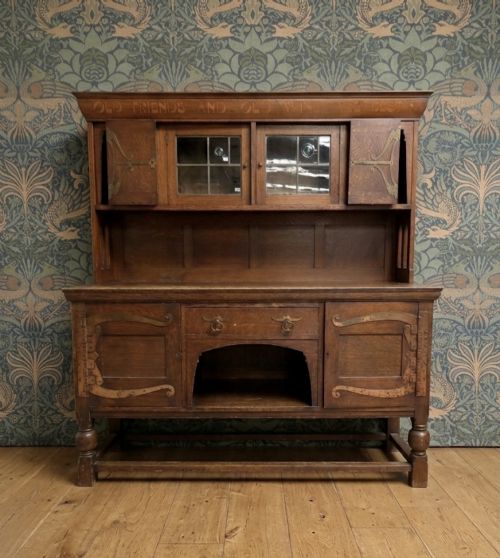
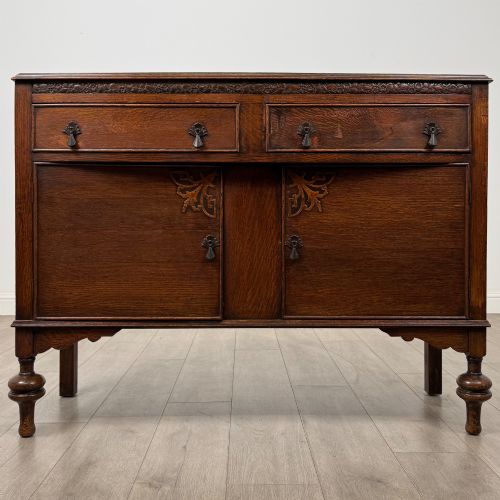
Edwardian Buffet Cabinet
When you search for an edwardian buffet cabinet, you find substantial dining room storage spanning sideboards, dressers and cupboards built for domestic utility.
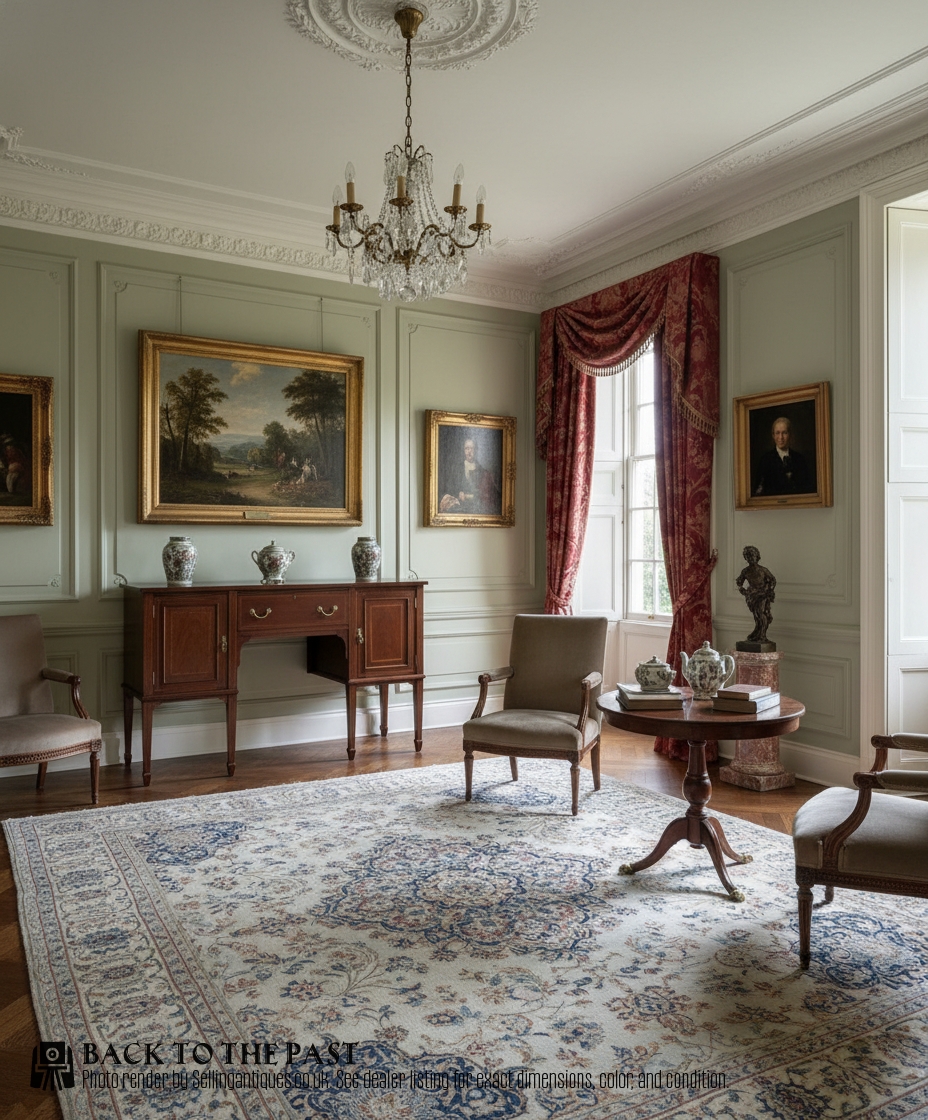
Edwardian Buffet Cabinet
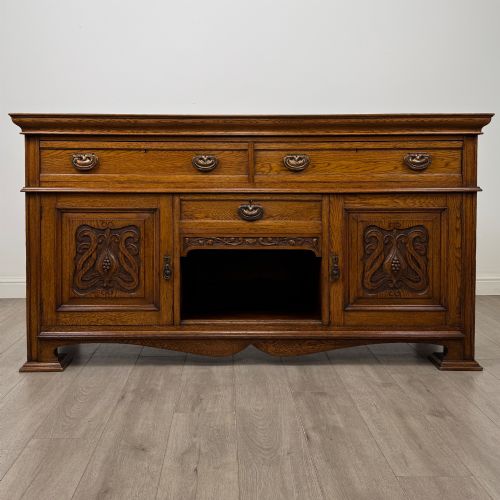
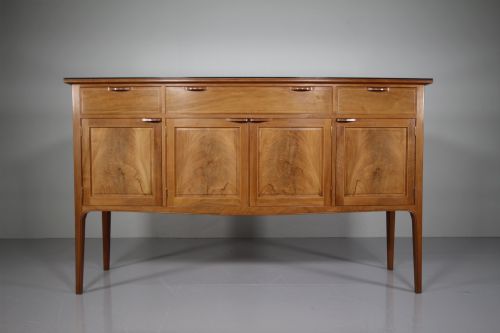
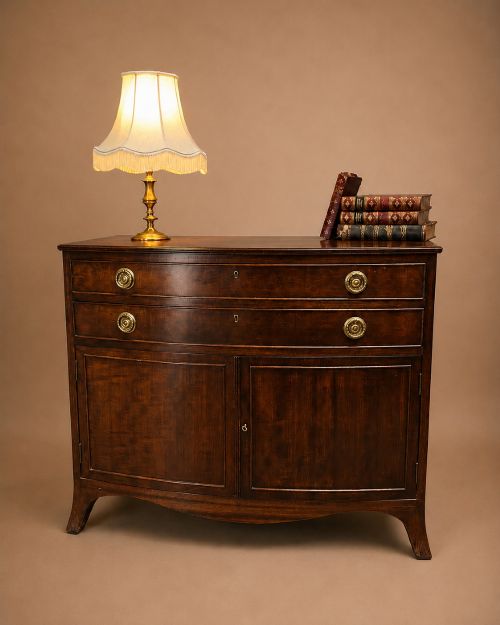
An edwardian buffet cabinet encompasses heavy dining room furniture designed for serving food and storing tableware, appearing frequently in forms such as sideboards, side cabinets, dressers and credenzas across this selection.
The objects span multiple periods, notably the Edwardian era alongside Victorian and early twentieth-century examples, frequently displaying revivalist motifs ranging from Sheraton and Queen Anne to Jacobean styles.
Most pieces combine functional cupboards and drawers with surfaces intended for display, occasionally incorporating glazed sections or mirror-backs to hold china and cutlery sets.
Materials and Construction
Makers utilised timber primaries such as mahogany, oak, satinwood, burr walnut and tiger oak, often incorporating brass handles and iron fittings for structural durability.
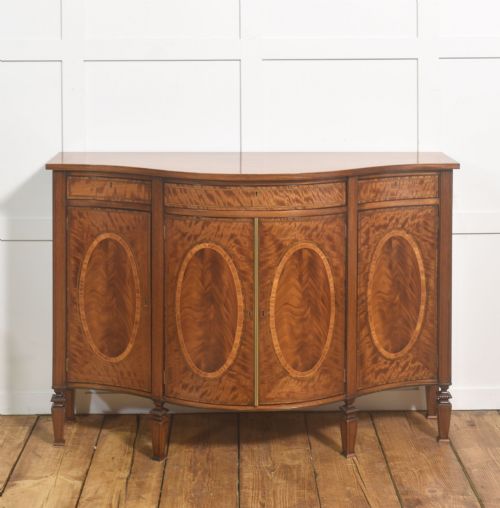
Surface ornamentation relied on marquetry inlay, crossbanding, and carved details, alongside glazed panels and mirrored backs on specific cabinet variations.
Listings show a strong preference for oak and mahogany, with satinwood and burr walnut appearing in decorative inlay work.
Assessing Craftsmanship
The upper tier of pieces displays meticulous timber selection, evidenced by figured mahogany, burr walnut and satinwood veneers matched with refined marquetry inlay and crisp carving.
Construction standards appear in the density of the solid timber used for frames, the precision of dovetail joints in drawers, and the integration of maker signatures or stamps.
Hewetsons London·Edward Barnsley·Heal and Son·Whytock and Reid·Leonard Wyburd·M D Miller and Sons
The Edwardian Buffet Cabinet Glossary
- Buffet cabinet
- A dining room storage unit designed for holding food, china, and cutlery. These pieces usually feature a combination of cupboards, drawers, and a flat top surface.
- Marquetry
- Decorative woodwork where pieces of veneer are fitted into a backing to form geometric or pictorial designs. This technique frequently appears on satinwood and mahogany surfaces.
- Bow-front
- A convex curved cabinet front that projects outward in an arc. This shape provides additional interior depth while softening the rectangular silhouette of the room.
- Crossbanding
- A strip of veneer applied across the grain of the primary wood around the border of a panel or drawer front. It creates a contrasting visual frame.
- Barley twist
- A turned wooden furniture leg or column resembling a spiral rope. This decorative detail occurs commonly on oak pieces from the period.
Edwardian Buffet Cabinet: Frequently Asked Questions
What is an edwardian buffet cabinet used for?
These pieces serve primarily in dining rooms for storing and serving food, tableware, and cutlery. They provide enclosed cupboard space alongside flat surfaces for display during meals.
Many examples incorporate specialised interior fittings such as dedicated cutlery compartments or glass-fronted display areas for china.
How do I identify an Edwardian piece?
Edwardian furniture typically dates from the early twentieth century, exhibiting lighter proportions than heavy Victorian designs while drawing inspiration from earlier Sheraton and revival styles.
Key indicators include satinwood inlay, mahogany or oak construction, and clean lines that favour elegance over heavy Victorian carving.
What is the difference between a sideboard and a buffet?
Sideboards and buffets both provide dining room storage, though buffets historically emphasised serving surfaces and lower cupboards for food delivery.
In modern usage, the terms overlap considerably, with many listings applying both labels to identical cabinet forms featuring drawers and doors.
How should I care for mahogany and walnut cabinets?
Protect timber surfaces by keeping cabinets away from direct sunlight and maintaining stable room humidity to prevent veneer cracking.
Regular dusting with a dry cloth preserves the polished finish without requiring heavy wax applications that attract dust.