
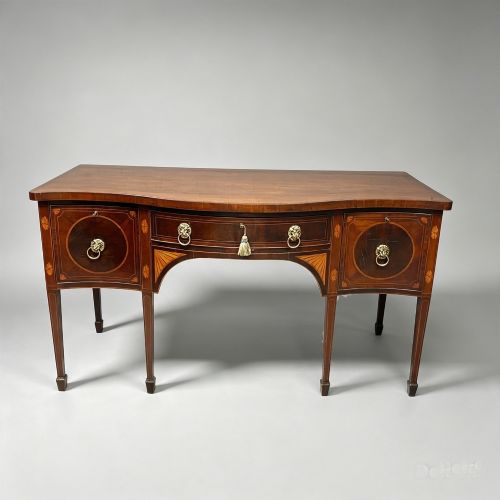
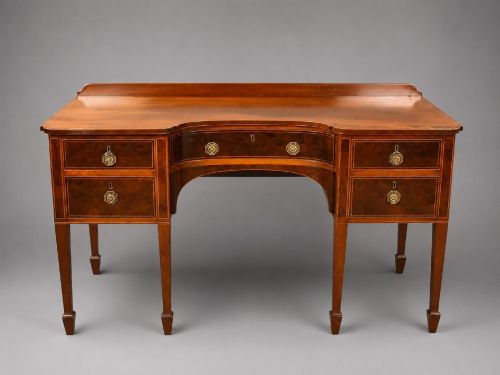
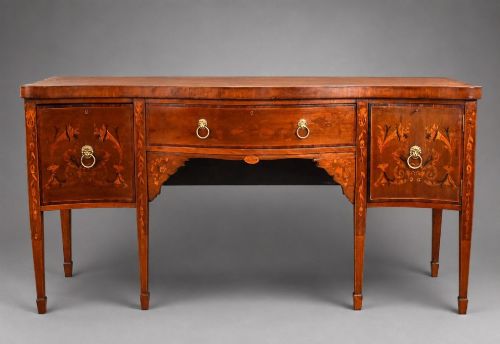
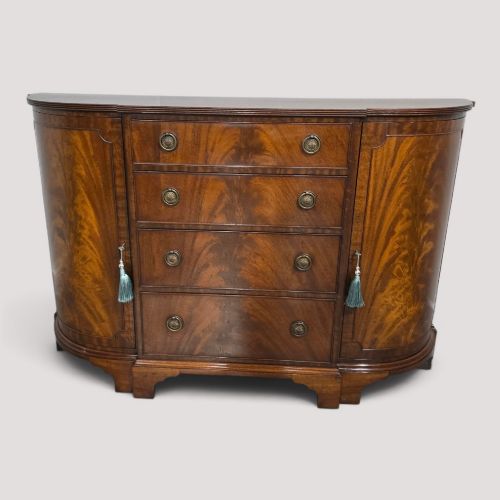
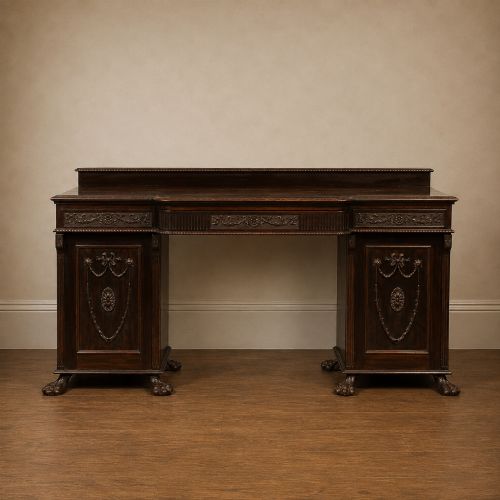
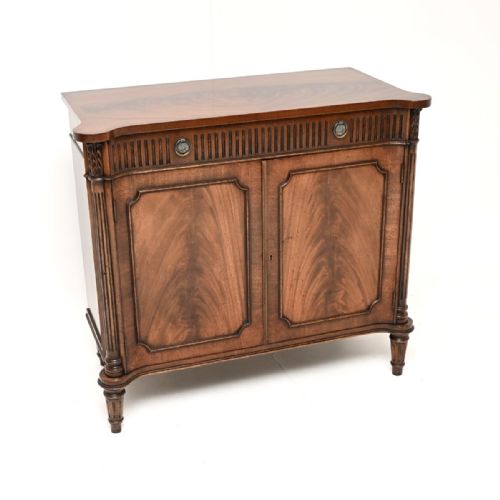
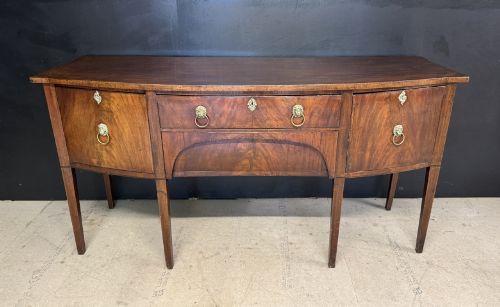
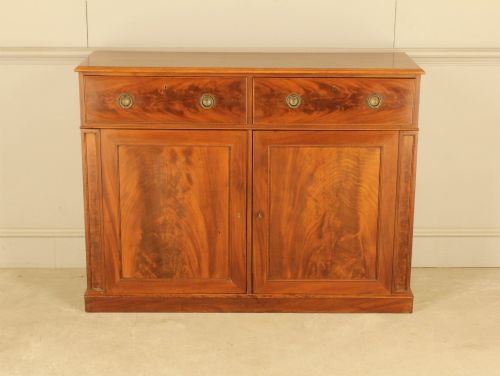
Georgian Style Mahogany Sideboard
A georgian style mahogany sideboard brings generous storage and classic proportions to a dining room.
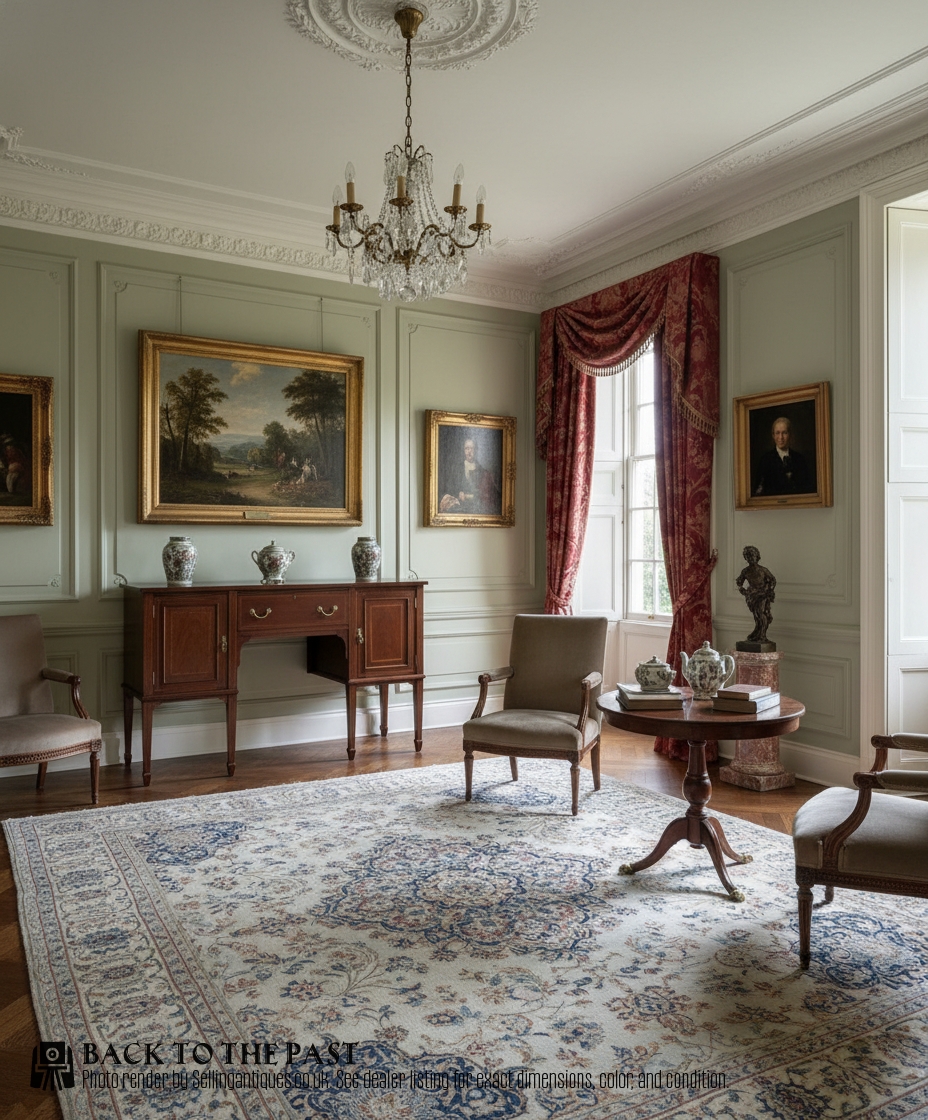
Understanding the Georgian Style Mahogany Sideboard
A georgian style mahogany sideboard provides long surface space for serving alongside cupboards and drawers underneath. These pieces echo the elegance of eighteenth-century proportions while often dating from later revival periods.
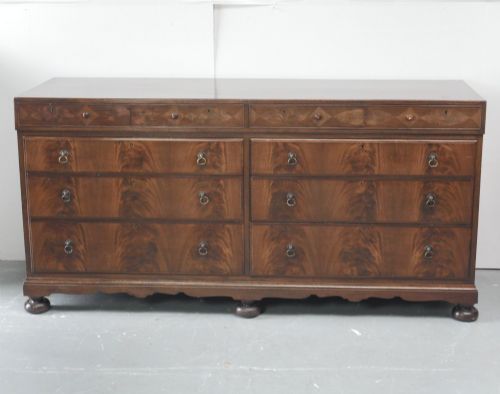
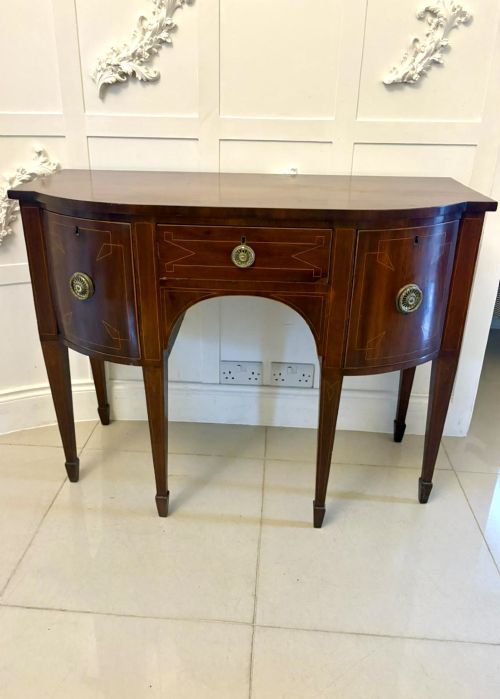
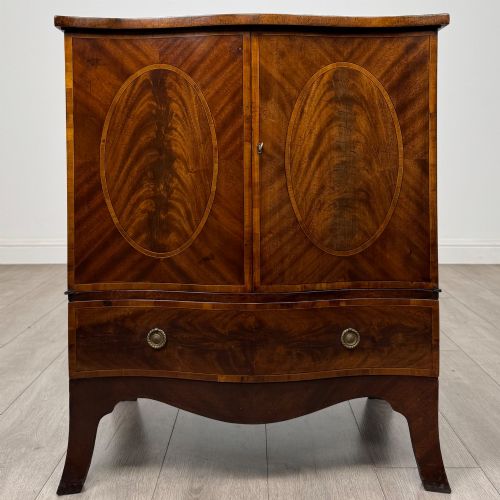
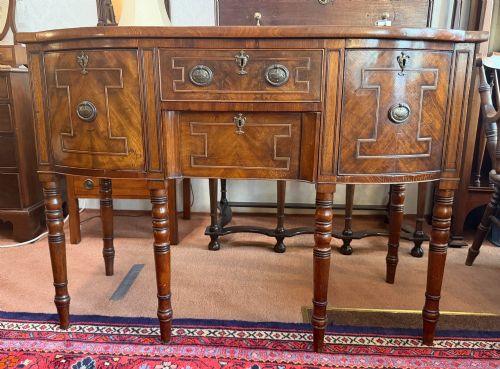
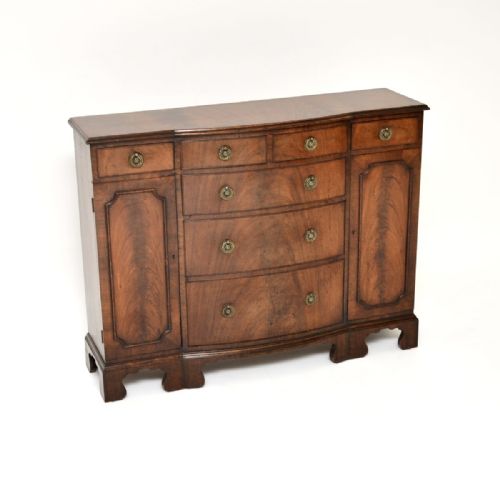
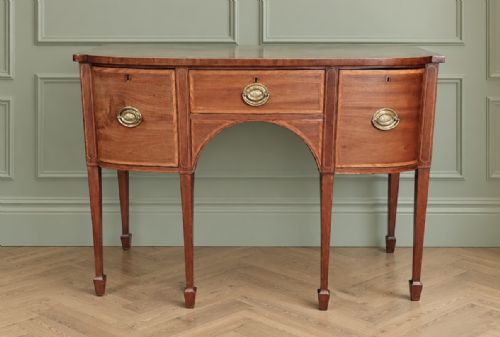
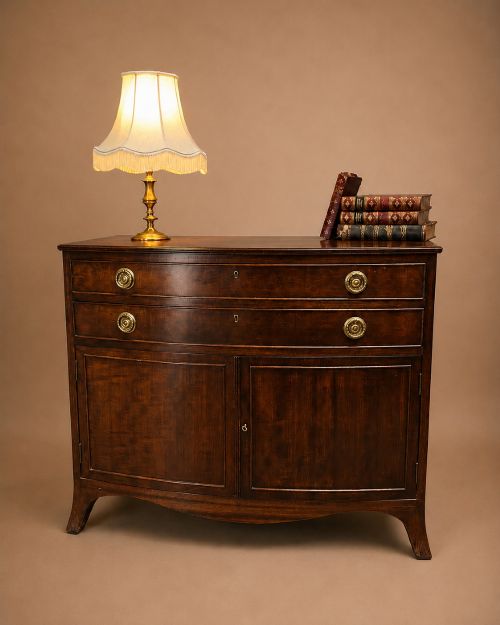
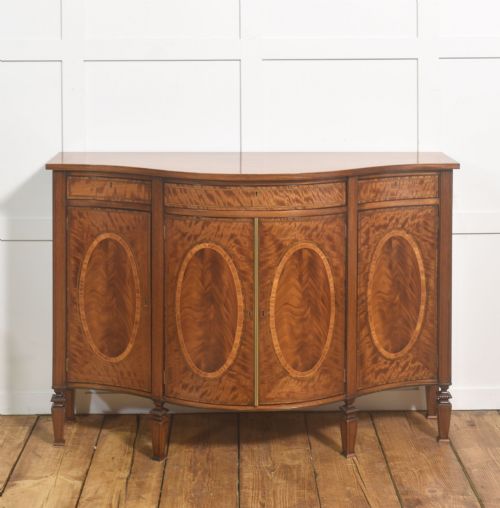
The versions most commonly met on this page include breakfront, bow front, and serpentine front shapes. Many examples incorporate delicate satinwood inlay or brass hardware.
Makers across the nineteenth and twentieth centuries produced these serving pieces to meet enduring demand for traditional dining room furniture.

Materials and Construction
Cabinet makers utilised solid mahogany and flame mahogany veneer over secondary timbers to build these substantial pieces. The distinct grain patterns on the drawer fronts and doors receive careful book-matching.
Surfaces often feature contrasting stringing or decorative satinwood inlay arranged in classical motifs. Brass handles and escutcheons secure the drawers and cupboard doors while adding metallic contrast to the dark timber.
Retail Price Guide 2026
Typical UK retail prices for georgian style mahogany sideboard, calculated from the Sellingantiques database of over a million retail prices indexed since 2003. This retail price guide relies exclusively on Sellingantiques data; no external sources or auction records are used, so the figures do not describe the wider market.
Common structural forms include breakfront, bow front, and serpentine shapes alongside simpler pedestals and cupboards.
Assessing Quality and Craftsmanship
Superior examples distinguish themselves through the choice of timber, particularly the vibrancy of the flame mahogany veneer and the precision of the satinwood inlay. The crispness of carved details and the weight of the brass fittings further separate finer pieces from standard production.
Structural integrity depends on robust internal framing and smooth drawer runners that operate without binding. The neatness of joint work on curved or serpentine fronts indicates the skill of the original workshop.

The Georgian Style Mahogany Sideboard Glossary
- Breakfront
- A cabinet front where the central section projects forward from the recessed outer sections. This architectural feature creates visual depth and extra internal capacity.
- Bow front
- A convexly curved furniture front that softens the rectangular profile of a room. This shape demands expert carpentry to bend and veneer the timber accurately.
- Serpentine
- A front configuration featuring a convex centre flanked by concave wings, or vice versa. The undulating line requires intricate cutting and fitting.
- Flame mahogany
- A veneer cut from timber where the branches join the main trunk, producing a rippled, flame-like pattern. Craftsmen prized this figure for principal display surfaces.
- Satinwood
- A pale, hard wood native to Sri Lanka and India used for contrasting inlay and banding. Its luminous golden tone highlights darker mahogany borders.
Frequently Asked Questions
How do I care for a mahogany surface?
Dust the wood regularly with a soft, dry cloth to prevent grit accumulation. Apply a quality beeswax occasionally to nourish the grain and maintain the natural sheen.
Avoid placing the furniture near direct heat sources or strong sunlight, which can dry out the timber and fade the rich colour.
Where should I place a large sideboard?
Position the piece against a main dining room wall where it can function effectively for serving food and storing tableware. Ensure there is adequate clearance for cabinet doors to open fully.
Keep walkways clear around the front profile, especially if you choose a breakfront or serpentine shape that extends further into the room.
What is the difference between a bow front and a serpentine front?
A bow front curves outward in a single continuous convex arc across the width of the piece. This provides a simpler, rounded appearance.
By contrast, a serpentine front combines both convex and concave curves in an undulating wave pattern, which requires significantly more advanced woodworking skill.
Can I use a sideboard in a hallway?
Low or narrow variations fit comfortably into spacious entrance halls or living rooms to provide useful surface space and hidden storage. Their shallow depth prevents them from obstructing movement in transit areas.
Ensure you measure the available floor space carefully to accommodate the specific proportions of pedestals, cupboards, or protruding curves.