
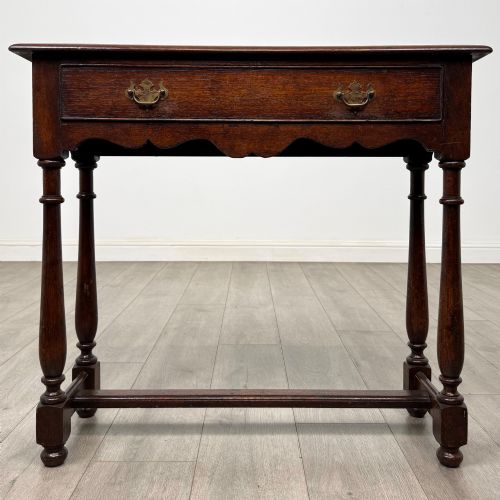
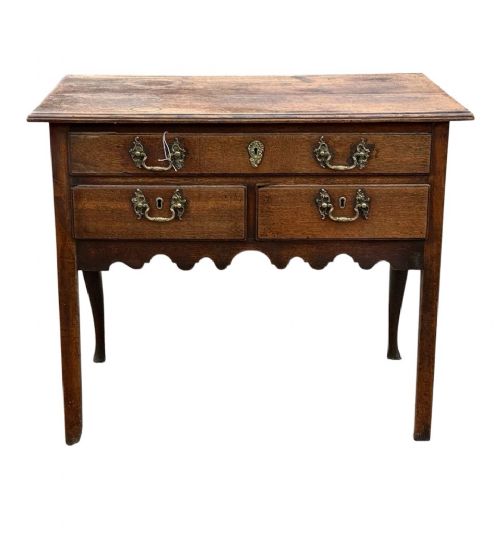
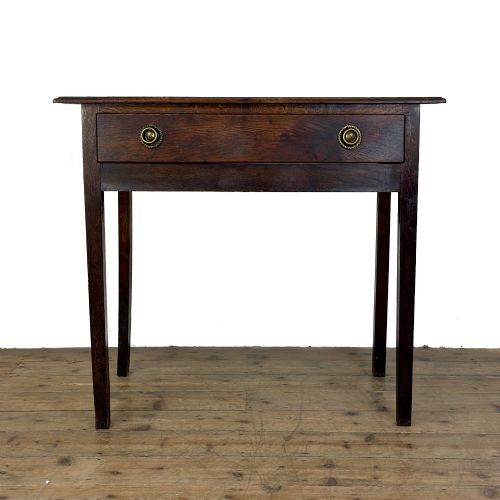
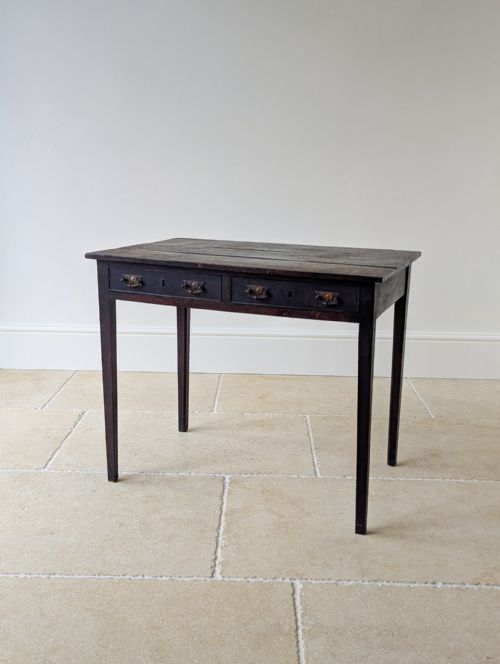

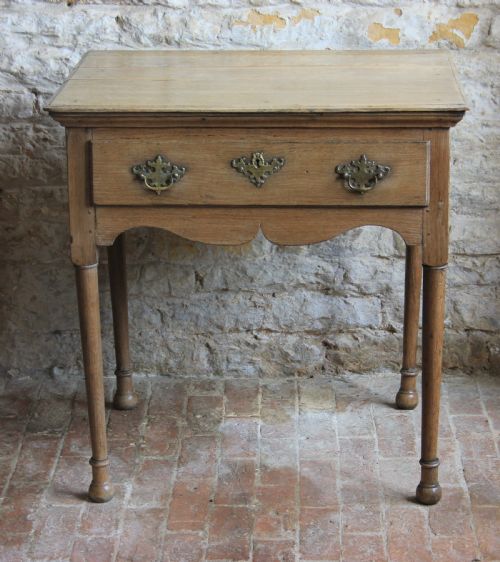


Country Oak Dressing Table
A country oak dressing table brings practical surface space and straightforward timber character to a bedroom.
Country Oak Dressing Table
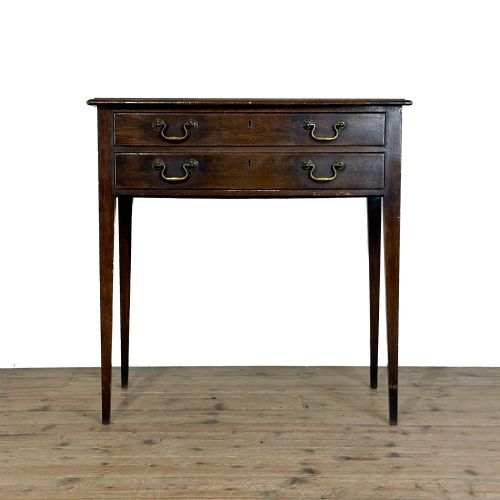
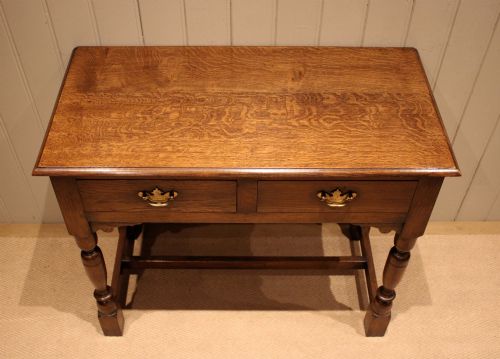
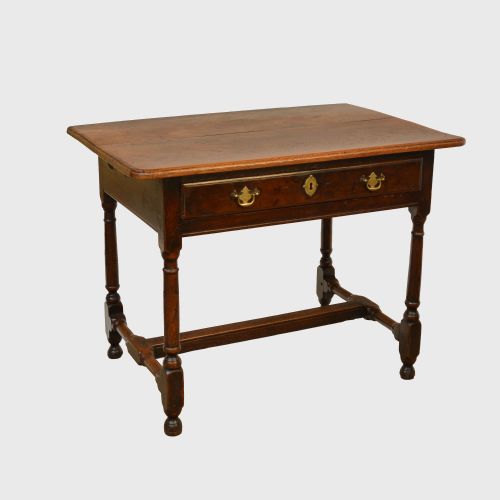
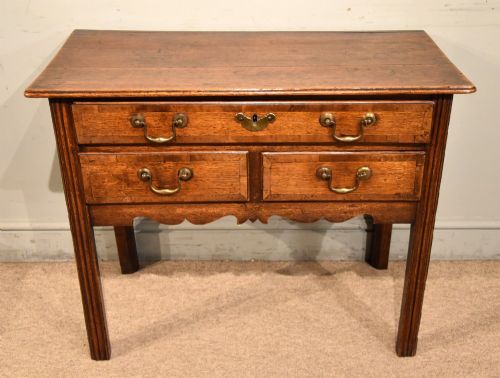
When you search for a country oak dressing table, you encounter lowboys, side tables, and writing desks that serve similar domestic functions. These pieces mostly date from the eighteenth and nineteenth centuries, with Georgian periods and regional country workshops strongly represented.
The version you meet most often on this page is the lowboy or side table, frequently fitted with drawers for storage. Makers constructed these items from robust timbers suited to daily use in domestic settings rather than formal state rooms.
What varies in quality
Quality rests on the selection of timber, particularly whether the oak shows attractive figuring and how well the secondary woods complement the main structure. Tables with untouched patination and original brass hardware sit at the higher end of the scale.
Proportion and the restraint of the design also separate ordinary pieces from finer examples. Heavy restorations or replaced tops alter the integrity of an antique and reduce its appeal to a collector.
Country Oak Dressing Table Retail Price Guide 2026
Typical asking prices for country oak dressing table among the pieces listed under this phrase on Sellingantiques today, from the lower quarter to the upper quarter. They describe what is for sale here now, not the wider market.
Early country makers occasionally concealed extra hiding spaces behind small drawer partitions.
The Country Oak Dressing Table Glossary
- Lowboy
- A small table with one or more drawers, commonly used as a dressing table or side table in the eighteenth century. These low-standing items provide convenient surface space.
- Side table
- A functional small table designed to stand against a wall in a hallway, parlour, or bedroom. They range from plain country pieces to more refined Georgian forms.
- Fruitwood
- A dense timber obtained from fruit-bearing trees such as pear or apple, utilised by country cabinet makers for boards and turned components. It takes a smooth finish.
- Timber inlay
- The decorative insertion of contrasting woods into a recessed surface to form patterns or lines. This technique adds visual interest to plain oak panels.
- Patina
- The surface sheen and colour acquired by wood over decades of handling, cleaning, and exposure to light. A natural patina indicates age and gentle use.
Country Oak Dressing Table: Frequently Asked Questions
What is a country oak dressing table?
A country oak dressing table typically refers to a lowboy, side table, or small writing desk dating from the eighteenth or nineteenth centuries. These pieces were built for everyday domestic use in provincial homes.
They offer a compact surface and drawer storage, making them practical for modern bedrooms while retaining period character.
How do I date an antique oak table?
Dating relies on observing construction methods, timber choice, and hardware. Eighteenth-century pieces often feature hand-cut dovetails and pegged joints.
Secondary woods like elm or fruitwood and regional styles, such as Welsh country work, also offer clues to the period of manufacture.
Are lowboys and dressing tables the same?
In historical terms, a lowboy functioned as a small dressing table or side table depending on where it stood in the house. Many examples served multiple purposes in the bedroom.
Today, buyers use these terms interchangeably when searching for small tables with drawers.
How should I care for antique oak?
Keep antique oak furniture away from direct heat sources and strong sunlight to prevent the timber from drying out and splitting. Regular dusting with a dry cloth maintains the surface.
Applying a traditional beeswax polish occasionally helps nourish the wood and preserve its natural patina.