


Early Oak Side Table
An early oak side table brings centuries of practical English domestic history into a modern room through honest carpentry and warm, aged timber.
Early Oak Side Table
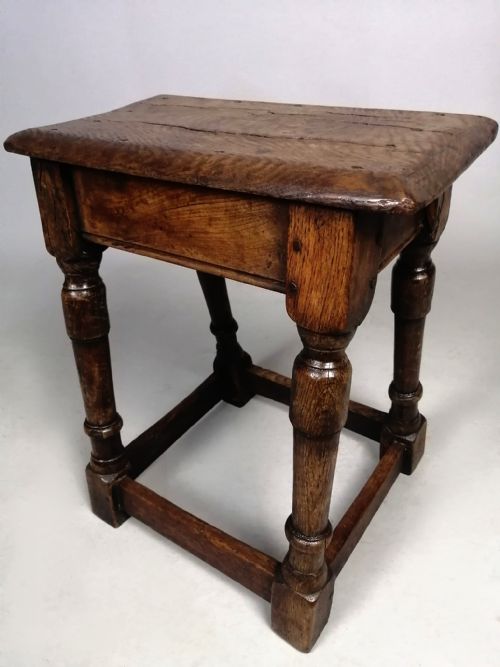
An early oak side table is a utilitarian surface intended for domestic storage and display, originating primarily from the seventeenth and eighteenth centuries alongside later revivals.
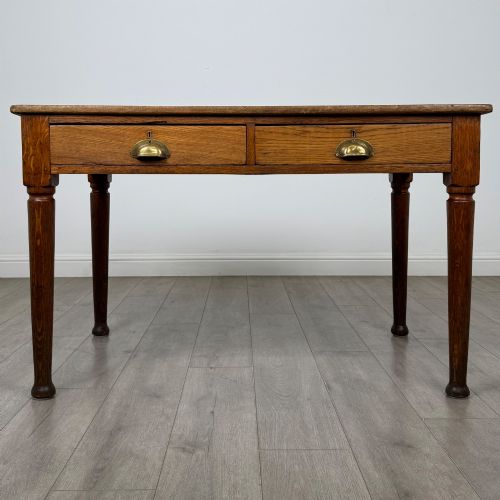
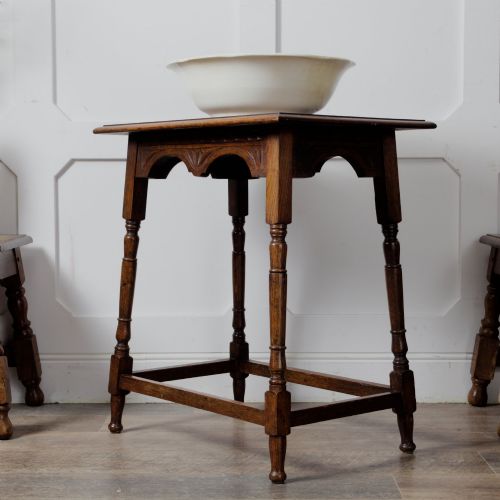
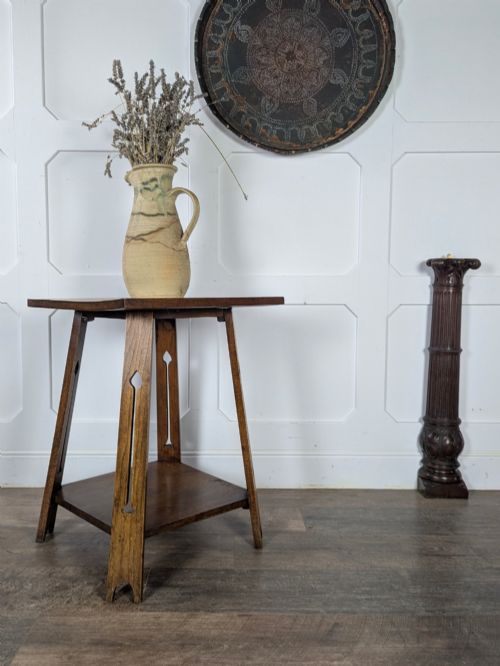
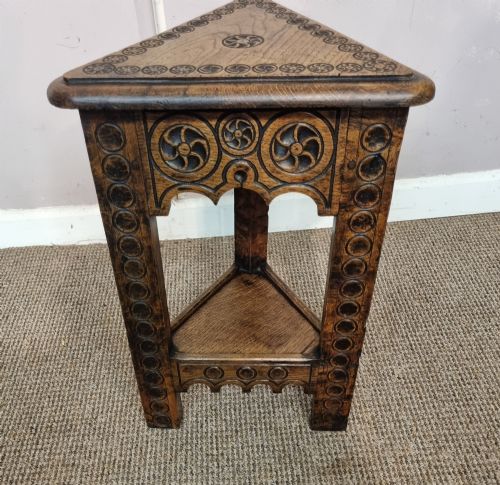
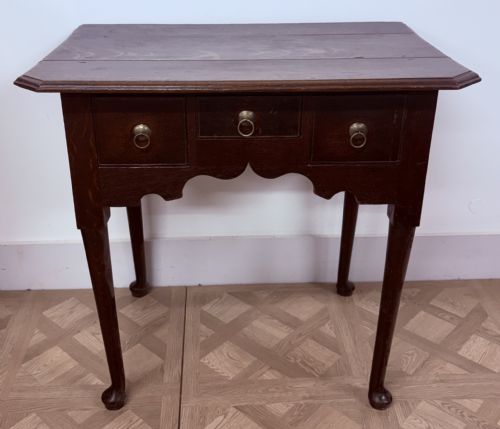
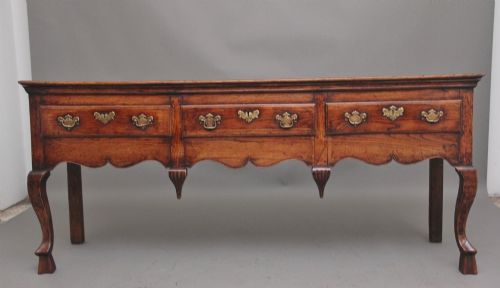
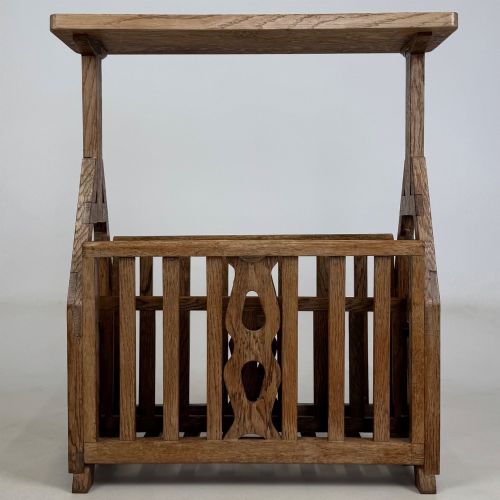
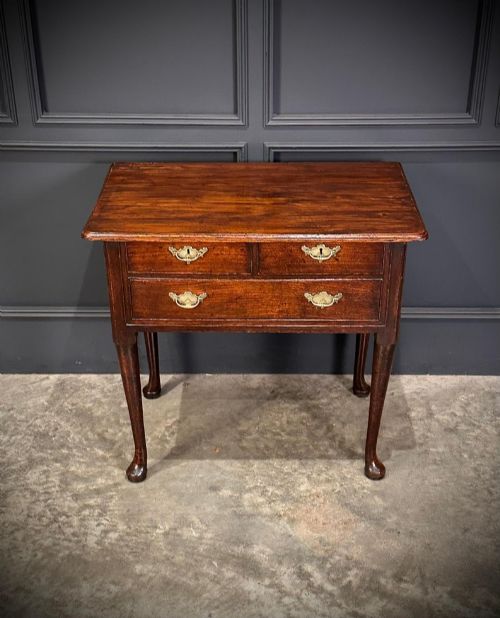
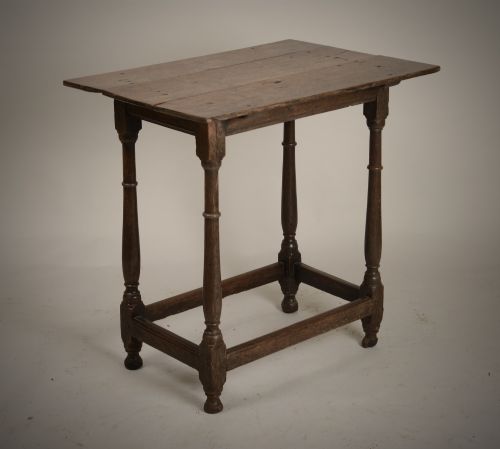
The inventory on this page ranges from seventeenth-century joined examples and eighteenth-century lowboys to twentieth-century Jacobean revival pieces and arts and crafts tables.
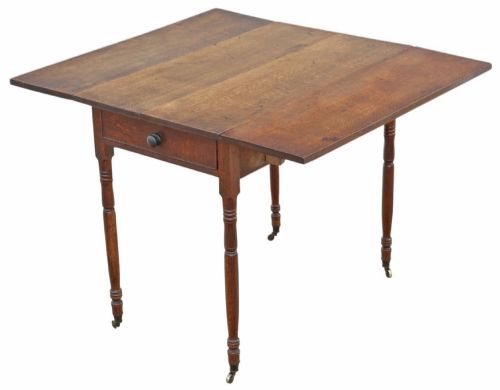
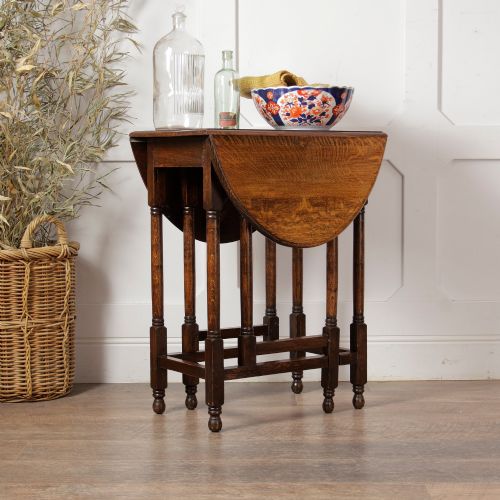
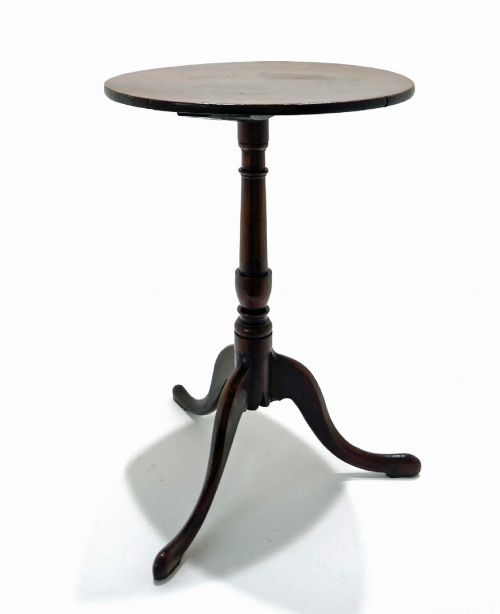
Common forms include single-drawer side tables, tripod tables, and gateleg variants constructed for everyday use in country houses and taverns.
How they were made
Joiners and cabinetmakers relied primarily on solid oak, frequently supplemented with secondary timbers such as elm, fruitwood, and walnut for tabletops or structural components.
Construction techniques typically involved traditional mortise and tenon joints secured with wooden pegs, hand-planed boards, and occasionally turned legs with brass hardware.
Some tables double as ships gallery pieces and clover-shaped novelties, proving ancestors enjoyed quirky furniture just as much as we do.
What varies in quality
Quality rests upon the proportion of original timber remaining in the piece, the integrity of the structural joins, and the depth of the natural surface patina accumulated over centuries.
Early tables exhibiting restrained hand-carving, well-proportioned drawer linings, and minimal later restoration command greater appreciation among collectors than heavily altered examples.
Heals·Liberty London
The Early Oak Side Table Glossary
- Lowboy
- A small oak table with one or more drawers, originating in the early eighteenth century and frequently used as a dressing or serving surface. These tables typically feature slender legs and elegant proportions.
- Joint stool
- A sturdy wooden seat constructed with pegged mortise and tenon joints rather than turned assembly. These items share the domestic spaces and construction methods of early tables.
- Gateleg table
- A table with hinged flaps supported by swing-out legs that pivot like a gate. This design allowed surfaces to expand or fold away efficiently in compact rooms.
- Tripod table
- A small freestanding table supported by a central pillar above three spreading feet. They appear frequently in eighteenth-century contexts.
- Patina
- The deep surface sheen and colour developed by wood through age, handling, and waxing. It serves as a key indicator of authenticity and historical depth.
Early Oak Side Table: Frequently Asked Questions
How old is an early oak side table?
Many examples date from the late seventeenth and eighteenth centuries, though the category also encompasses later nineteenth-century country house pieces and twentieth-century revival furniture.
Examination of the timber grain, tool marks, and construction joints helps determine whether a piece belongs to the early period or later traditions.
What was a lowboy used for?
A lowboy functioned primarily as a compact dressing table or a serving surface in eighteenth-century chambers and hallways.
The single or multiple drawers provided convenient storage for small personal items while maintaining a low profile against walls.
How should I care for an antique oak table?
Maintenance requires keeping the timber away from direct heat sources and sudden humidity changes to prevent wood movement.
Occasional applications of traditional beeswax nourish the surface patina without building up synthetic residues.
How do I distinguish between periods?
Seventeenth and early eighteenth-century pieces often display pegged joints, hand-sawn boards, and simpler turned supports reflecting regional vernacular traditions.
Later revival furniture from the twentieth century typically incorporates machine-cut elements and standardised fittings beneath stylistic ornamentation.