
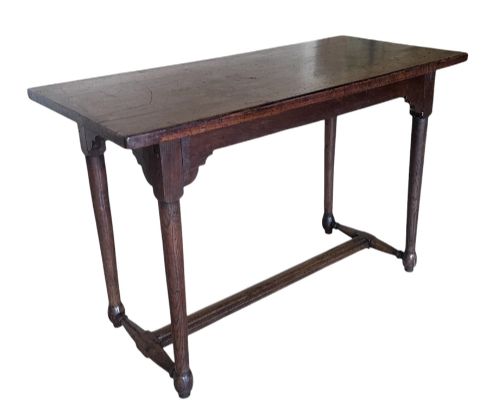
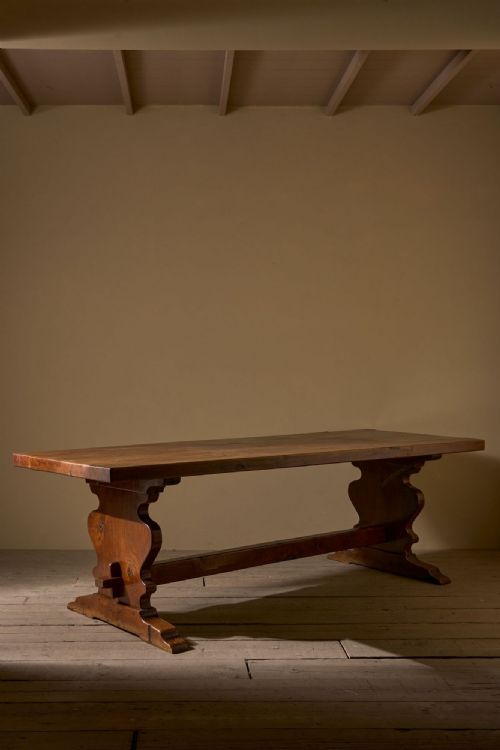
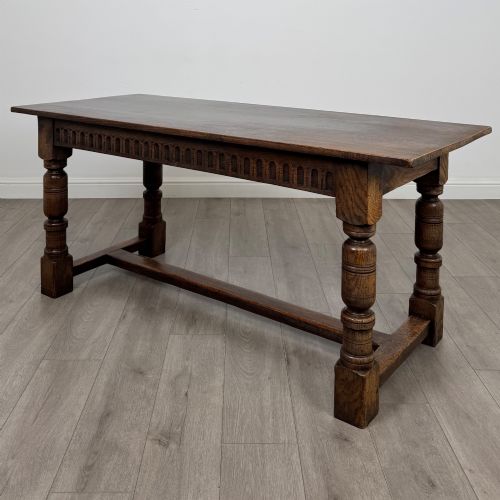
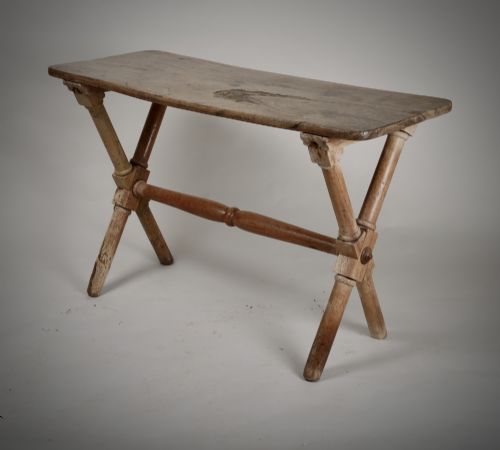

Oak Tavern Table
An oak tavern table brings rugged utility and centuries of social history straight into a room.
The Form and Period of Oak Tavern Tables
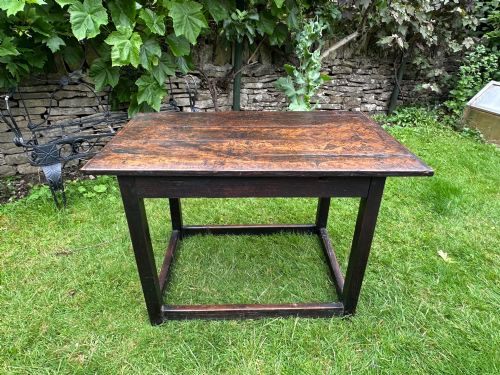
An oak tavern table is a robust domestic or public house surface designed to endure daily use, spanning centuries of British and continental rural craftsmanship. Buyers searching for an oak tavern table will encounter sturdy timber constructions suited for gathering, dining, or side placement in traditional spaces.
The pieces appearing in this category range from the seventeenth century through to the Edwardian era, encompassing Welsh country pieces, Spanish Baroque forms, and Jacobean revivals. Early examples often exhibit joined construction and thick planks, while later manifestations lean towards refectory styles, cricket tables, or Arts and Crafts interpretations.
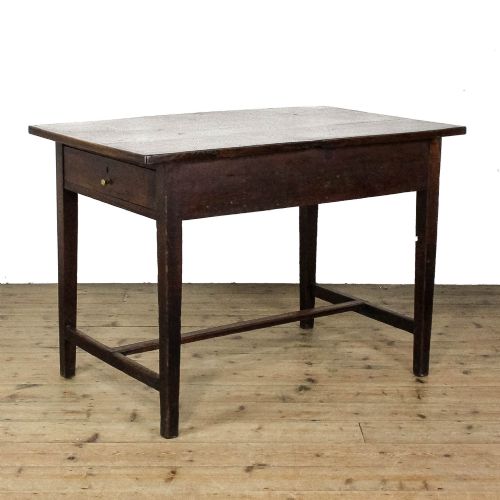
Side tables, dining tables, kitchen tables, and occasional tables all share this lineage, frequently overlapping with farmhouse and pub furniture definitions. The most commonly met versions on this page originate from the eighteenth and nineteenth centuries, retaining utilitarian proportions and honest construction.
Evaluating Quality and Character
The distinction between standard examples and exceptional pieces rests in the integrity of the timber, the depth of patination, and the retention of original structural elements. Tables displaying period repairs, uncompromised thick tops, and harmonious proportions command greater appreciation from collectors of vernacular furniture.
Construction details such as pegged joints, hand-planed surfaces, and unblemished structural framing separate provincial workshop output from later revival pieces. The presence of documented maker influence or distinctive regional variations, such as Welsh or Spanish framing traits, further defines the standing of individual tables.
Retail Price Guide 2026
Typical UK retail prices for oak tavern table, calculated from the Sellingantiques database of over a million retail prices indexed since 2003. This retail price guide relies exclusively on Sellingantiques data; no external sources or auction records are used, so the figures do not describe the wider market.
Some tavern tables feature built-in game boards, including shove a penny, ready for centuries-old pub disputes.
Heals
The Oak Tavern Table Glossary
- Patina
- The surface sheen and colour developed by wood over years of handling, polishing, and exposure to light. This deep layer indicates age and continuous use.
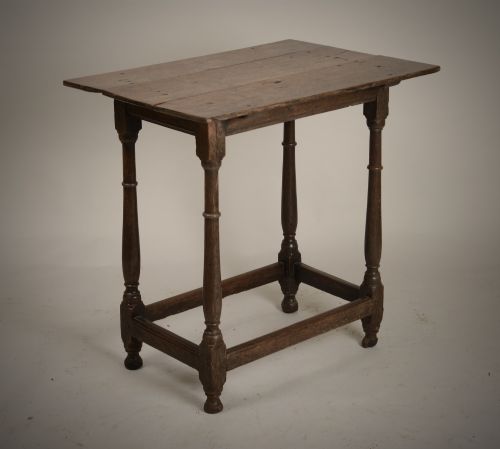
- Joined table
- A table constructed using traditional mortise and tenon joints secured with wooden pegs rather than modern metal fasteners. This method provides immense structural rigidity.
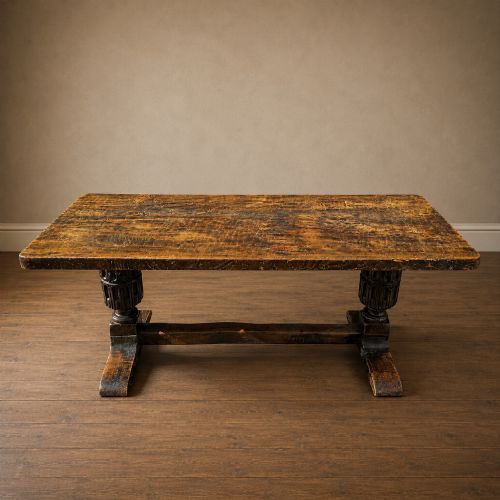
- Refectory table
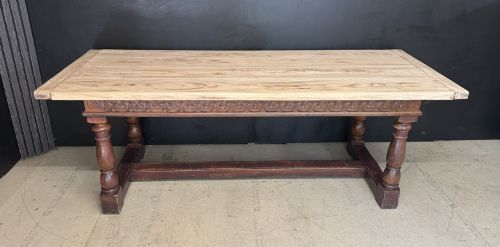
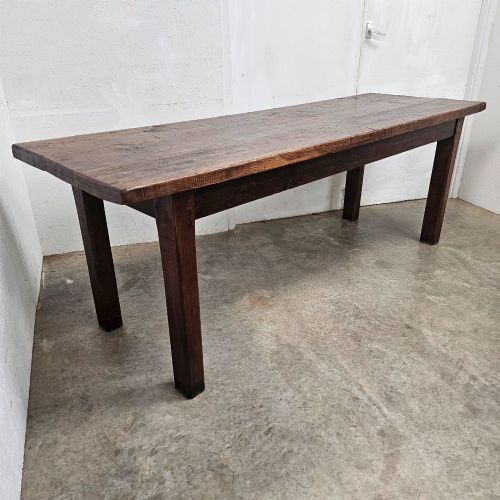
- A long, narrow dining table traditionally used in monastic refectories and later adopted in domestic and tavern settings. They offer generous seating capacity along the length.
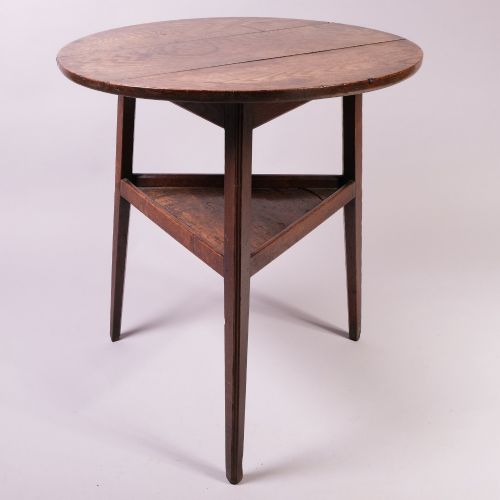
- Cricket table
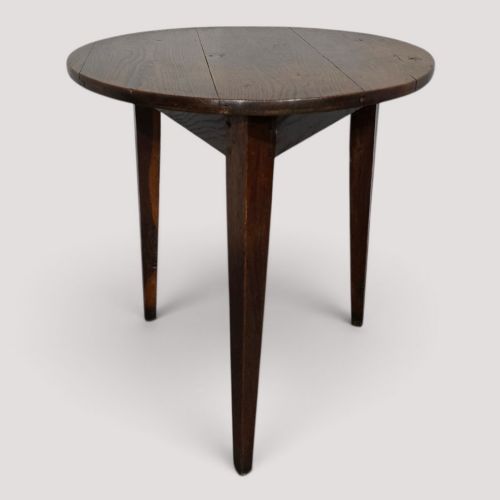
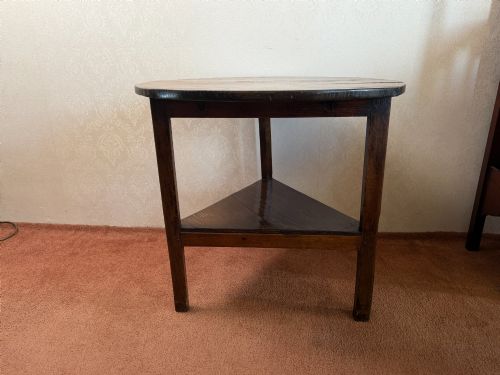
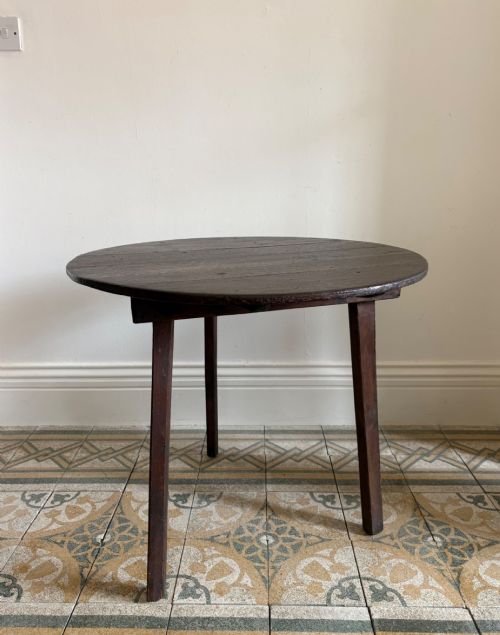
- A small, light table traditionally featuring three splayed legs and a round top, designed to stand firm on uneven flagstone floors. They function well as occasional or side tables.
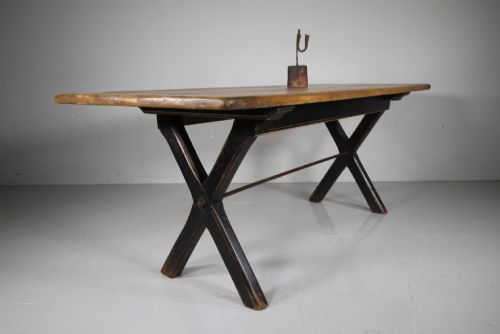
- X-frame
- A structural base design utilising intersecting diagonal timbers to support the top. This configuration maximises legroom while maintaining high load-bearing strength.
Frequently Asked Questions
What is an oak tavern table?
An oak tavern table is a heavy-duty wooden surface originally built for use in public houses, inns, and rural homes. These pieces were designed to withstand heavy daily use, featuring thick timbers and robust construction.
Today, they serve as functional dining, kitchen, or side tables that bring historic character and rustic warmth to contemporary interiors.
How do I date an old oak table?
Dating requires examining the construction methods, tool marks, timber selection, and wear patterns across the frame and top. Hand-cut joints, pegged tenons, and timber shrinkage offer reliable clues to centuries past.
Later revival pieces from the Edwardian period often mimic earlier styles but reveal machine-cut consistency and different fastening methods upon closer inspection.
Were these tables used in homes?
While originally commissioned for inns, taverns, and alehouses, similar robust designs served as practical kitchen and refectory tables in farmhouses and cottages. Their durability made them ideal for busy domestic environments where food preparation and communal dining took place.
Over time, the distinction between pub furniture and domestic country furniture blurred considerably.
How do I care for antique oak?
Antique oak benefits from stable indoor humidity and protection from direct heat sources that can dry out and split historic timber. Regular application of a traditional beeswax polish helps nourish the wood and maintain its protective surface sheen.
Avoid harsh chemical cleaners and moisture buildup to preserve the natural patina accumulated over generations.