


Seventeenth Century Storage Drawers
Seventeenth century storage drawers offer robust timber construction and historic joinery, bringing authentic period character and functional depth to an interior.
Seventeenth Century Storage Drawers
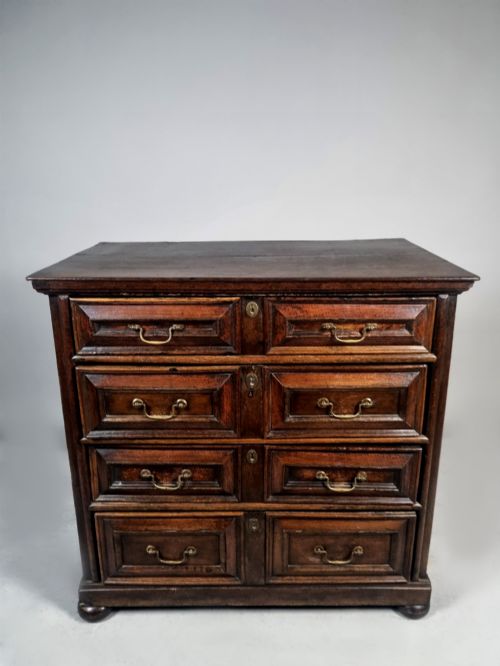
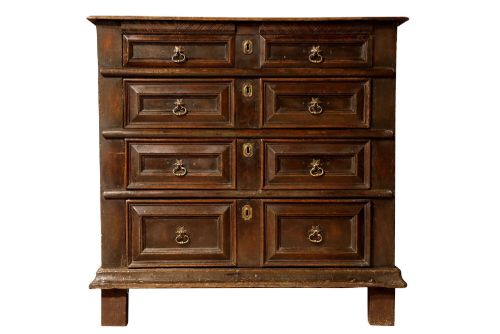
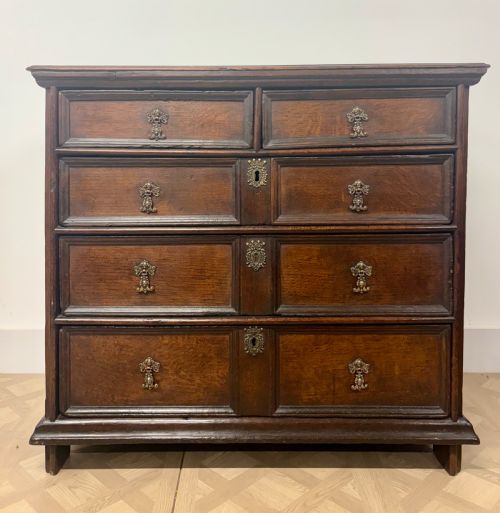
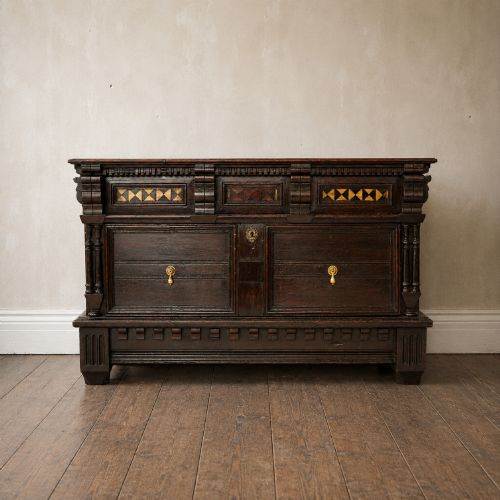
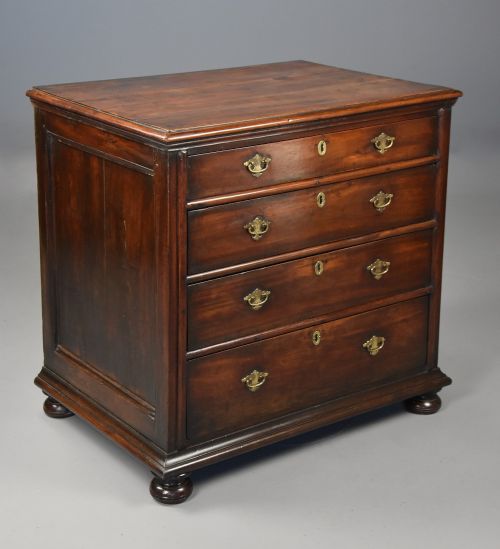
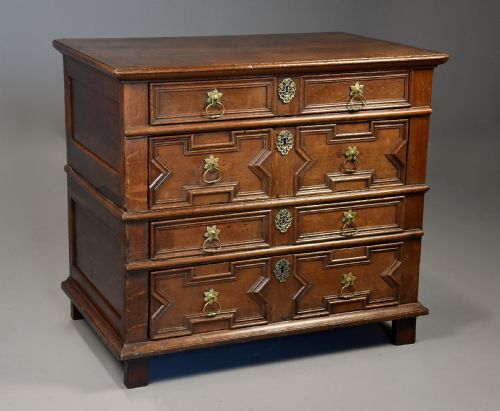
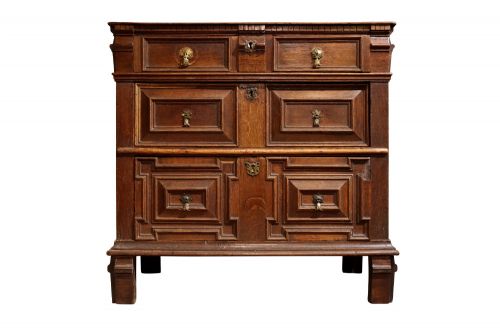
Seventeenth century storage drawers comprise solid timber carcases designed for domestic utility, encompassing formats from low two-part chests to taller case pieces. Buyers seeking seventeenth century storage drawers encounter sturdy oak structures alongside occasional fruitwood, walnut, and olive examples.
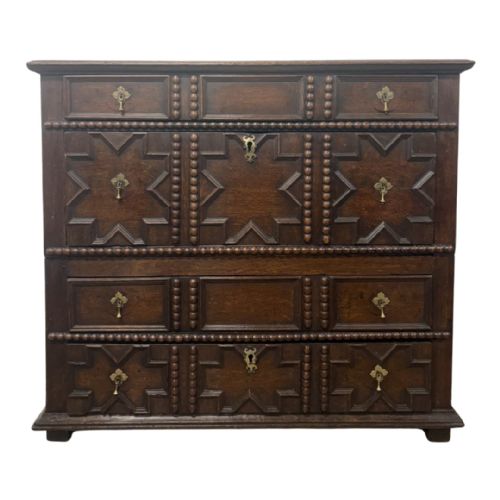
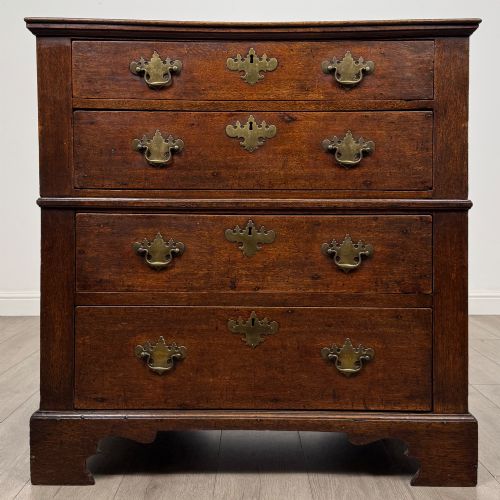
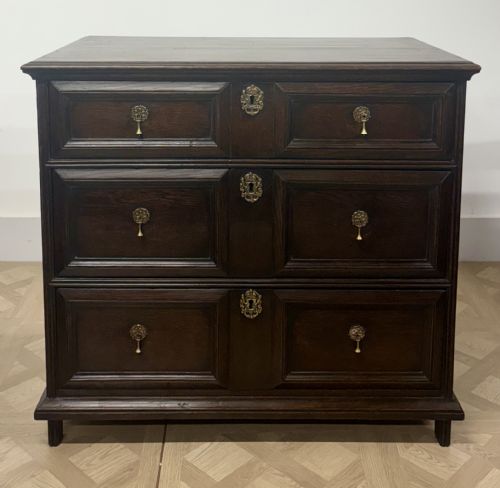
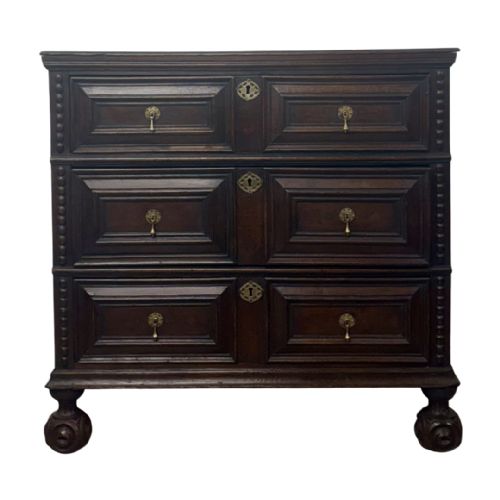
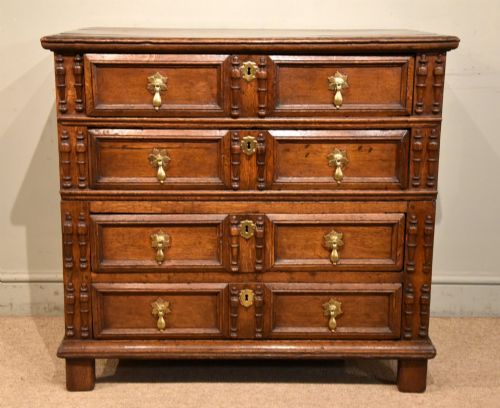
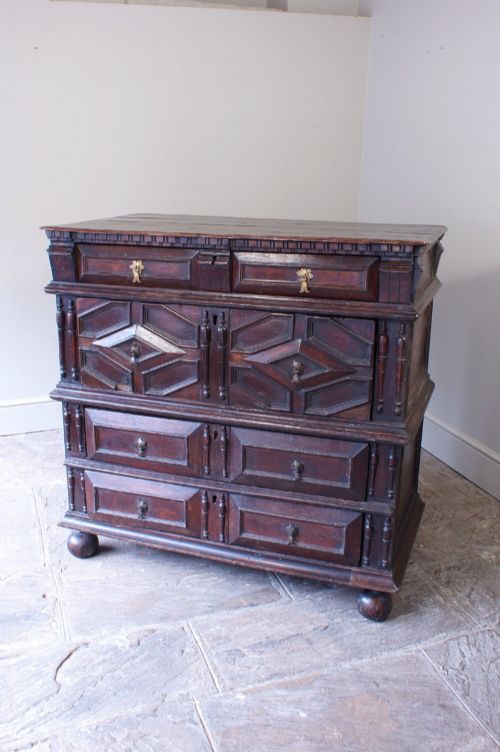
The prevailing form on this page is the chest of drawers, often detailed with geometric mouldings or raised panels. Variants include mule chests and chests on stands, spanning Jacobean, Charles II, Carolean, and William and Mary styles.
Evaluating Quality and Detail
Quality rests in the crispness of the geometric mouldings and the integrity of the timber figure, particularly in veneered or inlaid surfaces. Pieces retaining original brasses and an undisturbed surface finish hold greater fidelity to their period origins.
Proportion and scale distinguish finer examples, where carcase mouldings and drawer divisions align with deliberate architectural balance. The depth of the carved detail and the cohesion of the wood grain across the facade elevate the work of individual joiners.
Listings feature oak, walnut, fruitwood, and olive timbers, alongside decorative wood inlay and oyster veneer.
The Seventeenth Century Storage Drawers Glossary
- Oyster Veneer
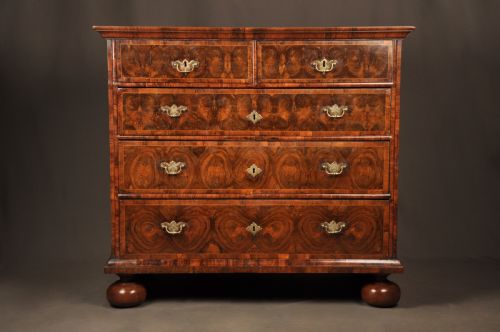
- Slices cut transversely from small branches to create circular or oval patterns resembling oyster shells. This technique flourished during the late seventeenth century.
- Moulded Front
- A drawer facade decorated with applied geometric mouldings that create raised panels. These patterns were often arranged in octagons or lozenges.
- Chest on Stand
- A case of drawers raised on a separate frame with legs. This form lifted storage higher and lightened the overall silhouette.
- Mule Chest
- A blanket chest fitted with one or two drawers in the base. It bridges the transition between traditional coffer storage and the multi-drawer chest.
- Jacobean Style
- Design associated with the early part of the century, marked by sturdy proportions, geometric panels, and carved oak decoration.
Seventeenth Century Storage Drawers: Frequently Asked Questions
How do I identify a Charles II chest?
Charles II chests frequently display geometric moulded drawer fronts and two-part carcase construction. They often incorporate brass drop handles and sturdy oak framing.
Look for pegged joints and distinct styles associated with the Restoration period, generally dating from the later decades of the seventeenth century.
What is an oyster veneer chest?
An oyster veneer chest utilises transverse branch sections arranged in decorative patterns across the surface. This technique creates intricate circular motifs using walnut, olive, or fruitwood.
These surfaces demonstrate advanced cabinetmaking skills typical of the late seventeenth century.
How were these drawers used originally?
These pieces served primary storage functions in domestic interiors for textiles, garments, and valuables. Drawers provided secure compartments within bedchambers and living quarters.
Mule chests combined blanket storage with accessible lower drawers for smaller items of apparel.
Are seventeenth century chests made only of oak?
While oak forms the predominant timber across the listed pieces, makers also utilised walnut, fruitwood, and olive. Wood inlay and decorative veneers frequently appeared on select surfaces.
Iron and brass hardware completed the construction of these storage pieces.