
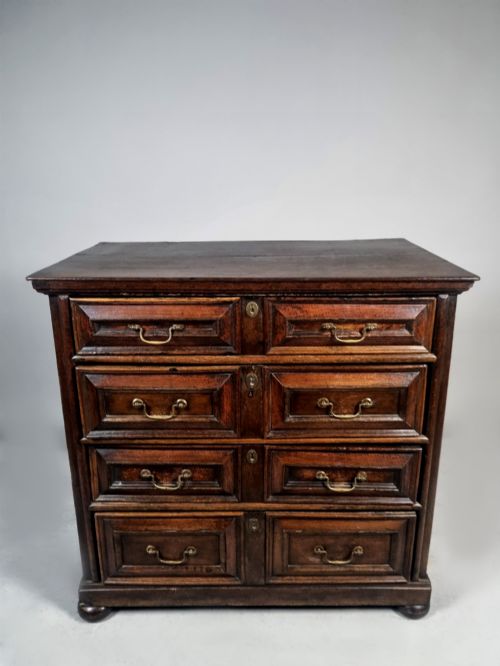
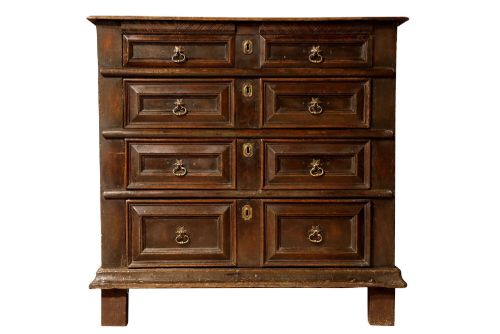
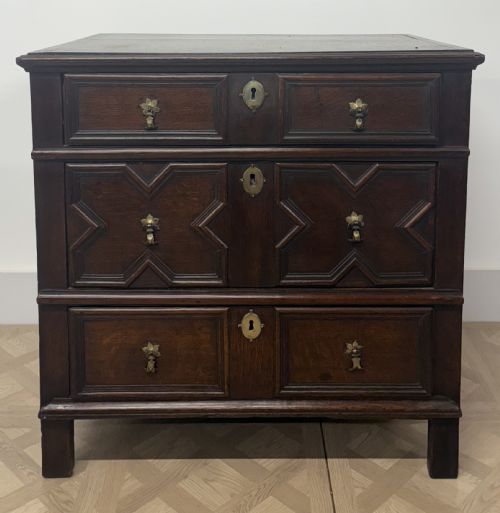
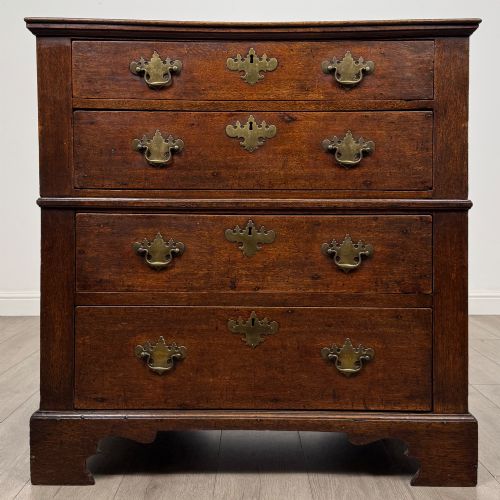
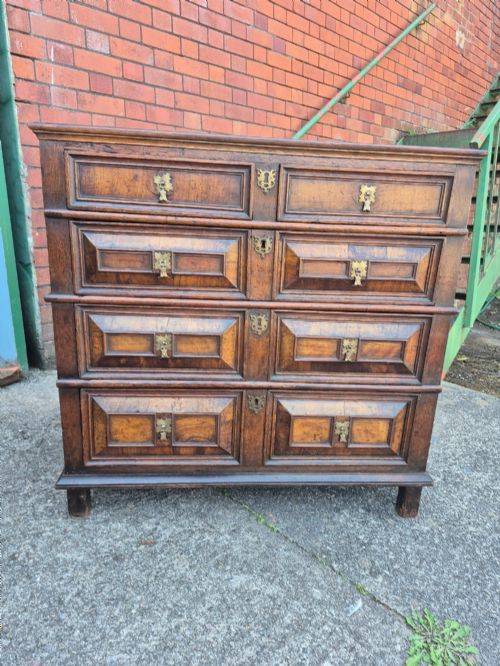
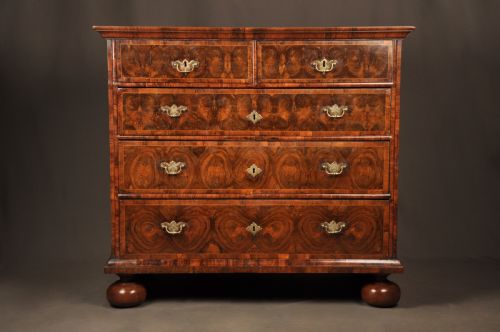
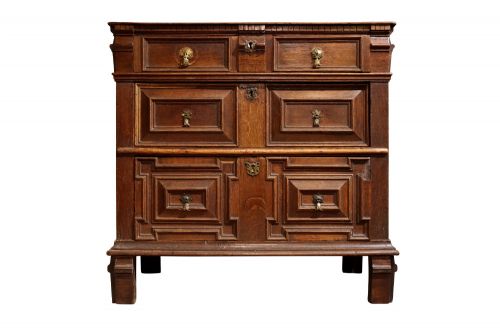


Restoration Period Oak Chest
A restoration period oak chest brings seventeenth-century craftsmanship and solid timber presence into a modern interior.
Restoration Period Oak Chest
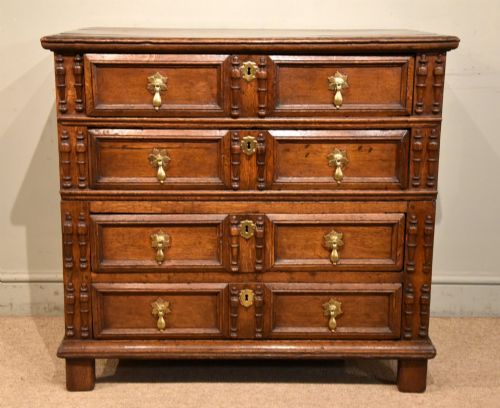
A restoration period oak chest represents seventeenth-century domestic storage, emerging from the Charles II and William and Mary eras with robust proportions. These early pieces form the core of what collectors find when searching for a restoration period oak chest.
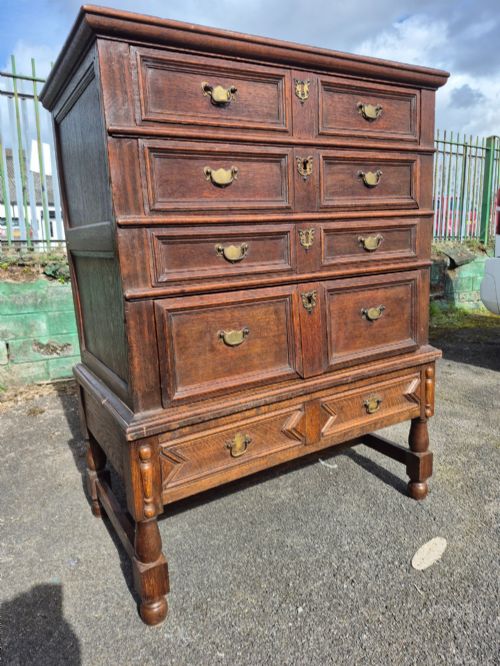
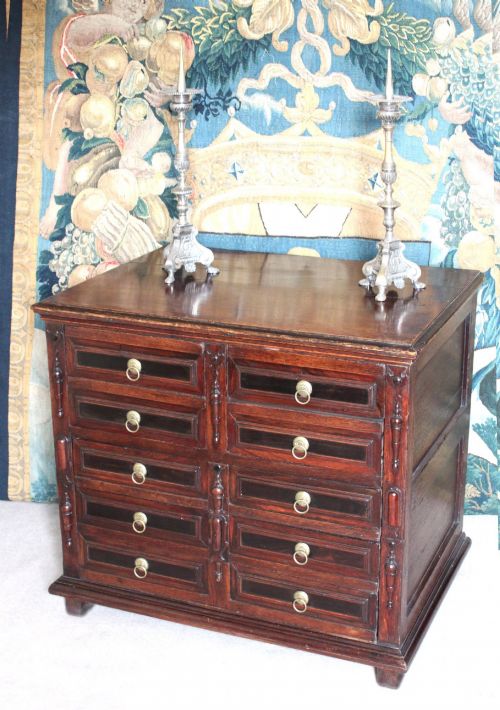
The construction typically takes the form of a chest of drawers, sometimes elevated on a stand or built with moulded fronts. Oak is the primary timber, often paired with walnut and decorative veneers.
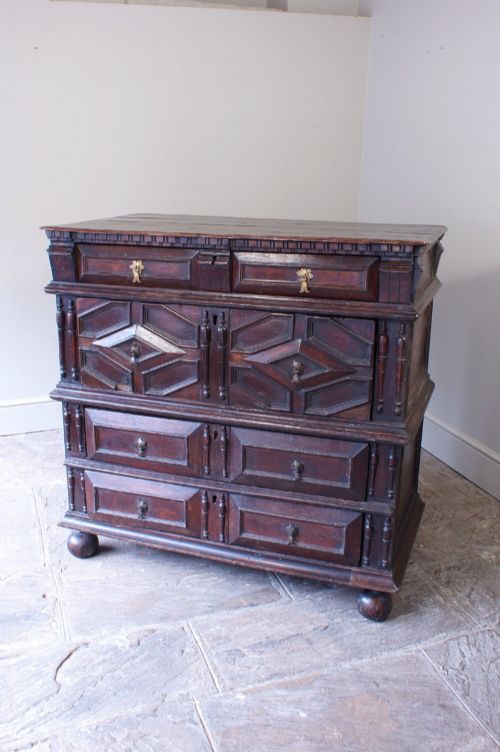
Originating predominantly in the seventeenth century, these pieces carry the distinctive stylistic markers of the Restoration. Buyers encounter geometric ornamentation and oyster veneers alongside straightforward panelled constructions.
What varies in quality
The sophistication of the surface decoration defines the upper tier of these pieces. Elaborate geometric mouldings and intricate oyster veneer work require greater joinery skill than plain panelled fronts.
The integrity of the timber and the retention of original brass hardware elevate an example. Alterations to stands, handles, or secondary veneers alter the historical balance of the piece.
Proportion and execution distinguish standard vernacular workshop production from more ambitious pieces of the era. The crispness of the moulded drawer fronts demonstrates the maker's proficiency.
Listings feature seventeeth-century pieces constructed from oak, walnut, and olive, incorporating oyster veneers and brass hardware.
The Restoration Period Oak Chest Glossary
- Oyster veneer
- Thin circular slices of branch wood arranged to form repeating decorative patterns across drawer fronts. This technique created rich surface textures popular during the late seventeenth century.
- Geometric moulding
- Raised wooden strips applied to drawer fronts in rectilinear or intersecting patterns. It adds depth and architectural character to seventeenth-century case furniture.
- Chest on stand
- A storage chest elevated on a distinct base fitted with legs or stretchers. This form lifted the primary drawers higher off damp floors.
- Charles II period
- The historical era spanning the reign of Charles II from sixteen sixty to sixteen eighty-five. Furniture from this time often displays Baroque influences and rich surface detailing.
- William and Mary
- The design style associated with the joint reign from sixteen eighty-nine to seventeen zero-two. Pieces from this period frequently introduce Dutch stylistic elements and contrasting veneers.
Restoration Period Oak Chest: Frequently Asked Questions
What defines a restoration period oak chest?
A restoration period oak chest dates from the late seventeenth century, specifically encompassing the reigns of Charles II and William and Mary. These pieces are characterised by solid oak construction and often feature geometric mouldings or applied veneers.
Makers of this era employed robust joinery techniques designed for daily household storage. The resulting forms range from simple chests of drawers to elevated chests on stands.
How were these chests used historically?
Households utilised these chests primarily for storing textiles, linens, and personal valuables in bedchambers and living spaces. The segmented drawers allowed for better organisation of garments compared to earlier single-compartment coffers.
As domestic comfort increased during the seventeenth century, furniture became more specialised. These chests provided both secure storage and a display surface for decorative objects.
How do I live with one today?
Placing a seventeenth-century chest in a contemporary room requires attention to environmental conditions. Keep timber furniture away from direct heat sources and sudden temperature fluctuations to preserve the wood and veneers.
These pieces function effectively as focal points in hallways, bedrooms, or living areas. Their substantial presence anchors modern interiors while offering practical surface area and drawer storage.
How do I distinguish periods within these chests?
Distinguishing between Charles II and William and Mary pieces involves examining the surface decoration and structural form. Charles II examples frequently display bold geometric mouldings and applied split turnings on oak carcases.
William and Mary pieces often incorporate walnut veneers and more refined leg structures on stands. Comparing the hardware fixings and secondary timbers also clarifies the production era.