
Geometric Oak Chest
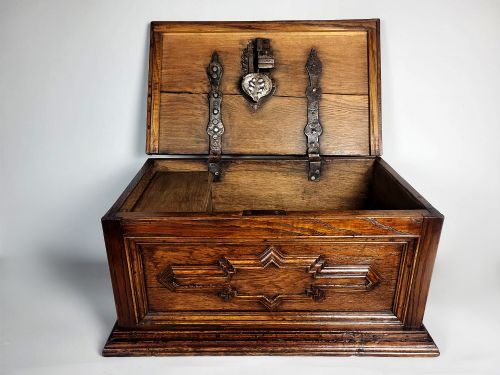
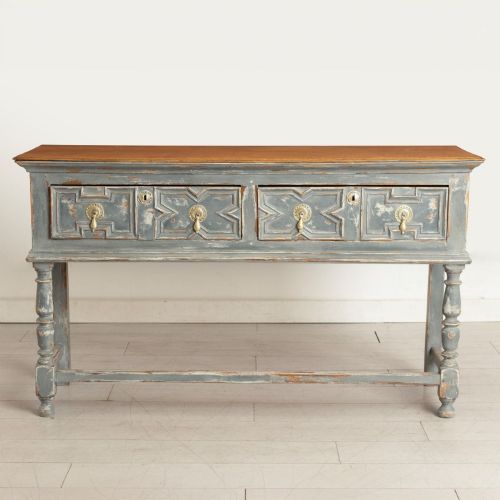
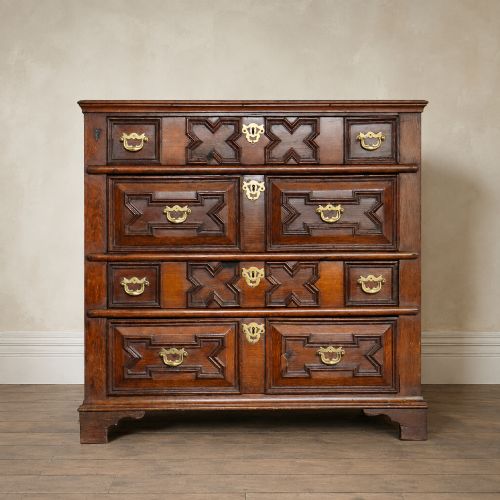
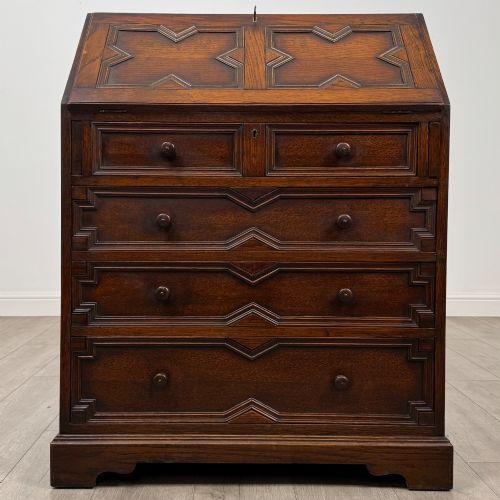
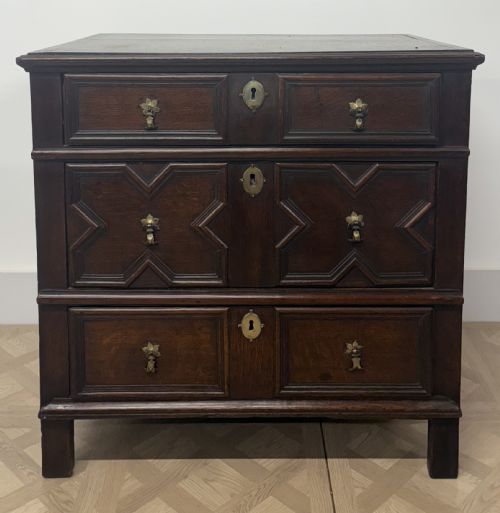
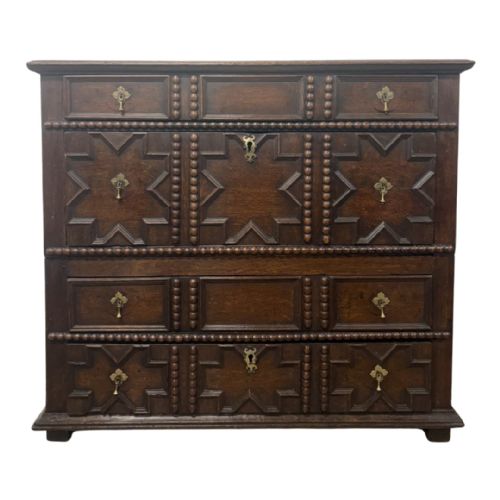
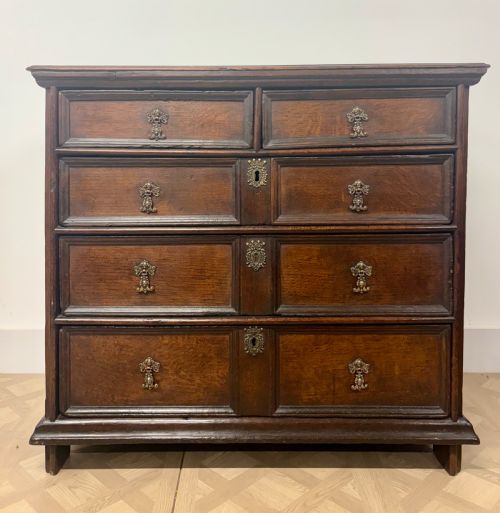
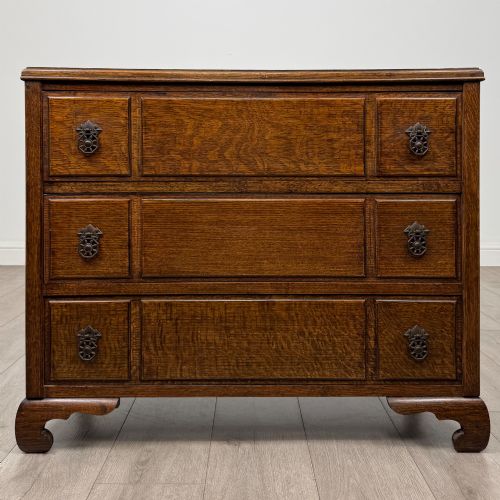
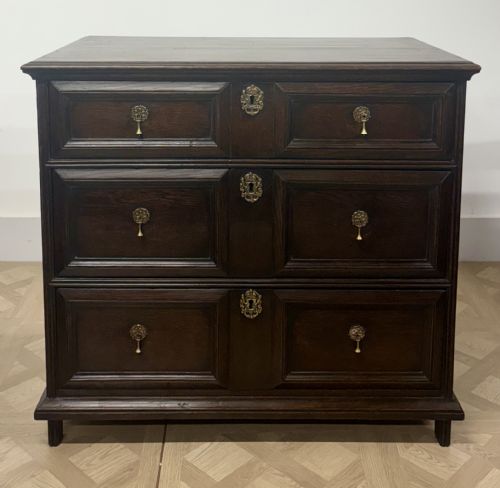
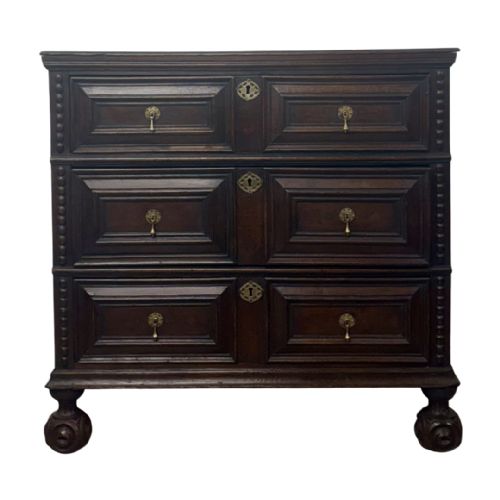
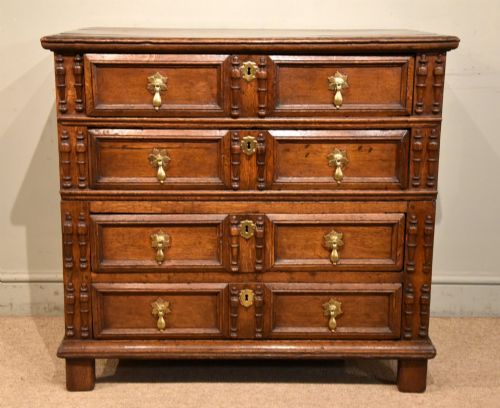
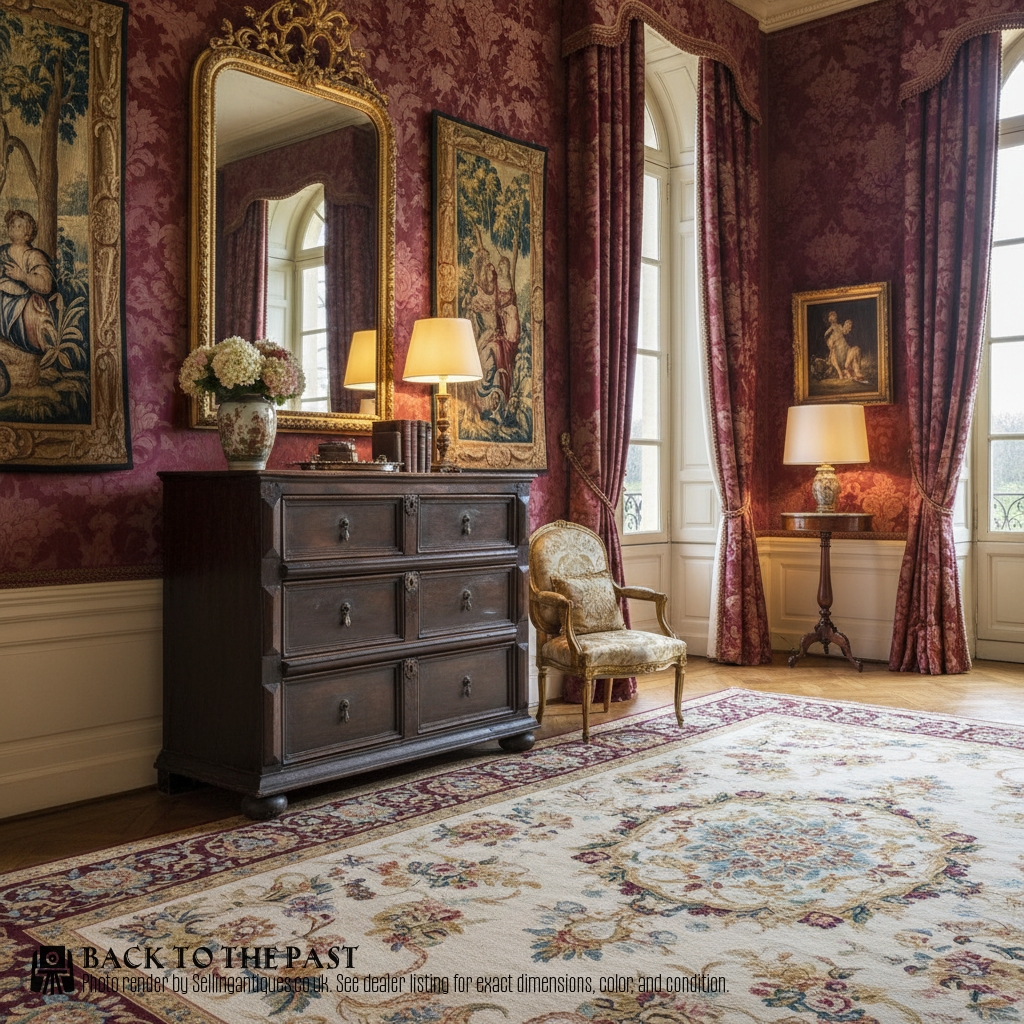
A geometric oak chest brings tangible seventeenth-century craftsmanship into a modern interior through deeply moulded drawer fronts and sturdy native timber.
Geometric Oak Chest
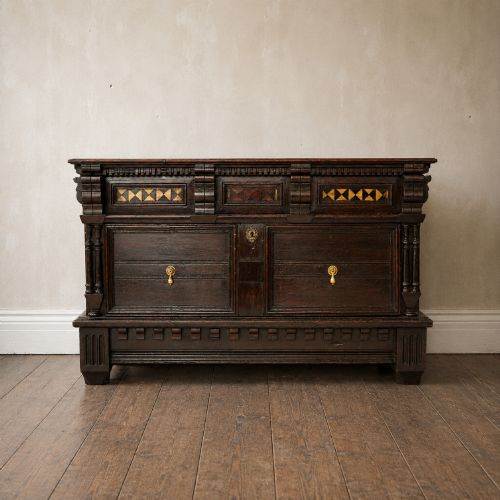
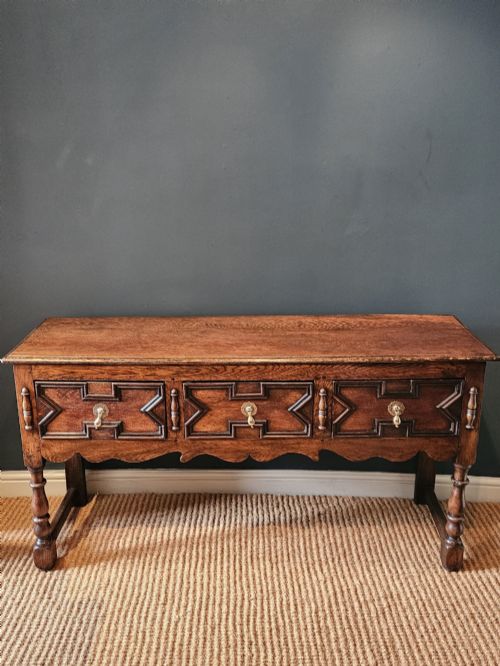
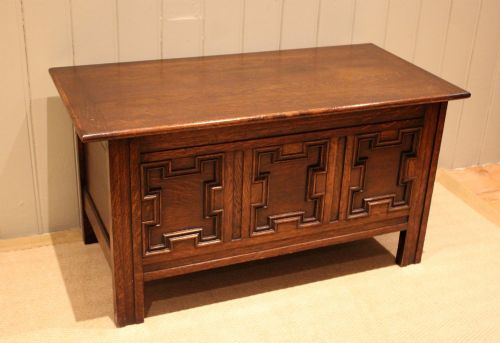
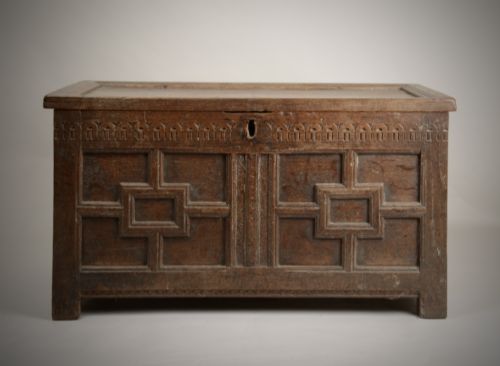
A geometric oak chest typically presents as a multi-drawer storage piece defined by applied moulding patterns on the drawer fronts, creating architectural panels and geometric depth. These pieces emerge predominantly from the seventeenth century, specifically during the Charles II, William and Mary, and Jacobean periods, alongside later revival iterations from the twentieth century.
The primary forms found here include two-part chests, single drawer-count configurations on stands, and mule chests incorporating lower storage drawers. While authentic seventeenth-century survivors and eighteenth-century examples form the core of the historical offerings, Edwardian and later reproductions also populate the selection for practical domestic use.
Materials and construction methods
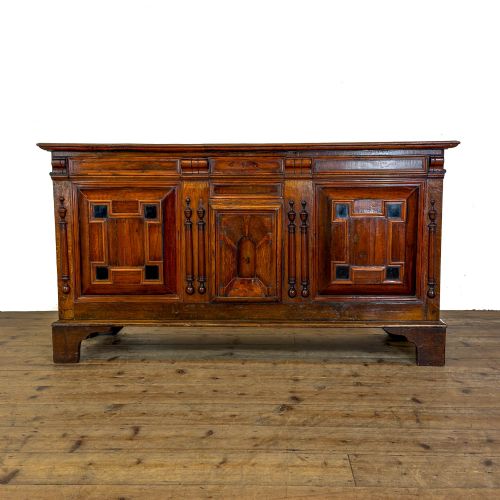
Makers built these pieces primarily using solid native oak for the structural carcase and drawer frames, frequently integrating walnut and fruitwood veneers to construct intricate geometric patterns on the drawer faces. Secondary woods and applied mouldings were glued and pinned directly onto the drawer fronts to achieve the characteristic panelled relief effects seen in seventeenth-century workshops.
Hardware played an essential structural and decorative role, with wrought iron, brass, and steel utilised for complex internal locks, escutcheons, and drop handles. Joinery relied heavily on traditional pegged mortise and tenon frames, while drawer dividers and backs showed hand-riven or sawn timber marks typical of early period craftsmanship.
Listings feature structural variations spanning solid oak, walnut, fruitwood, and applied brass or iron hardware from the seventeenth century onwards.
Assessing quality and authenticity
Quality rests significantly on the integrity of the timber surfaces and the complexity of the applied geometric mouldings, where crisp mitres and well-preserved grain contrast against simplified or later replacements. Pieces retaining original complex steel locks, period handles, and an honest faded patina command greater historical regard than those subjected to heavy modern stripping or extensive timber harvesting.
The proportion between the geometric decoration and the overall carcase scale dictates visual success, with smaller proportions and two-part constructions holding particular appeal. Authenticity is further measured by the harmonious integration of secondary woods like walnut and fruitwood, alongside undisturbed internal drawer construction reflecting period building methods.
The Geometric Oak Chest Glossary
- Geometric moulding
- Applied strips of wood arranged in repeating geometrical patterns such as rectangles, octagons, and crosses across drawer fronts. This technique defined the decorative vocabulary of late seventeenth-century case furniture.
- Mule chest
- A storage chest fitted with one or more working drawers at the base beneath the primary lift-lid compartment. They bridge the functional gap between traditional blanket boxes and modern drawer units.
- Oyster veneering
- Cross-section slices of small branches or roots arranged to create repeating circular and oval wood grain patterns. It appeared on high-status surfaces alongside primary oak and walnut timbers.
- Patina
- The surface sheen and colour developed by aged timber through decades of handling, polishing, and exposure to light. A desirable state shows gentle softening rather than artificial gloss.
Geometric Oak Chest: Frequently Asked Questions
How do I date a geometric oak chest?
Dating relies on examining the construction methods, timber species, and moulding profiles present on the carcase and drawers. Seventeenth-century examples often display hand-cut joinery, pegged frames, and original iron locks.
Later revival pieces from the twentieth century typically exhibit machine-cut elements and standardised fixings that distinguish them from period originals.
Were these chests used as blanket boxes?
Certain variants like mule chests combined a traditional top-opening lid with lower drawers specifically for textiles and household linens. Standard drawer chests served the same domestic storage purpose for clothing and valuables in early homes.
The inclusion of working locks on pieces like safe boxes indicates they also protected important documents and precious items.
How should I care for an antique oak chest?
Preserving these surfaces requires maintaining stable indoor humidity away from direct heat sources and strong sunlight to prevent timber shrinkage and splitting. Dusting with a dry cloth and applying occasional traditional wax preserves the historic finish.
Avoid modern liquid polishes containing silicones, which can penetrate the grain and degrade the natural patina over time.