


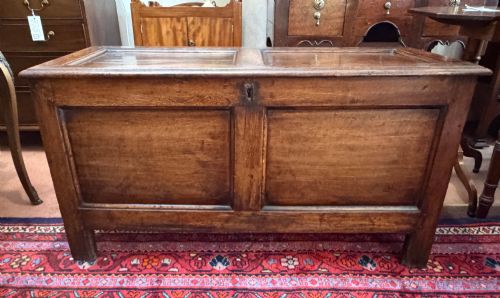
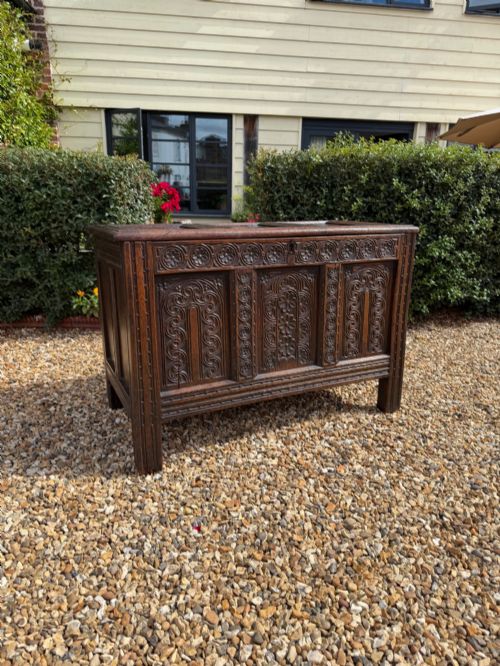
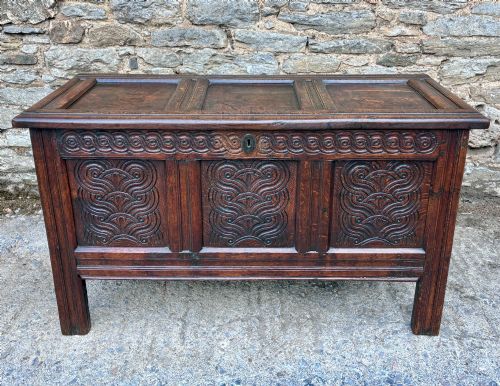
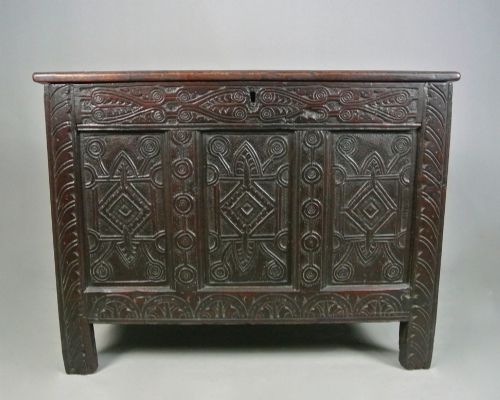
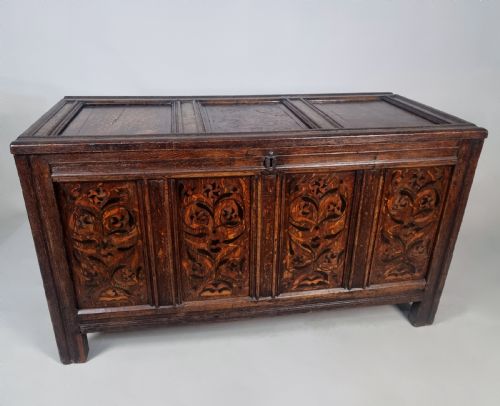
Period Oak Coffer Chest
A period oak coffer chest offers solid timber construction and centuries of domestic history, making it a practical storage piece for modern rooms.
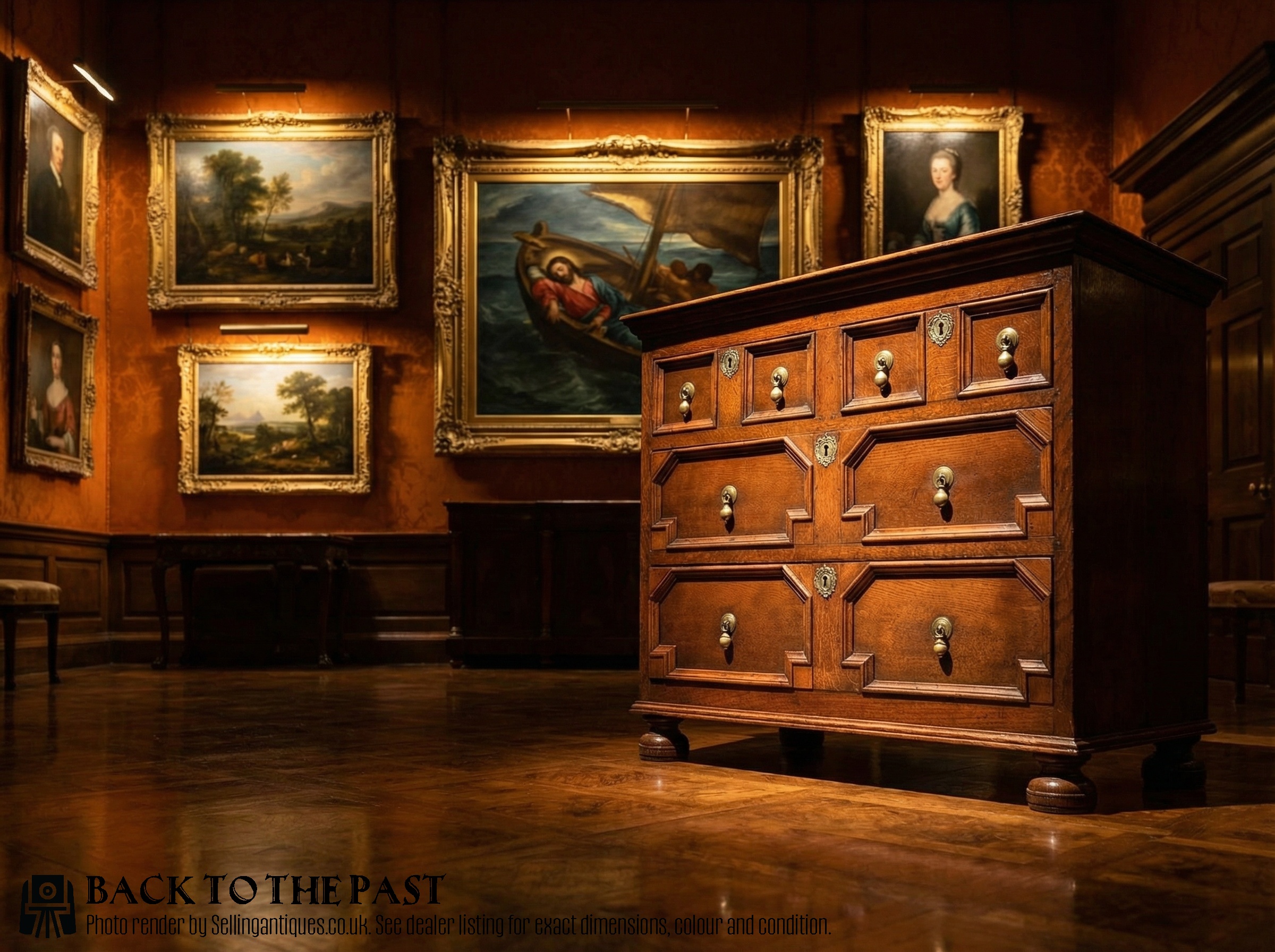
Period Oak Coffer Chest
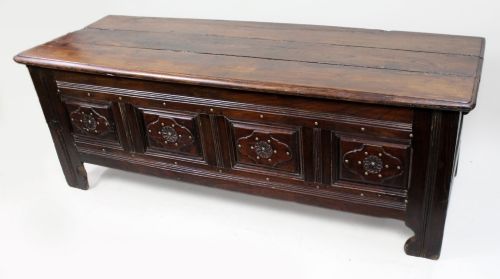
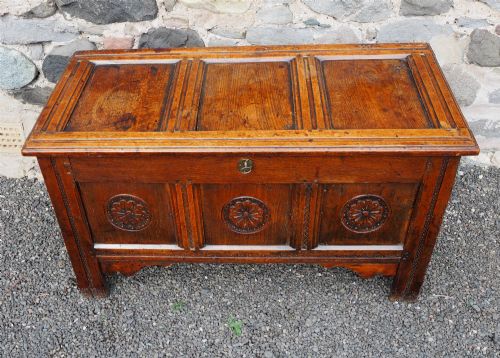
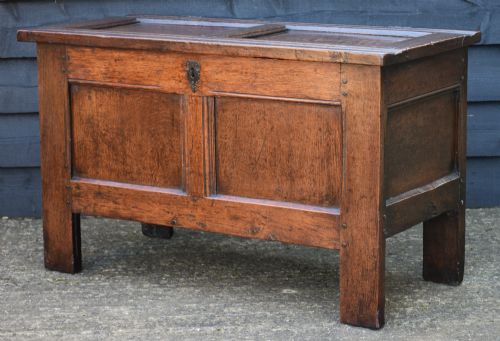
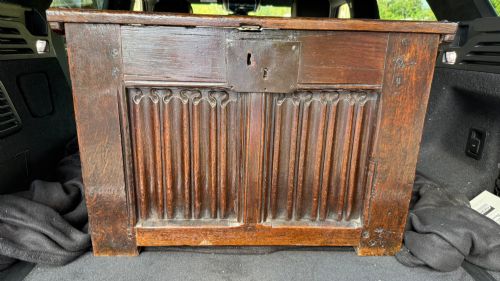
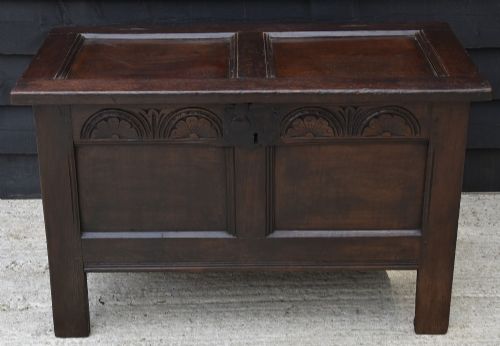
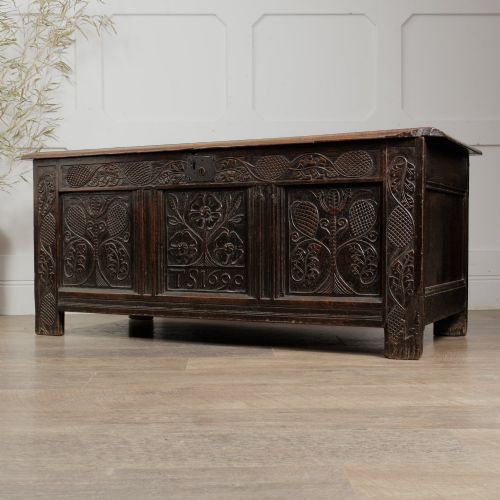
A period oak coffer chest is a heavy storage box designed for household goods, often featuring panelled construction and hinged lids. These items span from the sixteenth century through the eighteenth century, encompassing regional English, Welsh, and continental examples.
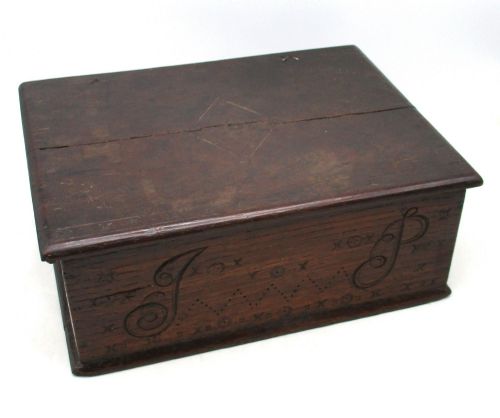
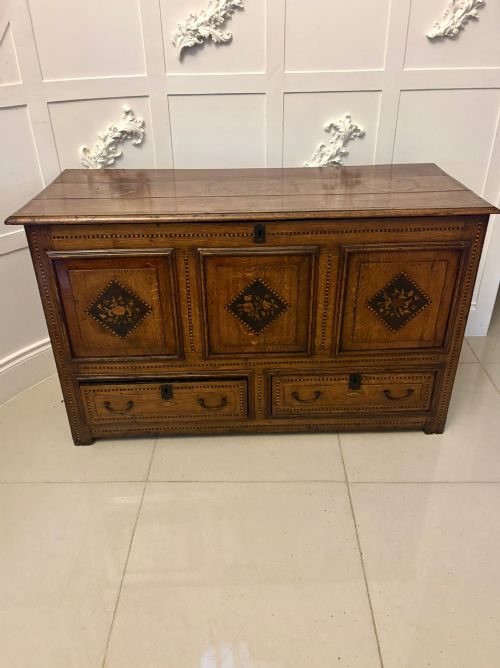
The selection on this page centres heavily on seventeenth-century joined oak coffers, alongside eighteenth-century variations and smaller document boxes. Buyers also encounter mule chests with lower drawers, bible boxes, and occasional chest of drawers formats from the same eras.
Origins range across domestic workshops and specific locales like the Gower Peninsula or Dorset, giving each piece distinct regional characteristics in its carving and assembly.
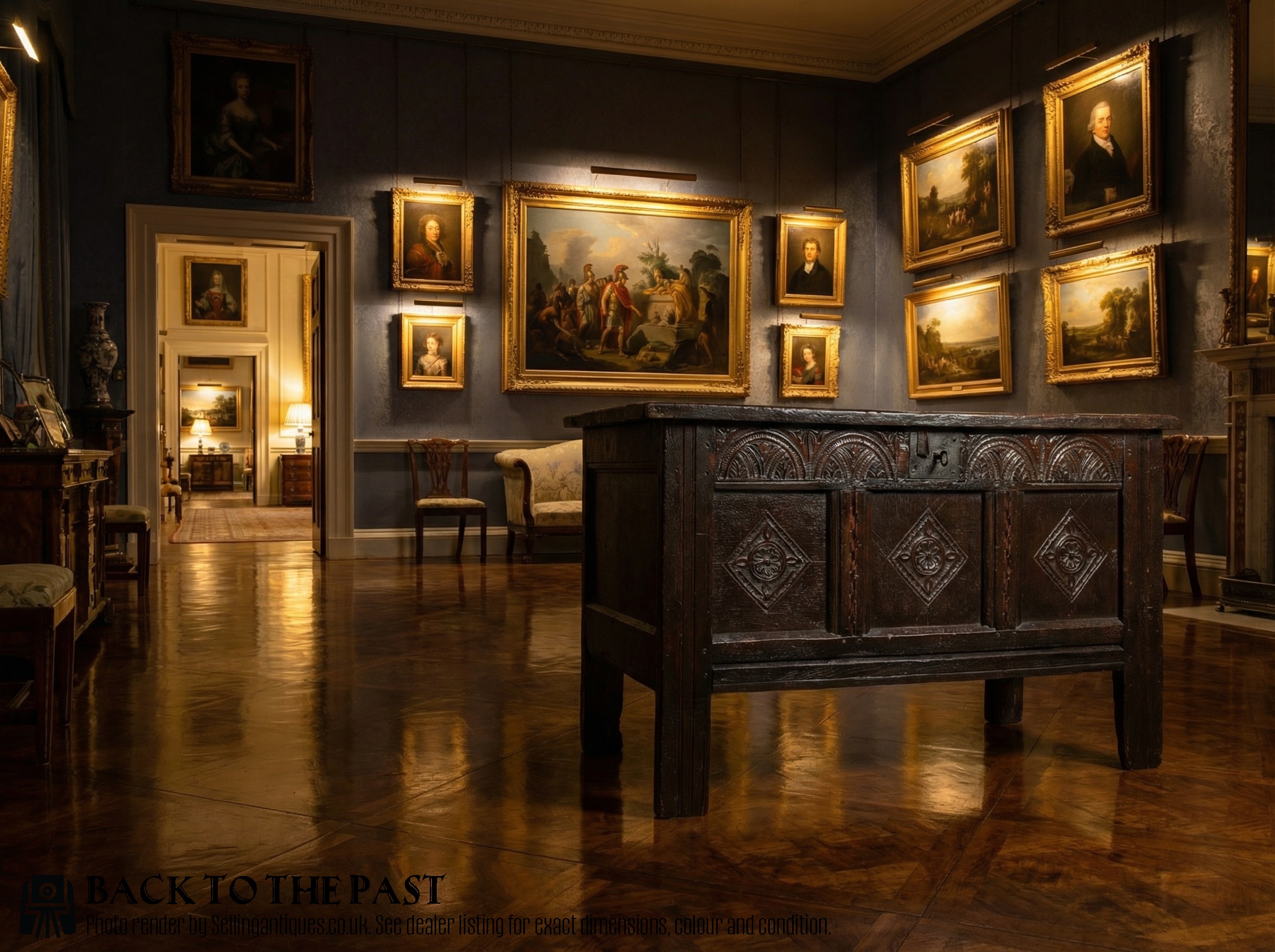
Materials and construction
Makers built these pieces primarily using solid oak timber, shaped through joined framing methods where panels float within grooved stiles and rails to accommodate wood movement. Iron hinges, brackets, and wrought iron hardware secure the lids and corners.
Decoration often involved hand carving, geometric moulding, and occasionally marquetry inlay utilising mixed woods such as walnut. Surface finishes developed through decades of waxing and handling, producing deep patination on the timber.
Period Oak Coffer Chest Retail Price Guide 2026
Typical asking prices for period oak coffer chest among the pieces listed under this phrase on Sellingantiques today, from the lower quarter to the upper quarter. They describe what is for sale here now, not the wider market.
Listings span multiple centuries, incorporating sixteenth-century Elizabethan pieces up through nineteenth-century entries and twentieth-century interpretations.
Assessing the examples
Quality rests in the crispness of the original carving, the integrity of the joined frame, and the survival of untouched surfaces. Pieces retaining original hardware and untouched patination command greater interest among collectors.
Proportions also dictate distinction, as smaller scaled coffers and examples featuring complex marquetry inlay or documented provenance stand apart from utilitarian storage boxes.
The Period Oak Coffer Chest Glossary
- Coffer
- A large wooden chest used historically for storing valuables, linen, or documents. Most examples feature a hinged lid and sturdy joined construction.
- Mule chest
- A coffer that incorporates one or more drawers beneath the main storage compartment. This form emerged as domestic storage needs evolved.
- Joined oak
- Furniture constructed using mortise and tenon joints secured by wooden pegs rather than simple nailed boards. This method provides structural stability.
- Bible box
- A small tabletop box with a sloping or flat lid, often carved, used for holding sacred texts or writing materials. They frequently date to the seventeenth century.
- Marquetry inlay
- Decorative patterns formed by inserting contrasting pieces of wood into veneers on the surface. Walnut and mixed inlay woods appear on select seventeenth-century pieces.
Period Oak Coffer Chest: Frequently Asked Questions
What did people store in a coffer?
Historically, families used these chests to safeguard valuable textiles, silver, church plate, and important documents. Because cupboards were less common in earlier centuries, the coffer served as the primary secure storage unit in a household.
Over time, their role shifted toward storing household linens, blankets, and clothing, leading to terms like blanket chest. Their sturdy flat tops also allowed them to function as benches or window seats within domestic spaces.
How do I date a seventeenth century coffer?
Dating relies on observing construction methods, timber characteristics, and decorative motifs such as strapwork, arcading, or geometric mouldings. Seventeenth-century pieces typically utilise joined frame-and-panel construction held together with pegged joints.
Carving styles often reflect specific reigns, such as Jacobean, Cromwellian, or Charles II periods. Clues like inscribed dates, original ironwork, and tool marks left by pit saws help narrow the decade of manufacture.
Where should I place a coffer at home?
These chests suit entryways, living rooms, and bedrooms where their flat surfaces and internal storage prove functional. Placing them away from direct heat sources and strong sunlight protects the antique oak timber from drying out or cracking.
Their substantial presence makes them effective at the foot of a bed or beneath a window as a seating option. The internal space accommodates spare bedding, pillows, or out-of-season items.
What is the difference between a coffer and a mule chest?
A standard coffer consists of a single compartment accessed exclusively through a hinged lid on top. Retrieving items at the bottom requires removing everything stacked above.
A mule chest adds one or more drawers beneath the main box section, combining top-loading storage with drawer access. This evolution made retrieving everyday items significantly easier without disturbing the contents on top.