


Oak Chest Bun Feet
These oak chest bun feet examples are heavy timber storage pieces raised on turned wooden spheres, prized for their deep grain and early English character.
Oak Chest Bun Feet
When you search for oak chest bun feet, you encounter sturdy timber storage furniture originating primarily from the seventeenth century and eighteenth century. These pieces include standard chests of drawers and blanket chests designed to keep domestic goods secure off damp floors.
The versions you meet most frequently on this page date from the Jacobean, Charles II, and William and Mary periods. They combine solid oak construction with decorative fronts and elevated circular feet that give the case a grounded appearance.
Makers of this era employed robust joinery and practical proportions to build furniture meant to last generations. Surviving examples show the straightforward utility of early domestic storage combined with period decorative touches.

Materials and construction
Carpenters built the primary frames using solid oak, sometimes combining it with walnut, oyster veneer, olive, or iron fittings. Timbers were hand-sawn and joined with traditional methods suited to heavy daily use.
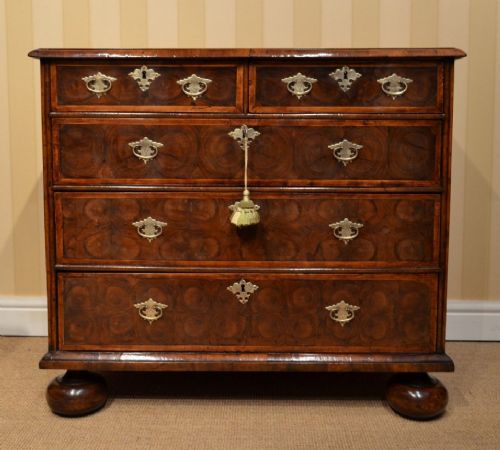
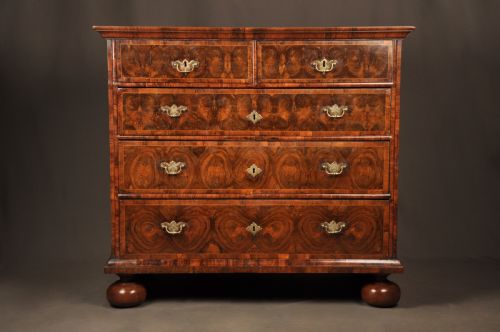
Surface decoration often involved geometric moulding, inlaid details, and oyster veneering sliced from branch wood to create circular patterns. Iron handles and brass escutcheons completed the hardware.
Listings span the seventeenth century through the eighteenth century, incorporating oak, walnut, olive, oyster veneer, brass, and iron materials.
Assessing quality
Quality rests in the crispness of the geometric mouldings and the complexity of the surface veneers, such as olive and walnut oyster work. Pieces retaining their original timber surfaces and distinct period turning display superior craftsmanship.
The integration of the bun feet with the base frame distinguishes finer examples from later alterations. Retaining original brass and iron hardware further elevates a piece within its period.
The Oak Chest Bun Feet Glossary
- Bun foot
- A turned, flattened spherical wooden foot typical of seventeenth-century and William and Mary furniture. It lifts the heavy case furniture cleanly off the floor.
- Oyster veneer
- Thin circular slices cut from small branches and arranged in patterns across the drawer fronts. This decorative technique creates rich, repeating wooden roundels.
- Geometric moulding
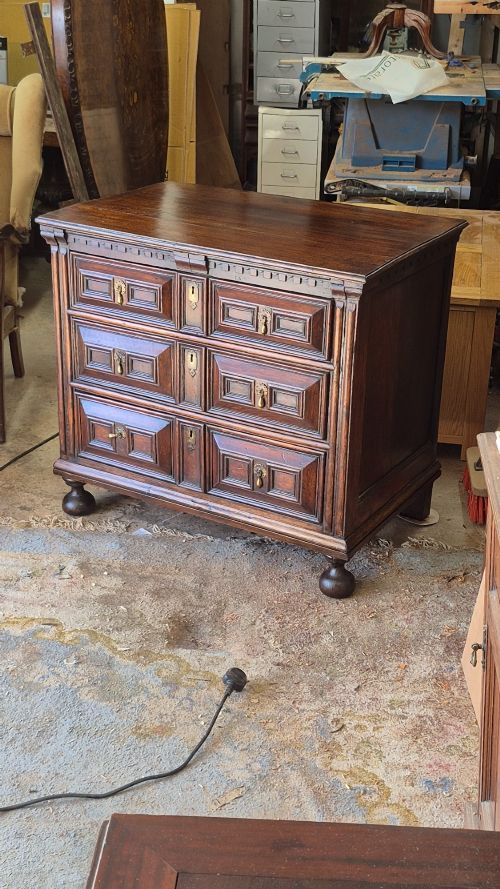
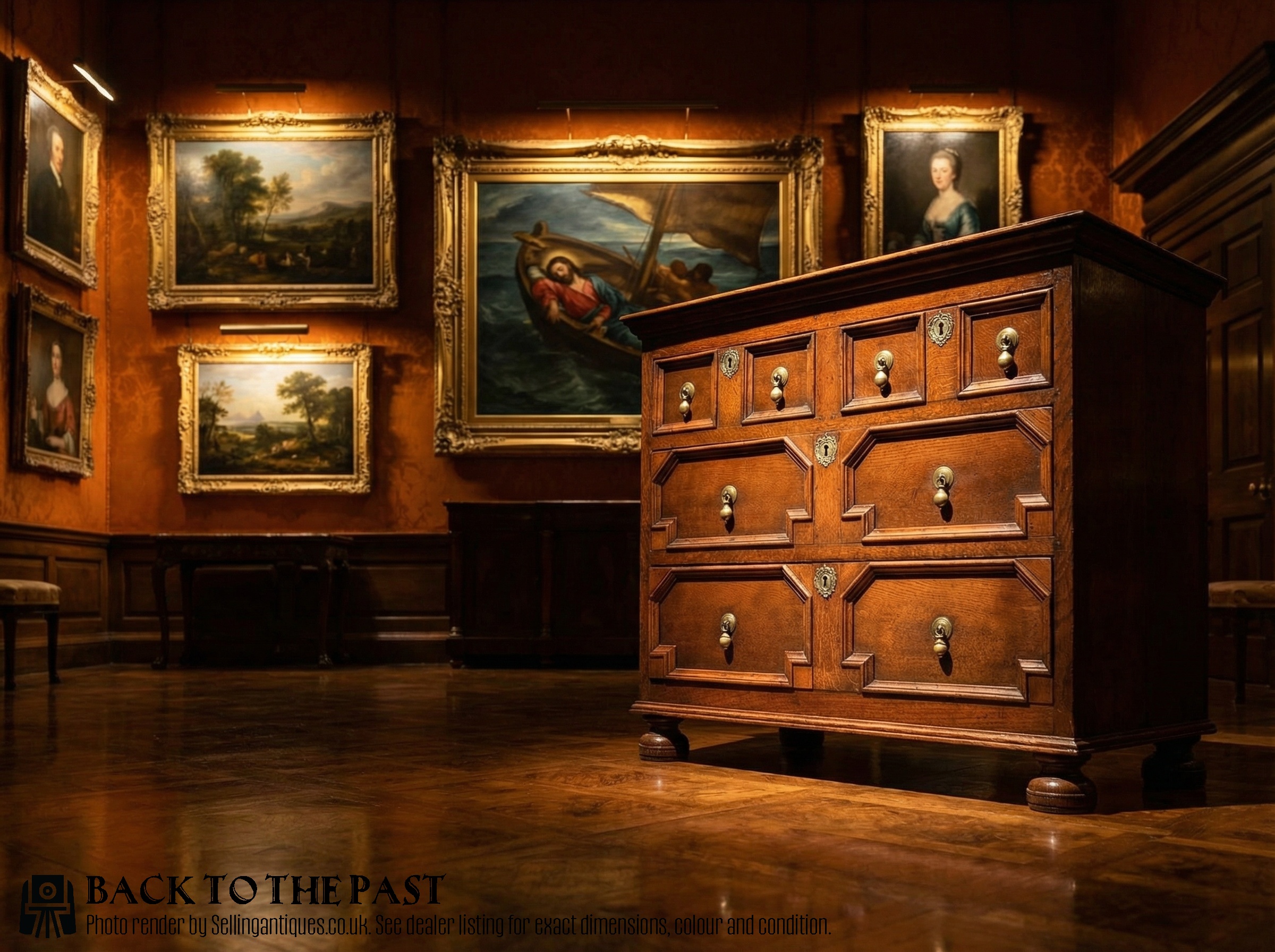
- Raised wooden strips applied in angular or rectilinear patterns to drawer fronts. This style is characteristic of Jacobean and seventeenth-century case pieces.
- Blanket chest
- A large wooden box used originally for storing textiles and bedding before fitted wardrobes became common. These often form the earliest category of surviving chest furniture.
Oak Chest Bun Feet: Frequently Asked Questions
What is an oak chest with bun feet?
An oak chest with bun feet is a heavy storage piece from the seventeenth or eighteenth century raised on spherical wooden feet. These items served as domestic repositories for clothing and valuables.
They combine utilitarian timber construction with decorative period styles such as geometric moulding or oyster veneering. The elevated feet protected the base timbers from damp stone floors.
How do I date an early oak chest?
Dating relies on examining the construction methods, timber species, and decorative styles present on the case. Seventeenth-century examples often display hand-sawn oak boards and geometric drawer fronts.
Later pieces incorporate veneered surfaces and distinct hardware styles associated with the William and Mary or Georgian eras. Comparing the joining techniques helps confirm the period of manufacture.
What woods were used besides oak?
While oak forms the primary structural timber for these chests, makers frequently incorporated walnut and olive for decorative effect. Oyster veneer sections cut from branches created patterned surfaces on drawer fronts.
Iron and brass appeared in the hinges, escutcheons, and drawer pulls. These contrasting materials highlighted the geometric designs popular during the seventeenth century.
How were these chests used originally?
These chests functioned as primary storage units for household textiles, garments, and valuables before built-in closets existed. Their sturdy construction allowed them to withstand heavy daily use in domestic settings.
Blanket chests held bedding, while multi-drawer chests organised smaller items of clothing. Their raised bun feet kept the contents safe from ground-level moisture.
Where do seventeenth-century styles differ?
Seventeenth-century styles shift from plain joined oak construction towards more ornamental veneered surfaces by the end of the period. Jacobean pieces favour heavy geometric mouldings on solid timber.
William and Mary designs introduce walnut veneers, inlaid details, and lighter proportions. Both styles maintain the characteristic bun feet that lift the case from the floor.