


Geometric Moulded Drawers
Geometric moulded drawers represent the peak of seventeenth-century cabinet-making, offering tactile relief fronts that collectors prize for architectural depth and historical honesty.

Geometric Moulded Drawers
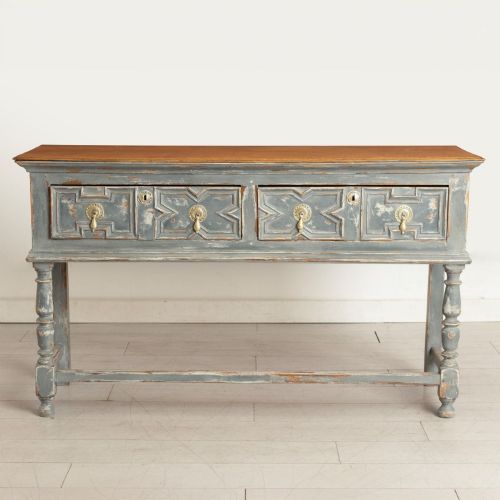
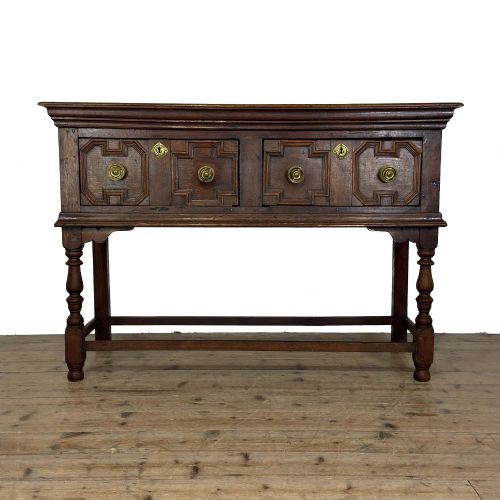
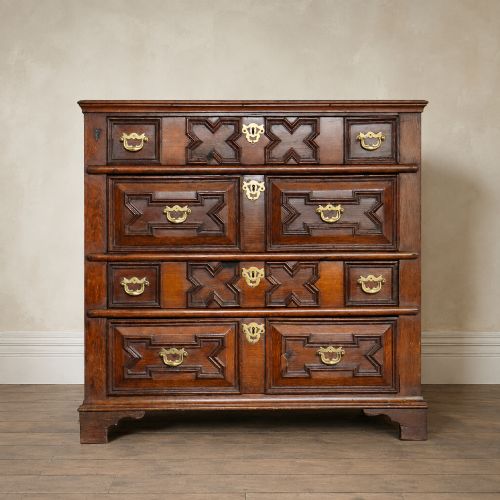
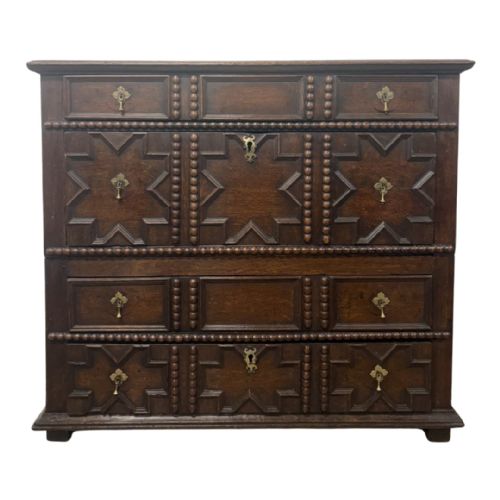
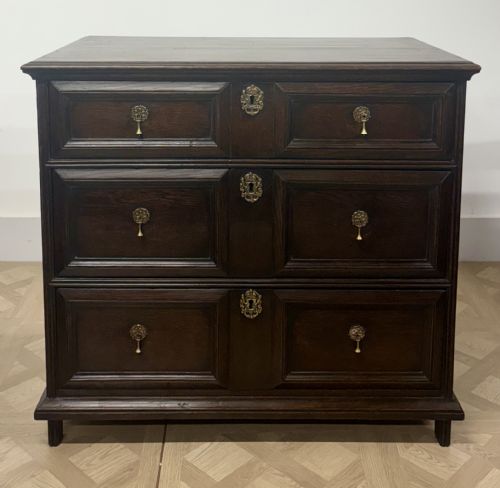
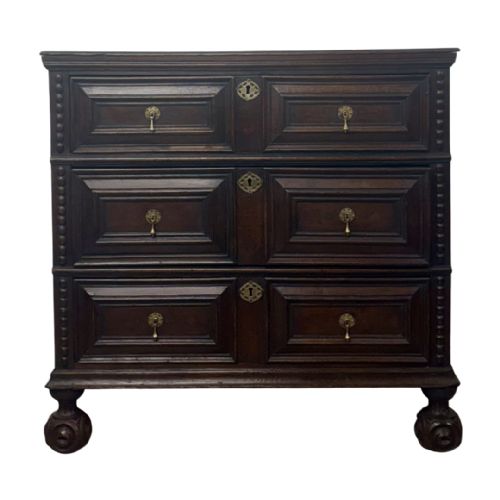
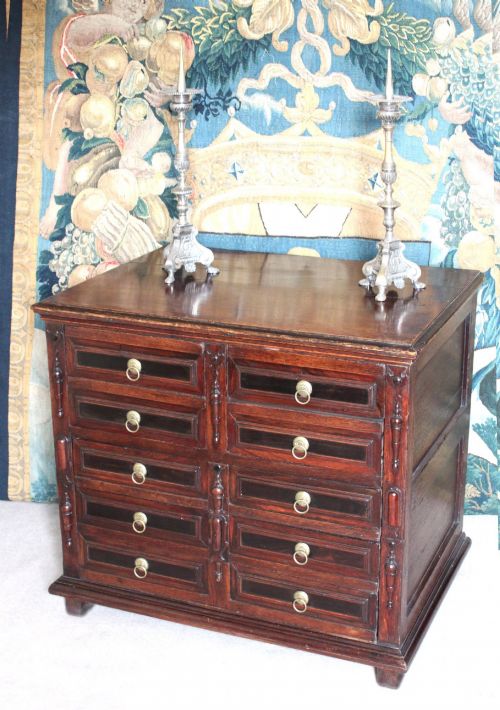
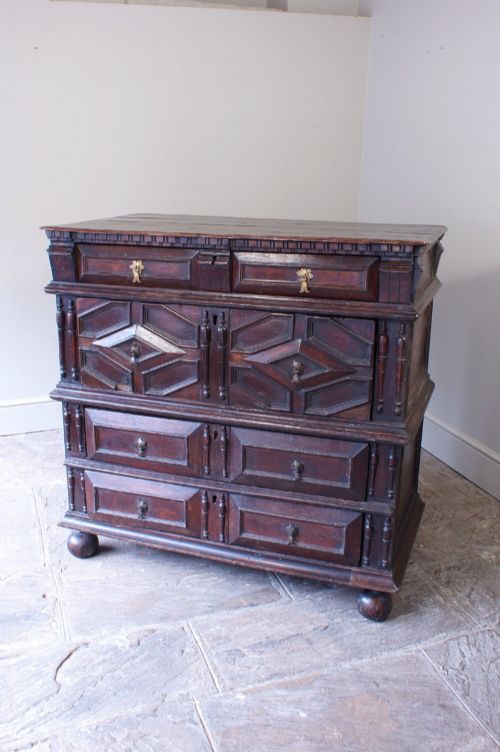
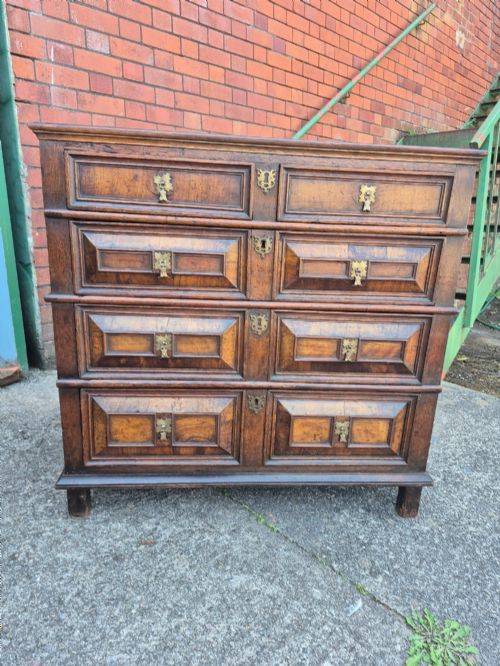
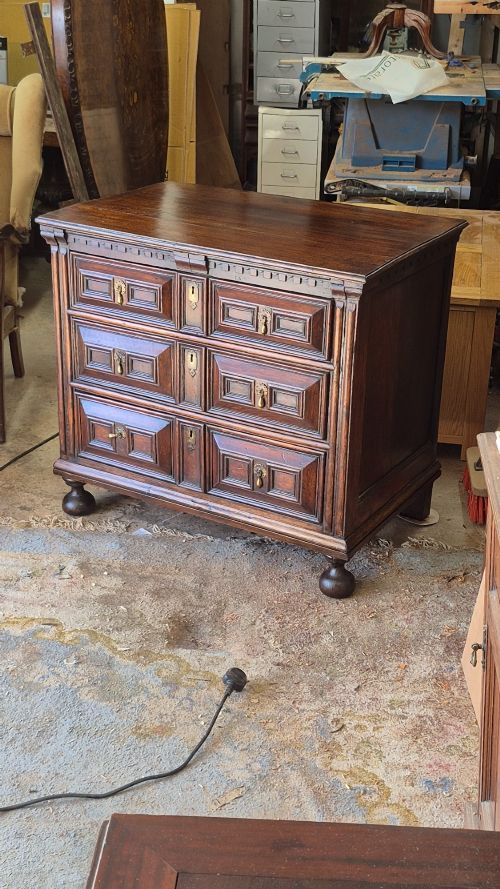
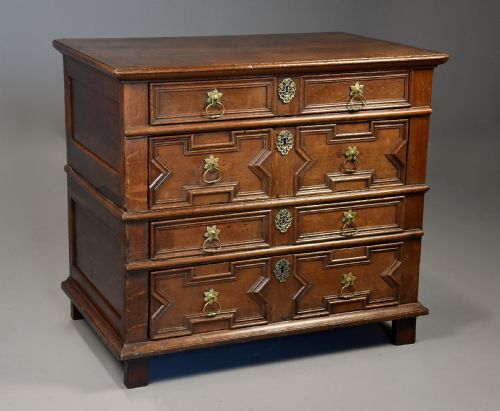
When you search for geometric moulded drawers, you find seventeenth-century and eighteenth-century storage furniture defined by applied wooden mouldings arranged in symmetrical, often geometric patterns across the drawer fronts. These pieces primarily take the form of chests of drawers and dresser bases, stemming chiefly from the Charles II, Jacobean, and William and Mary periods.
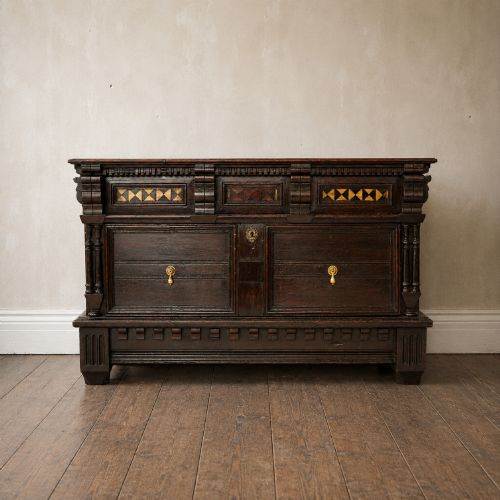
The version you are most likely to encounter on this page is the oak chest of drawers from the seventeenth century, frequently constructed in two distinct parts. Alongside oak, examples surface in walnut, fruitwood, and occasionally incorporating oyster veneers or wood inlay.
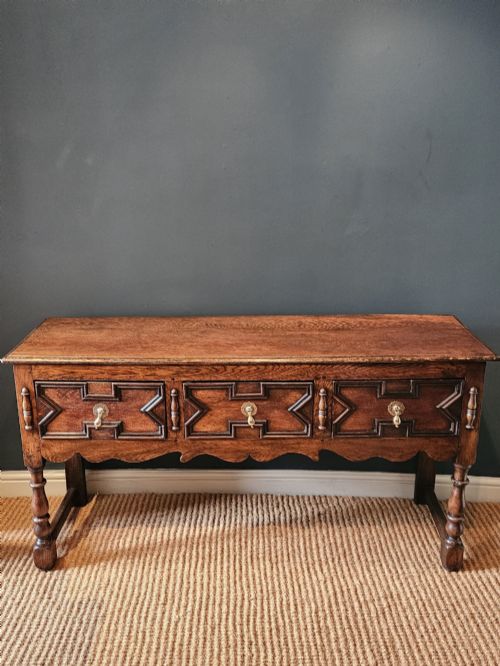
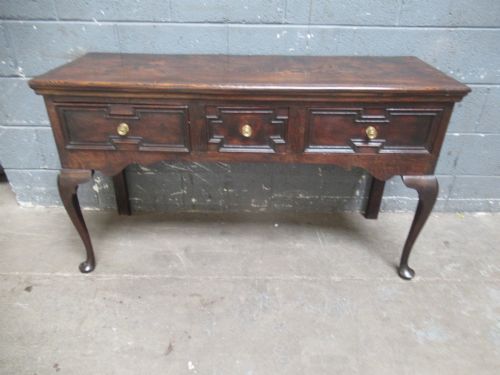
Beyond chests, the form extends to servers and low dresser bases carrying the same distinctive moulded drawer designs. Later revivals from the nineteenth century and around nineteen hundred also appear, mirroring the earlier seventeenth-century aesthetic.
How they were made
Cabinet-makers built these drawer fronts by shaping small pieces of solid timber, predominantly oak and walnut, and applying them meticulously onto a primary board to create raised geometrical panels. This technique required precise carpentry, as each applied moulding had to be individually cut, mitred, and fixed.
Drawer construction often utilised side-hung or bottom-running runners within sturdy timber carcases, sometimes augmented by panelled sides. Surfaces were finished with natural polishing methods, allowing the grain of woods such as fruitwood and oak to develop a faded patina over centuries of use.
Object forms on this page range from standard chests of drawers to low server tables and two-part cabinet configurations.
What varies in quality
Quality in these pieces rests heavily on the integrity of the applied geometric mouldings and the retention of original timber surfaces. Pieces retaining their original brass handles, escutcheons, and unblemished moulded grids command greater regard from collectors than those with reconstructed drawer fronts or replaced hardware.
The choice of primary wood also dictates the character of the piece, with dense walnut and figured oak displaying sharper geometric relief than softer or heavily restored timbers. Furthermore, the crispness of the mitred joints in the mouldings separates standard cabinet-making from exceptional craftsmanship.
The Geometric Moulded Drawers Glossary
- Geometric Moulding
- Applied strips of wood arranged in symmetrical patterns on drawer fronts. This technique creates tactile, architectural depth characteristic of the late seventeenth century.
- Oyster Veneer
- Cross-sections of small branches cut like corks to form circular or oval patterns. This delicate veneering appears on select period surfaces.
- Dresser Base
- A low sideboard or serving table fitted with drawers below the top surface. They often feature the same geometric moulding found on contemporary chests.
- Two-Part Chest
- A chest of drawers constructed in two separate stacked sections to facilitate transport. This form is common in seventeenth-century English joinery.
- Patina
- The surface sheen and colour acquired by wood over centuries of ageing and handling. A faded patina indicates natural exposure and gentle cleaning rather than harsh stripping.
Geometric Moulded Drawers: Frequently Asked Questions
What is a geometric moulded chest?
A geometric moulded chest is a storage piece from the seventeenth century featuring drawer fronts decorated with raised, applied wooden mouldings. These patterns create deep architectural panels across the facade.
Craftsmen built these pieces primarily from oak and walnut, using precise carpentry to arrange the small wooden pieces into squares, octagons, and intersecting lines.
How do I date a moulded drawer chest?
Dating relies on examining construction methods, timber choices, and hardware styles. Seventeenth-century examples often use hand-riven oak, two-part carcases, and pegged joinery.
Later revivals from the nineteenth century or around nineteen hundred mimic these traits but typically betray their age through machine-cut timber and different internal construction.
Were these chests used in bedrooms?
In seventeenth-century homes, chests of drawers served various rooms for storing textiles, linens, and personal valuables rather than residing exclusively in bedchambers. Their robust construction and decorative fronts suited public rooms as well as private spaces.
Today, collectors place them in hallways, living rooms, and studies where their sculptural drawer fronts can be appreciated.
What woods were used for these drawers?
Oak is the predominant timber found in these listings, reflecting the standard material of seventeenth-century English cabinet-making. Walnut and fruitwood also appear, offering finer grain patterns.
Cabinet-makers occasionally combined oak with walnut or utilised oyster veneer circular cross-sections to add visual contrast to the geometric designs.