
17th Century Commode
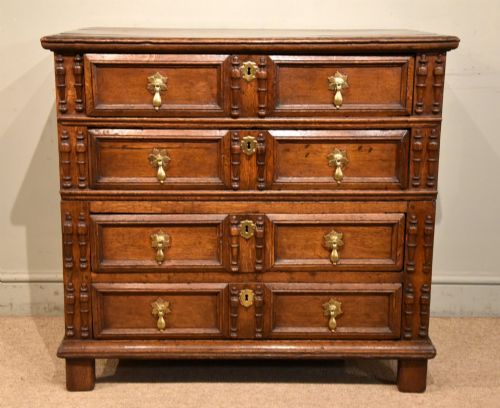
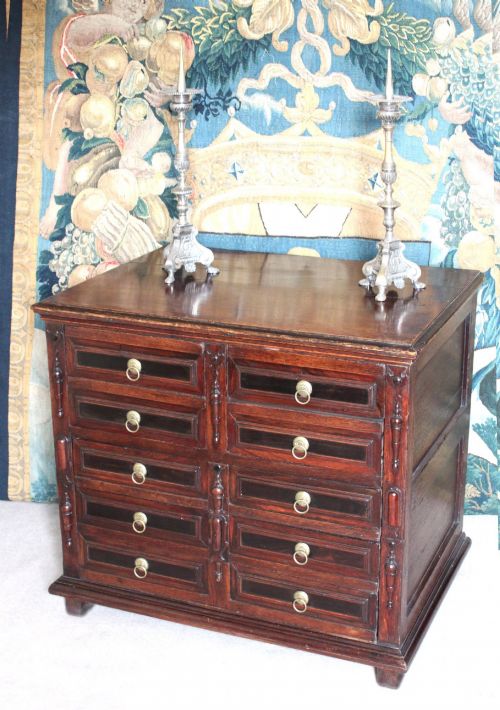
A 17th century commode brings heavy timber, intricate geometric mouldings and rich veneer work into a room.
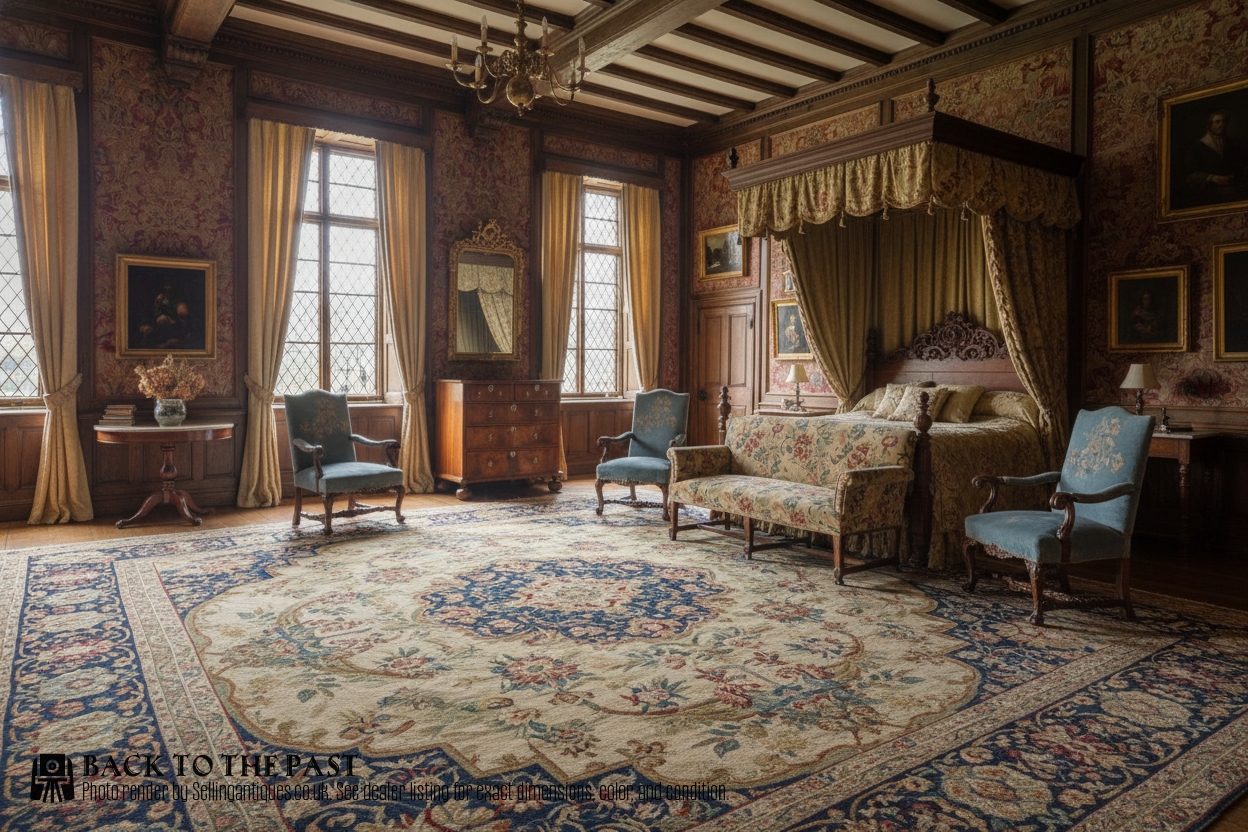
17th Century Commode
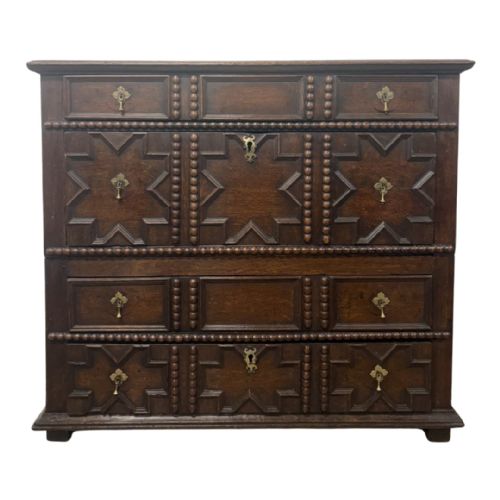
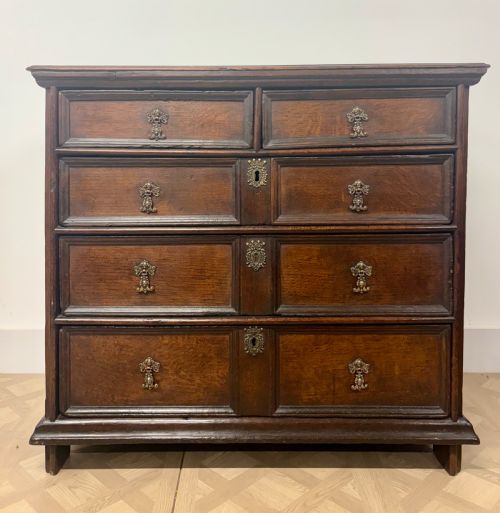
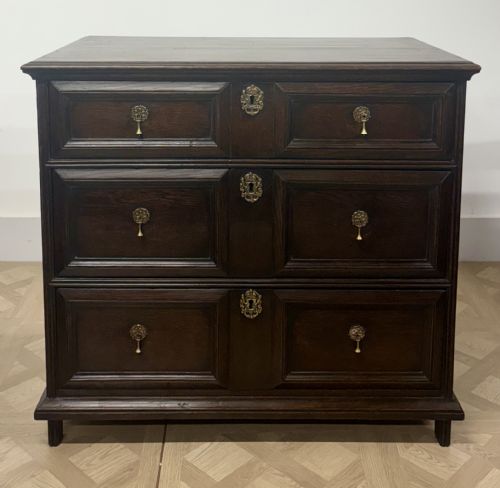
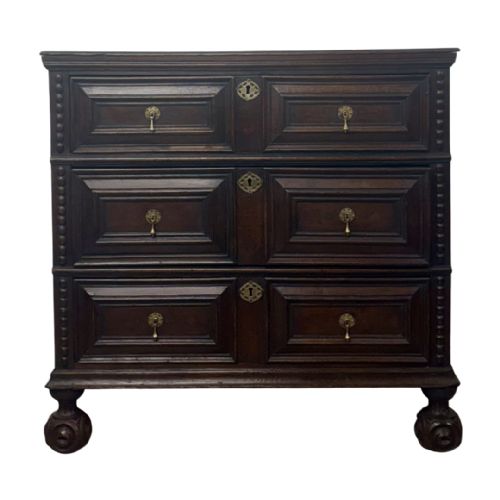
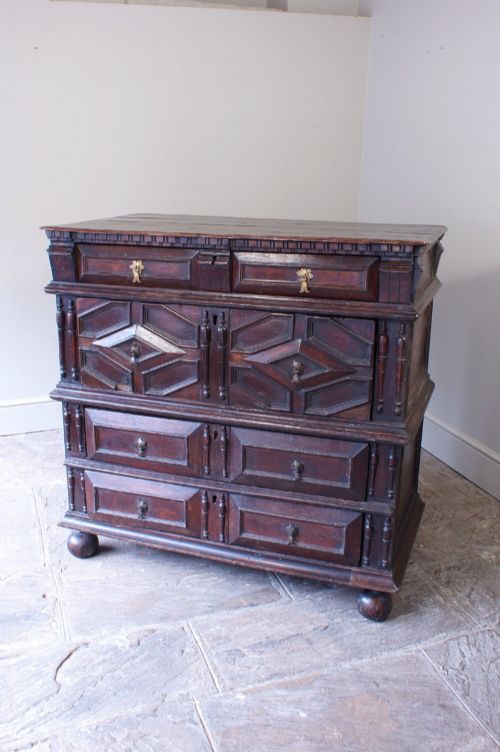
When you search for a 17th century commode, you encounter sturdy chests of drawers alongside low box stools and close stools from the same era. The primary forms you meet on this page are substantial chests of drawers, often constructed in two parts, reflecting the heavy domestic utility of the period.
Makers of this era relied on durable hardwoods, frequently expressing the 17th century commode design through regional British styles such as Charles II, William and Mary, and Jacobean, alongside continental examples.
The domestic interior of the seventeenth century demanded robust storage furniture, leading to the prevalence of geometric moulded drawer fronts and fitted box stools that served dual purposes in the household.
Materials and construction
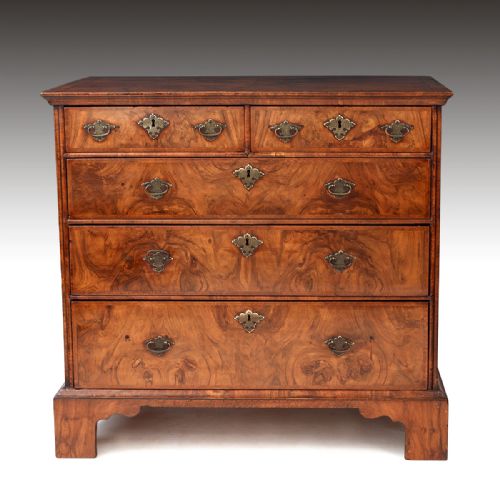
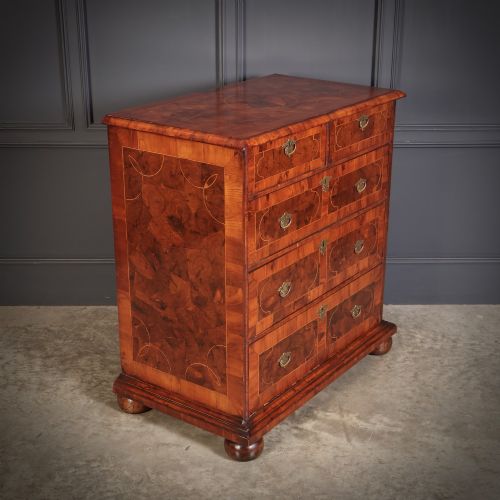
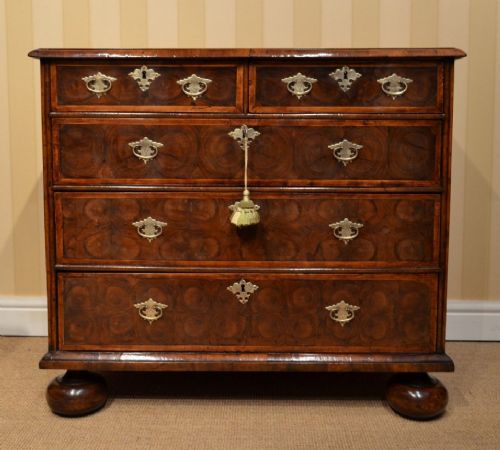
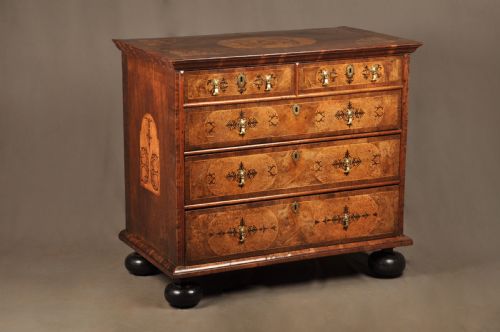
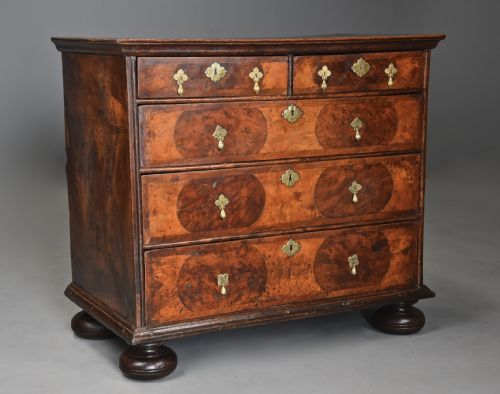
Cabinet makers constructed these pieces primarily from solid oak, walnut, and fruitwood, often applying decorative veneers such as oyster cut walnut and olive onto secondary timber bases.
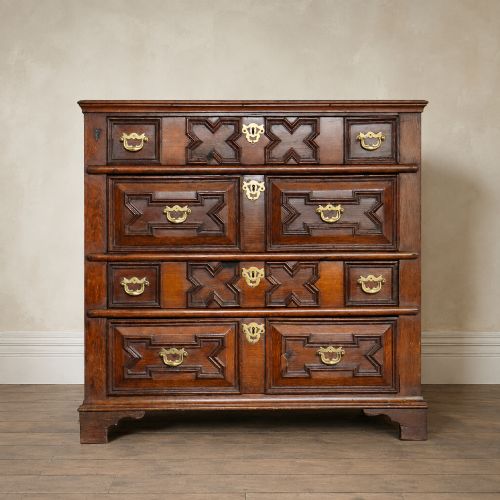
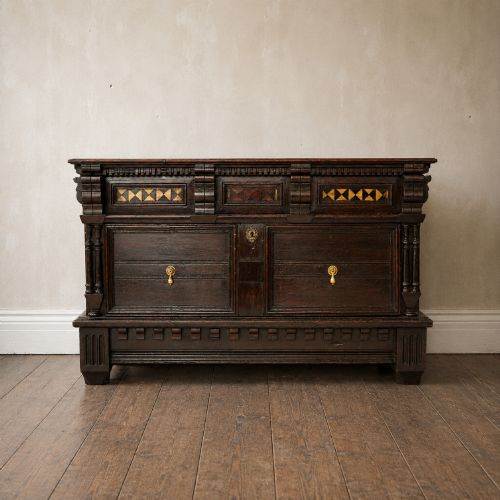
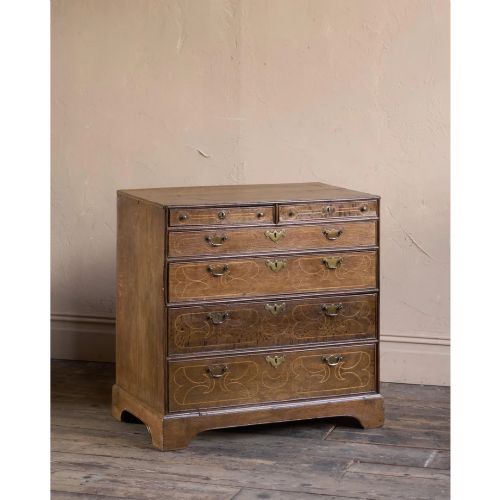
Surface ornamentation involved intricate techniques like geometric mouldings, floral marquetry, arabesque inlay, and boxwood stringing, secured with brass drop handles and escutcheons.
Joinery relied on traditional pegged mortise and tenon frames for the carcases, whilst drawer divisions utilised side-hung runners and panelled bottom boards.
17th Century Commode Retail Price Guide 2026
Typical asking prices for 17th century commode among the pieces listed under this phrase on Sellingantiques today, from the lower quarter to the upper quarter. They describe what is for sale here now, not the wider market.
Listings demonstrate a strong preference for oak and walnut timbers, frequently enhanced with geometric mouldings and oyster veneers from the late seventeenth century.
Distinctions in quality
The upper tier of pieces displays meticulous alignment in geometric mouldings and precise symmetry in oyster veneer cutting across every drawer front.
Superior examples retain their original brass hardware, uncompromised timber surfaces, and crisp carved details that have avoided heavy over-restoration.
Lesser items exhibit replaced structural elements, mismatched timber patches, or simplified drawer construction that lacks the depth of early marquetry and moulded enrichment.
The 17th Century Commode Glossary
- Oyster Veneer
- Thin circular slices cut across small branches of walnut, olive, or fruitwood to create an intricate, repeating pattern resembling oyster shells. This technique required immense skill from the seventeenth-century cabinet maker.
- Geometric Moulding
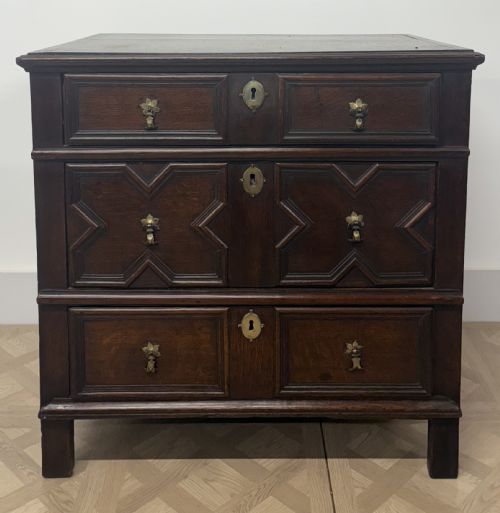
- Raised wooden profiles applied to drawer fronts in rectilinear patterns, creating strong shadow lines and architectural depth. These designs defined much of the joinery during the Charles II period.
- Close Stool
- A domestic box stool containing a commode seat mechanism for sanitary use, often upholstered or fitted with a hinged lid. They served as early forms of indoor convenience.
- Marquetry
- The art of applying decorative veneer pieces of various woods, bone, or metal to form pictorial or floral designs on furniture surfaces. William and Mary pieces frequently showcase elaborate floral displays.
- Carcase
- The main structural body or frame of a chest of drawers, excluding the drawers and feet. It provides the foundational strength for veneered and solid timber exteriors.
17th Century Commode: Frequently Asked Questions
What is a 17th century commode?
A 17th century commode typically refers to heavy oak or walnut chests of drawers and enclosed box stools from the seventeenth century. These items provided essential storage and seating in early homes.
They combine robust structural framing with decorative elements like geometric mouldings and oyster veneers. The term encompasses both British regional pieces and continental examples.
How were these pieces used?
Households utilised these chests primarily for storing textiles, garments, and valuables in private chambers and reception rooms. Box stools and close stools fulfilled personal sanitary needs while doubling as seat furniture.
Their substantial weight meant they remained in fixed locations rather than moving frequently around the house. The flat top surfaces also served to display domestic objects of status.
How do I live with antique oak?
Living with seventeenth-century furniture requires maintaining stable room humidity to prevent timber shrinkage or veneer lifting. Direct sunlight and proximity to heat sources should be avoided to protect the aged polish.
Regular dusting with a dry, soft cloth preserves the natural sheen of the wood. Gentle waxing every few years nourishes the dry timber without building up heavy chemical residues.
How to tell periods apart?
Distinguishing between Jacobean, Charles II, and William and Mary styles relies on observing shifts in ornamentation and timber choice. Jacobean pieces lean towards heavy solid oak with stark geometric panels.
Later seventeenth-century pieces under William and Mary introduce rich walnut veneers, marquetry patterns, and refined brass hardware. Structural assembly methods also evolve from purely pegged frames to more complex veneered carcases.