


Antique Oak Bun Feet
Antique oak bun feet anchor some of the sturdiest storage furniture from the seventeenth and eighteenth centuries.
Antique Oak Bun Feet
When searching for antique oak bun feet, buyers encounter robust storage furniture primarily dating from the seventeenth century and the Victorian era. These supportive spherical or slightly flattened wooden terminals typically anchor heavy case pieces designed for practical domestic use.
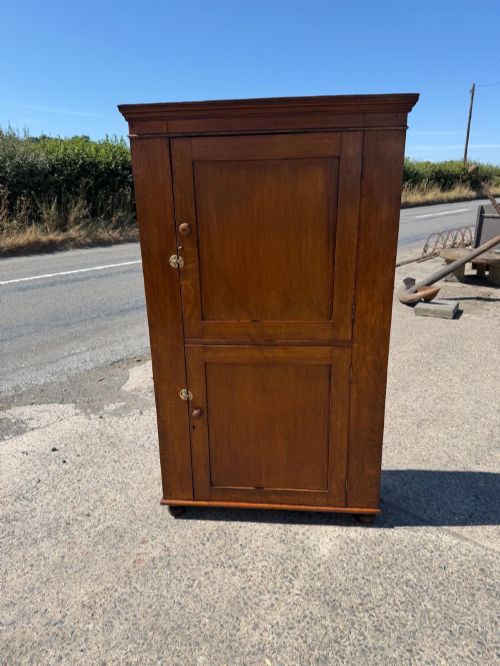
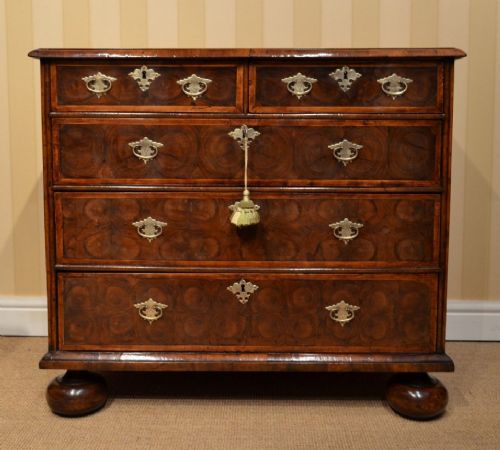
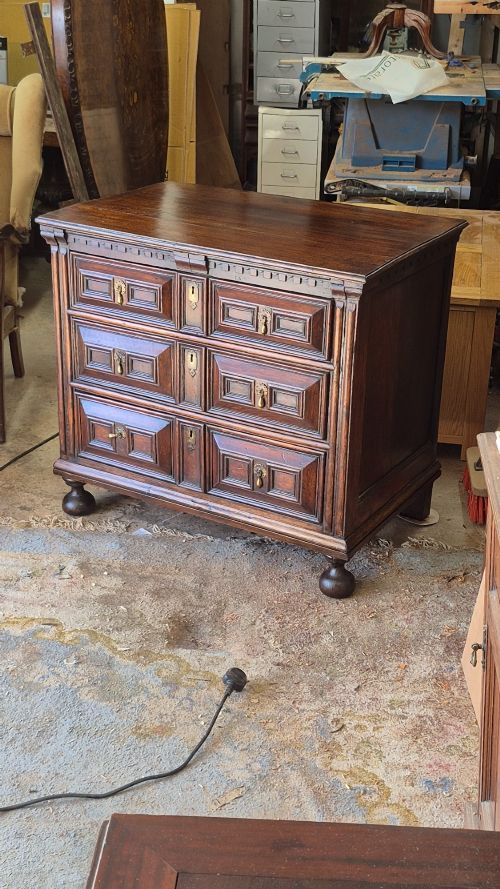
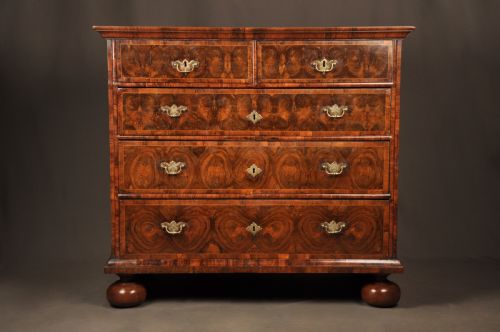
The pieces appearing with this feature include chest of drawers, cupboards and cabinets, and blanket chests. Alongside solid timber frames, surfaces frequently showcase decorative veneers or geometric block fronts rather than plain boards.
Originating largely within English workshops, these items also encompass continental examples from the eighteenth century. The visible timber shows the characteristic grain and medullary rays typical of early furniture production.
Materials and construction methods
Makers constructed these sturdy items predominantly using solid oak, often enhanced with walnut, oyster veneer, and olive woods to create patterned drawer fronts and panels. Secondary woods and iron or brass hardware complete the structural assembly.
Turned feet were shaped on a lathe to form the distinctive spherical bun profile before being secured beneath heavy case furniture. Joinery relied on traditional framing techniques suited to supporting dense timber carcasses over centuries.
Materials across the selection range from solid oak and iron to olive wood and oyster veneer.
Assessing quality in early furniture
Quality rests upon the selection of decorative surface timbers, such as intricate oyster veneer patterns set against solid oak carcases, compared to plain boarded construction. The crispness of geometric block fronts and inlaid walnut detailing also distinguishes finer examples.
The integrity of the structural form, including the proportion of the turned feet relative to the heavy chest above, dictates the visual balance of the piece. Surviving examples with integrated period surfaces demonstrate higher craftsmanship than heavily altered items.
The Antique Oak Bun Feet Glossary
- Bun feet
- Spherical or slightly flattened turned wooden supports placed beneath heavy case furniture. They lift the carcass clear of damp floors and provide a stable base.
- Oyster veneer
- Thin circular or oval slices cut across small branches of walnut, olive, or other timber to create repeating patterns. This technique was popular on seventeenth-century drawer fronts.
- Geometric block front
- A facade featuring projecting and recessed rectilinear panels arranged in formal patterns. This style requires precise carpentry and thick timber.
- Jacobean
- A British design style spanning the early to mid seventeenth century, characterised by solid construction and geometric ornamentation. Pieces from this era often feature heavy mouldings.
- William and Mary
- A decorative period lasting from the late seventeenth into the early eighteenth century. Furniture from this era displays refined turning and veneering techniques.
Antique Oak Bun Feet: Frequently Asked Questions
What periods do these pieces date from?
The listings span the seventeenth century, the William and Mary period, the eighteenth century, and the Victorian era.
Most examples originate from the late sixteen-hundreds, particularly around the sixteen-eighties and sixteen-nineties.
Are all these items made of solid oak?
While oak forms the primary structural carcass for many items, makers frequently incorporated walnut, olive, and oyster veneer on the decorative surfaces.
Some pieces also integrate brass and iron hardware alongside multiple timber species.
What types of furniture have bun feet?
The listings feature chests of drawers, cupboards and cabinets, blanket chests, and side tables.
These functional storage items rely on sturdy wooden feet to support heavy timber frames.
How do walnut and oak pieces differ?
Oak furniture generally displays a strong visible grain and is associated with solid seventeenth-century construction.
Walnut pieces often utilise fine veneers and geometric block fronts characteristic of William and Mary design.
Where were these items made?
English workshops produced the majority of these storage pieces during the seventeenth and eighteenth centuries.
Continental makers also contributed eighteenth-century blanket chests and cabinets featuring similar decorative elements.