


Restoration Period Oak Furniture
Restoration period oak furniture brings heavy timber and precise geometric moulding from the seventeenth century straight into modern rooms.
Restoration Period Oak Furniture
Restoration period oak furniture centres upon solid timber forms made during the seventeenth century, spanning the reigns of Charles II and the William and Mary era. These pieces are what a buyer meets when searching for restoration period oak furniture, offering a heavy domestic presence rooted in seventeenth century English craft.
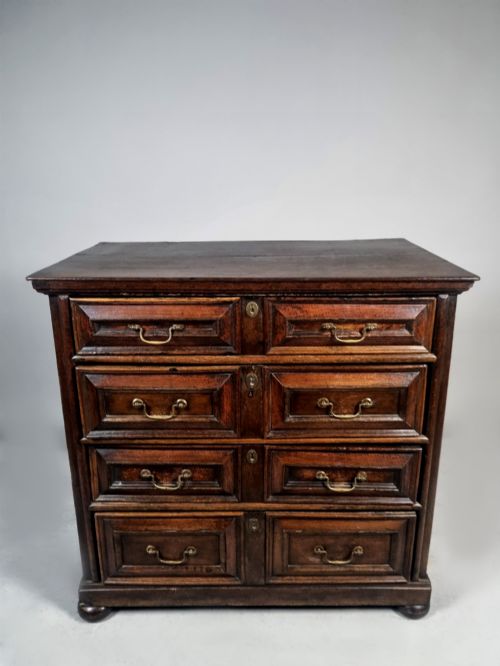
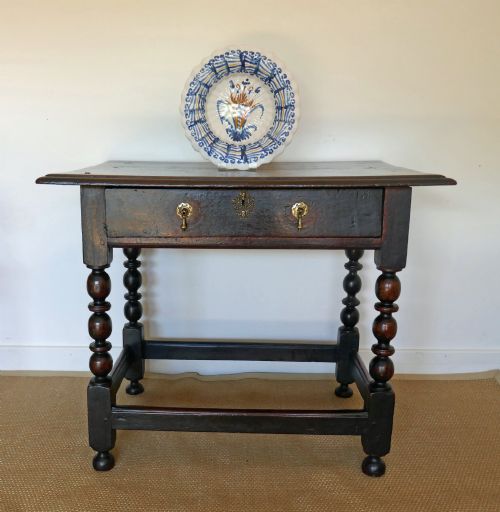
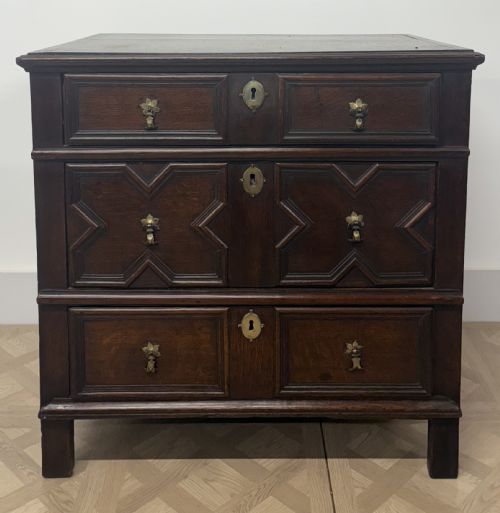
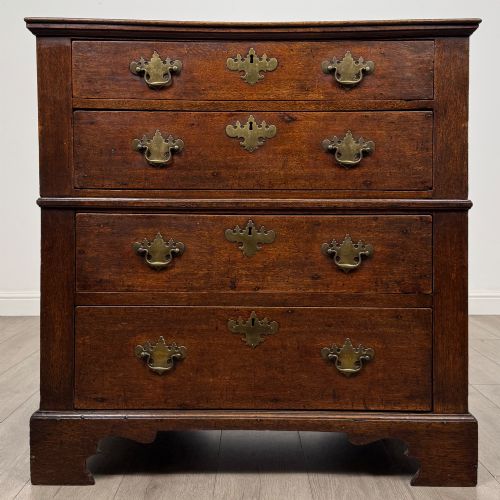
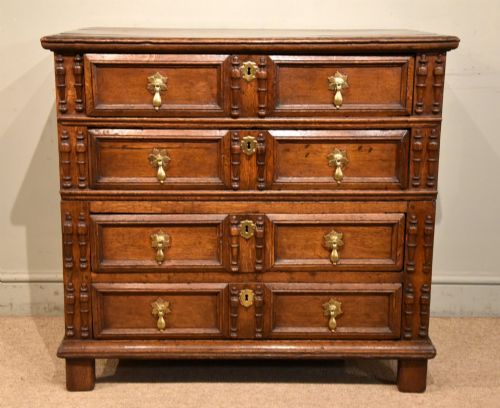
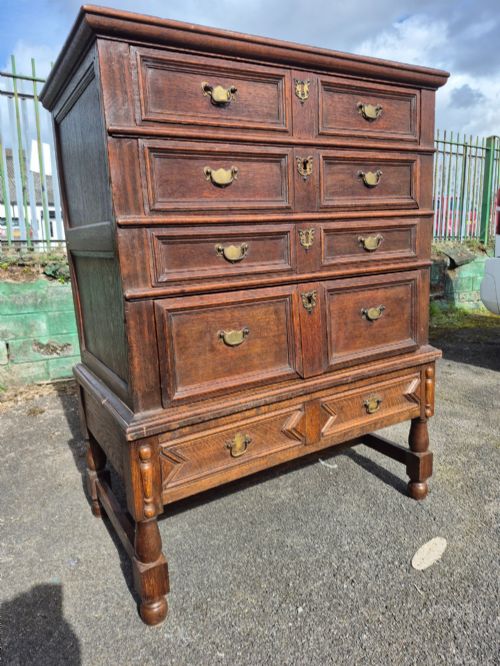
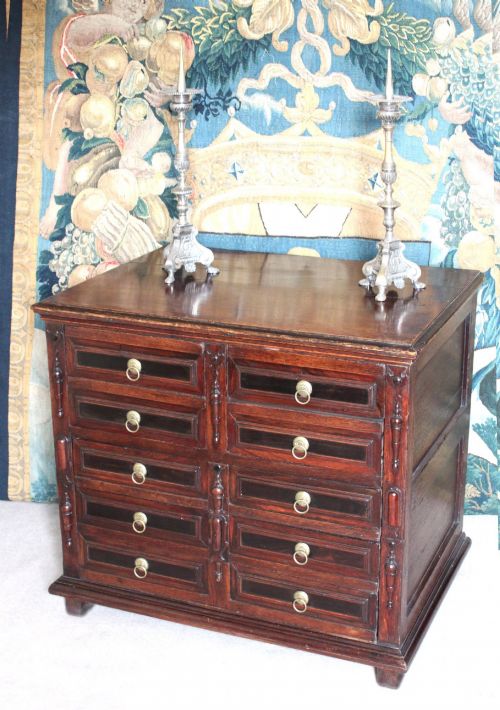
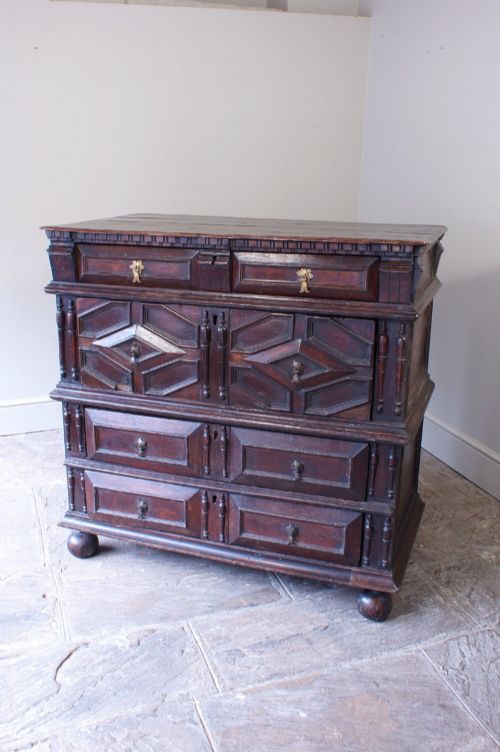
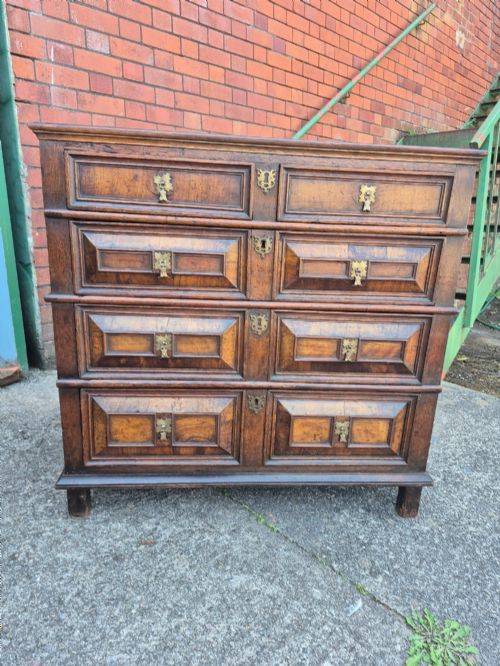
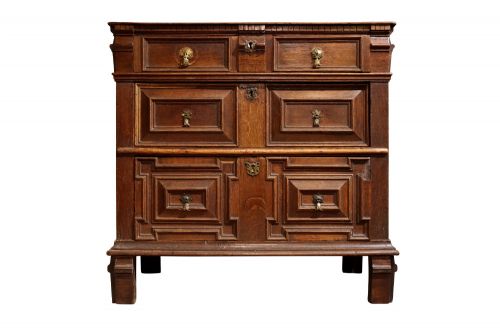
The most common forms on this page are chests of drawers, often featuring moulded fronts or geometric decoration, alongside side tables of bold proportions. Buyers also encounter less frequent forms such as cupboards, stools, rocking cradles, and chests on stands.
Most examples date from the later seventeenth century, specifically around the sixteen-sixties to the sixteen-eighties under Charles II. Walnut, fruitwood, and oyster veneer occasionally supplement the primary oak material, reflecting the shifting tastes of the period.
What varies in quality
Quality rests upon the depth of the geometric mouldings and the crispness of the carved details on the drawer fronts and panels. Pieces with bolder proportions and integrated secondary woods display a higher ambition in design.
The choice of surface treatment and the preservation of original oyster veneer create distinct tiers within the range. Coarser country pieces sit at the simpler end, whilst sophisticated urban commissions command greater attention for their structural harmony.
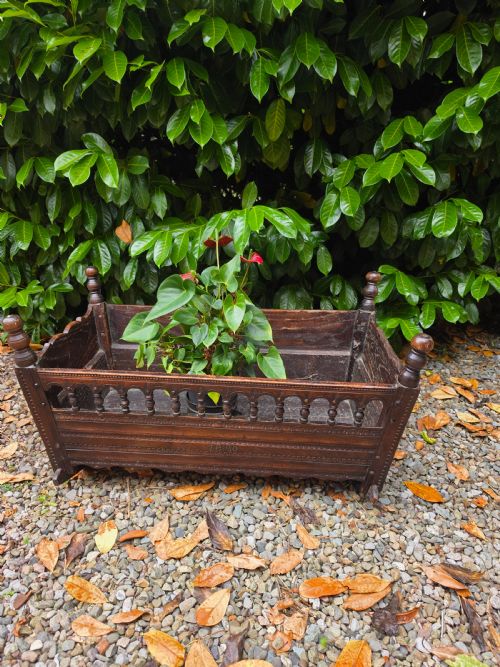
A rocking cradle waits in the collection, offering a seventeenth century solution to keeping a restless infant asleep.
The Restoration Period Oak Furniture Glossary
- Oyster veneer
- Circular or oval slices cut across small branches to create decorative wood patterns. This technique appeared on sophisticated surfaces during the later seventeenth century.
- Geometric moulding
- Raised wooden strips applied to drawer fronts in repeating symmetrical patterns. These designs defined the facade of many pieces from the Charles II period.
- Chest on stand
- A tall storage section elevated upon a separate supportive base with legs. This form lifted heavy drawers off the floor during the late seventeenth century.
- Side table
- A small functional table designed to stand against a wall. Examples from this era display bold proportions and sturdy timber legs.
- Charles II period
- The reign spanning sixteen-sixty to sixteen-eighty-five. Furniture from this era often shows exuberant carving and geometric ornamentation.
Restoration Period Oak Furniture: Frequently Asked Questions
What defines restoration period oak furniture?
These pieces date from the seventeenth century, primarily covering the reign of Charles II and the William and Mary era. They consist of solid timber items built with traditional joinery.
Key forms include chests of drawers with moulded fronts, side tables, and cupboards. The aesthetic relies upon heavy oak construction supplemented by geometric decoration.
Where were these pieces used originally?
Households utilised these heavy wooden items in principal rooms of seventeenth century English homes. Chests provided secure storage for textiles and valuables.
Side tables and cupboards served functional domestic roles in halls and chambers. Their sturdy build suited daily household routines.
How do I live with seventeenth century oak?
Place these solid timber pieces away from direct heat sources and sudden humidity changes. Maintaining stable room conditions protects the old wood and applied veneers.
Pair the robust dark surfaces with simple modern interiors to let the historic proportions stand out. Daily use requires only a soft cloth for dusting.
How do I tell Charles II pieces apart?
Look for applied geometric mouldings and panelled drawer fronts that characterise the Charles II period. Carved details and bold proportions indicate the prevailing style of the sixteen-eighties.
Later William and Mary pieces introduce different veneering techniques and leg structures. Comparing the secondary woods helps determine the specific decade of production.