




Dark Oak Cradle
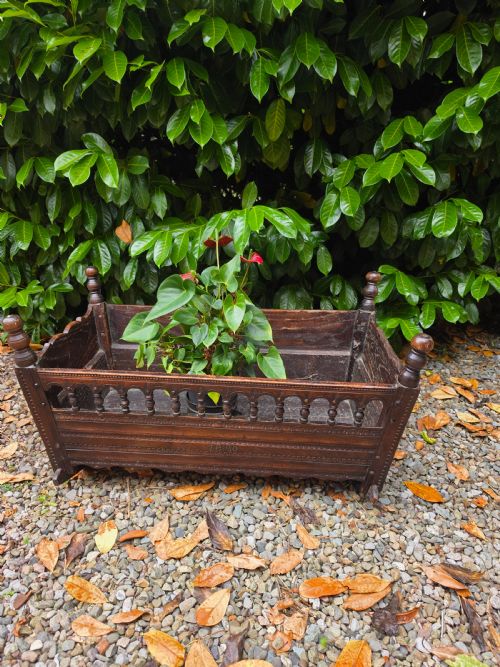
A dark oak cradle brings solid seventeenth-century substance into a room, offering heavy timber construction and centuries of domestic history.
Dark Oak Cradle
A dark oak cradle provides a substantial timber form designed for domestic use, spanning periods from the sixteenth century to the Victorian era. Buyers searching for a dark oak cradle encounter robust panelled construction, integrated rockers, and occasionally protective hoods.
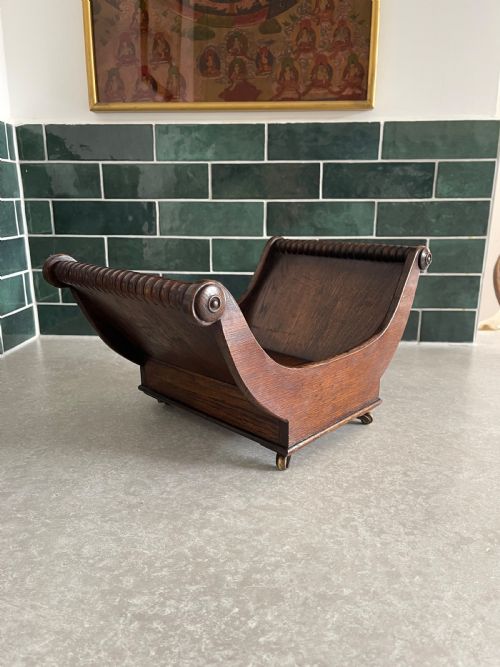
The pieces appearing on this page range from early seventeenth-century examples featuring field panels and fruitwood accents to nineteenth-century revivals and related treen forms such as cheese coasters. William and Mary, Charles II, and Elizabethan influences dominate the stylistic range alongside Victorian Gothic revivals.
Most examples rely on traditional joinery techniques, utilising heavy oak boards and panelled sides to create a secure enclosure for a child. Surviving pieces demonstrate the enduring utility of these domestic items, occasionally repurposed for alternative storage roles.
How they were made
Construction relies upon solid oak timbers, frequently augmented with fruitwood details and secured with brass elements. Makers utilised traditional panelled techniques, fitting timber boards into grooved frames to manage natural wood movement.
Surfaces exhibit hand-worked tool marks from the sixteenth century onwards, showing the methods of period joiners. Rockers were integrated into the base structures to allow smooth movement, while hoods on specific early examples provided shelter.
Current listings span the sixteenth to the nineteenth centuries, incorporating oak, fruitwood, and brass across various revival styles.
What varies in quality
Quality rests in the integrity of the original timber panels and the crispness of period joinery. Pieces retaining their authentic seventeenth-century proportions and untouched surface patination stand apart from later revivals.
The sophistication of the panel carving and the clever integration of fruitwood accents dictate the refinement of individual items. Later nineteenth-century interpretations vary according to how closely they adhere to earlier seventeenth-century structural standards.
The Dark Oak Cradle Glossary
- Field panel
- A wood panel with bevelled edges sloping down toward a central raised flat area. This technique added rigidity to large timber surfaces while improving visual depth.
- Rocking cradle
- A low bed mounted on curved wooden rockers to permit gentle motion. This form represents the primary functional object type seen across the periods.
- Treen
- Small handmade wooden household objects and utensils. The category includes related domestic treen items appearing alongside larger furniture pieces.
- Hood
- A protective canopy fitted over the head end of early sleeping furniture. This feature sheltered infants from draughts in older domestic spaces.
Dark Oak Cradle: Frequently Asked Questions
What periods do these cradles date from?
The pieces span multiple eras, including sixteenth-century Elizabethan work, seventeenth-century Charles II and William and Mary pieces, and later nineteenth-century revivals.
Specific examples reflect distinct historical aesthetics, ranging from early panelled construction to Victorian interpretations.
How were these wooden cradles constructed?
Joiners built them primarily from solid oak and fruitwood, utilising heavy panels fitted into grooved frames.
Rockers were attached to the base structures to provide smooth movement, while selected early examples incorporated protective wooden hoods.
What materials are typically found?
Oak forms the primary structural material across nearly all examples, frequently paired with fruitwood details and occasional brass elements.
Surfaces display the natural grain and patination developed over centuries of domestic exposure.
Can these items be used in modern interiors?
These robust timber items integrate easily into contemporary spaces as striking decorative focal points or historical display pieces.
Certain sturdy nineteenth-century variants also serve practical alternative functions, such as holding logs near a fireplace.