
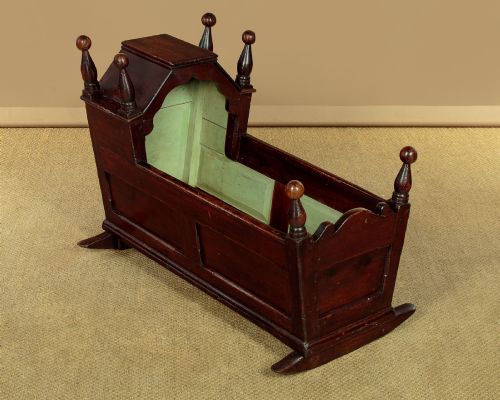
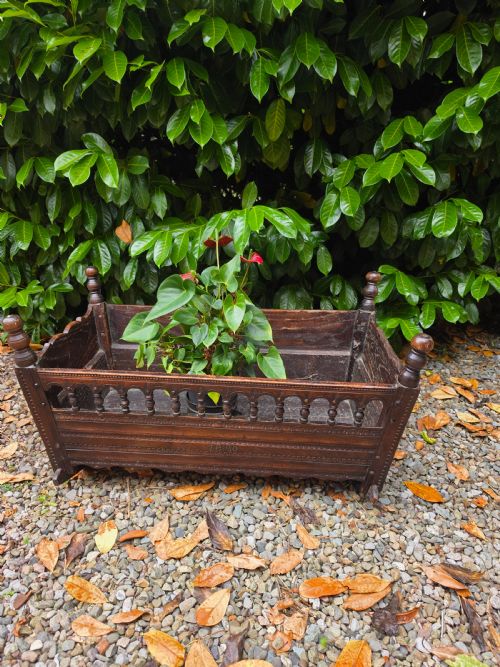


Carved Wooden Rocking Crib
These carved wooden rocking cribs are centuries-old sleeping vessels hewn from solid timber, offering enduring joinery and gentle movement for historic interiors.
Carved Wooden Rocking Crib
A carved wooden rocking crib is a traditional infant bed mounted on curved rockers for side-to-side motion. The pieces found here span from the sixteenth century through the nineteenth century, encompassing vernacular country forms and formal period revivals.
Buyers encounter heavy panelled oak examples alongside lighter Scandinavian painted pine versions. Formats range from simple boarded boxes to panelled constructions with protective hoods and applied mouldings.
The styles represented across these listings include William and Mary, Georgian, Charles II, and Jacobean Revival. These items function today as decorative focal points or as deep log baskets in period hearths.
How they were made
Construction relies primarily on sturdy hardwoods and softwoods such as oak, fruitwood, mahogany, and pine. Joinery techniques include frame and panel assembly, pegged mortise and tenon joints, and simple board construction.
One robust Victorian oak example carries a dual legacy, recommended by its dealer specifically to double as a sturdy fireside log basket.
What varies in quality
Quality depends upon the integrity of the original timber and the crispness of the hand-carved detail on panels and hoods. Pieces featuring dense seventeenth-century oak display superior structural weight compared to lighter nineteenth-century revivals.
The sophistication of the joinery and the presence of untouched period surfaces separate standard vernacular items from exceptional workshop examples. Alterations to the rockers or base diminish historical authenticity.
The Carved Wooden Rocking Crib Glossary
- Field panel
- A raised wooden panel with bevelled edges set within a grooved frame. This technique allows the timber to expand and contract safely with humidity changes.
- Rockers
- The curved wooden members attached to the base of the crib. They allow the cradle to sway smoothly.
- Fruitwood
- Dense timber harvested from fruit-bearing trees such as pear or apple. It provides a fine grain favored for decorative accents and turnings.
- Hood
- A protective canopy built over the head of the crib. It shields the infant from drafts in older draughty rooms.
Carved Wooden Rocking Crib: Frequently Asked Questions
How old are these cribs?
The pieces span from the sixteenth century up through the Victorian era. Many reflect seventeenth-century styles built during later revival periods.
Dates are assigned based on timber species, construction methods, and stylistic carving traits characteristic of each era.
Were these used for sleeping?
These wooden vessels served historically as infant beds. The curved rockers allowed parents to soothe a child without leaving the bed.
Modern safety standards mean they are typically acquired today for decorative display, storage, or collection.
Can I use one for logs?
Certain sturdier examples make practical log baskets for large hearths. Their deep wooden boxes contain firewood neatly.
Buyers often repurpose Victorian oak cribs for this functional role in traditional living spaces.
How do I identify oak types?
Early seventeenth-century pieces utilise dense native oak with pronounced medullary rays. Later nineteenth-century interpretations often feature softer pine or imported mahogany.
Examining the underside and interior boards reveals tool marks and patination consistent with the period.