
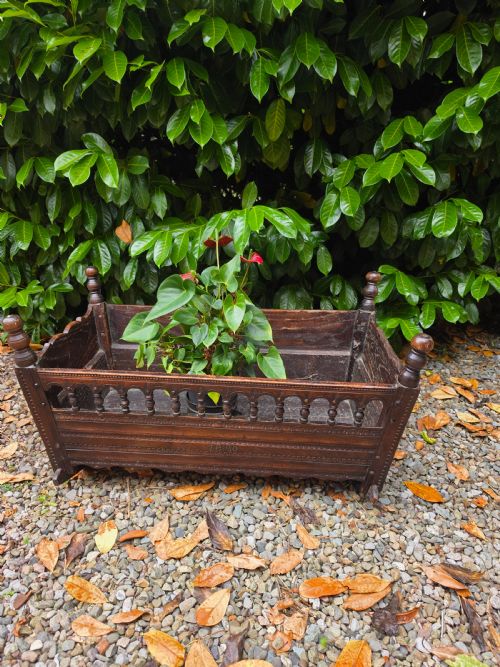


Oak Rocking Crib
An oak rocking crib is a traditional sleeping vessel for infants, offering gentle movement and solid timber construction for the nursery.
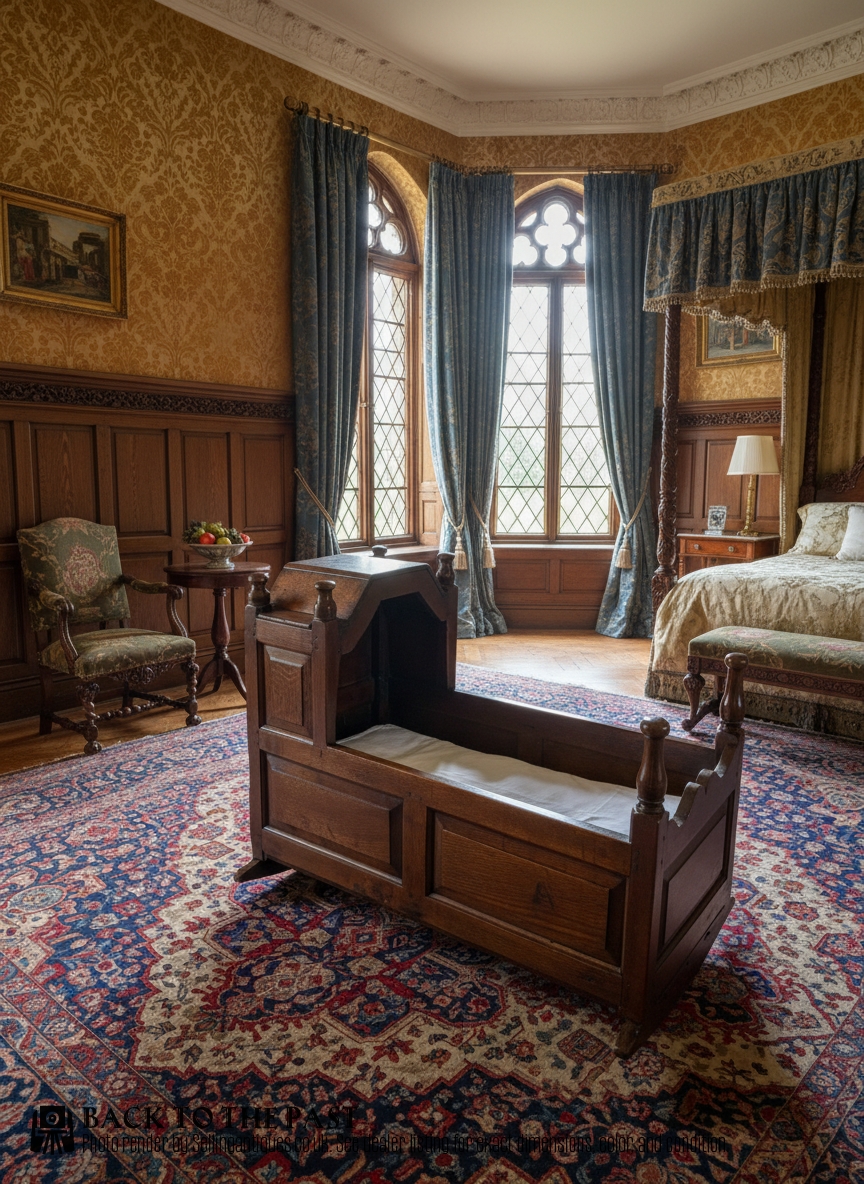
Oak Rocking Crib
When you search for an oak rocking crib, you encounter heavy timber infant cradles built to rock upon curved wooden runners. These pieces span several centuries, including examples from the sixteenth, seventeenth, eighteenth, and nineteenth centuries.
The versions most commonly met on this page range from plain seventeenth-century panelled formats to decorative Victorian and Georgian iterations. They appear in styles such as William and Mary, Charles II, Jacobean Revival, and Elizabethan.
Many of these historic nursery items utilise sturdy frame and panel construction. Alongside straightforward rocking cradles, the selection includes hooded designs and pieces adapted for alternative household uses.
How they were made
Maker's hands built these cribs primarily from solid oak, frequently augmented with contrasting fruitwood and secondary pine elements. Joinery techniques relied heavily on pegged panels, joined frames, and hand-carved detailing.
Earlier pieces incorporate field panels and elaborate fretwork frames, whilst later nineteenth-century examples display carved decoration. Timber selection focused on durable local hardwoods capable of withstanding generations of nursery use.
Listings feature oak, fruitwood, glass, and pine materials across periods from the sixteenth to the nineteenth century.
What varies in quality
The distinction between standard examples and superior pieces rests in the sophistication of the timber work and the integrity of the original construction. Early seventeenth-century joined frames and crisp field panelling demonstrate a higher standard of craftsmanship than later utility pieces.
The Oak Rocking Crib Glossary
- Field panel
- A raised wooden panel with bevelled edges set within a grooved frame. This technique allowed timber to expand and contract safely with changes in humidity.
- Rockers
- Curved wooden feet attached to the base of the crib. They enable the cradle to sway back and forth to soothe an infant.
- Hood
- A fitted canopy or covering over the head end of the crib. It provided shelter from drafts in older rooms.
- Joined construction
- A method of building furniture using mortise and tenon joints secured by wooden pegs rather than metal nails.
- Fruitwood
- Dense timber derived from fruit-bearing trees such as pear or apple. Cabinet makers used it for contrasting details or secondary structural elements.
Oak Rocking Crib: Frequently Asked Questions
What is an oak rocking crib?
An oak rocking crib is a traditional wooden infant bed mounted on curved rockers to allow gentle movement. These pieces range from sixteenth-century panelled designs to nineteenth-century domestic examples.
They served as functional nursery furniture designed to soothe babies to sleep. Today, collectors value them for their historic timber construction and period joinery.
How do I date an antique crib?
Dating relies on examining the construction methods, timber choice, and decorative style visible on the piece. Seventeenth-century examples often feature pegged frame and panel joinery, whilst Victorian pieces display heavier carved ornamentation.
Changes in hardware, tool marks, and regional building traditions also help determine the period of origin. Comparing the style to known historical periods narrows down the decade of manufacture.
Were these cribs used daily?
These cribs were essential practical items in historic households for rocking infants to sleep. Their solid oak and fruitwood construction ensured they endured years of heavy domestic service.
Many show signs of continuous use across generations within family homes. Their sturdy build allowed them to survive centuries of practical nursery life.
How do I live with an antique crib?
Living with an antique crib involves placing it in a stable environment away from direct heat sources and excessive moisture. This protects the historic oak timber from splitting or warping.
Some owners utilise them for decorative storage or display purposes within modern homes. They add historic character and warmth to room settings whilst retaining their traditional form.
What styles of crib are available?
The selection encompasses various historical aesthetics including Elizabethan, Charles II, William and Mary, and Victorian periods. Each style brings distinct decorative elements such as field panels or fretwork.
Some feature protective wooden hoods whilst others remain open. Regional variations from places like the West Country also appear among the offerings.