
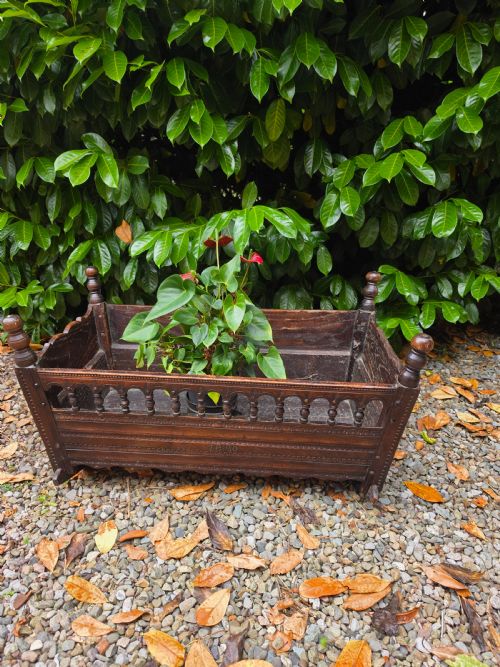


Dark Oak Rocking Crib
These dark oak rocking crib pieces offer a tangible link to domestic history, combining robust regional joinery with functional infant bedding.
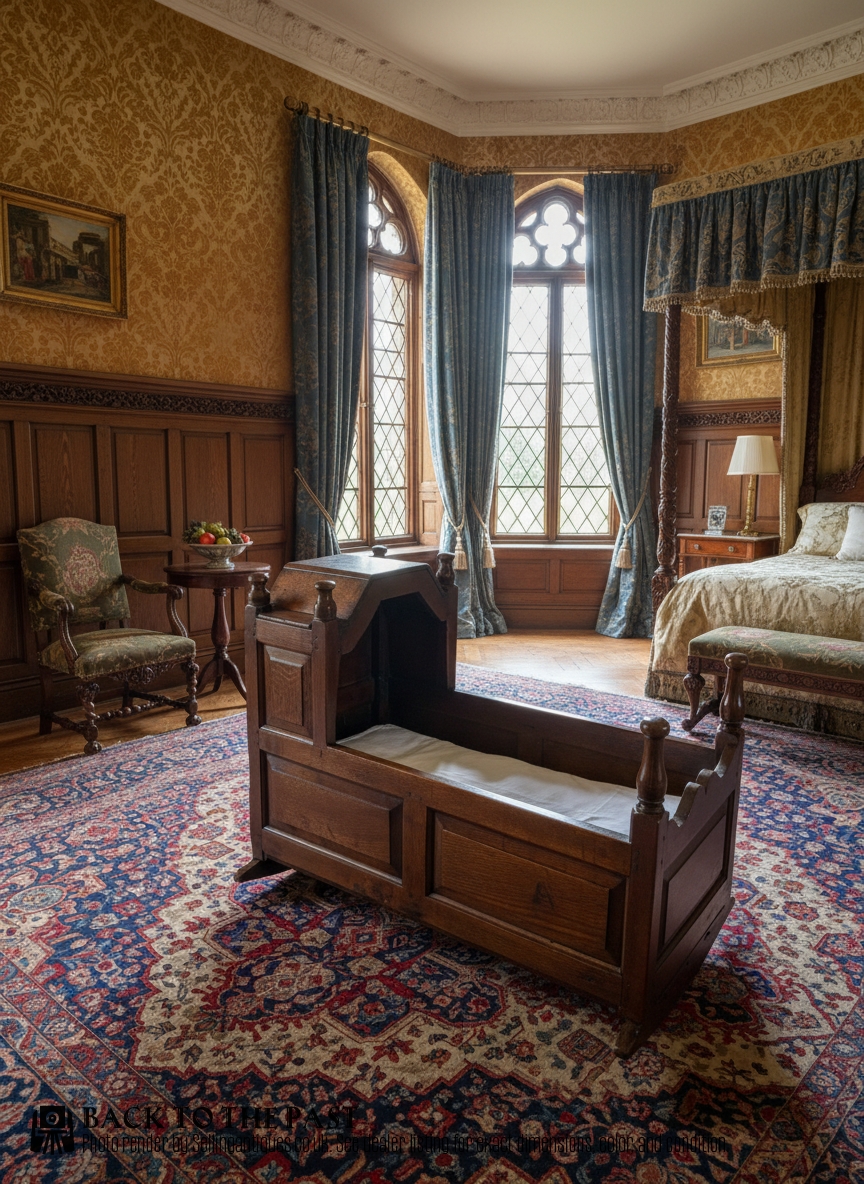
Dark Oak Rocking Crib
A dark oak rocking crib represents a traditional form of infant furniture designed with curved rockers to soothe a child, appearing in periods from the sixteenth century through to the Victorian era. The examples on this page span styles such as Jacobean, William and Mary, and Victorian Gothic Revival, reflecting centuries of domestic woodworking traditions.
Most items meeting the search for a dark oak rocking crib present panelled construction and substantial timber frames. Forms range from unadorned field-panelled cradles to hooded variants and pieces incorporating fruitwood elements.
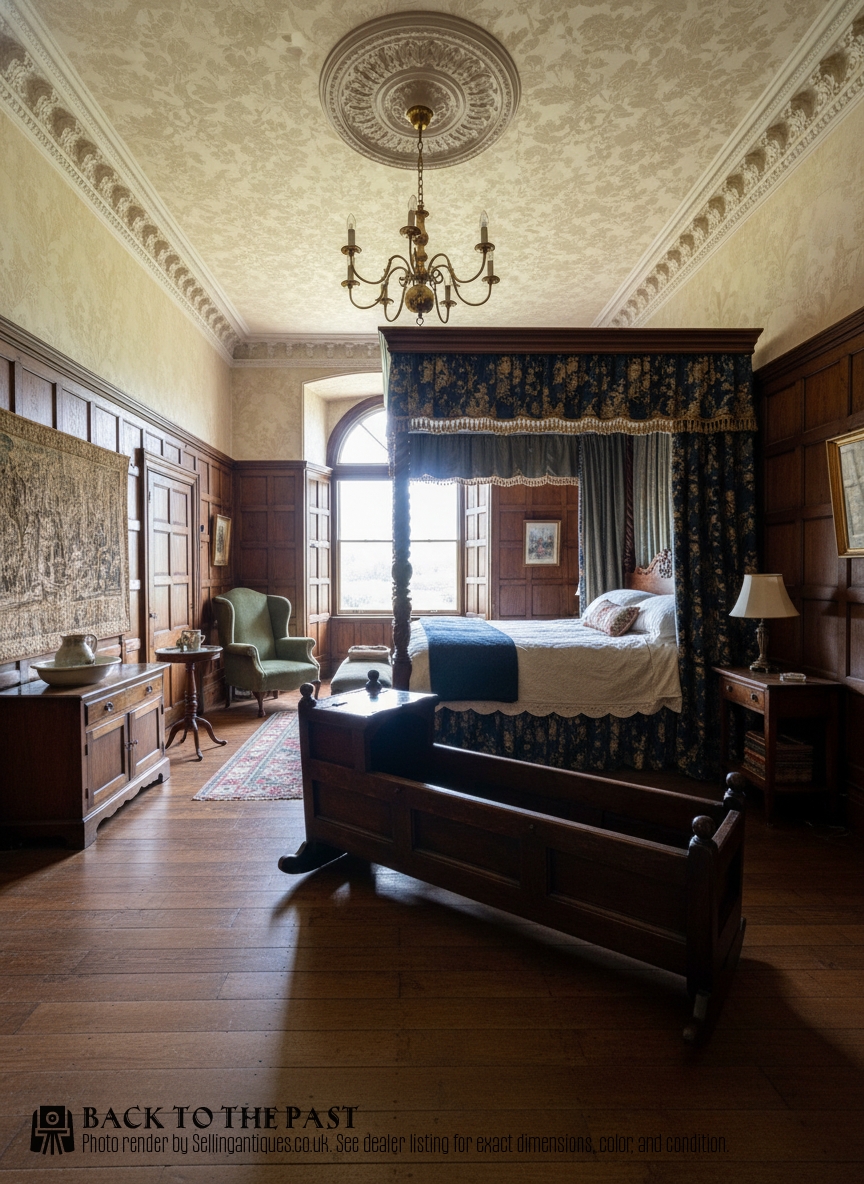
How they were made
Construction relies heavily on solid oak and occasional fruitwood, shaped through traditional joinery techniques such as panelled framing. Surfaces exhibit the natural grain and dark patina characteristic of early timber subjected to centuries of wax polishing and handling.
Joinery methods include pegged joints and fielded panels fitted securely within grooved framework. Carved details occasionally appear on later interpretations, whilst rockers are integrated directly into the base structure to permit smooth movement.
Styles recorded across these items include Elizabethan, Jacobean Revival, William and Mary, and Victorian Gothic Revival.
What varies in quality
Quality differences lie in the crispness of the original joinery, the integrity of the timber panels, and the subtlety of any carved ornamentation. Pieces displaying sophisticated period styling, such as William and Mary characteristics, command greater interest than simpler utilitarian iterations.
The degree of alteration also dictates standing, as uncompromised construction with period-correct timber retains higher integrity. The handling of the wood over generations, resulting in a rich surface patina, distinguishes superior examples from lesser or heavily restored items.
The Dark Oak Rocking Crib Glossary
- Field panel
- A wood panel with bevelled edges sloping down towards a central flat raised area. This technique reduces weight whilst allowing the timber to expand and contract naturally.
- Rockers
- The curved wooden members attached to the base of the crib. They allow the structure to pivot gently back and forth.
- Hood
- A protective canopy or cover integrated into the head of the cradle. It shields the infant from draughts in older domestic spaces.
- Patina
- The surface sheen and colour developed by timber over long periods of time through handling, ageing, and polishing.
Dark Oak Rocking Crib: Frequently Asked Questions
What is a dark oak rocking crib?
It is a traditional wooden infant bed fitted with curved base rails designed for gentle motion. These items utilise durable timbers and period joinery techniques.
They reflect historical domestic life across multiple centuries, serving originally as practical nursery furniture before becoming decorative interior objects.
How were these cribs used historically?
Parents placed infants inside to sleep, using the curved rockers to soothe the child without needing to lift them. The addition of a hood helped block household draughts.
In modern contexts, they are frequently repurposed for display or alternative storage rather than infant use.
How do I distinguish seventeenth-century pieces from nineteenth-century revivals?
Distinguishing the periods requires examining the construction methods, tool marks, and timber shrinkage patterns. Seventeenth-century examples display authentic period joinery and natural wear.
Revival pieces, such as those from the Victorian era or mid-nineteenth century, often replicate earlier styles like Jacobean or William and Mary using older or mixed-period wood.
How should I live with one of these cribs?
These items require stable indoor humidity levels away from direct heat sources to prevent the solid oak from splitting. Regular gentle dusting and occasional wax application maintain the surface.
Positioning them as standalone decorative focal points allows their historical joinery and timber grain to be appreciated fully.