
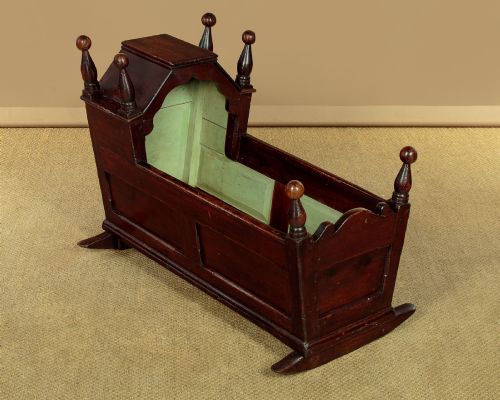


Hooded Wooden Cradle
A hooded wooden cradle offers a quiet anchor for a room, combining centuries of domestic craftsmanship with enduring structural grace.
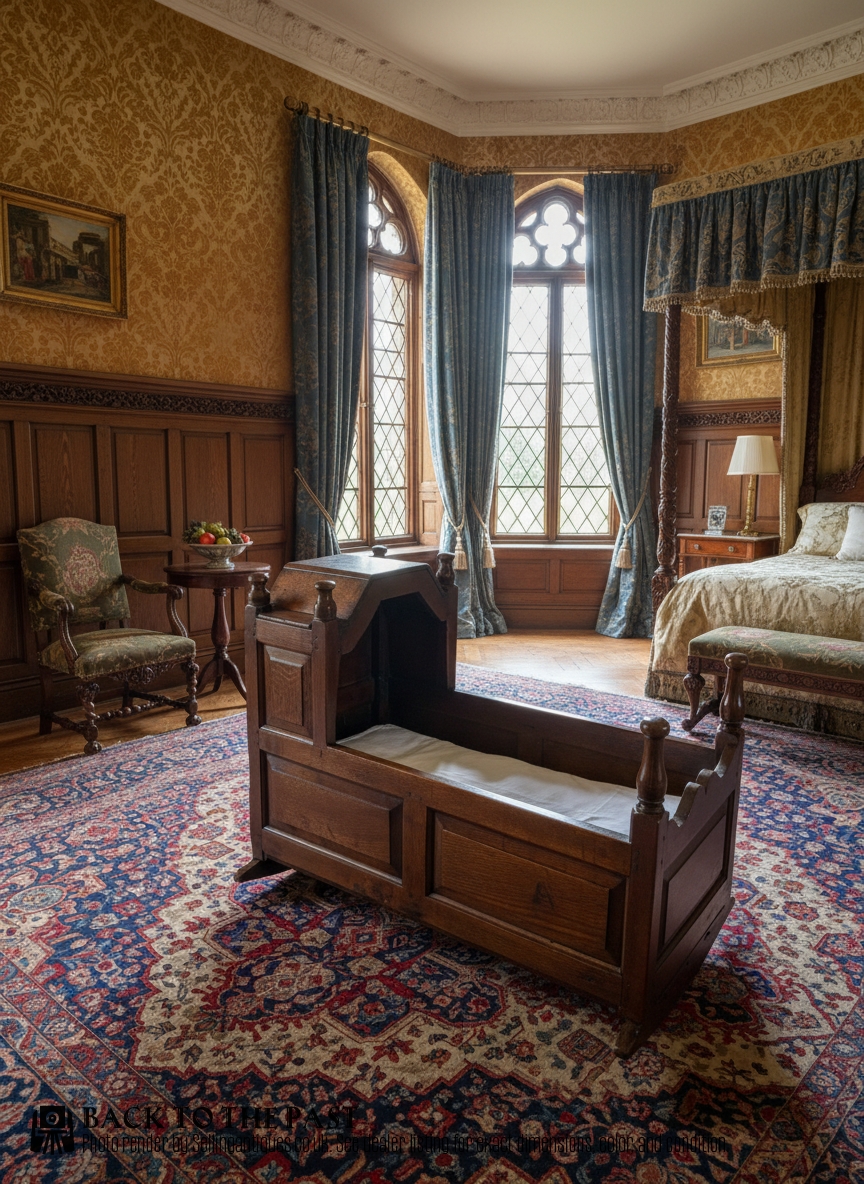
Hooded Wooden Cradle
A hooded wooden cradle provides a secure, enclosed resting space for an infant, designed with protective headboards and curving rockers beneath. When exploring a hooded wooden cradle, buyers encounter robust examples shaped from sturdy timbers across several defining eras.
The pieces appearing on this page span the seventeenth, eighteenth, and nineteenth centuries, alongside revival interpretations carrying earlier design motifs. Oak and pine dominate the forms, frequently manifesting as panelled structures or rustic country variations.
Many items incorporate rocking mechanisms, while canopy tops and protective hoods define the upper profiles of these historical sleeping vessels. These domestic furnishings bridge utilitarian nursery equipment and sculptural antique woodwork.
Materials and construction
Makers relied primarily on native timbers such as oak and pine, shaping solid boards into durable panels and curved rockers. Joinery techniques in early pieces involved pegged mortise and tenon construction, ensuring the frame withstood generations of motion.
Surface treatments range from natural waxed finishes highlighting the grain to original painted coats in pigments like blue. Secondary materials such as cane, mahogany, and metal occasionally appear, adding textural contrast to the primary wooden frames.
Listings feature woods spanning sturdy oak, utilitarian pine, and rich mahogany across multiple centuries.
Evaluating the standard
Quality rests in the integrity of the timber selection and the sophistication of the panel construction. Early seventeenth-century joinery displays crisp framing and thoughtful proportion, whereas later nineteenth-century interpretations lean towards decorative carving or simpler painted pine surfaces.
The preservation of original structural elements, including intact rockers and untouched surface finishes, distinguishes superior examples. Alterations to hoods or replacement of base timbers alter the historical cohesion of the piece.
Heals and son
The Hooded Wooden Cradle Glossary
- Hood
- A protective canopy or upper covering at the head of the cradle designed to shield the infant from drafts. This architectural feature defines the silhouette of the traditional sleeping vessel.
- Rockers
- The curved wooden bases attached beneath the cradle body to permit smooth swaying motion. They allow the entire structure to glide gently across the floor.
- Field panel
- A raised wooden panel set within a grooved frame, commonly seen on seventeenth-century and revival oak examples. This technique adds depth and structural rigidity to the sides.
- Caning
- Woven rattan material used to form decorative panels in select nineteenth-century frames. It introduces a lighter, breathable element to otherwise solid wooden construction.
Hooded Wooden Cradle: Frequently Asked Questions
How do I date a wooden cradle?
Dating relies heavily on construction methods, timber choice, and stylistic cues present in the panels. Seventeenth-century examples typically feature heavy oak with pegged joinery, while nineteenth-century pieces often utilise pine, mahogany, or machine-sawn boards.
Secondary details like painted finishes or retailer labels further help narrow the period of origin. Comparing the form to dated comparative examples in local records secures an accurate timeline.
Were these cradles used for sleeping?
These pieces served as primary infant beds in historic households, keeping babies close to hearths and parents. The enclosed hood offered shelter from cold household drafts in poorly insulated rooms.
Modern safety standards differ significantly from historical practices, meaning these items now function best as display pieces or storage solutions rather than infant beds.
What is the purpose of the hood?
The hooded structure blocked ambient light and cold air currents circulating through historic bedchambers. It created a microclimate of relative warmth and security for the infant resting inside.
Over time, the hood evolved from a strictly functional shield into an ornamental focal point displaying regional woodworking styles.