
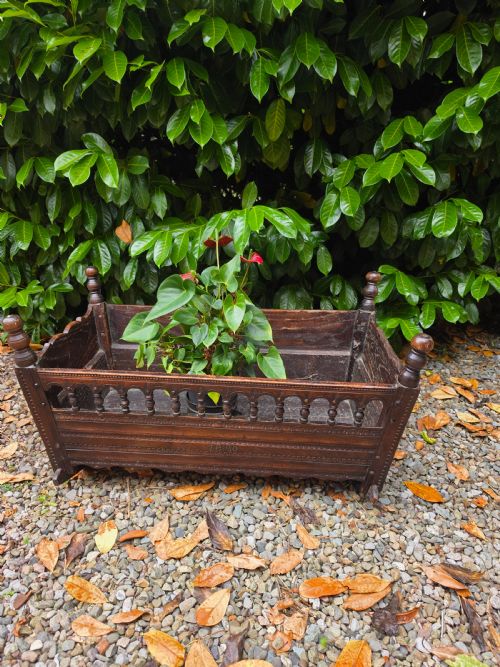


Oak Wooden Rocking Cradle
These oak wooden rocking cradle pieces are sturdy resting places built to gently soothe children to sleep.
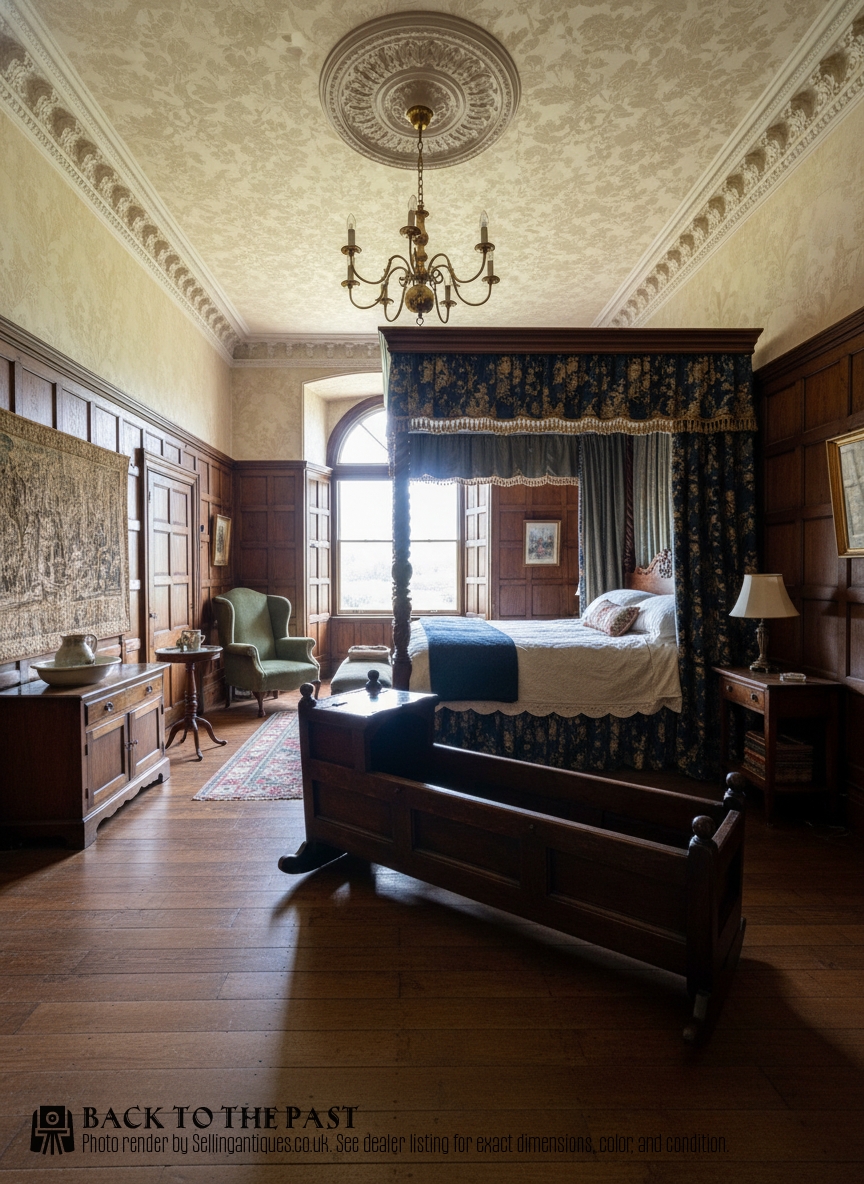
Oak Wooden Rocking Cradle
An oak wooden rocking cradle provides a traditional resting place for infants, combining solid construction with curved rockers for gentle movement. The pieces listed span several eras, reaching from the sixteenth century through the seventeenth and Georgian periods into the nineteenth and Victorian years.
Buyers will encounter various forms ranging from panelled cribs to hooded designs and pieces featuring fruitwood additions. The origins trace across centuries of English cabinet-making, showing substantial timber construction intended for daily domestic use.
What varies in quality
Quality differences emerge in the sophistication of the timber work and the depth of period detail, such as fielded panels versus plain boards. Earlier examples often show more elaborate regional styling and careful joinery.
The integrity of the original rockers and the preservation of early surface patination distinguish finer items from simpler utilitarian nursery pieces.
The listings show materials predominantly consisting of oak alongside fruitwood and pine, spanning periods from the sixteenth century to the Victorian era.
The Oak Wooden Rocking Cradle Glossary
- Field panelling
- A method where wooden panels have bevelled edges set into a frame to reduce warping and add decoration. This technique appears frequently on seventeenth century examples.
- Hood
- A protective canopy fitted over the head of the cradle to shield the infant from draughts. These hooded variants belong to the sixteenth century tradition.
- Fruitwood
- Dense hardwood utilised alongside oak for contrasting tones and finer decorative turnings. It adds visual variety to the primary timber structure.
- Rockers
- Curved wooden rails attached to the base allowing the crib to sway. They are fundamental to the function of these nursery pieces.
Oak Wooden Rocking Cradle: Frequently Asked Questions
What periods do these cradles come from?
The listings span multiple eras, including sixteenth century Elizabethan pieces, seventeenth century Charles II and William and Mary examples, Georgian items, and nineteenth century Victorian designs.
This broad chronological range means buyers can find both very early panelled specimens and later nineteenth century interpretations.
What materials were used to build them?
Solid oak is the primary timber across the inventory, frequently supplemented by fruitwood for contrast and occasional pine elements.
Glass does not form a structural part of these robust wooden nursery items.
How do seventeenth century cradles differ from Victorian ones?
Seventeenth century pieces often display field panelling and styles associated with the Jacobean and William and Mary eras. Victorian examples tend to feature carved oak details and distinct nineteenth century proportions.
Some Victorian pieces were later adapted for alternative domestic uses such as log baskets.
What styles are represented here?
The inventory records various historical styles including Elizabethan, Charles II, William and Mary, Jacobean Revival, and Georgian.
Each style reflects the prevailing cabinet-making preferences of its respective period.
Did these cradles always have hoods?
Not all pieces feature hoods, as surviving examples range from open rocking cribs to fully hooded sixteenth century designs.
The presence of a hood depends on the specific period and regional workshop traditions.