


Hooded Oak Rocking Cradle
These hooded oak rocking cradles bring centuries of dense English timberwork straight into a modern interior.
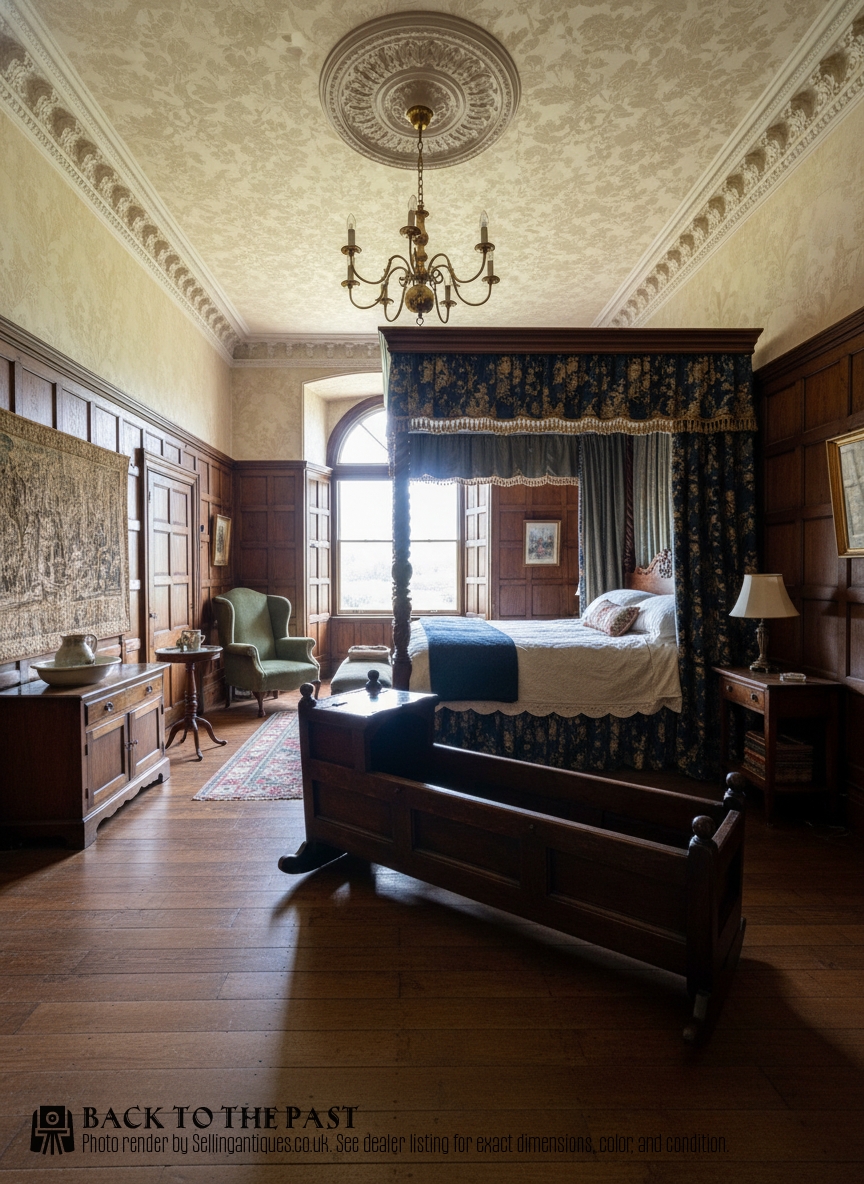
Hooded Oak Rocking Cradle
A hooded oak rocking cradle is a traditional sleeping vessel raised on curved rockers and protected by a sheltering canopy at the head. Buyers searching this phrase encounter sturdy domestic timber constructions designed to keep infants sheltered from draughts in early English homes.
The versions most frequently met on this page span from the sixteenth century through the Georgian era and into the Victorian revival periods. Examples range from early field-panelled forms to decorative Victorian interpretations and later revivals of seventeenth-century styles.
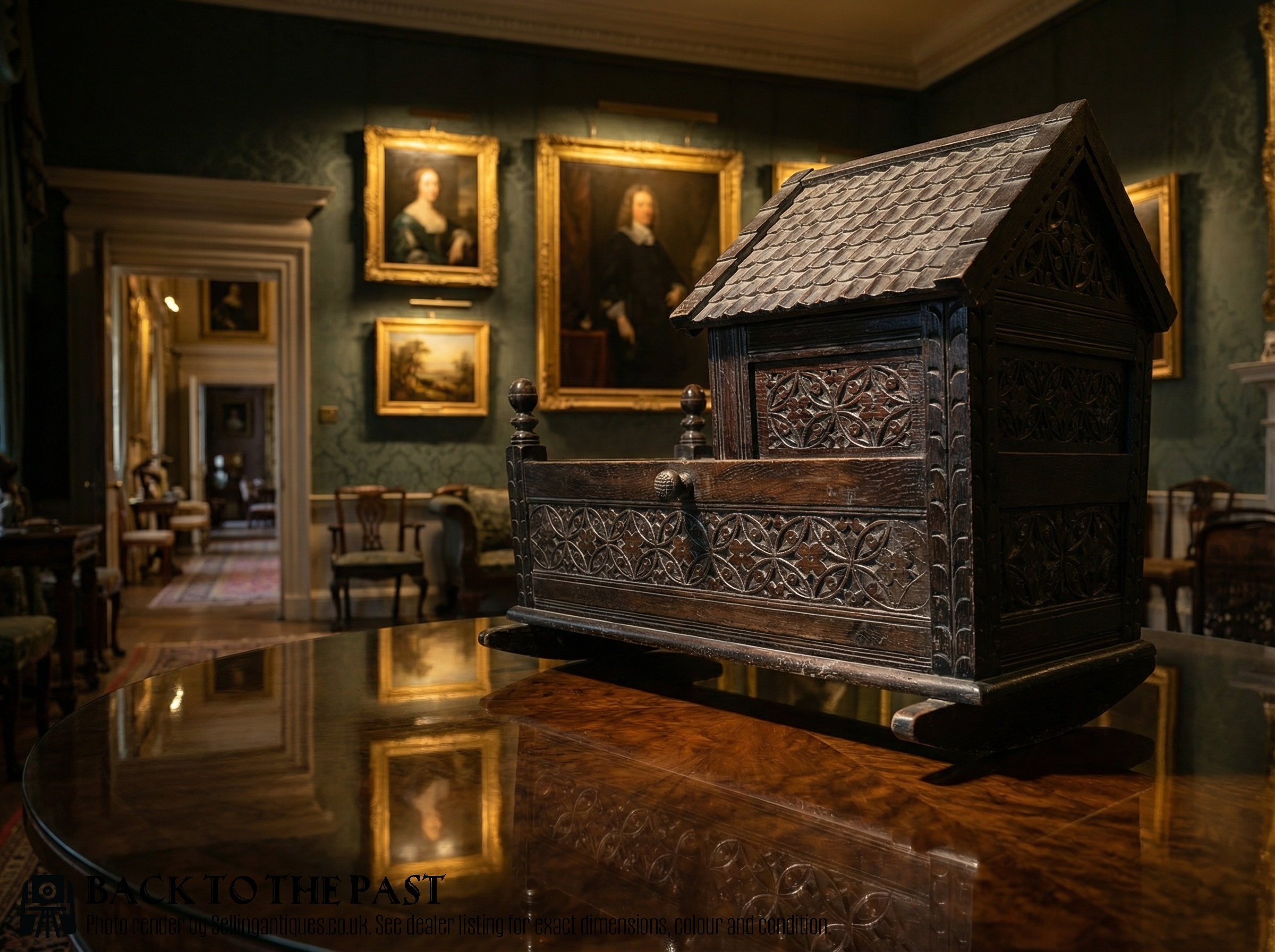
How they were made
Makers built these pieces primarily from solid oak, utilising heavy panels and sturdy framing techniques suited to domestic use. Carpenters constructed the hoods and sides using pegged joinery and traditional panel-in-frame methods.
Makers shaped the base timbers into smooth curves to allow the cradle to rock gently on the floor. Later Victorian examples sometimes incorporate carved decoration or simpler pine elements alongside the dominant oak construction.
Current listings feature oak as the dominant material, alongside occasional pine and glass details across multiple centuries.
What varies in quality
Quality rests in the authenticity of the timber construction and the crispness of the original panelling. Pieces showing seventeenth-century proportions and period construction methods stand apart from later revival items.
The integrity of the hood and the retention of the original rocking members dictate the structural standing of the piece. Subtle details like field-panelling and early surface patination elevate certain examples above standard utilitarian items.
The Hooded Oak Rocking Cradle Glossary
- Hood
- The protective canopy built over the head of a cradle to shield an infant from cold air. It forms the defining architectural feature of these pieces.
- Field panel
- A wooden panel with bevelled edges recessed into a heavier frame. This construction method allows the timber to expand and contract naturally with humidity.
- Rockers
- The curved wooden shoes attached to the base of the cradle. They enable the vessel to swing smoothly from side to side.
- Jacobean revival
- A nineteenth-century design movement that copied the heavy oak forms and panelled ornamentation of the early seventeenth century.
Hooded Oak Rocking Cradle: Frequently Asked Questions
What is a hooded oak rocking cradle?
A hooded oak rocking cradle is a traditional infant bed featuring a protective wooden canopy and curved base rockers.
These pieces were constructed from sturdy timber to keep babies warm and secure in historic homes.
How old are these cradles usually?
The pieces span multiple eras, including sixteenth-century origins, seventeenth-century construction, Georgian updates, and nineteenth-century revivals.
Revival pieces often replicate earlier styles while retaining the distinct manufacturing traits of their actual period of creation.
How were they used historically?
Families placed these vessels near hearths or beds to keep infants close while parents worked.
The rocking action allowed adults to soothe a child without lifting the heavy oak structure.
Can I use one for a baby today?
Most buyers acquire these historic pieces for decorative display, interior styling, or alternative home storage uses.
Modern safety standards for infant sleep differ significantly from historic manufacturing practices.
What materials are standard in these pieces?
Oak serves as the primary timber across the majority of examples found in these listings.
Secondary materials like pine and occasional glass details appear alongside the main oak construction in later Victorian pieces.