
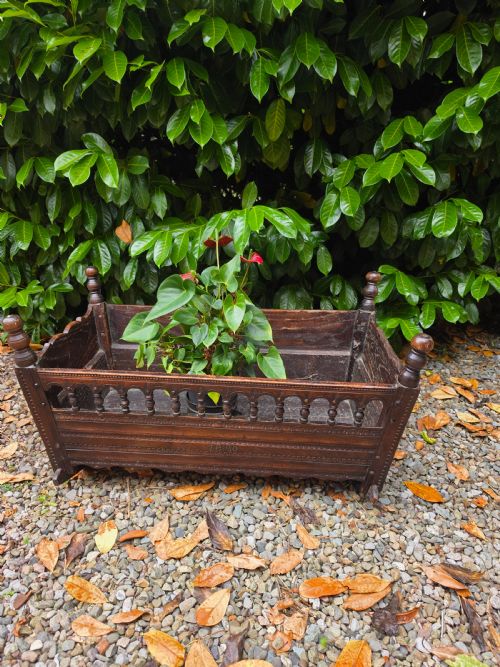


Dark Oak Rocking Cradle
A dark oak rocking cradle brings tangible centuries of domestic history into a room, fashioned from sturdy timber to soothe generations.
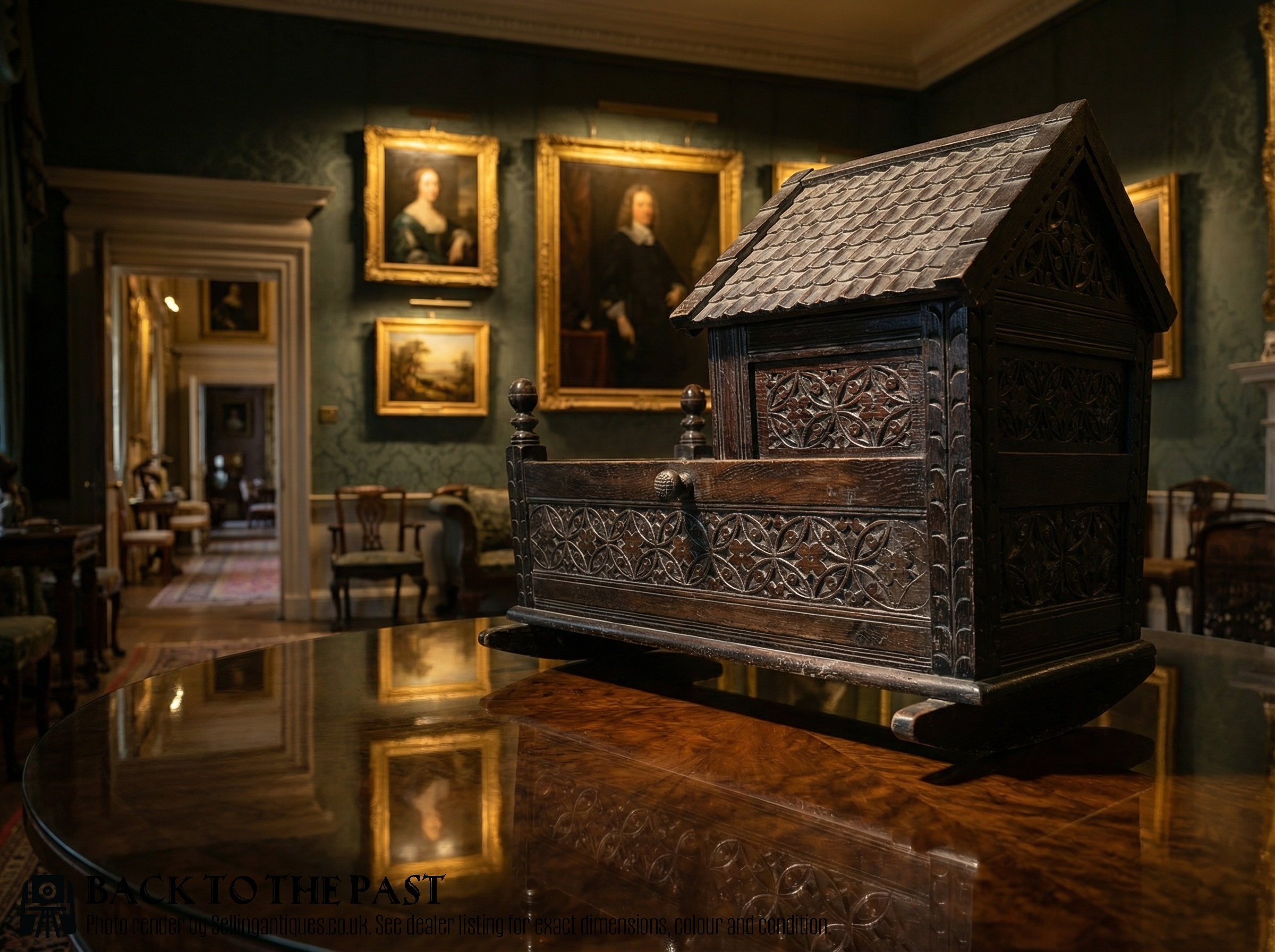
Dark Oak Rocking Cradle
A dark oak rocking cradle is a deep-sided wooden bed built upon curved rockers to soothe infants, constructed primarily from robust timber during periods ranging from the sixteenth century through the Victorian era.
The buyer searching this phrase meets pieces spanning several distinct eras, including sixteenth-century Elizabethan examples, seventeenth-century Charles the Second designs, and later nineteenth-century revivals.
Most entries on this page take the form of panelled cribs or cradles on rockers, occasionally incorporating fruitwood elements or protective hoods alongside the dominant dark oak material.
How they were made
These cradles rely fundamentally on solid oak construction, often utilising panelled techniques to form strong walls that withstand the gentle motion of the curved rockers.
Selected pieces introduce contrasting fruitwood alongside the primary oak, while later Victorian iterations incorporate carved ornamentation into the heavy timber structure.
Listings incorporate oak and fruitwood across periods from the sixteenth century to the Victorian era, including William and Mary and Elizabethan styles.
What varies in quality
Quality in a dark oak rocking cradle rests on the integrity of the timber panels and the crispness of any period joinery, distinguishing seventeenth-century workmanship from later revivals.
The sophistication of the surface decoration, from plain seventeenth-century field panels to elaborate Victorian carving, marks the distinction between utilitarian nursery items and high-status examples.
The Dark Oak Rocking Cradle Glossary
- Rockers
- The curved wooden runners attached to the base of a cradle to permit gentle back-and-forth movement. They are essential for fulfilling the primary function of soothing an infant.
- Panelled
- A method of construction where flat boards are fitted within a structural frame to prevent warping. This technique dominates seventeenth-century examples.
- Fruitwood
- Dense hardwood used selectively alongside oak for contrast and detail. It appears in specific seventeenth-century items.
- Hood
- A protective canopy or cover integrated into the head of early cradles, such as Elizabethan designs. It shielded the sleeping infant from drafts.
- Field panel
- A raised wooden panel with bevelled edges set into a frame. This style defines seventeenth-century pieces.
Dark Oak Rocking Cradle: Frequently Asked Questions
How old are these cradles?
The pieces span multiple centuries, ranging from sixteenth-century Elizabethan and seventeenth-century Charles the Second items down to nineteenth-century copies and Victorian gothic revival versions.
Exact dating depends on construction methods, panel styles, and timber characteristics recorded across the periods represented.
What wood are they made from?
The primary material across the selection is oak, frequently showing a dark patination developed over centuries of handling and age.
Certain pieces also incorporate fruitwood elements to complement the main oak structure.
Were these used for sleeping?
These wooden cribs served historically as infant beds, utilising curved rockers at the base to soothe children to sleep.
Later Victorian interpretations sometimes find alternative domestic uses, such as holding logs by a hearth.
What styles can I find?
The listings feature diverse historical aesthetics, including Elizabethan, William and Mary, Jacobean, and Victorian Gothic Revival.
Details range from plain panelled sides and protective hoods to deeply carved ornamentation.