

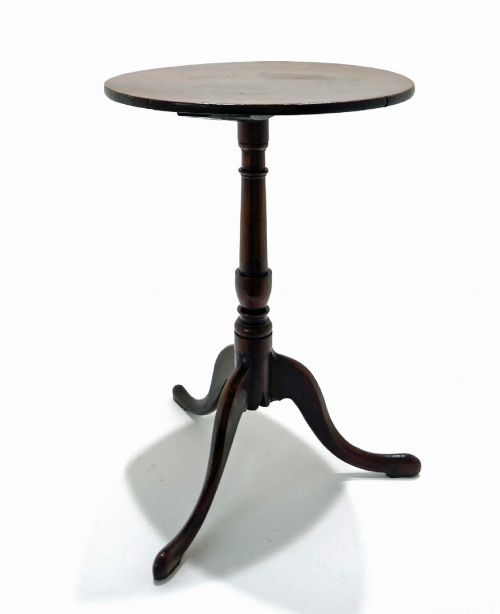

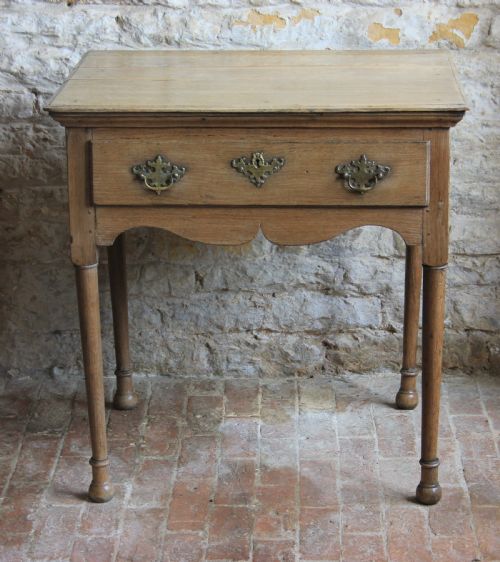


Early English Oak Furniture
Early english oak furniture brings heavy timber construction and centuries of domestic history straight into a room.
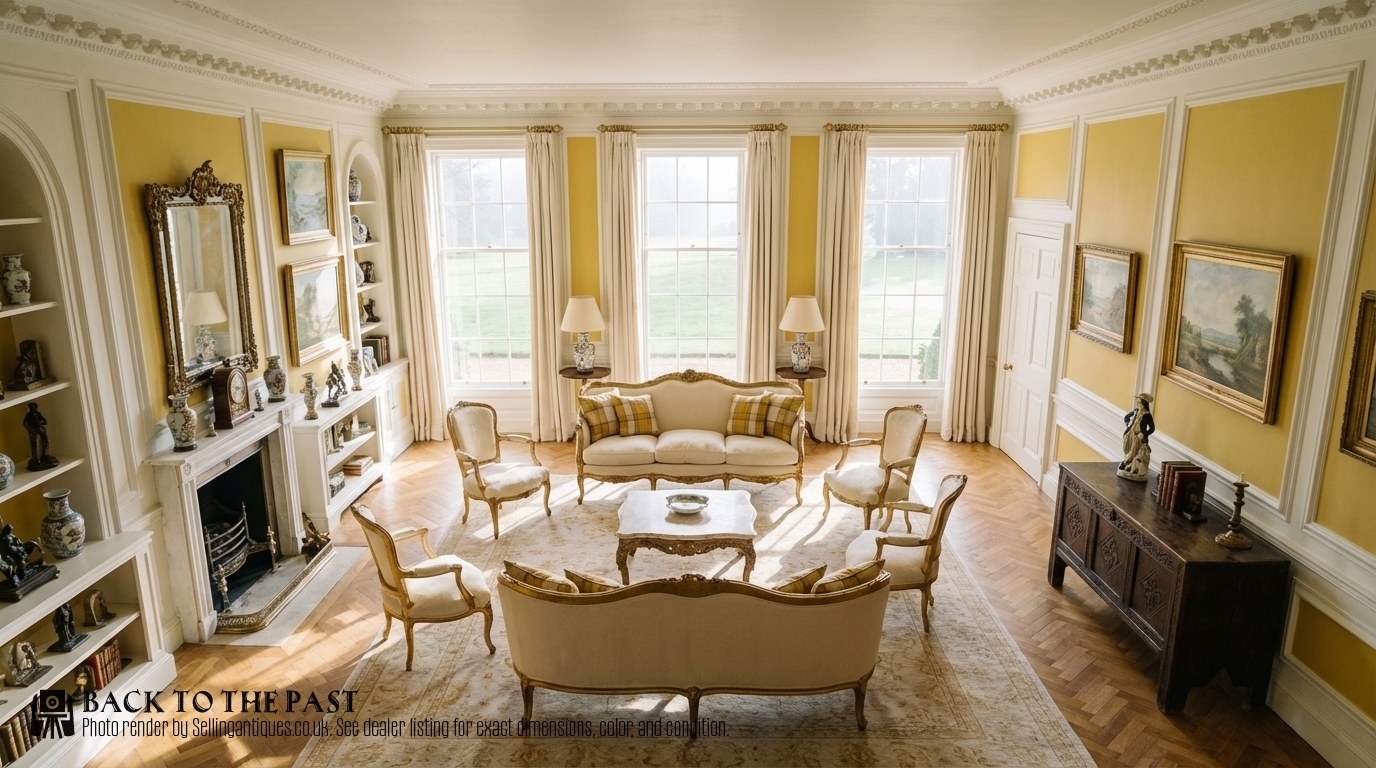
What early english oak furniture is
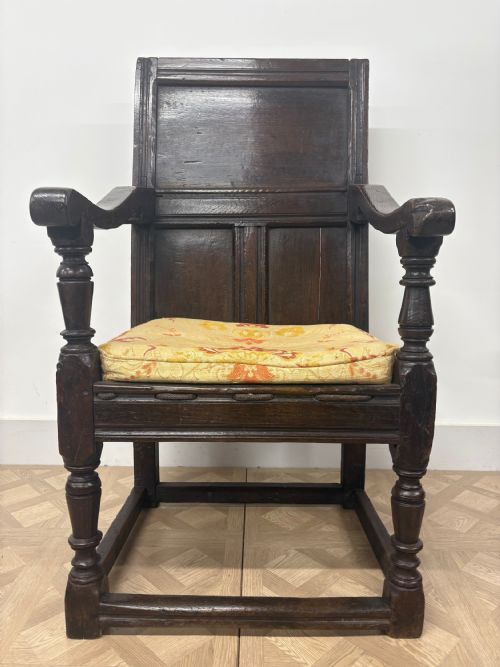
Early english oak furniture comprises sturdy domestic items built primarily from native timber during the sixteenth and seventeenth centuries, though domestic pieces stretching into later periods also appear. Buyers encounter robust forms such as joint stools, four poster beds, rocking cradles, coffers, and court cupboards that reflect daily life in early households.
The surviving pieces demonstrate the heavy structural framing methods of the period, often categorised under Jacobean or seventeenth-century styles. Surviving examples range from simple joined seating to elaborate enclosed chests and panelled cupboards.
Most items on this page date from the seventeenth century, offering tangible links to the domestic interiors of the era through visible tool marks and traditional pegged construction.
Materials and construction
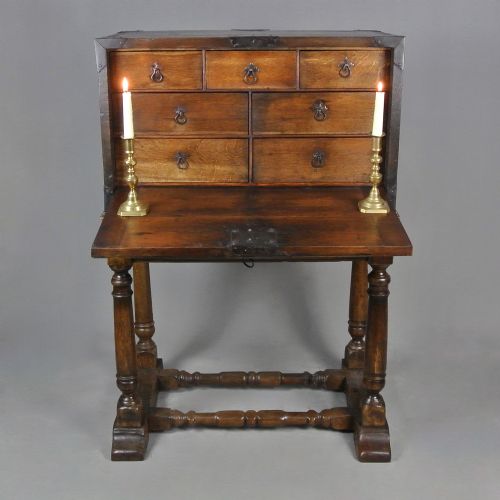
Makers utilised native oak alongside secondary timbers such as fruitwood, elm, pine, and iron fixings, shaping the dense wood with hand tools. Joinery relied heavily on mortise and tenon joints secured with wooden pegs rather than metal nails.
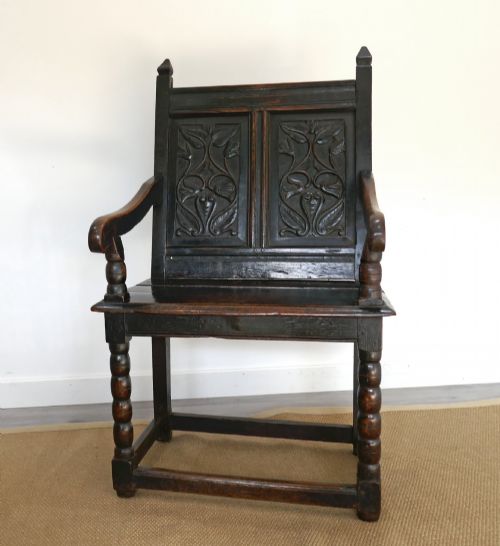
Panels were set into grooved frames to allow for natural wood movement as humidity changed, while surfaces frequently received carved detailing or fruitwood inlay to ornament the structural framework.
Retail Price Guide 2026
Typical UK retail prices for early english oak furniture, calculated from the Sellingantiques database of over a million retail prices indexed since 2003. This retail price guide relies exclusively on Sellingantiques data; no external sources or auction records are used, so the figures do not describe the wider market.
Listings feature seventeeth-century forms including joined stools, court cupboards, coffers, and four-poster beds constructed from oak, fruitwood, and iron.
What separates the best pieces
Quality rests in the originality of the surface skin, the crispness of hand-carved panels, and the integrity of the original joinery without excessive timber replacement. Untouched surfaces retain centuries of patination, whereas heavily restored examples lose the subtle texture of early tool work.
Proportion and structural honesty dictate the standing of a piece, separating utilitarian items of simple construction from ambitious joined cupboards and armchairs designed with balanced architectural details.
The Early English Oak Furniture Glossary
- Joint stool
- A sturdy wooden seat constructed with pegged mortise and tenon joints rather than turned legs inserted into a seat slab.
- Coffer
- A heavy wooden chest used for storage, typically constructed with panelled sides and a hinged lid.
- Court cupboard
- An enclosed or tiered cabinet used for displaying plate and storing domestic provisions.
- Wainscot
- A type of heavy wooden armchair characterised by panelled backs and solid wooden seats.
- Tester bed
- A four-poster bed featuring a wooden canopy or tester suspended above the sleeping frame.
- Gateleg table
- A drop-leaf table supported by hinged legs that swing out to hold the leaves in place.
Frequently Asked Questions
How do I clean early oak?
Dust surfaces regularly with a soft, dry cloth to prevent grit accumulation in the grain and carved recesses.
Avoid modern liquid polishes, applying traditional beeswax sparingly when the timber appears dry to nourish the surface patination.
Can I use an antique coffer as a coffee table?
Many people place low coffers in sitting rooms to serve dual purposes of storage and surface space.
Ensure items placed on top utilise protective mats to prevent rings or scratches on the historic timber lid.
Why do joint stools feel so heavy?
Makers built these seats entirely from dense native oak using thick timbers designed to withstand rough daily domestic use.
The substantial weight comes directly from the heavy framework and pegged joinery required to maintain structural rigidity without metal bracing.
How do I spot replacement timber?
Examine the colour, grain direction, and tool marks across different sections of the piece to identify mismatched boards.
Original sections show consistent oxidation and wear patterns accumulated over centuries, while repairs often display different surface textures.