


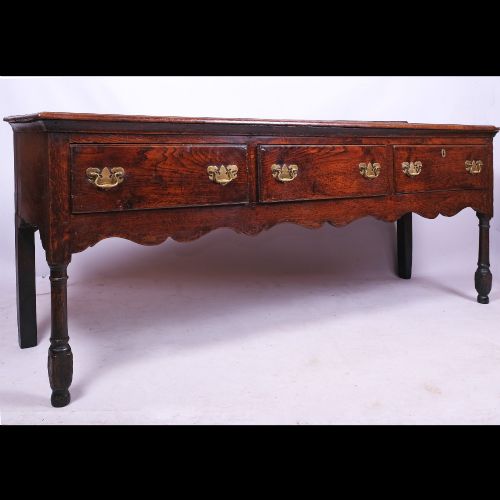
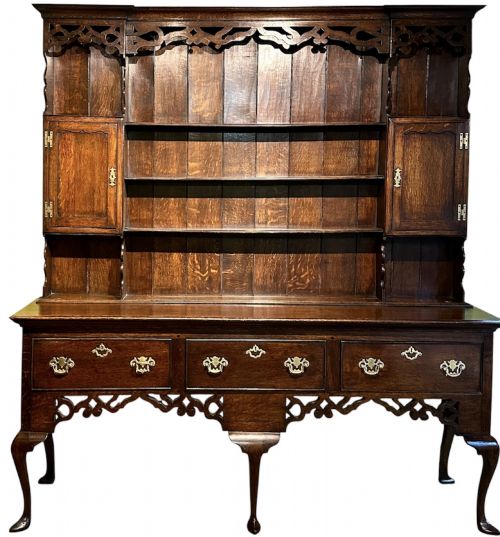


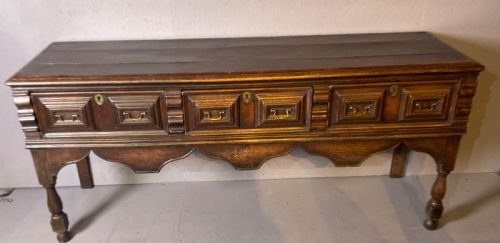


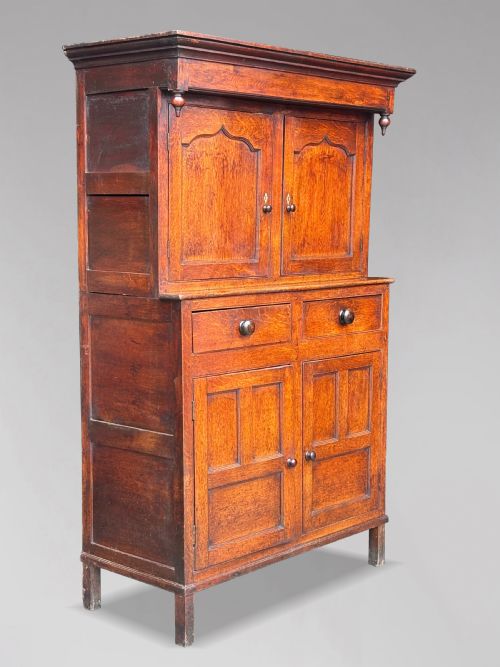

Period Oak Sideboard
A period oak sideboard brings centuries of honest utility and timber character into a modern interior.
Period Oak Sideboard
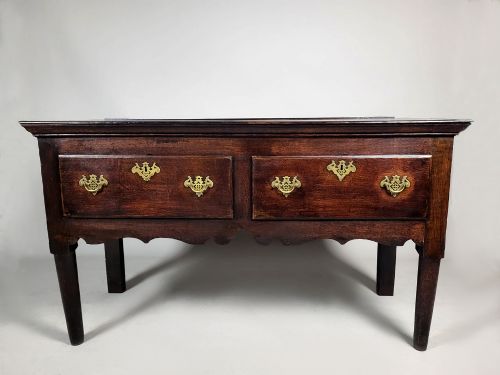
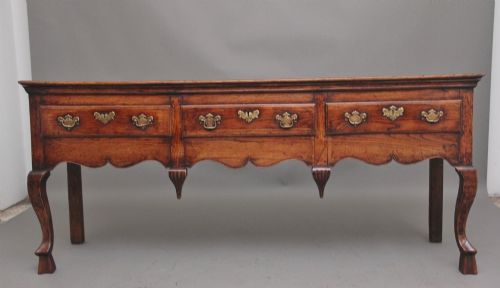
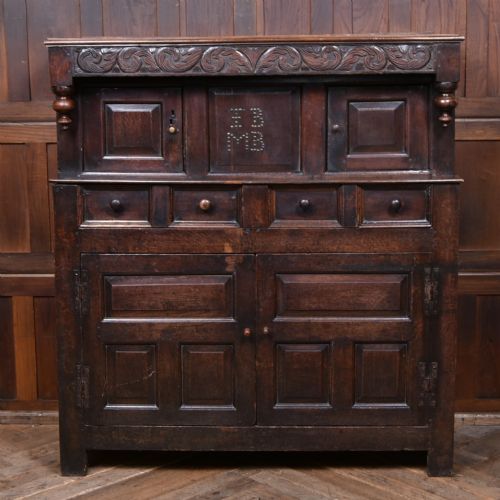
A period oak sideboard serves as a robust storage piece that evolved from early cupboards, dressers, and servers. When searching for a period oak sideboard, buyers encounter forms ranging from low dresser bases and potboard dressers to imposing court cupboards.
The pieces on this page span the seventeenth, eighteenth, and nineteenth centuries, alongside regional variants and later revivals. English country examples, George III formats, and Jacobean styles dominate the selection.
Makers utilised solid oak alongside secondary timbers like fruitwood, pine, and yew, often finished with brass and iron hardware. These survivors carry the marks of centuries of domestic service in estate houses and farmhouses.
What varies in quality
The integrity of the timber and the depth of the patination dictate the standing of a piece. Original brasses, untouched surfaces, and period construction methods elevate certain examples above heavily restored or altered equivalents.
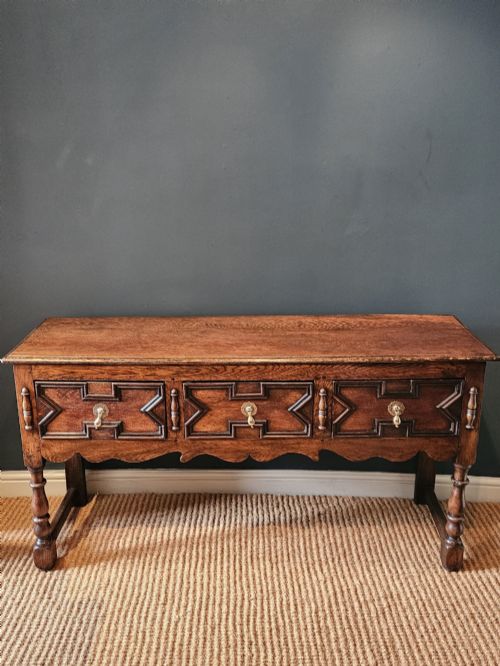
Proportion and architectural ambition also divide the range, from simple provincial servers to grand court cupboards with intricate geometric mouldings and column supports.
Listings feature oak, fruitwood, and pine pieces spanning from the seventeenth century through to the Arts and Crafts period.
Liberty & Co.·John Moyr Smith·Wylie Lochhead
The Period Oak Sideboard Glossary
- Potboard dresser
- A dresser featuring an open lower shelf designed for storing pots and heavy kitchen utensils. This lower tier sits just above the floor on short feet or stiles.
- Court cupboard
- A heavy, enclosed storage cabinet from the sixteenth or seventeenth century, typically featuring an upper recessed section supported by columns. They were traditionally used for displaying plate and storing provisions.
- Geometric moulding
- Raised wooden profiling applied to drawer fronts and doors in intricate geometric patterns, popular in the seventeenth century. These patterns create deep shadows across the facade.
- Dovetail
- A joint formed by interlocking wedge-shaped fingers, used primarily to join drawer sides to drawer fronts. Hand-cut dovetails indicate traditional pre-industrial construction.
- Joined oak
- Furniture constructed using a heavy timber frame locked together with pegged joints rather than modern adhesives. This method forms a rigid skeleton capable of supporting heavy loads.
Period Oak Sideboard: Frequently Asked Questions
How do I date an oak sideboard?
Dating relies on examining the construction methods, tool marks, timber selection, and hardware style. Seventeenth-century pieces typically show heavy framing with pegged joints and hand-riven panels, while eighteenth-century examples introduce finer mouldings and dovetailed drawer construction.
Secondary woods also offer clues, as pine and fruitwood appeared more frequently in later regional workshops. Examining the backboards and interior surfaces reveals the age of the timber and the consistency of the wear.
What is a potboard base?
A potboard base is an open-shelf storage unit positioned beneath the main counter surface of a dresser. Historically, this lower platform held heavy ceramic and metal cookware off the damp flagstone floors.
Today, the potboard provides an ideal display shelf for baskets, ceramics, or large decorative objects. It distinguishes working country furniture from formal dining room cabinetry.
Where should I place a court cupboard?
Court cupboards require substantial wall space and a setting that can balance their heavy architectural presence. They anchor dining rooms, wide hallways, or large living spaces effectively.
Keep these pieces away from direct heat sources and strong sunlight to protect the dry historic timber and finish. Allowing sufficient clearance lets the carved details and geometric mouldings catch natural room light.
How do I care for antique oak?
Maintain antique oak surfaces by dusting with a dry, soft cloth and applying a traditional beeswax polish sparingly. Avoid modern silicone sprays that can penetrate the open grain and degrade the historic patination.
Maintain stable humidity levels in the room to prevent the solid oak from splitting or warping. Gentle care preserves the dry, lustrous finish built up over centuries of handling.