




Tudor Style Cupboard
These tudor style cupboard pieces bring substantial oak construction and revival character into domestic spaces.
Tudor Style Cupboard
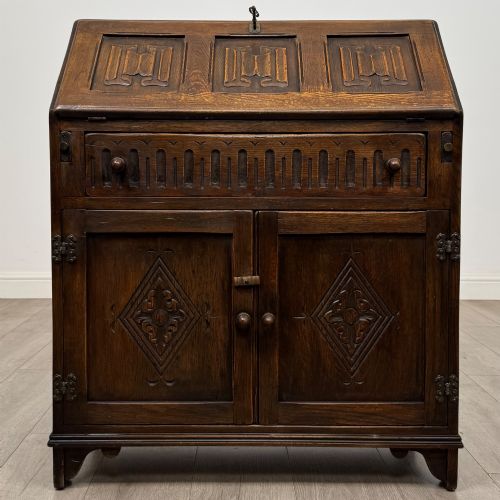
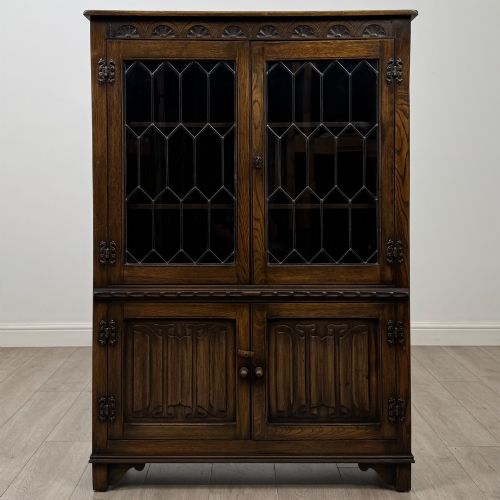
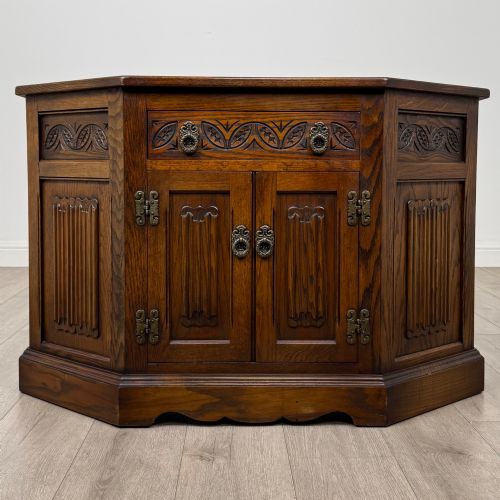
When you search for a tudor style cupboard, you encounter robust storage furniture built primarily in the 20th century, alongside Edwardian examples and pieces from the 19th century and earlier periods. The selection encompasses court cupboards, linenfold bureaus, display cabinets, side cabinets, hall robes, bookcases, and general storage cupboards.
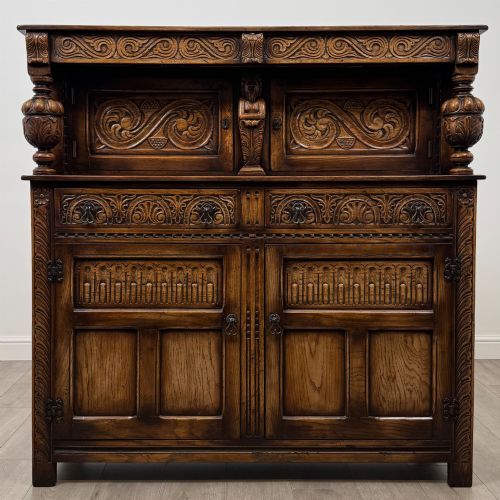
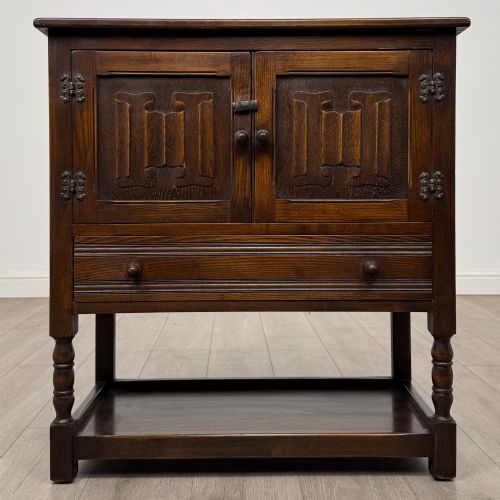
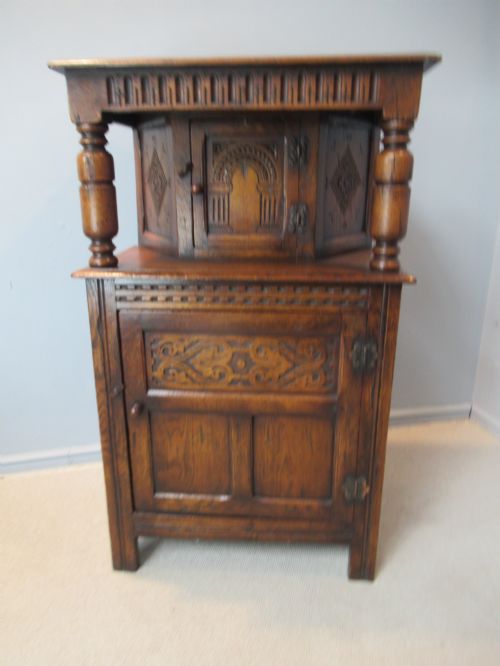
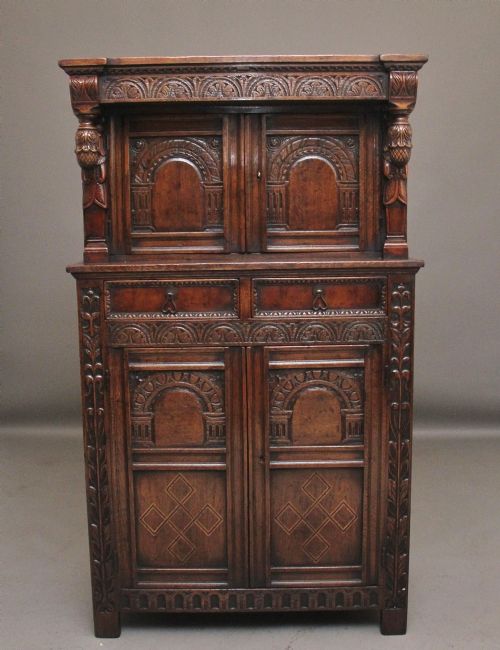
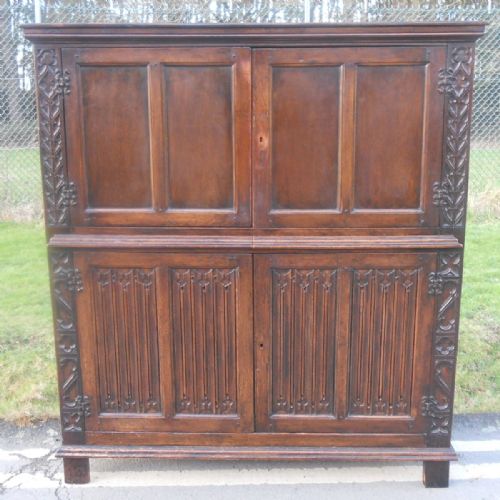
The version you are most likely to meet on this page is the Edwardian or 1920s oak court cupboard, often featuring carved details and linenfold panels. These items reflect revivalist movements, drawing heavily on Jacobean Revival, Tudor Revival, Jacobean, and Gothic Revival styles.
Originating predominantly from English workshops, these items serve as practical storage solutions while carrying distinct historical aesthetic references. The form varies from compact small-size pieces to large golden oak storage cupboards and sideboards.
How they were made
Construction relies heavily on solid oak, shaped into heavy storage frames, panelled doors, and distinctive linenfold motifs. Woodwork often incorporates deep hand-carving to emulate earlier centuries.
Metal components such as iron and brass provide structural hinges, handles, and fastening hardware. Glass and lead are integrated selectively into display cabinets and bookcases to enclose shelving securely.
Tudor Style Cupboard Retail Price Guide 2026
Typical asking prices for tudor style cupboard among the pieces listed under this phrase on Sellingantiques today, from the lower quarter to the upper quarter. They describe what is for sale here now, not the wider market.
Materials recorded across these listings include solid oak, iron, brass, glass, and lead.
What varies in quality
The standard of carving and timber selection dictates the distinction between standard production and finer craftsmanship. Dense solid oak with crisp, deep relief carving represents the upper end of the range.
Proportion and execution of historical revival styles also vary. Pieces that successfully balance authentic regional revival proportions with heavy timber framing stand apart from simpler utilitarian storage boxes.
The Tudor Style Cupboard Glossary
- Linenfold
- A style of wood carving used to decorate panels, resembling folded cloth or linen. It appears frequently on Edwardian and 1920s cupboard doors and bureau flaps.
- Court Cupboard
- A traditional form of short, heavy sideboard or cupboard used for displaying plate and storing provisions. These pieces often feature carved upper tiers and sturdy upright supports.
- Jacobean Revival
- An architectural and furniture style popular in the 19th and 20th centuries, copying the heavy, dark-toned oak aesthetic of the early 17th century. It defines much of the carved decoration seen on these cupboards.
- Gothic Revival
- A design movement drawing inspiration from medieval architecture, incorporating pointed arches, tracery, and heavy structural forms into domestic furniture.
Tudor Style Cupboard: Frequently Asked Questions
Where did court cupboards originate?
Court cupboards developed as prominent dining room and hall furniture in English domestic interiors during the medieval and Tudor periods.
Later revival makers in the Edwardian era and the 1920s reinterpreted these forms for contemporary homes seeking historical character.
How do I maintain solid oak cupboards?
Solid oak furniture benefits from minimal intervention, requiring only occasional dusting with a dry cloth and protection from direct heat sources.
Applying traditional wax polish helps nourish the timber surface and maintain the natural grain without building up heavy chemical residues.
Are these cupboards authentic antiques?
The pieces span various eras, including genuine earlier examples alongside Edwardian and 1920s revival items built in historical styles.
Examining the construction methods, timber ageing, and hardware helps determine whether a piece originates from the pre-16th century or later revival periods.