
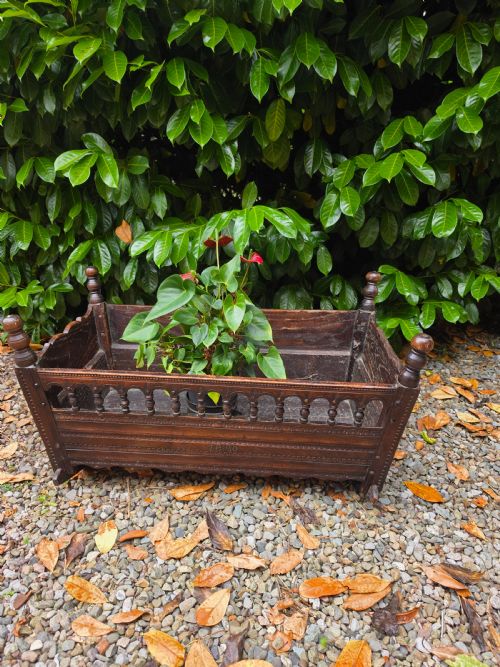


Antique Oak Crib
An antique oak crib brings centuries of heavy timber and domestic heritage straight into a modern room.
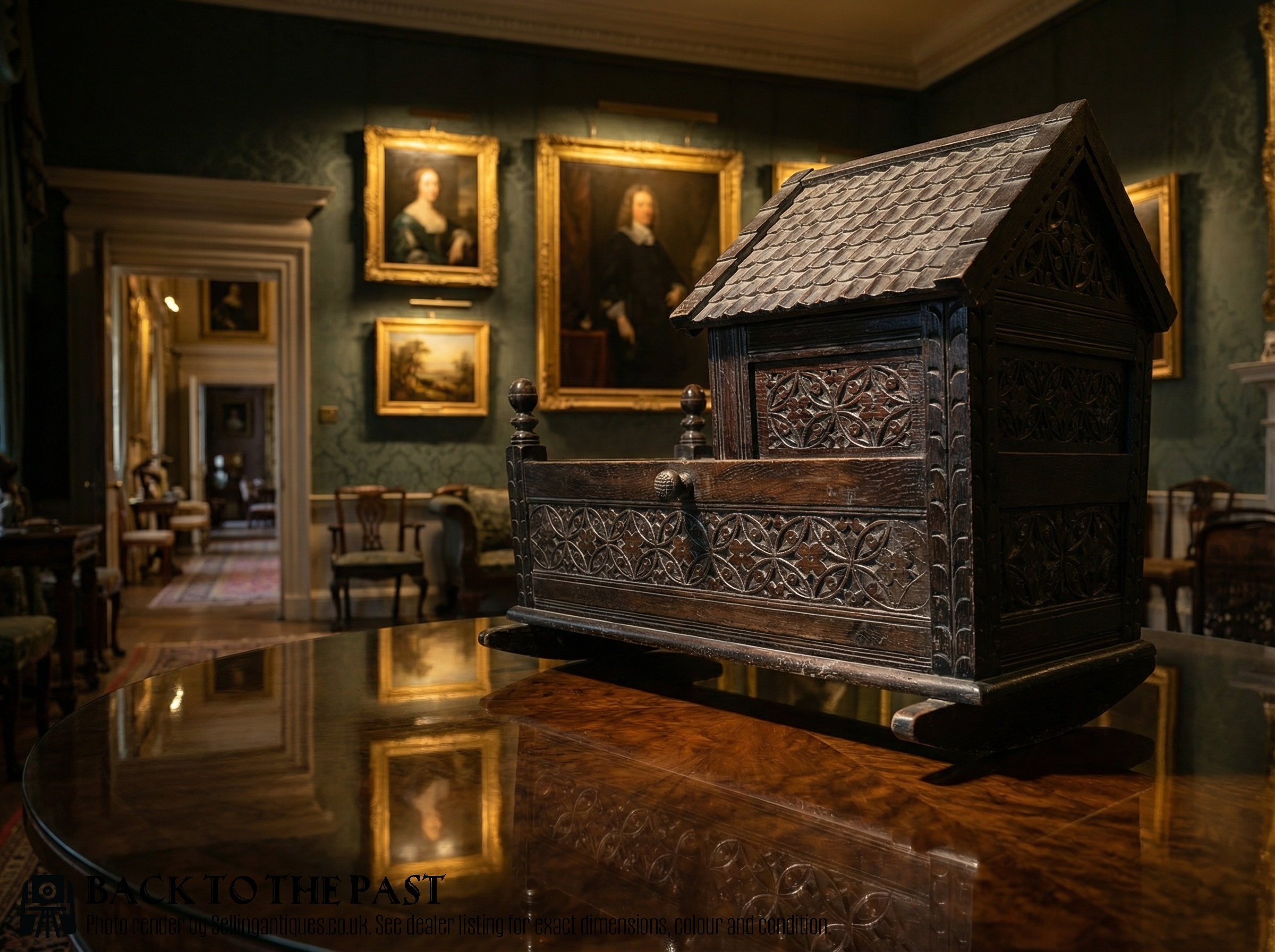
Antique Oak Crib
An antique oak crib is a solid wooden infant bed designed for rocking, appearing across several centuries from the sixteenth through the nineteenth.
The examples available here span authentic seventeenth-century joined furniture, Georgian country pieces, and later Victorian interpretations.
Construction and materials
Cabinetmakers built these pieces primarily using solid oak, frequently combining fruitwood for secondary framing or decorative contrast.
Panels were traditionally fitted into grooved stiles and rails to accommodate seasonal wood movement without splitting the primary structure.
One sturdy Victorian rocker suggests a secondary career as a fireside log basket.
Judging quality and character
Quality rests in the crispness of the panel carving and the integrity of the original joined framing rather than surface finish alone.
Earlier seventeenth-century examples display tighter timber grain and traditional joinery, whilst later pieces show the influence of Victorian or Jacobean revival styles.
The Antique Oak Crib Glossary
- Panelled crib
- A bed constructed with wooden panels set into a sturdy frame. This traditional method provided strength and stability.
- Rockers
- Curved wooden bases attached to the bottom of the crib. They allowed parents to gently sway the infant to sleep.
- Hood
- A protective canopy or cover integrated into the head of the cradle. It shielded the sleeping child from draughts in older homes.
- Joined construction
- A method using mortise and tenon joints secured with wooden pegs. This technique preceded the widespread use of metal fasteners.
Antique Oak Crib: Frequently Asked Questions
How do I date an oak crib?
Dating relies on observing construction methods, such as joined frames versus later assembly techniques, alongside stylistic details like panel carving.
Material choices, including the presence of fruitwood or secondary pine, also help distinguish seventeenth-century pieces from Victorian revivals.
Were these cribs used for sleeping?
These pieces served as functional infant beds in historical households, designed to keep babies close to the fire.
The inclusion of curved rockers allowed caregivers to soothe infants while attending to domestic tasks.
Can I use an antique crib today?
Modern safety standards differ significantly from historical manufacturing practices, meaning these pieces are typically acquired for display or decorative storage.
Many collectors adapt them to hold items like blankets, logs, or books within a room.