



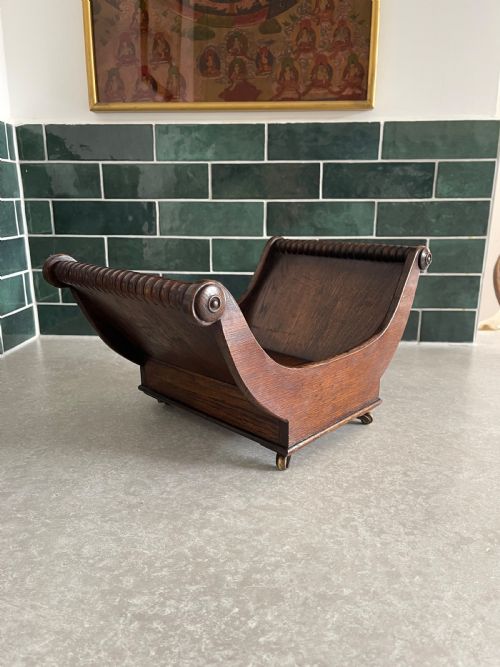


Carved Oak Cradle
These carved oak cradle examples are heavy timber infant beds on rockers, offering genuine domestic history and rich patination.
Carved Oak Cradle
A carved oak cradle represents a substantial piece of early domestic furniture built to rock infants on rounded runners or rocker feet. The examples seen on this page span from the sixteenth century through the nineteenth century, encompassing original period pieces and later revivals.
Buyers most frequently meet seventeenth-century pieces alongside nineteenth-century interpretations built in earlier styles such as Elizabethan, Jacobean, and William and Mary. Forms range from simple panelled cribs to hooded structures and field panel designs, reflecting the domestic habits of past centuries.
Materials and construction methods
These items rely principally upon robust oak timber, frequently accented with secondary woods like fruitwood and fitted with brass hardware. Joinery employs traditional panel construction methods designed to withstand generations of daily use in domestic settings.
Surfaces feature hand-carved ornamentation typical of sixteenth, seventeenth, and nineteenth-century workshops. The timber acquires deep natural patination over centuries of handling and environmental exposure.
The listings here demonstrate periods ranging from the sixteenth century through the Victorian era, executed primarily in oak and fruitwood.
Judging quality and character
Quality rests upon the crispness of the original carving, the integrity of the timber panels, and the survival of early rocker bases. Finer examples display deep, deliberate tool work and harmonious proportions rather than routine surface decoration.
The relationship between structural age and subsequent adaptation alters the character of individual pieces. Original period construction commands attention through authentic surface wear, whereas revival pieces demonstrate nineteenth-century interpretations of earlier historic styles.
The Carved Oak Cradle Glossary
- Field panel
- A raised wooden panel with bevelled edges set within a grooved frame. This technique allows the timber to expand and contract safely with humidity changes.
- Hood
- A protective canopy or cover integrated into the head of certain early cribs. It sheltered infants from draughts in cold historic rooms.
- Rocker
- A curved wooden foot attached to the base of a bed to permit swaying. These components bear the brunt of mechanical wear.
- Treen
- Small handmade wooden household objects. The category occasionally encompasses miniature or associated wooden items found alongside primary furniture.
- Fruitwood
- Dense hardwood derived from fruit-bearing trees such as pear or apple. Makers utilised it for contrasting details and durable structural elements.
Carved Oak Cradle: Frequently Asked Questions
How were these cradles used historically?
Families placed these heavy wooden structures on the floor beside adult beds to soothe infants by rocking the runners.
They functioned as central pieces of domestic furniture in early households before the advent of lighter nursery equipment.
How do I live with a carved oak cradle today?
These pieces integrate easily into modern interiors as standalone decorative items or functional storage containers for blankets and logs.
Position them away from direct heat sources to protect the historic timber panels from drying and splitting.
How do I tell seventeenth-century pieces from nineteenth-century revivals?
Seventeenth-century examples display authentic tool marks, pegged joinery, and centuries of natural surface oxidation.
Nineteenth-century revival pieces often reveal mechanical saw marks and standardised construction details typical of later cabinetmaking.