



Carved Oak Rocker
A carved oak rocker brings genuine country character and comforting movement to a room, spanning sturdy farmhouse seating to early panelled cradles.
Carved Oak Rocker
A carved oak rocker encompasses both functional seating and traditional infant cradles built from solid timber. Buyers searching for a carved oak rocker will encounter nineteenth-century vernacular chairs alongside seventeenth-century panelled designs.
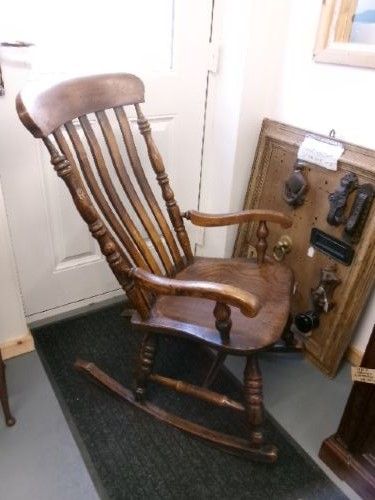
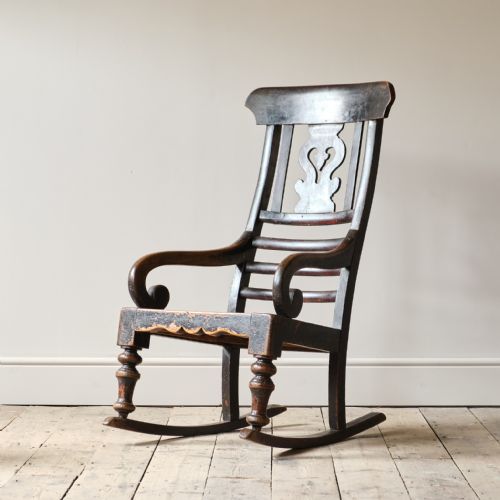
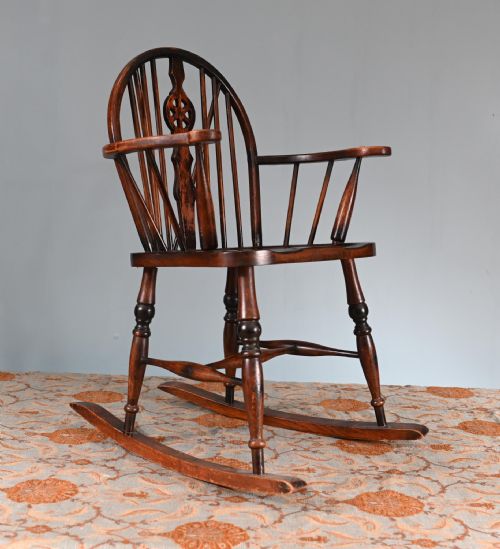
The selection ranges from Windsor and spindle-back armchairs to field-panelled cradles on rockers. Most examples lean towards nineteenth-century Victorian country styles and earlier seventeenth-century English traditions.
Beyond standard seating, the category includes specialist forms like nursing rocking chairs and low-slung farmhouse seats. Oak forms the primary structural timber, frequently paired with fruitwood, beech, or ash.
How they were made
Joinery relies on traditional pegged and panelled construction methods using solid timber. Carved details on panels and crest rails show hand-chiselled execution rather than machine production.
Makers utilised native hardwoods such as oak for frames, supplementing with beech or fruitwood for spindles and turned components. Seats are typically shaped from solid planks or feature moulded panel designs.
Rockers were curved from thick timber sections to create a balanced arc for smooth motion. Metal fixings remain minimal, with structural integrity maintained through tight mortise and tenon joints.
Listings span from the seventeenth century through the nineteenth century, featuring oak, elm, beech, and fruitwood.
What varies in quality
The distinction between ordinary and superior pieces rests on the crispness of the timber carving and the balance of the proportions. Crisp hand-work on seventeenth-century panels commands greater attention than plain later surfaces.
Timber selection dictates the visual depth of the grain and the stability of the frame. Pieces retaining their original patination and uncompromised structural joinery demonstrate superior craftsmanship.
The Carved Oak Rocker Glossary
- Field panel
- A raised wooden panel with bevelled edges set into a frame. This technique adds structural strength and decorative depth to early oak furniture.
- Windsor chair
- A chair built with a solid wooden seat into which the legs and back spindles are separately inserted. They often feature carved wheelback or comb-back designs.
- Spindle back
- A chair back constructed from a series of turned vertical wooden rods. This method provides lightweight support while maintaining timber strength.
- Cradle
- A low infant bed mounted on rocking feet or curved rockers. Early examples frequently utilise heavy oak boards and panelled construction.
- Nursing chair
- A low-seated chair designed without arms to allow comfortable movement for childcare. Nineteenth-century versions often incorporate low rocking rails.
Carved Oak Rocker: Frequently Asked Questions
What is a carved oak rocker?
A carved oak rocker is a traditional wooden seating piece or infant cradle mounted on curved rocking rails. These items range from sturdy farmhouse armchairs to panelled seventeenth-century cradles.
The category highlights vernacular craftsmanship, utilising solid native timbers and hand-carved decorative motifs rather than factory production methods.
How do I date a rocker?
Dating relies on examining the construction methods, joinery types, and decorative carving styles present on the piece. Seventeenth-century examples feature pegged frame-and-panel construction and distinct geometric or floral carving.
Nineteenth-century pieces often adopt Windsor or spindle-back forms influenced by regional English country traditions. Comparing timber patination and tool marks helps confirm the manufacturing era.
Where were these chairs used?
These chairs and cradles originated in rural farmhouses, cottages, and domestic nurseries across Britain. They served practical daily functions for nursing, resting, and soothing infants.
Their robust construction made them central pieces of furniture in busy household spaces, designed to withstand generations of heavy domestic use.
Are cradles and chairs grouped together?
Cradles and rocking chairs share the same functional mechanism of curved wooden rockers attached to a stationary base. Both forms utilise heavy timbers like oak and fruitwood to maintain balance during movement.
Collectors often group them because they represent parallel vernacular woodworking traditions from the same historical periods.