


Embossed Leather Chairs
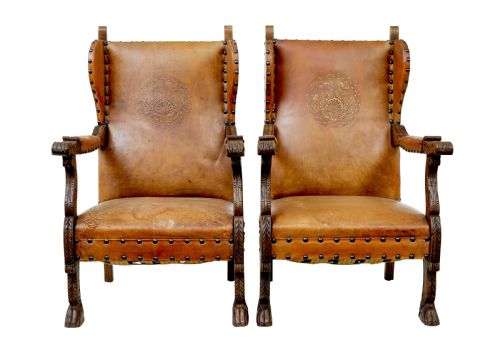
These embossed leather chairs bring rich tactile depth and historic presence to a room, uniting sturdy wooden frames with decorative hide.
Embossed Leather Chairs
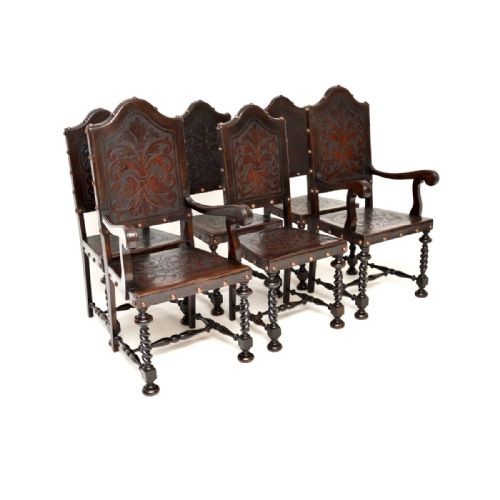
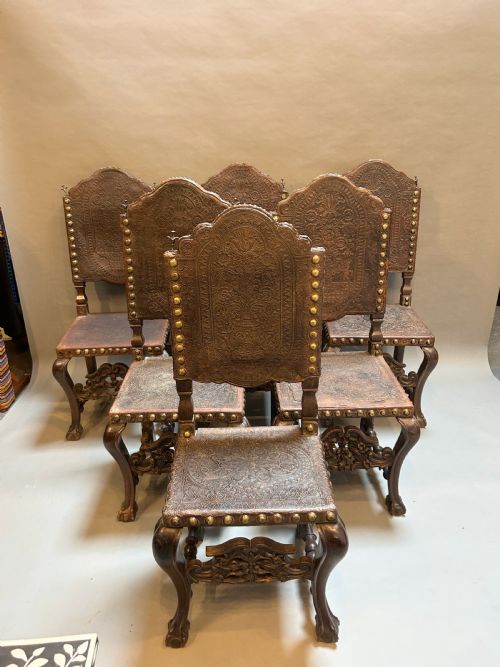
When you search for embossed leather chairs, you encounter seating designed for formal dining, study, and reception spaces across multiple centuries. These chairs combine robust wooden skeletons with patterned leather panels applied to backs and seats.
The most common examples on this page date from the nineteenth century, including sets of dining chairs and individual armchairs. Portuguese and Spanish regional designs frequently appear alongside Victorian Gothic Revival and Edwardian seating.
Makers adapted these chairs for various domestic roles, ranging from heavy throne chairs and desk swivel seats to tall dining chairs and occasional rocking chairs. The integration of stamped or tooled hides provides both visual weight and supportive seating.
What varies in quality
Quality rests upon the crispness of the leather embossing and the depth of the carving on the wooden frame. Sharply defined patterns on the hide and substantial timber sections distinguish superior examples from simpler production.
The integrity of the structural joints and the retention of original brass hardware dictate the overall standard of the piece. Matching sets demonstrate greater consistency in timber selection and leather tooling across all chairs.
The Embossed Leather Chairs Glossary
- Embossed leather
- Leather that has been stamped or pressed with raised designs using metal dies. This technique creates tactile decorative patterns across the backrests and seats.
- Gothic Revival
- An architectural and decorative style drawing inspiration from medieval forms. Pieces often feature pointed arches, heavy linenfold carving, and structural solemnity.
- Hip-joint chair
- A folding or X-framed chair design historically associated with Spanish Renaissance furniture. These seats utilise interlocking wooden components for portable assembly.
- Occasional rocking chair
- A light-scale rocking chair intended for intermittent use in sitting rooms or bedrooms. They frequently incorporate bentwood or turned spindle elements.
- Throne chair
- An imposing, high-backed armchair designed to denote authority and status. These pieces typically display elaborate carved crests and extensive panel work.
Embossed Leather Chairs: Frequently Asked Questions
How do I clean embossed leather?
Dust the surface regularly with a soft, dry cloth to prevent dirt accumulation in the recessed patterns. Avoid harsh chemical cleaners that can strip the historic finish from the hide.
Apply a specialist leather conditioner sparingly to maintain flexibility and prevent the material from drying out over time. Test any product on a hidden area before general application.
Can I use these chairs daily?
Most antique seating functions well for everyday dining or desk use provided the wooden joints remain tight. Examine the stability of the frame before subjecting the chair to heavy loads.
Limit exposure to direct sunlight and intense heat sources to protect the leather panels from cracking. Placing protective pads under the feet helps prevent further wear on uneven floors.
How do I date an oak chair?
Examine the construction marks, tool traces, and the method used to join the wooden components together. Hand-cut joinery and visible peg construction generally indicate earlier production periods.
Compare the decorative style, such as Victorian Gothic or Edwardian simplicity, with known furniture typologies of the era. Secondary woods used in the underframe can also offer clues regarding origin and date.
What is Portuguese Baroque furniture?
Portuguese Baroque furniture emerged during an era marked by ornate carving, twisted spiral turnings, and rich materials. These pieces often incorporate walnut and heavy leather upholstery.
The style emphasises dramatic silhouettes and dense ornamentation, reflecting the global reach of Portuguese trade during the period. Chairs from this tradition frequently display prominent crest rails and studwork.