






Renaissance Revival Dining Chairs
Renaissance Revival dining chairs bring historic weight to a room, offering grand carved timber frames and rich upholstery for formal interiors.
Renaissance Revival Dining Chairs
When buyers search for renaissance revival dining chairs, they encounter substantial seating from the nineteenth and early twentieth centuries. These pieces draw on historical forms, appearing in listings as side chairs, hall chairs, and larger sets of dining chairs.
The versions most commonly met on this page span the Victorian era, alongside later nineteenth and early twentieth century manifestations. Oak, mahogany, and walnut dominate the selection, frequently paired with leather or fabric upholstery.
How they were made
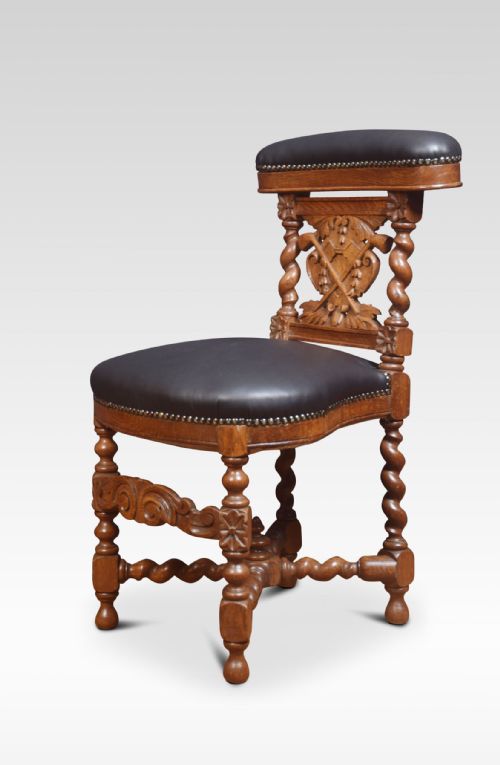
Constructed primarily from durable hardwoods like oak, mahogany, and walnut, these chairs rely on robust joinery to support heavy use. Timber frames receive ornate hand carving, establishing the characteristic depth and architectural relief of the style.
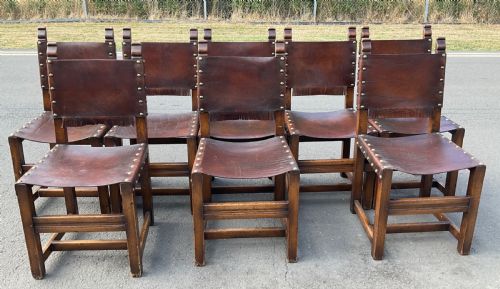
Seating surfaces utilise traditional materials such as embossed leather and woven fabric. Brass hardware often fastens the upholstery and accents the heavy timber structures.
Listings feature oak, mahogany, and walnut timbers alongside brass accents and embossed leather upholstery.
What varies in quality
The standard of carving dictates much of the distinction between ordinary and exceptional examples. Crisp, deeply undercut woodwork reflects superior bench skill compared to shallow, mechanical tooling.
Timber selection and structural integrity also separate the tiers. Dense, well-figured walnut and mahogany with tight, original joinery stand apart from softer, lesser timbers or loose frames.
The Renaissance Revival Dining Chairs Glossary
- Renaissance Revival
- A nineteenth-century design movement that borrows heavily from sixteenth-century classical and architectural motifs. It prioritises grandeur, symmetry, and heavy ornamentation.
- Victorian Gothic Revival
- A nineteenth-century architectural and decorative style inspired by medieval forms. It often incorporates pointed arches and heavy, solemn timber elements.
- Embossed leather
- Leather decorated with raised patterns produced by hammering or pressing dies into the damp hide. This technique provides rich textural detail on backs and seats.
Renaissance Revival Dining Chairs: Frequently Asked Questions
What periods do these chairs come from?
These pieces date principally from the Victorian era and the broader nineteenth century, with some examples extending into the early twentieth century around nineteen twenty and nineteen thirty.
Makers of this period drew heavily on historical revivals, blending earlier Renaissance motifs with contemporary Victorian production methods and heavy hardwood frames.
What woods were used for these chairs?
Makers relied heavily on durable hardwoods including oak, mahogany, and walnut. These timbers provided the structural strength required for ornate, heavy carving and large dining sets.
Walnut and mahogany often appear in finer nineteenth-century examples, while oak frequently supports the robust frames of hall chairs and Jacobean or Gothic revival pieces.
How should I live with these chairs?
These substantial seats suit formal dining rooms and studies where their grand scale and historical carving can anchor the space. Pair them with large timber tables to balance their visual weight.
Protect leather and fabric upholstery from direct sunlight and excessive humidity to preserve the original materials. Regular conditioning keeps embossed leather supple over decades of daily use.
How do I identify a hall chair?
Hall chairs typically feature high, carved wooden backs without upholstered inserts, designed for occasional seating in grand entryways rather than prolonged dining comfort.
They often utilise sturdy timbers like oak and present narrower proportions than standard dining chairs, sometimes incorporating solid wooden seats instead of leather or fabric pads.