
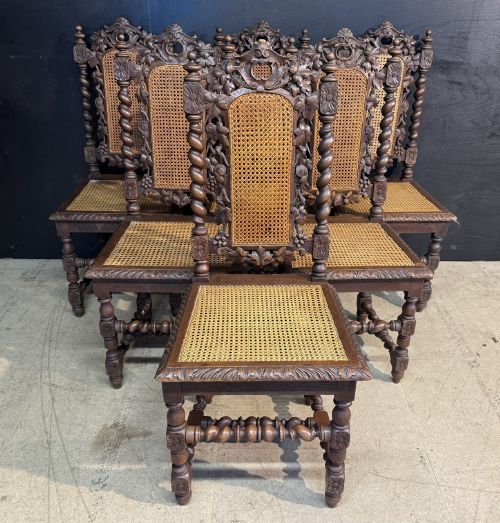
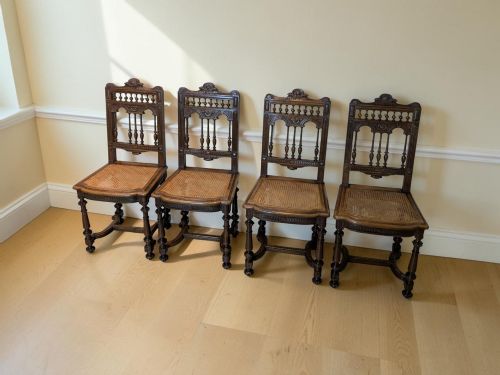
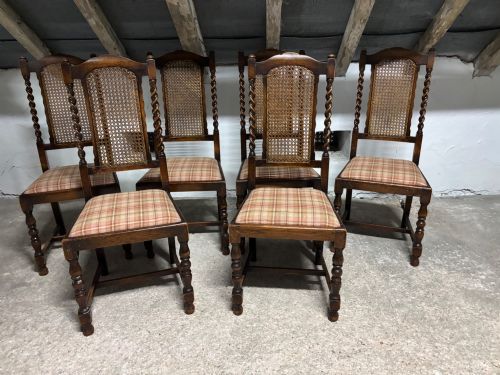


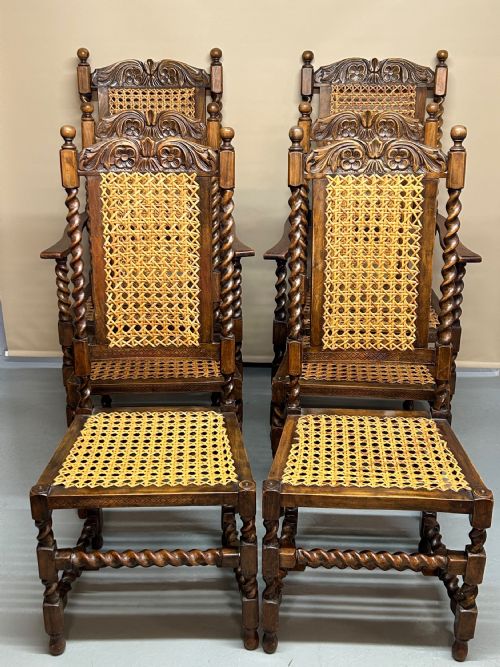


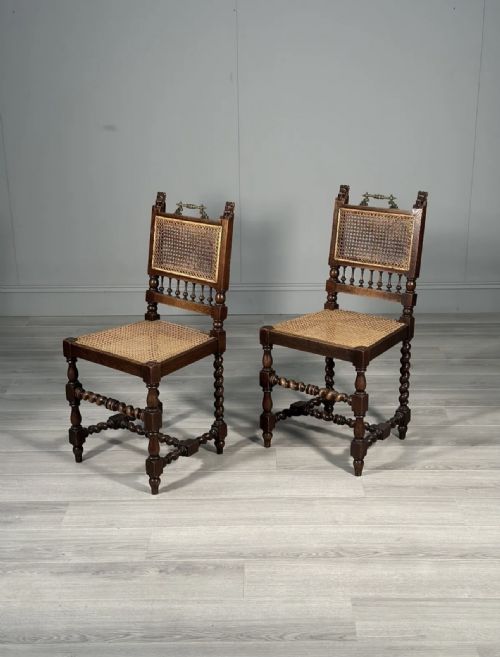


Cane Oak Dining Chairs
These cane oak dining chairs bring solid timber frames and woven seats to the table, offering lasting support and period character for daily meals.
Cane Oak Dining Chairs
When you search for cane oak dining chairs, you encounter sturdy seating built primarily from oak with woven cane or rattan panels set into the backrests and seats. These pieces predominantly span the nineteenth century and the early twentieth century, drawing heavily on revival aesthetics.
The selection here frequently includes sets of dining chairs alongside smaller groupings and matched pairs, often featuring carved frames and high backs. Side chairs and armless forms dominate the offerings, designed to tuck neatly beneath standard dining tables while providing upright support.
Makers working in these historical styles looked back to seventeenth-century forms, producing Carolean, Jacobean Revival, and William and Mary interpretations. Buyers meet both grand sets intended for formal dining rooms and simpler farmhouse styles suited to everyday use.
How they were made
Craftsmen shaped solid oak into structural frames using traditional joinery, frequently incorporating turned elements such as barley twist legs to add visual interest. Carved details adorn the crest rails and stiles, reflecting historical revival tastes through floral motifs and scrollwork.
Weavers inserted natural cane and rattan strips by hand through holes drilled in the wooden frames, creating supportive mesh panels. Additional materials such as brass fixings, fabric pads, gilt highlights, and dark lacquer finishes appear across specific pieces to enhance the surface decoration.
Listings feature oak frames combined with cane, rattan, and fabric materials across styles spanning Jacobean Revival to Victorian Gothic.
What varies in quality
The calibre of these chairs rests primarily on the depth and crispness of the wood carving, where hand-tooled details surpass shallow machine cutting. Heavier, denser oak frames provide greater stability and indicate a higher grade of initial construction.
The tension and neatness of the cane work distinguish finer examples, as evenly spaced strands withstand daily sitting pressure far better than loose weaves. The integrity of the original joints and the condition of the timber finish likewise separate standard utility pieces from superior works.
The Cane Oak Dining Chairs Glossary
- Cane
- Woven material made from the peeled bark of rattan palms, used to create flexible and breathable panels in chair backs and seats. It provides a lightweight yet strong surface that yields slightly to the sitter.
- Carolean
- A seventeenth-century English design style associated with the reign of Charles II, characterised by rich carving, scrolling foliage, and turned components. Later revival versions replicate these festive motifs.
- Jacobean Revival
- A nineteenth-century interior style that copies the heavy, rectilinear furniture of the early seventeenth century. Pieces in this mode often feature dark oak, panelled effects, and upright proportions.
- Barley Twist
- A form of wood turning resembling a twisted rope, popular in seventeenth-century furniture and widely revived during the Victorian era. It adds texture and dynamic movement to chair legs and stretchers.
- Bergere
- An enclosed upholstered or caned armchair or side chair featuring a solid wooden frame. The woven rattan forms tight panels that enclose the back and sometimes the sides.
Cane Oak Dining Chairs: Frequently Asked Questions
How do I clean caned seats?
Wipe the cane gently with a damp cloth using warm water and mild soap, ensuring you do not soak the material.
Allow the cane to dry naturally in a well-ventilated room so the fibres tighten back up properly.
Can I use these chairs daily?
Most antique cane oak dining chairs handle everyday use well if the woven panels remain taut and undamaged.
Avoid kneeling on the seats or placing excessive weight on the caning to preserve the historical webbing.
How do I identify Jacobean revival pieces?
Look for straight lines, dark oak timber, geometric mouldings, and high backrests that echo seventeenth-century architecture.
Revival pieces often display machine-sawn marks or nineteenth-century construction methods hidden beneath the antique styling.
Do mismatched chairs work together?
Mixing different revival styles or varying heights can create an eclectic dining arrangement if the wood tones share a similar warmth.
Keep the seat heights consistent around the table to ensure everyone sits at a comfortable level for meals.